Results by title
216 books match the query 'Social' and 11 start with e
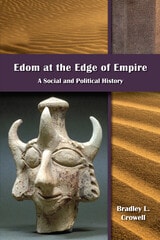
Edom at the Edge of Empire
A Social and Political HistoryBradley L. Crowell
SBL Press, 2021
A comprehensive history of a state on Judah’s border
Edom at the Edge of Empire combines biblical, epigraphic, archaeological, and comparative evidence to reconstruct the history of Judah's neighbor to the southeast. Crowell traces the material and linguistic evidence, from early Egyptian sources that recall conflicts with nomadic tribes to later Assyrian texts that reference compliant Edomite tribal kings, to offer alternative scenarios regarding Edom's transformation from a collection of nomadic tribes and workers in the Wadi Faynan as it relates to the later polity centered around the city of Busayra in the mountains of southern Jordan. This is the first book to incorporate the important evidence from the Wadi Faynan copper mines into a thorough account of Edom's history, providing a key resource for students and scholars of the ancient Near East and the Hebrew Bible.

Eduard C. Lindeman and Social Work Philosophy
Gisela Konopka
University of Minnesota Press, 1958
Eduard C. Lindeman and Social Work Philosophy was first published in 1958. Minnesota Archive Editions uses digital technology to make long-unavailable books once again accessible, and are published unaltered from the original University of Minnesota Press editions.
Eduard C. Lindeman, a leader in the field of social work for many years, was deeply concerned with the profession's development of a basic philosophy. As a teacher at the New York School of Social Work for more than 25 years and as a prolific writer and consultant in a broad range of activities, Lindeman challenged old ideas and stimulated new ones in relation to the concepts and principles of social work. In this study of the man and his thinking, Mrs. Konopka, a professor of social work herself, provides an illuminated discussion of the theories upon which the practice of social work is based.
In the first section Mrs. Konopka presents a biographical sketch of Lindeman, showing the forces and experiences which helped to shape his views and to create the ideas and ideals he fostered. Then she traces the development of Lindeman's philosophy over the three decades of his most fruitful period, the years from 1920 to 1953, when he died.
In the third part, as a background for an understanding of Lindeman's contributions, she describes the status of social work values and goals before and during his career. In conclusion, she discusses a theory of social work based upon an integration of values, methods, and knowledge.
This book will be especially useful to those teaching courses in the history and philosophy of social work and related professions, as well as to those actively engaged in social work.
Education and Equality
Danielle Allen
University of Chicago Press, 2016
Allen argues that education plays a crucial role in the cultivation of political and social equality and economic fairness, but that we have lost sight of exactly what that role is and should be. Drawing on thinkers such as John Rawls and Hannah Arendt, she sketches out a humanistic baseline that re-links education to equality, showing how doing so can help us reframe policy questions. From there, she turns to civic education, showing that we must reorient education’s trajectory toward readying students for lives as democratic citizens. Deepened by commentaries from leading thinkers Tommie Shelby, Marcelo Suárez-Orozco, Michael Rebell, and Quiara Alegría Hudes that touch on issues ranging from globalization to law to linguistic empowerment, this book offers a critical clarification of just how important education is to democratic life, as well as a stirring defense of the humanities.
Educational Goods
Values, Evidence, and Decision-MakingHarry Brighouse, Helen F. Ladd, Susanna Loeb, and Adam Swift
University of Chicago Press, 2018
In Educational Goods, two philosophers and two social scientists address this very question. They begin by broadening the language for talking about educational policy: “educational goods” are the knowledge, skills, and attitudes that children develop for their own benefit and that of others; “childhood goods” are the valuable experiences and freedoms that make childhood a distinct phase of life. Balancing those, and understanding that not all of them can be measured through traditional methods, is a key first step. From there, they show how to think clearly about how those goods are distributed and propose a method for combining values and evidence to reach decisions. They conclude by showing the method in action, offering detailed accounts of how it might be applied in school finance, accountability, and choice. The result is a reimagining of our decision making about schools, one that will sharpen our thinking on familiar debates and push us toward better outcomes.
Ekklesia
Three Inquiries in Church and StatePaul Christopher Johnson, Pamela E. Klassen, and Winnifred Fallers Sullivan
University of Chicago Press, 2018
The first of a closely linked trio of essays is by Paul Johnson, and offers a new interpretation of the Brazilian community gathered at Canudos and its massacre in 1896–97, carried out as a joint churchstate mission and spectacle. In the second essay, Pamela Klassen argues that the colonial churchstate relationship of Canada came into being through local and national practices that emerged as Indigenous nations responded to and resisted becoming “possessions” of colonial British America. Finally, Winnifred Sullivan’s essay begins with reflection on the increased effort within the United States to ban Bibles and scriptural references from death penalty courtrooms and jury rooms; she follows with a consideration of the political theological pressure thereby placed on the jury that decides between life and death. Through these three inquiries, Ekklesia takes up the familiar topos of “church and state” in order to render it strange.
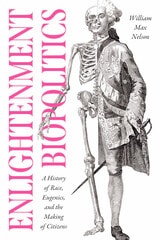
Enlightenment Biopolitics
A History of Race, Eugenics, and the Making of CitizensWilliam Max Nelson
University of Chicago Press, 2024
In Enlightenment Biopolitics, historian William Max Nelson pursues the ambitious task of tracing the context in which biopolitical thought emerged and circulated. He locates that context in the Enlightenment when emancipatory ideals sat alongside the horrors of colonialism, slavery, and race-based discrimination. In fact, these did not just coexist, Nelson argues; they were actually mutually constitutive of Enlightenment ideals.
In this book, Nelson focuses on Enlightenment-era visions of eugenics (including proposals to establish programs of selective breeding), forms of penal slavery, and spurious biological arguments about the supposed inferiority of particular groups. The Enlightenment, he shows, was rife with efforts to shape, harness, and “organize” the minds and especially the bodies of subjects and citizens. In his reading of the birth of biopolitics and its transformations, Nelson examines the shocking conceptual and practical connections between inclusion and exclusion, equality and inequality, rights and race, and the supposed “improvement of the human species” and practices of dehumanization.
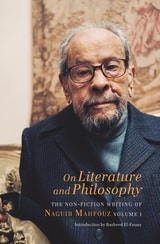
Essays on Literature and Philosophy
The Non-Fiction of Naguib Mahfouz: Volume INaguib Mahfouz
Gingko, 2025
The first Arabic language writer to win the Nobel Prize for Literature, Naguib Mahfouz, helped bring Arabic writing to an international readership. This collection of his early writing, from his time as a philosophy student, reveals the intellectual ferment of the young author, grappling with two millennia of philosophers and writers and establishing his own voice among them.
Available in English for the first time, these essays tackle a vast array of subjects, from Presocratic Philosophy to love and the sexual impulse. The intellectual development demonstrated here forms the foundation of Mahfouz’s literary work, granting insight into the mind behind such famed works as the Cairo Trilogy and Children of The Alley.
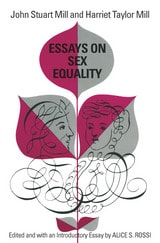
Essays on Sex Equality
John Stuart Mill and Harriet Taylor Mill
University of Chicago Press, 1970
Also contained in this volume is a major interpretative essay by Alice S. Rossi on Mill and Harriet Taylor which describes and analyzes their long personal and intellectual relationship.
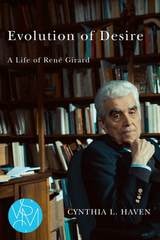
Evolution of Desire
A Life of René GirardCynthia L Haven
Michigan State University Press, 2018

Ex Ante
Power and Prediction in the Real-Time FutureJohn Cheney-Lippold
University of Chicago Press, 2027
An incisive framework for understanding how predictive AI has reshaped our relationship with time.
Ex Ante argues that AI systems draw us into a new experience of time, a continuous stream of machine-generated futures that reshapes our relationship to ourselves, to capitalism, and to infrastructure. Unlike other predictive tools that help us prepare for what might come, these projections—produced by algorithms and sourced by massive flows of data—calibrate our actions moment by moment, second by second.
In this book, John Cheney-Lippold offers a framework he calls the ex ante, Latin for “before the event,” as a way to consider how the future has become capitalism’s latest resource for exploitation. Through case studies spanning TikTok beauty filters that have fueled a surge in plastic surgery consultations, chess engines that redefine how the game is played, online sports betting platforms that commodify probability itself, hospital sepsis algorithms that transform the labor of nursing, and coordinated vehicle networks that collectively anticipate their surroundings to function, Ex Ante offers an exploration and powerful critique of our algorithmic present and the powers behind it.
Exposed
Environmental Politics and Pleasures in Posthuman TimesStacy Alaimo
University of Minnesota Press, 2016
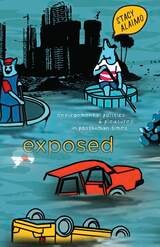
Opening with the statement “The anthropocene is no time to set things straight,” Stacy Alaimo puts forth potent arguments for a material feminist posthumanism in the chapters that follow.
From trans-species art and queer animals to naked protesting and scientific accounts of fishy humans, Exposed argues for feminist posthumanism immersed in strange agencies and scale-shifting ethics. Including such divergent topics as landscape art, ocean ecologies, and plastic activism, Alaimo explores our environmental predicaments to better understand feminist occupations of transcorporeal subjectivity.
She puts scientists, activists, artists, writers, and theorists in conversation, revealing that the state of the planet in the twenty-first century has radically transformed ethics, politics, and what it means to be human. Ultimately, Exposed calls for an environmental stance in which, rather than operating from an externalized perspective, we think, feel, and act as the very stuff of the world.