Results by title
238 books match the query 'Social Classes & Economic Disparity' and 6 start with e
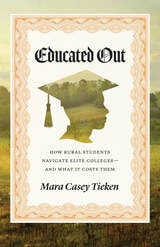
Educated Out
How Rural Students Navigate Elite Colleges—And What It Costs ThemMara Casey Tieken
University of Chicago Press, 2025
A former third-grade teacher in rural Tennessee, education researcher Mara Casey Tieken watched as her former students graduated high school. She was shocked at how few were heading to college—and none were going to elite four-year schools. These students were representative of a larger national phenomenon: In 2021, 31 percent of rural adults aged twenty-five and older held a postsecondary degree, compared to 45 percent of urban adults, and rural students are especially unlikely to pursue degrees from private, selective schools. Why, Tieken wondered? And what happens to the handful of rural students who do attend elite colleges, colleges that may feel worlds away from home?
Tieken addresses these questions in Educated Out—a study that shows how geography shapes rural, first-generation students’ access to college, their college experiences, and their postgraduation plans and opportunities. Tieken closely follows a group of nine students for their college years and beyond at an elite New England private school that she calls Hilltop. Interviews with these students reveal the critical moments in the students’ educational careers when their rural origins mattered most: when applying to college, she shows how students are hindered by limited college counseling resources. Once on campus, they learn that many of the school’s opportunities are not available to them: they cannot access spring break trips, job networks, or low-pay-but-important internships. These students discover that home and college are very different worlds with different academic, social, and political climates—and, over time, they start to question both. As they near graduation and navigate a job market in which the highest-paying and most prestigious opportunities are located in urban centers, they begin to feel the complicated burden of their schooling: they’ve been “educated out.” Their stories show the costs of college for rural students: If they do not pursue higher education, they lose the opportunity for social mobility; if they do, they face a more permanent departure. These costs are individual, but rural families and communities also suffer—they lose young people with talent and skills.
In addition to advocating for a higher education landscape that truly includes rural students, Tieken critiques a system that requires people to leave their rural homes in search of opportunities. Our current economy depends on inexpensive rural labor. Without meaningful change, some students will have to make the impossible decision to leave home—and far more will remain there, undereducated and overlooked.
Both engaging and accessible, Educated Out presents important and timely questions about rurality, identity, education, and inequality.
Educated Out
How Rural Students Navigate Elite Colleges—And What It Costs ThemMara Casey Tieken
University of Chicago Press, 2025
Through the stories of nine rural, first-generation students and their families, Educated Out shows how geography shapes college opportunities, from admission to postgraduation options.
A former third-grade teacher in rural Tennessee, education researcher Mara Casey Tieken watched as her former students graduated high school. She was shocked at how few were heading to college—and none were going to elite four-year schools. These students were representative of a larger national phenomenon: In 2021, 31 percent of rural adults aged twenty-five and older held a postsecondary degree, compared to 45 percent of urban adults, and rural students are especially unlikely to pursue degrees from private, selective schools. Why, Tieken wondered? And what happens to the handful of rural students who do attend elite colleges, colleges that may feel worlds away from home?
Tieken addresses these questions in Educated Out—a study that shows how geography shapes rural, first-generation students’ access to college, their college experiences, and their postgraduation plans and opportunities. Tieken closely follows a group of nine students for their college years and beyond at an elite New England private school that she calls Hilltop. Interviews with these students reveal the critical moments in the students’ educational careers when their rural origins mattered most: when applying to college, she shows how students are hindered by limited college counseling resources. Once on campus, they learn that many of the school’s opportunities are not available to them: they cannot access spring break trips, job networks, or low-pay-but-important internships. These students discover that home and college are very different worlds with different academic, social, and political climates—and, over time, they start to question both. As they near graduation and navigate a job market in which the highest-paying and most prestigious opportunities are located in urban centers, they begin to feel the complicated burden of their schooling: they’ve been “educated out.” Their stories show the costs of college for rural students: If they do not pursue higher education, they lose the opportunity for social mobility; if they do, they face a more permanent departure. These costs are individual, but rural families and communities also suffer—they lose young people with talent and skills.
In addition to advocating for a higher education landscape that truly includes rural students, Tieken critiques a system that requires people to leave their rural homes in search of opportunities. Our current economy depends on inexpensive rural labor. Without meaningful change, some students will have to make the impossible decision to leave home—and far more will remain there, undereducated and overlooked.
Both engaging and accessible, Educated Out presents important and timely questions about rurality, identity, education, and inequality.
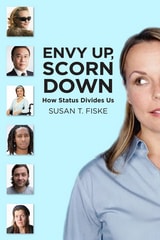
Envy Up, Scorn Down
How Status Divides UsSusan T. Fiske
Russell Sage Foundation, 2011
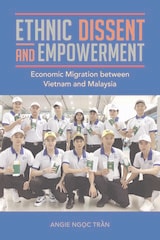
Ethnic Dissent and Empowerment
Economic Migration between Vietnam and MalaysiaAngie Ngoc Tran
University of Illinois Press, 2022
A rare study of labor migration in the Global South, Ethnic Dissent and Empowerment answers essential questions about why nations export and import migrant workers and how the workers protect themselves not only within the system, but by circumventing it altogether.
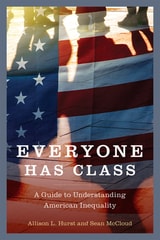
Everyone Has Class
A Guide to Understanding American InequalityAllison L. Hurst
Oregon State University Press, 2026
Social class is a neglected, misunderstood, yet overwhelmingly powerful factor in the United States. In Everyone Has Class Allison L. Hurst and Sean McCloud draw on both personal stories and insights from recent studies to recount the many ways class influences American life. The authors explore the material conditions we live in, the social relationships we develop, and the unconscious and conscious psychological and physical habits we form based on our social class location. Each chapter reveals the profound presence and complex influence of social class—beyond that of money, education, and occupation—providing readers with an understanding of what social class is and how it operates in our everyday lives.
Starting with “what is class?” in chapter one, personal narratives alongside interviews with key researchers and scholars allow entrée for everyone to the meaning of the term class, the impact of class, and the broader applications and perspectives within the study of class. Can one overcome class? Does recognizing its effects allow us to navigate our own social standing? Through twelve stand-alone chapters, Hurst and McCloud show how class shapes and influences both individual and social lives in consequential ways.
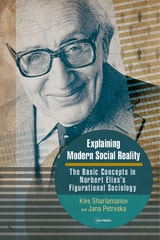
Explaining Modern Social Reality
The Basic Concepts in Norbert Elias’s Figurational SociologyKire Sharlamanov
Central European University Press, 2026
At the center of the discussion is Elias’s landmark work, The Civilizing Process, with particular attention to class structures, changing patterns of behavior, and the development of the modern state. The book also explores figurational sociology, one of Elias’s most influential contributions to social theory.
An innovative and original thinker, Elias challenged established concepts and introduced new analytical tools, including the influential notion of habitus. The chapters examine his theory of knowledge, his reflections on violence and de-civilization, his analyses of nations and nationalism, and his work on emotions and shame. The book further traces Elias’s dialogue with major thinkers such as Edmund Husserl, Karl Mannheim, Max Weber, Sigmund Freud, and Talcott Parsons, showing how he reinterpreted their ideas in distinctive ways. The book concludes with an overview of the most important critiques of Elias’s work and its continuing relevance today.