158 books match the query 'Social justice' and 6 start with e
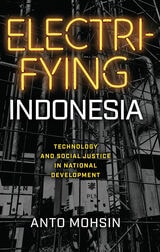
cover of Electrifying Indonesia: Technology and Social Justice in National Development

Electrifying Indonesia

Technology and Social Justice in National Development

Anto Mohsin

University of Wisconsin Press, 2023
In this innovative volume, Anto Mohsin brings Indonesian studies together with science and technology studies to tell the story of the entanglement of nation building and social justice during the state’s rapid post–World War II project to supply electricity to the entire country. He shows that attempts to illuminate the country were inseparable from the effort to maintain the new nation-state, chart its path to independence, and legitimize ruling regimes. In exchange for an often dramatically improved standard of living, people gave their votes, and their acquiescence, to the ruling government.
[more]
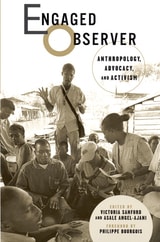
cover of Engaged Observer: Anthropology, Advocacy, and Activism

Engaged Observer

Anthropology, Advocacy, and Activism

Sanford, Victoria

Rutgers University Press, 2006

Anthropology has long been associated with an ethos of “engagement.” The field’s core methods and practices involve long-term interpersonal contact between researchers and their study participants, giving major research topics in the field a distinctively human face. Can research findings be authentic and objective? Are anthropologists able to use their data to aid the participants of their study, and is that aid always welcome?

In Engaged Observer, Victoria Sanford and Asale Angel-Ajani bring together an international array of scholars who have been embedded in some of the most conflict-ridden and dangerous zones in the world to reflect on the role and responsibility of anthropological inquiry.  They explore issues of truth and objectivity, the role of the academic, the politics of memory, and the impact of race, gender, and social position on the research process. Through ethnographic case studies, they offer models for conducting engaged research and illustrate the contradictions and challenges of doing so.

[more]
cover of Engaging Museums: Rhetorical Education and Social Justice

Engaging Museums

Rhetorical Education and Social Justice

Lauren E. Obermark

Southern Illinois University Press, 2022

Examining rhetorical engagement with difficult topics

Museums offer an opportunity to reenvision rhetorical education through their address of hard, discomforting histories that challenge visitors to confront traumatic events and work toward a better future. While both museum studies and rhetoric center the audience in their scholarship and practices, this volume engages across and between these disciplines, allowing for a fuller theorization and enactment of rhetorical education’s connections to social justice. Engaging Museums works to fill gaps between the fields of rhetoric and social justice by going beyond classrooms to sites of public memory represented in museums.
 
This volume presents three distinct, diverse case studies of recently established historical museums taking on the rhetorically complex tasks of representing traumatic events: the National Underground Railroad Freedom Center, the National World War I Museum, and the Oklahoma City National Memorial Museum. Through rhetorical and comparative analysis of data collected from the museums and intersectional transdisciplinary frameworks, each chapter theorizes aspects of rhetoric—namely identification, collectivity, and memory—bringing rhetorical theory more firmly into current conversations surrounding civic engagement and social justice. 
 
Obermark’s weave of voices and perspectives concludes with a critical focus on how memory may serve as a generative pedagogical topos for both public rhetoric and university-based rhetoric and writing classrooms. This book helps scholars, students, and teachers bring what museums do—difficult, complicated pedagogical work representing hard history—back inside the classroom and further into our civic discourse.

 
[more]
cover of Entry Points: The Vera List Center Field Guide on Art and Social Justice No. 1

Entry Points

The Vera List Center Field Guide on Art and Social Justice No. 1

Carin Kuoni and Chelsea Haines, editors

Duke University Press, 2016

Providing a lively snapshot of the state of art and social justice today on a global level, Entry Points accompanies the inaugural Vera List Center Prize for Art and Politics, launched at The New School on the occasion of the center’s twentieth anniversary. This book captures some of the most significant worldwide examples of art and social justice and introduces an interested audience of artists, policy makers, scholars, and writers to new ways of thinking about how justice is defined, advanced, and practiced through the arts. In so doing, it assembles some of the latest scholarship in this field while refining our vocabulary for speaking about social justice, social engagement, community enhancement, empowerment, and even art itself.
 
The book's first half contains three essays by Thomas Keenan, João Ribas, and Sharon Sliwinski that map the field of art and social justice. These essays are accompanied by more than twenty profiles of recent artist projects that consist of brief essays and artist pages. This curated and carefully considered map of artists and projects identifies key moments in art and social justice.
 
The book's second half consists of an in-depth analysis of Theaster Gates's The Dorchester Projects, which won the inaugural Vera List Prize for Art and Politics. Produced to complement the project’s exhibition at the Sheila C. Johnson Design Center, Parsons School of Design in September 2013, this analysis illuminates Gates's rich, complex, and exemplary work. This section includes an interview between Gates and Vera List Center director Carin Kuoni; essays by Horace D. Ballard Jr., Romi N. Crawford, Shannon Jackson, and Mabel O. Wilson; and a number of responses to The Dorchester Projects by faculty in departments across The New School.

Published by Duke University Press and the Vera List Center for Art and Politics at The New School
[more]
cover of Environmentalism and Economic Justice: Two Chicano Struggles in the Southwest

Environmentalism and Economic Justice

Two Chicano Struggles in the Southwest

Laura Pulido

University of Arizona Press, 1996
Ecological causes are championed not only by lobbyists or hikers. While mainstream environmentalism is usually characterized by well-financed, highly structured organizations operating on a national scale, campaigns for environmental justice are often fought by poor or minority communities. Environmentalism and Economic Justice is one of the first books devoted to Chicano environmental issues and is a study of U.S. environmentalism in transition as seen through the contributions of people of color. It elucidates the various forces driving and shaping two important examples of environmental organizing: the 1965-71 pesticide campaign of the United Farm Workers and a grazing conflict between a Hispano cooperative and mainstream environmentalists in northern New Mexico. The UFW example is one of workers highly marginalized by racism, whose struggle--as much for identity as for a union contract--resulted in boycotts of produce at the national level. The case of the grazing cooperative Ganados del Valle, which sought access to land set aside for elk hunting, represents a subaltern group fighting the elitism of natural resource policy in an effort to pursue a pastoral lifestyle. In both instances Pulido details the ways in which racism and economic subordination create subaltern communities, and shows how these groups use available resources to mobilize and improve their social, economic, and environmental conditions. Environmentalism and Economic Justice reveals that the environmental struggles of Chicano communities do not fit the mold of mainstream environmentalism, as they combine economic, identity, and quality-of-life issues. Examination of the forces that create and shape these grassroots movements clearly demonstrates that environmentalism needs to be sensitive to local issues, economically empowering, and respectful of ethnic and cultural diversity.
[more]
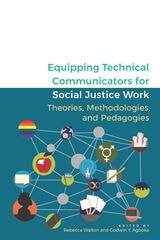
cover of Equipping Technical Communicators for Social Justice Work: Theories, Methodologies, and Pedagogies

Equipping Technical Communicators for Social Justice Work

Theories, Methodologies, and Pedagogies

Rebecca Walton

Utah State University Press, 2021

Equipping Technical Communicators for Social Justice Work provides action-focused resources and tools—heuristics, methodologies, and theories—for scholars to enact social justice. These resources support the work of scholars and practitioners in conducting research and teaching classes in socially just ways. Each chapter identifies a tool, highlights its relevance to technical communication, and explains how and why it can prepare technical communication scholars for socially just work.
 
For the field of technical and professional communication to maintain its commitment to this work, how social justice intersects with inclusivity through UX, technological, civic, and legal literacies, as well as through community engagement, must be acknowledged. Equipping Technical Communicators for Social Justice Work will be of significance to established scholar-teachers and graduate students, as well as to newcomers to the field.
 
Contributors: Kehinde Alonge, Alison Cardinal, Erin Brock Carlson, Oriana Gilson, Laura Gonzales, Keith Grant-Davie, Angela Haas, Mark Hannah, Kimberly Harper, Sarah Beth Hopton, Natasha Jones, Isidore Kafui Dorpenyo, Liz Lane, Emily Legg, Nicole Lowman, Kristen Moore, Emma Rose, Fernando Sanchez, Jennifer Sano-Franchini, Adam Strantz, Cana Uluak Itchuaqiyaq, Josephine Walwema, Miriam Williams, Han Yu


[more]