Results by title
501 books match the query 'South' and 15 start with e
Elementary Aspects of Peasant Insurgency in Colonial India
Ranajit Guha
Duke University Press, 1999
This classic work in subaltern studies explores the common elements present in rebel consciousness during the Indian colonial period. Ranajit Guha—intellectual founder of the groundbreaking and influential Subaltern Studies Group—describes from the peasants’ viewpoint the relations of dominance and subordination in rural India from 1783 to 1900.
Challenging the idea that peasants were powerless agents who rebelled blindly against British imperialist oppression and local landlord exploitation, Guha emphasizes their awareness and will to effect political change. He suggests that the rebellions represented the birth of a theoretical consciousness and asserts that India’s long subaltern tradition lent power to the landmark insurgence led by Mahatma Gandhi. Yet as long as landlord authority remains dominant in a ruling culture, Guha claims, all mass struggles will tend to model themselves after the unfinished projects documented in this book.
Students and scholars will welcome this paperback edition of Guha’s 1983 original, which was distributed on a limited scale in the United States. It will influence new generations studying colonialism, postcolonialism, subaltern studies, historiography, anthropology, and Indian, Asian, and Latin American history.
Elementary Aspects of the Political
Histories from the Global SouthPrathama Banerjee
Duke University Press, 2020

Elephants and Kings
An Environmental HistoryThomas R. Trautmann
University of Chicago Press, 2015
Trautmann traces the history of the war elephant in India and the spread of the institution to the west—where elephants took part in some of the greatest wars of antiquity—and Southeast Asia (but not China, significantly), a history that spans 3,000 years and a considerable part of the globe, from Spain to Java. He shows that because elephants eat such massive quantities of food, it was uneconomic to raise them from birth. Rather, in a unique form of domestication, Indian kings captured wild adults and trained them, one by one, through millennia. Kings were thus compelled to protect wild elephants from hunters and elephant forests from being cut down. By taking a wide-angle view of human-elephant relations, Trautmann throws into relief the structure of India’s environmental history and the reasons for the persistence of wild elephants in its forests.
Elusive Histories
Mozambican Migrant Laborers in Rhodesia, ca. 1900-1980Allen F. Isaacman, Joy M. Chadya, and Barbara S. Isaacman
Ohio University Press, 2025
At the heart of Elusive Histories is a long-neglected story of the clandestine journeys of Mozambican migrant laborers and their families to Rhodesia. Drawing from oral histories, court records, archives, newspapers, and popular magazines, the authors chronicle Mozambican migration, work experiences, and settlement in Rhodesia. Thousands of men, women, and children traveled long distances, often on foot, to reach Rhodesia. Starting with a trickle of workers seeking to avoid chibharo, a Mozambican agricultural forced-labor system, the number of migrants peaked in the 1950s.
In 1958, the Rhodesian government passed legislation to bar new Mozambican migrants from entering large cities, redirecting them toward agriculture and mining. When Black Rhodesian laborers began to complain about losing jobs to Mozambicans, the restrictions became an outright ban to prevent further migrants from entering the country.
Contrary to previous assumptions, Mozambican labor in Rhodesia was not contract labor derived from bilateral negotiations between the Mozambican colonial and Rhodesian governments. In fact, many Mozambicans who came to work and live in Rhodesia arrived as illegal migrants. The book also demystifies the widely held notion that all foreign migrant workers in Rhodesia who spoke Nyanja were Nyasalanders. Because Nyanja is widely spoken at the confluence of Malawi, Zambia, and Mozambique, many Mozambicans who came to work in Rhodesia were fluent. Despite the national, racial, and cultural differences and the discrimination in job placement, promotion, and housing, Mozambican migrant laborers creatively adapted and made Rhodesia home for the duration of their lives.
Empire's Garden
Assam and the Making of IndiaJayeeta Sharma
Duke University Press, 2011
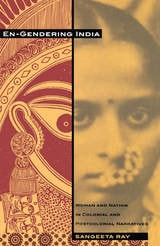
En-Gendering India
Woman and Nation in Colonial and Postcolonial NarrativesSangeeta Ray
Duke University Press, 2000
Through her readings of works by writers including Bankimchandra Chatterjee, Rabindranath Tagore, Harriet Martineau, Flora Annie Steel, Anita Desai, and Bapsi Sidhaa, Ray demonstrates that Indian women were presented as upper class and Hindu, an idealization that paradoxically served the needs of both colonial and nationalist discourses. The Indian nation’s goal of self-rule was expected to enable women’s full participation in private and public life. On the other hand, British colonial officials rendered themselves the protectors of passive Indian women against their “savage” male countrymen. Ray shows how the native woman thus became a symbol for both an incipient Indian nation and a fading British Empire. In addition, she reveals how the figure of the upper-class Hindu woman created divisions with the nationalist movement itself by underscoring caste, communal, and religious differences within the newly emerging state. As such, Ray’s study has important implications for discussions about nationalism, particularly those that address the concepts of identity and nationalism.
Building on recent scholarship in feminism and postcolonial studies, En-Gendering India will be of interest to scholars in those fields as well as to specialists in nationalism and nation-building and in Victorian, colonial, and postcolonial literature and culture.
Enduring Cancer
Life, Death, and Diagnosis in DelhiDwaipayan Banerjee
Duke University Press, 2020
Environment, Power, and Justice
Southern African HistoriesGraeme Wynn
Ohio University Press, 2022
Environmental Justice in South Africa
David A. McDonald
Ohio University Press, 2002
Beginning with a history of the environmental justice movement in the country, the book explores a range of conceptual and practical questions: How does environmental justice relate to issues of marginalization and poverty in South Africa? What are the links between environmental justice and other schools of environmental thought? Is the legal system an appropriate tool for addressing environmental equity? How do race, class, and gender intersect in the South African environmental context?
The second half of the book is a more concrete exploration of environmental (in)justice in the country. These chapters are interspersed with real-life stories of struggles by workers and communities for environmental change. The book is an invaluable resource for South African and international audiences interested in the growing, and increasingly global, environmental justice movement.
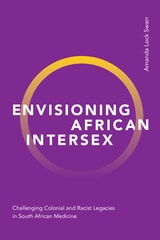
Envisioning African Intersex
Challenging Colonial and Racist Legacies in South African MedicineAmanda Lock Swarr
Duke University Press, 2023
All author royalties from Envisioning African Intersex will be donated to Intersex South Africa.

Epidemics
The Story of South Africa’s Five Most Lethal Human DiseasesHoward Phillips
Ohio University Press, 2012
This is the first history of epidemics in South Africa, lethal episodes that significantly shaped this society over three centuries. Focusing on five devastating diseases between 1713 and today—smallpox, bubonic plague, “Spanish influenza,” polio, and HIV/AIDS—the book probes their origins, their catastrophic courses, and their consequences in both the short and long terms. The impacts of these epidemics ranged from the demographic—the “Spanish flu,” for instance, claimed the lives of six percent of the country’s population in six weeks—to the political, the social, the economic, the spiritual, the psychological, and the cultural. Moreover, as each of these epidemics occurred at crucial moments in the country’s history—such as during the South African War and World War I—the book also examines how these processes affected and were affected by the five epidemics. To those who read this book, history will not look the same again.
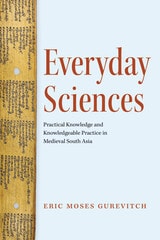
Everyday Sciences
Practical Knowledge and Knowledgeable Practice in Medieval South AsiaEric Moses Gurevitch
University of Chicago Press, 2027
How people across society in medieval South Asia—including coppersmiths, merchants, bureaucrats, philosophers, and physicians—pioneered new vernacular sciences.
Starting in the eleventh century, South Asian scholars and artisans began to investigate and shape the world in a novel manner. Intellectuals translated Sanskrit texts into regional languages such as Kannada, situating knowledge in particular places. At the same time, architects and artisans began to assert their intellectual and literary presence, often claiming the title of “scholar” as they negotiated a space between classical textual erudition, professional expertise, and personal experience. Working within the perilous world of court politics, a new class of scholar-administrators began collecting recipes and composing texts about weather prediction, horticulture, mathematics, astrology, sexual life, and medicine.
Everyday Sciences traces this emergence of vernacular sciences by engaging with untapped archives and an array of sources in multiple languages. By exploring how historical actors resolved disputes about the physiology of vision, the use of meat and alcohol in medicine, and the management of information in elephant stables, Eric Moses Gurevitch unveils the complex textual and social orders that structured medieval society in India. He argues that a focus on everyday sciences in the non-modern non-West allows historians to reassess how places outside—and even inside—Europe are brought into narratives of a global history of science. Gurevitch articulates a “big-enough” history of science in South Asia, one open to little voices and unexpected connections that might not make their way through the fray in other histories.
Everyday Sciences demonstrates how practical, everyday activities were engines of profound intellectual innovation—and it shows the promise of revisiting the past without colonial hang-ups, and with fresh eyes.
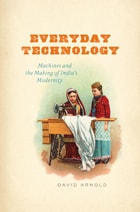
Everyday Technology
Machines and the Making of India's ModernityDavid Arnold
University of Chicago Press, 2013
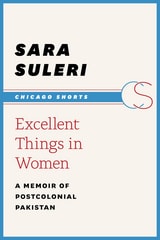
Excellent Things in Women
A Memoir of Postcolonial PakistanSara Suleri Goodyear
University of Chicago Press, 1989
Sometimes, only the most heartbreaking memories possess the capacity—in their elegiac immediacy—to take our breath away. With Excellent Things in Women, Sara Suleri offers the reader a delicately wrought memoir of life in postcolonial Pakistan. Suleri intertwines the violent history of Pakistan's independence with her own intimate experiences—relating the tumult of growing up female during a time of fierce change in the Middle East in the 1960s and ’70s. In the two selections presented here, “Excellent Things in Women” and “Meatless Days,” we watch as Suleri re-encounters the relationships that inform her voyage from adolescence to womanhood—with her Welsh mother; her Pakistani father, prominent political journalist Z. A. Suleri; and her tenacious grandmother, Dadi, along with her five siblings—as she comes to terms with the difficulties of growing up and her own complicated passage to the West.
Exile and the Nation
The Parsi Community of India and the Making of Modern IranBy Afshin Marashi
University of Texas Press, 2020
Honorable Mention, Hamid Naficy Iranian Studies Book Award from the Association of Iranian Studies
In the aftermath of the seventh-century Islamic conquest of Iran, Zoroastrians departed for India. Known as the Parsis, they slowly lost contact with their ancestral land until the nineteenth century, when steam-powered sea travel, the increased circulation of Zoroastrian-themed books, and the philanthropic efforts of Parsi benefactors sparked a new era of interaction between the two groups.Tracing the cultural and intellectual exchange between Iranian nationalists and the Parsi community during the late nineteenth and early twentieth centuries, Exile and the Nation shows how this interchange led to the collective reimagining of Parsi and Iranian national identity—and the influence of antiquity on modern Iranian nationalism, which previously rested solely on European forms of thought. Iranian nationalism, Afshin Marashi argues, was also the byproduct of the complex history resulting from the demise of the early modern Persianate cultural system, as well as one of the many cultural heterodoxies produced within the Indian Ocean world. Crossing the boundaries of numerous fields of study, this book reframes Iranian nationalism within the context of the connected, transnational, and global history of the modern era.