323 books match the query 'Southeast Asia' and 12 start with e
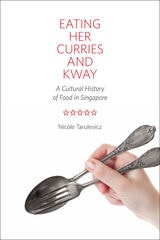
cover of Eating Her Curries and Kway: A Cultural History of Food in Singapore

Eating Her Curries and Kway

A Cultural History of Food in Singapore

Nicole Tarulevicz

University of Illinois Press, 2013

Discovering Singaporean identity through cooking and cuisine

While eating is a universal experience, for Singaporeans it carries strong national connotations. The popular Singaporean-English phrase "Die die must try" is not so much hyperbole as it is a reflection of the lengths that Singaporeans will go to find great dishes.

In Eating Her Curries and Kway: A Cultural History of Food in Singapore, Nicole Tarulevicz argues that in a society that has undergone substantial change in a relatively short amount of time, food serves Singaporeans as a poignant connection to the past. Eating has provided a unifying practice for a diverse society, a metaphor for multiracialism and recognizable national symbols for a fledgling state. Covering the period from British settlement in 1819 to the present and focusing on the post–1965 postcolonial era, Tarulevicz tells the story of Singapore through the production and consumption of food.

Analyzing a variety of sources that range from cookbooks to architectural and city plans, Tarulevicz offer a thematic history of this unusual country, which was colonized by the British and operated as a port within Malaya. Connecting food culture to the larger history of Singapore, she discusses various topics including domesticity and home economics, housing and architecture, advertising, and the regulation of food-related manners and public behavior such as hawking, littering, and chewing gum. Moving away from the predominantly political and economic focus of other histories of Singapore, Eating Her Curries and Kway provides an important alternative reading of Singaporean society.
[more]
cover of Economic Exchange and Social Interaction in Southeast Asia: Perspectives from Prehistory, History, and Ethnography

Economic Exchange and Social Interaction in Southeast Asia

Perspectives from Prehistory, History, and Ethnography

Karl L. Hutterer, Editor

University of Michigan Press, 1978

Economic behavior is governed by two major sets of boundary conditions: environmental and technological factors on the one hand, and conditions of social organization on the other hand. Indeed, social scientists are often particularly interested in the framework of exchange relationships: exchange of goods, services, personnel, and information. Economic exchanges lend concrete manifestations to social relations that themselves may transcend the economic realm and that otherwise are often difficult to trace.
Yet in social science research in Southeast Asia, the area of economic studies has lagged behind, despite the great study potential represented by the tremendous diversity of its physical and human environment. Economic Exchange and Social Interaction in Southeast Asia attempts to take advantage of that opportunity. As a number of the contributions to this volume show, many if not most of the systems organized on very different levels of integration interact with each other. Taken as a whole, they provide evidence of the incredible diversity of economic and social systems that may be investigated in Southeast Asia.
 
[more]
cover of Electrifying Indonesia: Technology and Social Justice in National Development

Electrifying Indonesia

Technology and Social Justice in National Development

Anto Mohsin

University of Wisconsin Press, 2023
In this innovative volume, Anto Mohsin brings Indonesian studies together with science and technology studies to tell the story of the entanglement of nation building and social justice during the state’s rapid post–World War II project to supply electricity to the entire country. He shows that attempts to illuminate the country were inseparable from the effort to maintain the new nation-state, chart its path to independence, and legitimize ruling regimes. In exchange for an often dramatically improved standard of living, people gave their votes, and their acquiescence, to the ruling government.
[more]
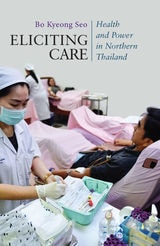
cover of Eliciting Care: Health and Power in Northern Thailand

Eliciting Care

Health and Power in Northern Thailand

Bo Kyeong Seo

University of Wisconsin Press, 2020

In 2001, Thailand introduced universal health care reforms that have become some of the most celebrated in the world, providing almost its entire population with health protection coverage. However, this remarkable implementation of health policy is not without its weaknesses. Drawing on two years of fieldwork at a district hospital in northern Thailand, Bo Kyeong Seo examines how people in marginal and dependent social positions negotiate the process of obtaining care.
Using the broader concept of elicitation, Seo analyzes the social encounters and forces that shape caregivers. These dynamics challenge dichotomies of subjugation and resistance, consent and coercion, and dependence and autonomy. The intimate and moving stories at the core of Eliciting Care from patients and providers draw attention to a broader, critically important phenomenon at the hospital level. Seo's poignant ethnography engages with feminist theory on the ethics of care, and in so doing, makes a significant contribution to emerging work in the field of health policy and politics.

[more]
cover of Enchanted Modernities: Ancestral Vitalizations in the Upper Mekong

Enchanted Modernities

Ancestral Vitalizations in the Upper Mekong

Micah F. Morton

University of Wisconsin Press, 2025

Enchanted Modernities tells the story of an Indigenous community’s work to decolonize and reclaim its collective ancestral identity. In this rich, theoretically informed ethnography, Micah F. Morton follows a transregional network of Indigenous Akha people from Thailand, Myanmar (Burma), China, and Laos as they spearhead a new movement for a pan-Akha identity. In the face of enormous historical and present-day colonialist pressures, this neo-traditionalist movement has focused on revitalizing (or “vitalizing,” in Morton’s suggestive term) Akha ancestral ways, preventing ongoing conversion to Christianity, and facilitating return conversion to the ways of the Ancestors. Morton focuses especially on the community’s work to ensure their Ancestors live on and thus remain a dynamic part of their, and their descendants’, lives.

Although modernity and its colonial legacies are often portrayed as severing or at least attenuating people’s ancestral ties, Enchanted Modernities shows that those ties persist and, in fact, are on the rise. Akha and other Indigenous ancestral and animist resurgences are blossoming despite the paradigmatic Western framing of modernity as fundamentally at odds with Ancestors and, for that matter, kinship and even religion. Morton demonstrates that modernity and modernization proceed alongside the reproduction of new and old forms of enchantment.
[more]
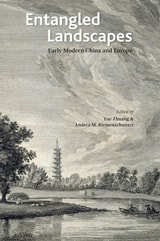
cover of Entangled Landscapes: Early Modern China and Europe

Entangled Landscapes

Early Modern China and Europe

Edited by Yue Zhuang and Andrea M. Riemenschnitter

National University of Singapore Press, 2017

China and Europe have had a storied, and at times stormy, relationship. Yet their relationship is hardly one of a simple, binary exchange. Instead, their roles are best described as entangled. This exchange has a physical manifestation in the world of garden design, as artists on both continents engaged in complex processes of appropriation, crossover, and transformation.

Entangled Landscapes focuses on the exchange of ideas of landscape practice between Europe and China in the sixteenth, seventeenth, and eighteenth centuries. Yue Zhuang and Andrea M. Riemenschnitter explore this through three themes—empire-building, mediators’ constraints, and aesthetic negotiations. They challenge our assumptions about how China and Europe influenced one another and go beyond well-documented outcomes like the jardin anglo-chinois and Européenerie styles. Interdisciplinary and revisionist, this brings the critical spirit of postcolonial studies to art history and will appeal to scholars in fields such as comparative literature and visual culture, history, and human geography.
[more]
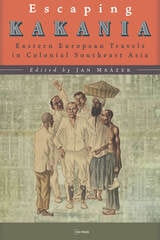
cover of Escaping Kakania: Eastern European Travels in Colonial Southeast Asia

Escaping Kakania

Eastern European Travels in Colonial Southeast Asia

Jan Mrázek

Central European University Press, 2024

Escaping Kakania is about fascinating characters—soldiers, doctors, scientists, writers, painters—who traveled from their eastern European homelands to colonial Southeast Asia. Their stories are told by experts on different countries in the two regions, who bring diverse approaches into a conversation that crosses disciplinary and national borders.

The 14 chapters deal with the diverse encounters of eastern Europeans with the many faces of colonial southeast Asia. Some essays directly engage with post-colonial studies, contributing to an ongoing critical re-evaluation of eastern European “semi-peripheral” (non-)involvement in colonialism. Other chapters disclose a range of perspectives and narratives that illuminate the plurality of the travelers’ positions while reflecting on the specificity of the eastern European experience.

The travellers moved—as do the chapter authors—between two regions that are off-centre, in-between, shiftingly “Eastern,” and disorientingly heterogeneous, thus complicating colonial and postcolonial notions of “Europe,” “East,” and East-West distinctions. Both at home and overseas, they navigated among a multiplicity of peoples, “races,” and empires, Occidents and Orients, fantasies of the Self and the Other, adopting/adapting/mimicking/rejecting colonialist identities and ideologies. They saw both eastern Europe and southeast Asia in a distinctive light, as if through each other—and so will the readers of Escaping Kakania.
[more]
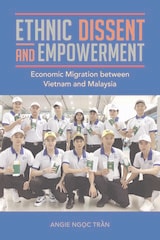
cover of Ethnic Dissent and Empowerment: Economic Migration between Vietnam and Malaysia

Ethnic Dissent and Empowerment

Economic Migration between Vietnam and Malaysia

Angie Ngoc Tran

University of Illinois Press, 2022

Vietnam annually sends a half million laborers to work at low-skill jobs abroad. Angie Ngọc Trần concentrates on ethnicity, class, and gender to examine how migrant workers belonging to the Kinh, Hoa, Hrê, Khmer, and Chãm ethnic groups challenge a transnational process that coerces and exploits them. Focusing on migrant laborers working in Malaysia, Trần looks at how they carve out a third space that allows them a socially accepted means of resistance to survive and even thrive at times. She also shows how the Vietnamese state uses Malaysia as a place to send poor workers, especially from ethnic minorities; how it manipulates its rural poor into accepting work in Malaysia; and the ways in which both countries benefit from the arrangement.

A rare study of labor migration in the Global South, Ethnic Dissent and Empowerment answers essential questions about why nations export and import migrant workers and how the workers protect themselves not only within the system, but by circumventing it altogether.
[more]
cover of Ethnic Diversity and the Control of Natural Resources in Southeast Asia

Ethnic Diversity and the Control of Natural Resources in Southeast Asia

A. Terry Rambo, Kathleen Gillogly, and Karl L. Hutterrer, Editors

University of Michigan Press, 1988
The authors consider the ways in which the high degree of ethnic diversity within the region is related to the nature of tropical Asian environments, on the one hand, and the nature of Southeast Asian political systems and the ways in which they manipulate natural resources, on the other. Rather than focus on defining the phenomenon of ethnicity, this book examines the different social evolutionary contexts in which the phenomenon is manifested.
Companion volume to Cultural Values and Human Ecology in Southeast Asia (Michigan Papers no. 27).
[more]
cover of Ethnography #9

Ethnography #9

Alan Klima

Duke University Press, 2019
As Alan Klima writes in Ethnography #9, “there are other possible starting places than the earnest realism of anthropological discourse as a method of critical thought.” In this experimental ethnography of capitalism, ghosts, and numbers in mid- and late-twentieth-century Thailand, Klima uses this provocation to deconstruct naive faith in the “real” and in the material in academic discourse that does not recognize that it is, itself, writing. Klima also twists the common narrative that increasing financial abstractions in economic culture are a kind of real horror story, entangling it with other modes of abstraction commonly seen as less “real,” such as spirit consultations, ghost stories, and haunted gambling. His unconventional, distinctive, and literary form of storytelling uses multiple voices, from ethnographic modes to a first-person narrative in which he channels Northern Thai ghostly tales and the story of a young Thai spirit. This genre alchemy creates strange yet compelling new relations between being and not being, presence and absence, fiction and nonfiction, fantasy and reality. In embracing the speculative as a writing form, Klima summons unorthodox possibilities for truth in contemporary anthropology.
[more]
cover of Everyday Economic Survival in Myanmar

Everyday Economic Survival in Myanmar

Ardeth Maung Thawnghmung

University of Wisconsin Press, 2022

Reforms in Myanmar (formerly Burma) have eased restrictions on citizens' political activities. Yet for most Burmese, Ardeth Maung Thawnghmung shows, eking out a living from day to day leaves little time for civic engagement. Citizens have coped with extreme hardship through great resourcefulness. But by making bad situations more tolerable in the short term, these coping strategies may hinder the emergence of the democratic values needed to sustain the country's transition to a more open political environment.

Thawnghmung conducted in-depth interviews and surveys of 372 individuals from all walks of life and across geographical locations in Myanmar between 2008 and 2015. To frame her analysis, she provides context from countries with comparable political and economic situations. Her findings will be welcomed by political scientists and policy analysts, as well by journalists and humanitarian activists looking for substantive, reliable information about everyday life in a country that remains largely in the shadows.
[more]
cover of Explorations in Early Southeast Asian History: The Origins of Southeast Asian Statecraft

Explorations in Early Southeast Asian History

The Origins of Southeast Asian Statecraft

Kenneth R. Hall and John K. Whitmore, Editors

University of Michigan Press, 1976

While following the probes of foreign individuals into various obscure parts of Southeast Asia over the centuries is a diverting and entertaining pastime, the purpose of this volume is to investigate this past with the mind, to question and postulate upon the historical patterns that have developed from earlier study of the area, and to bring concepts from other areas and disciplines to bear on the existing information. The product of this effort, as it is encompassed in this volume, is not an attempt at the definitive study of any of the topics. It is rather a series of speculations on the directions feasible for the further study of the Southeast Asian past. As such, the answers proposed in these essays are really questions. Are the ideas presented here true within the specific historical contexts for which they have been developed? If so, can we use these ideas, or variations of them, to interpret the history of other parts of Southeast Asia? If not, what other ideas may be brought to bear on these situations in order to understand them? The ultimate aim of this volume is thus a challenge to the profession at large not only to criticize what we have done, but also to go beyond our postulations and create new ones. [xi]
[more]