Results by title
141 books match the query 'Space Science' and 8 start with e
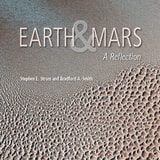
Earth and Mars
A ReflectionStephen E. Strom and Bradford A. Smith
University of Arizona Press, 2015
Earth and Mars is a fusion of art and science, a blend of images and essays celebrating the successful creation of our life-sustaining planet and the beauty and mystery of Mars. Through images of terrestrial landscapes and photographs selected from recent NASA and European Space Agency missions to Mars, Earth and Mars reveals the profound beauty resulting from the action of volcanism, wind, and water. The accompanying text provides a context for appreciating the role of these elemental forces in shaping the surfaces of each planet, as well as the divergent evolutionary paths that led to an Earth that is teeming with life, and Mars that is seemingly lifeless.
Earth and Mars inspires reflection on the extraordinarily delicate balance of forces that has resulted in our good fortune: to be alive and sentient on a bountiful blue world.

Edwin Hubble
Mariner of the NebulaeGale E. Christianson
University of Chicago Press, 1996
end of the decade, he proved that the universe is expanding, thus laying
the very cornerstone of the big bang theory. A revealing portrait of a
scientific genius at work, this book also offers an incisive narrative
of the history of astronomy, and an evocation of what we see when gazing
at the stars.
"Highly entertaining. . . . Hubble may have been the most important
astronomer since Galileo. Perhaps since Copernicus."—Dick Teresi,
New York Times Book Review
"Hubble's own story has not been adequately told until now. . . . A
riveting portrait of a great scientist and a haunted man, and the best
look we are likely to have of the real Hubble."—Dennis Overby, Los
Angeles Times Book Review
"Displays remarkable strength in its steadfast balance and scrupulous
honesty. The greatness of the discoveries is set off against the
contrasting pettiness of the man."—Hans Christian von Baeyer,
Boston Sunday Globe
"Fascinating. . . . This is one of the most impressive scientific
biographies of recent years."—Kirkus Review, starred review
— "Notable Books for the Year 1995" selection, New York Times Book
Review
—"Best Books of 1995" selection, Library Journal
—Selected as one of the five best science books in 1995 by Carl Sagen,
Washington Post
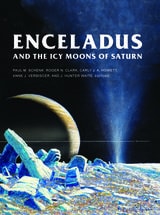
Enceladus and the Icy Moons of Saturn
Edited by Paul M. Schenk, Roger N. Clark, Carly J. A. Howett, Anne J. Verbiscer, and J. Hunter Waite
University of Arizona Press, 2018
As a new volume in the Space Science Series, Enceladus and the Icy Moons of Saturn brings together nearly eighty of the world’s top experts writing more than twenty chapters to set the foundation for what we currently understand, while building the framework for the highest-priority questions to be addressed through ongoing spacecraft exploration. Topics include the physics and processes driving the geologic and geophysical phenomena of icy worlds, including, but not limited to, ring-moon interactions, interior melting due to tidal heating, ejection and reaccretion of vapor and particulates, ice tectonics, and cryovolcanism.
By contextualizing each topic within the profusion of puzzles beckoning from among Saturn’s many dozen moons, Enceladus and the Icy Moons of Saturn synthesizes planetary processes on a broad scale to inform and propel both seasoned researchers and students toward achieving new advances in the coming decade and beyond.
Encountering Life in the Universe
Ethical Foundations and Social Implications of AstrobiologyEdited by Chris Impey, Anna H. Spitz, and William Stoeger
University of Arizona Press, 2013
Encountering Life in the Universe examines the intersection of scientific research and society to further explore the ethics of how to behave in a universe where much is unknown. Taking contributions from notable experts in several fields, the editors skillfully introduce and develop a broad look at the moral questions facing humans on Earth and beyond.
Major advances in biology, biotechnology, and medicine create an urgency to ethical considerations in those fields. Astrobiology goes on to debate how we might behave as we explore new worlds, or create new life in the laboratory, or interact with extraterrestrial life forms. Stimulated by new technologies for scientific exploration on and off the Earth, astrobiology is establishing itself as a distinct scientific endeavor.
In what way can established philosophies provide guidance for the new frontiers opened by astrobiology research? Can the foundations of ethics and moral philosophy help answer questions about modifying other planets? Or about how to conduct experiments to create life in the lab or about? How to interact with organisms we might discover on another world?
While we wait for the first echo that might indicate life beyond Earth, astobiologists, along with philosophers, theologians, artists, and the general public, are exploring how we might behave—even before we know for sure they are there. Encountering Life in the Universe is a remarkable resource for such philosophical challenges.
End of Time
The Maya Mystery of 2012Anthony Aveni
University Press of Colorado, 2009
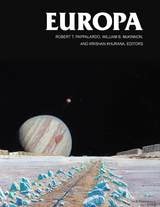
Europa
Edited by Robert T. Pappalardo, William B. McKinnon, and Krishan Khurana
University of Arizona Press, 2009
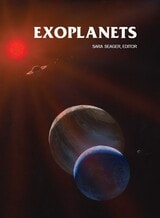
Exoplanets
Edited by Sara Seager
University of Arizona Press, 2010
Exoplanets serves as both an introduction for the non-specialist and a foundation for the techniques and equations used in exoplanet observation by those dedicated to the field.
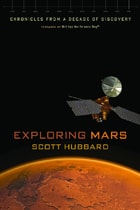
Exploring Mars
Chronicles from a Decade of DiscoveryScott Hubbard; Foreword by Bill Nye
University of Arizona Press, 2012
The Red Planet has been a subject of fascination for humanity for thousands of years, becoming part of our folklore and popular culture. The most Earthlike of the planets in our solar system, Mars may have harbored some form of life in the past and may still possess an ecosystem in some underground refuge. The mysteries of this fourth planet from our Sun make it of central importance to NASA and its science goals for the twenty-first century.
In the wake of the very public failures of the Mars Polar Lander and the Mars Climate Orbiter in 1999, NASA embarked on a complete reassessment of the Mars Program. Scott Hubbard was asked to lead this restructuring in 2000, becoming known as the "Mars Czar." His team's efforts resulted in a very successful decade-long series of missions—each building on the accomplishments of those before it—that adhered to the science adage "follow the water" when debating how to proceed. Hubbard's work created the Mars Odyssey mission, the twin rovers Spirit and Opportunity, the Mars Reconnaissance Orbiter, the Phoenix mission, and most recently the planned launch of the Mars Science Laboratory.
Now for the first time Scott Hubbard tells the complete story of how he fashioned this program, describing both the technical and political forces involved and bringing to life the national and international cast of characters engaged in this monumental endeavor. Blending the exciting stories of the missions with the thrills of scientific discovery, Exploring Mars will intrigue anyone interested in the science, the engineering, or the policy of investigating other worlds.