67 books match the query 'Students' and 3 start with e
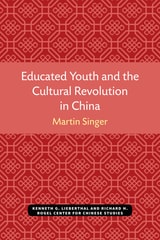
cover of Educated Youth and the Cultural Revolution in China

Educated Youth and the Cultural Revolution in China

Martin Singer

University of Michigan Press, 1971
The Cultural Revolution was an emotionally charged political awakening for the educated youth of China. Called upon by aging revolutionary Mao Tse-tung to assume a “vanguard” role in his new revolution to eliminate bourgeois revisionist influence in education, politics, and the arts, and to help to establish proletarian culture, habits, and customs, in a new Chinese society, educated young Chinese generally accepted this opportunity for meaningful and dramatic involvement in Chinese affairs. It also gave them the opportunity to gain recognition as a viable and responsible part of the Chinese polity. In the end, these revolutionary youths were not successful in proving their reliability. Too “idealistic” to compromise with the bourgeois way, their sense of moral rectitude also made it impossible for them to submerge their factional differences with other revolutionary mass organizations to achieve unity and consolidate proletarian victories. Many young revolutionaries were bitterly disillusioned by their own failures and those of other segments of the Chinese population and by the assignment of recent graduates to labor in rural communes.
Educated Youth and the Cultural Revolution in China reconstructs the events of the Cultural Revolution as they affected young people. Martin Singer integrates material from a range of factors and effects, including the characteristics of this generation of youths, the roles Mao called them to play, their resentment against the older generation, their membership in mass organizations, the educational system in which they were placed, and their perception that their skills were underutilized. To most educated young people in China, Singer concludes, the Cultural Revolution represented a traumatic and irreversible loss of political innocence, made yet more tragic by its allegiance to the unsuccessful campaign of an old revolutionary to preserve his legacy from the inevitable storms of history.
[more]
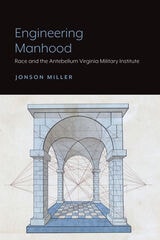
cover of Engineering Manhood: Race and the Antebellum Virginia Military Institute

Engineering Manhood

Race and the Antebellum Virginia Military Institute

Jonson Miller

Lever Press, 2020

It is not an accident that American engineering is so disproportionately male and white; it took and takes work to create and sustain this situation. Engineering Manhood: Race and the Antebellum Virginia Military Institute examines the process by which engineers of the antebellum Virginia Military Institute cultivated whiteness, manhood, and other intersecting identities as essential to an engineering professional identity. VMI opened in 1839 to provide one of the earliest and most thorough engineering educations available in antebellum America. The officers of the school saw engineering work as intimately linked to being a particular type of person, one that excluded women or black men. This particular white manhood they crafted drew upon a growing middle-class culture. These precedents impacted engineering education broadly in this country and we continue to see their legacy today.
[more]
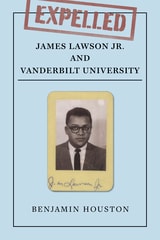
cover of Expelled: James Lawson Jr. and Vanderbilt University

Expelled

James Lawson Jr. and Vanderbilt University

Benjamin Houston

Vanderbilt University Press, 2026

In February 1960, as lunch counter sit-ins began in Southern cities, national attention focused on Nashville, where demonstrations were carried out by an unusually organized and disciplined group of students tutored extensively in nonviolent direct action. Their mentor was Reverend James Lawson Jr., a graduate student at Vanderbilt University Divinity School with longstanding nonviolent credentials. His workshops with Nashville students, exploring Gandhian style philosophies and tactics, had predated the famed Greensboro sit-ins.

As demonstrations continued in Nashville and successive sit-ins saw violence erupt downtown, local Black ministers demanded an audience with Mayor Ben West. At this meeting, an exchange occurred that was misconstrued by subsequent newspaper reportage. Shortly thereafter, Lawson was summarily expelled from Vanderbilt, one semester shy of graduating.

Lawson’s ouster triggered a wave of repercussions and headlines. After extended negotiations with their superiors were rebuffed, a large contingent of Divinity School faculty resigned en masse. Simmering dissension between the university’s professors, Board of Trust, and administrators kept the crisis ongoing. Sustained criticism of Vanderbilt both within the city and nationally made for a turbulent situation as Lawson’s expulsion came to symbolize profound tensions about civil rights and racial justice.

[more]