Results by title
828 books match the query 'Study and teaching' and 34 start with e

Ecofeminist Literary Criticism
Theory, Interpretation, PedagogyEdited by Greta Gaard and Patrick D. Murphy
University of Illinois Press, 1998
Ecofeminism is a practical movement for social change that discerns interconnections among all forms of oppression: the exploitation of nature, the oppression of women, class exploitation, racism, colonialism. Against binary divisions such as self/other, culture/nature, man/woman, humans/animals, and white/non-white, ecofeminist theory asserts that human identity is shaped by more fluid relationships and by an acknowledgment of both connection and difference.
Once considered the province of philosophy and women's studies, ecofeminism in recent years has been incorporated into a broader spectrum of academic discourse. Ecofeminist Literary Criticism assembles some of the most insightful advocates of this perspective to illuminate ecofeminism as a valuable component of literary criticism.
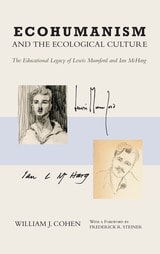
Ecohumanism and the Ecological Culture
The Educational Legacy of Lewis Mumford and Ian McHargWilliam J. Cohen
Temple University Press, 2019
Lewis Mumford, one of the most respected public intellectuals of the twentieth century, speaking at a conference on the future environments of North America, said, “In order to secure human survival we must transition from a technological culture to an ecological culture.” In Ecohumanism and the Ecological Culture, William Cohen shows how Mumford’s conception of an educational philosophy was enacted by Mumford’s mentee, Ian McHarg, the renowned landscape architect and regional planner at the University of Pennsylvania. McHarg advanced a new way to achieve an ecological culture―through an educational curriculum based on fusing ecohumanism to the planning and design disciplines.
Cohen explores Mumford’s important vision of ecohumanism—a synthesis of natural systems ecology with the myriad dimensions of human systems, or human ecology―and how McHarg actually formulated and made that vision happen. He considers the emergence of alternative energy systems and new approaches to planning and community development to achieve these goals.
The ecohumanism graduate curriculum should become the basis to train the next generation of planners and designers to lead us into the ecological culture, thereby securing the educational legacy of both Lewis Mumford and Ian McHarg.
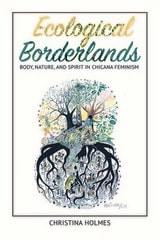
Ecological Borderlands
Body, Nature, and Spirit in Chicana FeminismChristina Holmes
University of Illinois Press, 2016
Holmes revisits key debates to analyze issues surrounding embodiment, women's connections to nature, and spirituality's role in ecofeminist philosophy and practice. By doing so, she challenges Chicanas to escape the narrow frameworks of the past in favor of an inclusive model of environmental feminism that alleviates Western biases. Holmes uses readings of theory, elaborations of ecological narratives in Chicana cultural productions, histories of human and environmental rights struggles in the Southwest, and a description of an activist exemplar to underscore the importance of living with decolonializing feminist commitment in body, nature, and spirit.
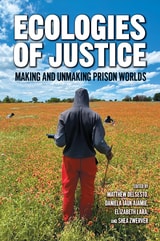
Ecologies of Justice
Making and Unmaking Prison WorldsMatthew DelSesto
Rutgers University Press, 2027
What is the role of multi-species ecologies in creating spaces that counteract the violence in carceral systems and environmental destruction? This book brings together, for the first time, contributions on issues related to prison, jail, and reentry programs, community-based interventions, environmental justice, and sustainability. Through rigorous analysis, detailed case studies, poetry, and personal reflections, the book offers ways of thinking and acting at the intersection of environmental issues and the carceral system. It gathers hard-earned wisdom and insight of researchers, activists, practitioners, and community leaders from within and beyond prison walls who have taken up their projects despite profound institutional constraints.
Approaches in the book range from reform to abolition, as authors detail both practical interventions and imaginative courses of action. More than a contribution to academic knowledge, the book also uniquely highlights voices of those who are incarcerated, survivors of crime, and institutional stakeholders. In addition to writing about the carceral system based on research and personal experience, authors describe practices that are creating transformative spaces of environmental education, building effective pipelines for green workforce development, and sustaining reciprocal relationships for eco-social healing.
Visit for more information: ecologiesofjustice.net

Educating Film-Makers
Past, Present and FutureDuncan Petrie and Rod Stoneman
Intellect Books, 2014
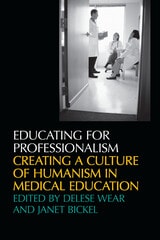
Educating For Professionalism
Creating A Culture Of Humanism In Medical EducationDelese Wear
University of Iowa Press, 2000
The thirteen essays in Educating for Professionalism examine the often conflicting ethical, social, emotional, and intellectual messages that medical institutions send to students about what it means to be a doctor. Because this disconnection between what medical educators profess and what students experience is partly to blame for the current crisis in medical professionalism, the authors offer timely, reflective analyses of the work and opportunities facing medical education if doctors are to win public trust.
In their drive to improve medical professionalism within the world of academic medicine, editors Delese Wear and Janet Bickel have assembled thought-provoking essays that elucidate the many facets of teaching, valuing, and maintaining medical professionalism in the middle of the myriad challenges facing medicine at the dawn of the twenty-first century.
The collection traces how the values of altruism and service can influence not only mission statements and admission policies but also the content of medical school ethics courses, student-led task forces, and mentoring programs, along with larger environmental issues in medical schools and the communities they serve.
Stanley Joel Reiser
Jack Coulehan
Peter C. Williams
Frederic W. Hafferty
Richard Martinez
Judith Andre
Jake Foglio
Howard Brody
Sheila Woods
Sue Fosson
Lois Margaret Nora
Mary Anne C. Johnston
Tana A. Grady-Weliky
Cynthia N. Kettyle
Edward M. Hundert
Norma E. Wagoner
Frederick A. Miller
William D. Mellon
Howard Waitzkin
Donald Wasylenki
Niall Byrne
Barbara McRobb
Edward J. Eckenfels
Lucy Wolf Tuton
Claudia H. Siegel
Timothy B. Campbell
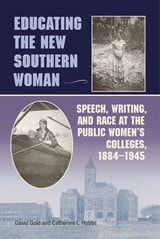
Educating the New Southern Woman
Speech, Writing, and Race at the Public Women's Colleges, 1884-1945David Gold and Catherine L. Hobbs
Southern Illinois University Press, 2014
From the end of Reconstruction through World War II, a network of public colleges for white women flourished throughout the South. Founded primarily as vocational colleges to educate women of modest economic means for life in the emerging “new” South, these schools soon transformed themselves into comprehensive liberal arts–industrial institutions, proving so popular that they became among the largest women’s colleges in the nation. In this illuminating volume, David Gold and Catherine L. Hobbs examine rhetorical education at all eight of these colleges, providing a better understanding of not only how women learned to read, write, and speak in American colleges but also how they used their education in their lives beyond college.
With a collective enrollment and impact rivaling that of the Seven Sisters, the schools examined in this study—Mississippi State College for Women (1884), Georgia State College for Women (1889), North Carolina College for Women (1891), Winthrop College in South Carolina (1891), Alabama College for Women (1896), Texas State College for Women (1901), Florida State College for Women (1905), and Oklahoma College for Women (1908)—served as important centers of women’s education in their states, together educating over a hundred thousand students before World War II and contributing to an emerging professional class of women in the South. After tracing the establishment and evolution of these institutions, Gold and Hobbs explore education in speech arts and public speaking at the colleges and discuss writing instruction, setting faculty and departmental goals and methods against larger institutional, professional, and cultural contexts. In addition to covering the various ways the public women’s colleges prepared women to succeed in available occupations, the authors also consider how women’s education in rhetoric and writing affected their career choices, the role of race at these schools, and the legacy of public women’s colleges in relation to the history of women’s education and contemporary challenges in the teaching of rhetoric and writing.
The experiences of students and educators at these institutions speak to important conversations among scholars in rhetoric, education, women’s studies, and history. By examining these previously unexplored but important institutional sites, Educating the New Southern Woman provides a richer and more complex history of women’s rhetorical education and experiences.
Effective Teaching of Technical Communication
Theory, Practice, and ApplicationMichael J. Klein
University Press of Colorado, 2021
Drawn from quantitative and qualitative work of practitioners in the field, this edited collection provides an update to the Staples and Ornatowski's influential Foundations of Teaching Technical Communication (1997). The collection is organized around the broad themes of expanding pedagogy, shaping curriculum, incorporating technology, and engaging community. In each section, authors illustrate their experiences with teaching in the university technical communication classroom, addressing topics such as rethinking the role of internships, redesigning student learning outcomes for assessment practices, incorporating ethics into the technical communication classroom, using visual communication in community context, and engaging plain language. These sixteen chapters, taken as a whole or individually, provide readers with insights and examples into teaching technical communication in the 21st century.
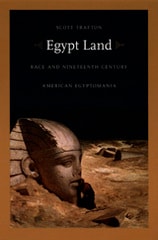
Egypt Land
Race and Nineteenth-Century American EgyptomaniaScott Trafton
Duke University Press, 2004
Drawing on literary and cultural studies, art and architectural history, political history, religious history, and the histories of archaeology and ethnology, Trafton illuminates anxieties related to race in different manifestations of nineteenth-century American Egyptomania, including the development of American Egyptology, the rise of racialized science, the narrative and literary tradition of the imperialist adventure tale, the cultural politics of the architectural Egyptian Revival, and the dynamics of African American Ethiopianism. He demonstrates how debates over what the United States was and what it could become returned again and again to ancient Egypt. From visions of Cleopatra to the tales of Edgar Allan Poe, from the works of Pauline Hopkins to the construction of the Washington Monument, from the measuring of slaves’ skulls to the singing of slave spirituals—claims about and representations of ancient Egypt served as linchpins for discussions about nineteenth-century American racial and national identity.
Embodied Literacies
Imageword and a Poetics of TeachingKristie S. Fleckenstein
Southern Illinois University Press, 2003
Embodied Literacies: Imageword and a Poetics of Teaching is a response to calls to enlarge the purview of literacy to include imagery in its many modalities and various facets. Kristie S. Fleckenstein asserts that all meaning, linguistic or otherwise, is a result of the transaction between image and word. She implements the concept of imageword—a mutually constitutive fusion of image and word—to reassess language arts education and promote a double vision of reading and writing. Utilizing an accessible fourfold structure, she then applies the concept to the classroom, reconfiguring what teachers do when they teach, how they teach, what they teach with, and how they teach ethically.
Fleckenstein does not discount the importance of text in the quest for literacy. Instead, she places the language arts classroom and teacher at the juncture of image and word to examine the ways imagery enables and disables the teaching of and the act of reading and writing. Learning results from the double play of language and image, she argues. Helping teachers and students dissolve the boundaries between text and image, the volume outlines how to see reading and writing as something more than words and language and to disestablish our definitions of literacy as wholly linguistic.
Embodied Literacies: Imageword and a Poetics of Teaching comes at a critical time in our cultural history. Echoing the opinion that postmodernity is a product of imagery rather than textuality, Fleckenstein argues that we must evolve new literacies when we live in a culture saturated by images on computer screens, televisions, even billboards. Decisively and clearly, she demonstrates the importance of incorporating imagery—which is inextricably linked to our psychological, social, and textual lives—into our epistemologies and literacy teaching.
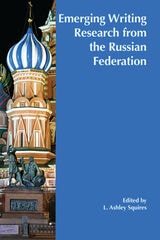
Emerging Writing Research from the Russian Federation
edited by L. Ashley Squires
University Press of Colorado, 2022
This book is also available as an open access ebook through the WAC Clearinghouse.
Empathy and the Other
Difference, Connection, and the Teaching of WritingLisa Blankenship
Utah State University Press, 2026
Empathy and the Other: Difference, Connection, and the Teaching of Writing focuses on the theoretical basis for empathy as a pedagogical concern, adding to important conversations happening in writing studies about how to foster empathetic understanding and practices for teachers and students. It offers ways for higher education classrooms to become sites for the cultivation of a critical form of empathy that can help address the most important challenges of our time.
Drawing on the study of empathy in rhetorical theory and related fields, teacher-scholars from a variety of institutions and backgrounds offer pedagogical rationales and approaches for fostering empathetic, inclusive, and antiracist pedagogies centered around five key themes related to empathetic teaching: difference, citizenship, storytelling, assessment, and process. A reflective and critical approach to empathetic teaching—as presented by the authors in this collection—can begin to address forces of social division, particularly in the ways we read and write about others. Teaching grounded in empathetic principles can offer students ways of relating to one another across cultural, religious, class, ethnic, political, and ideological differences.
Empathy and the Other is a companion volume to Enacting Empathy: Stories and Strategies from the Writing Classroom, which features vignettes and praxis pieces focused on classroom experiences and reflections on teaching empathy. The two collections may stand alone or be read together and are of great interest to writing teachers and graduate students invested in social justice in the classroom.
Empowering Young Writers
The "Writers Matter" ApproachDeborah S Yost
Temple University Press, 2014
Launched in middle schools in the fall of 2005, the "Writers Matter" approach was designed to discover ways to improve the fit between actual English curricula, district/state standards and, more recently, the Common Core Curriculum Standards for writing instruction. Adapted from Erin Gruwell's successful Freedom Writers Program, "Writers Matter" develops students' skills in the context of personal growth, understanding others, and making broader connections to the world.
Empowering Young Writers explains and expands on the practical aspects of the "Writers Matter" approach, emphasizing a focus on free expression and establishing connections between the curriculum and students' personal lives. Program creator Robert Vogel, and his co-authors offer proven ways to motivate adolescents to write, work diligently to improve their writing skills, and think more critically about the world.
This comprehensive book will help teachers, administrators, and education students apply and reproduce the "Writers Matter" approach more broadly, which can have a profound impact on their students' lives and social development.
Enacting Empathy
Stories and Strategies from the Writing ClassroomLisa Blankenship
Utah State University Press, 2026
Featuring vignettes and praxis pieces focused on classroom experiences and reflections on teaching empathy, Enacting Empathy: Stories and Strategies from the Composition Classroom provides inspiration and consideration of how and why teachers might adopt an emphasis on empathy. Contributors locate empathy in the particulars of writing assignments, classroom discussions, responses to students, interpretations of texts, and connections with communities.
The challenges and means of understanding one another—as we encounter one another in words, images, and texts—are a central focus of the writing classroom. Teaching for and about empathy has become only more important as we have experienced increased social division, greater recognition and attention to identity, and an emphasis on attending to personal experiences and stories as part of larger efforts to support social justice. With its possibilities for critical reflection and revision, writing is a key tool for developing empathy. Empathy likewise can make us more present, accountable, and socially engaged in our writing. This collection explores how empathy might best be put into practice in the composition classroom, featuring teaching resources, assignment designs, and reflections on empathy and teaching writing for diverse institutional contexts.
The first edited collection in at least thirty years to present strategies for teaching empathy in composition classrooms, Enacting Empathy is a companion volume to Empathy and the Other: Difference, Connection, and the Teaching of Writing, which focuses on the theoretical basis for empathy as a pedagogical concern. The two volumes may stand alone or be read together and are of great interest to writing teachers and graduate students invested in social justice in the classroom.
Encounters and Reflections
Conversations with Seth BenardeteSeth Benardete
University of Chicago Press, 2002
The first part of the book discloses vignettes about fellow students, colleagues, and acquaintances of Benardete's who later became major figures in the academic and intellectual life of twentieth-century America. We glimpse the student days of Allan Bloom, Stanley Rosen, George Steiner, and we discover the life of the mind as lived by well-known scholars such as David Grene, Jacob Klein, and Benardete's mentor Leo Strauss. We also encounter a number of other learned, devoted, and sometimes eccentric luminaries, including T.S. Eliot, James Baldwin, Werner Jaeger, John Davidson Beazley, and Willard Quine. In the book's second part, Benardete reflects on his own intellectual growth and on his ever-evolving understanding of the texts and ideas he spent a lifetime studying. Revisiting some of his recurrent themes—among them eros and the beautiful, the city and the law, and the gods and the human soul—Benardete shares his views on thinkers such as Plato, Homer, and Heidegger, as well as the relations between philosophy and science and between Christianity and ancient Roman thought.
Engaging and informative, Encounters and Reflections brings Benardete's thought to life to enlighten and inspire a new generation of thinkers.
Engaging Museums
Rhetorical Education and Social JusticeLauren E. Obermark
Southern Illinois University Press, 2022
Museums offer an opportunity to reenvision rhetorical education through their address of hard, discomforting histories that challenge visitors to confront traumatic events and work toward a better future. While both museum studies and rhetoric center the audience in their scholarship and practices, this volume engages across and between these disciplines, allowing for a fuller theorization and enactment of rhetorical education’s connections to social justice. Engaging Museums works to fill gaps between the fields of rhetoric and social justice by going beyond classrooms to sites of public memory represented in museums.
This volume presents three distinct, diverse case studies of recently established historical museums taking on the rhetorically complex tasks of representing traumatic events: the National Underground Railroad Freedom Center, the National World War I Museum, and the Oklahoma City National Memorial Museum. Through rhetorical and comparative analysis of data collected from the museums and intersectional transdisciplinary frameworks, each chapter theorizes aspects of rhetoric—namely identification, collectivity, and memory—bringing rhetorical theory more firmly into current conversations surrounding civic engagement and social justice.
Obermark’s weave of voices and perspectives concludes with a critical focus on how memory may serve as a generative pedagogical topos for both public rhetoric and university-based rhetoric and writing classrooms. This book helps scholars, students, and teachers bring what museums do—difficult, complicated pedagogical work representing hard history—back inside the classroom and further into our civic discourse.
Engaging the Age of Jane Austen
Public Humanities in PracticeBridget Draxler and Danielle Spratt
University of Iowa Press, 2018
Humanities scholars, in general, often have a difficult time explaining to others why their work matters, and eighteenth-century literary scholars are certainly no exception. To help remedy this problem, literary scholars Bridget Draxler and Danielle Spratt offer this collection of essays to defend the field’s relevance and demonstrate its ability to help us better understand current events, from the proliferation of media to ongoing social justice battles.
The result is a book that offers a range of approaches to engaging with undergraduates, non-professionals, and broader publics into an appreciation of eighteenth-century literature. Essays draw on innovative projects ranging from a Jane Austen reading group held at the public library to students working with an archive to digitize an overlooked writer’s novel.
Reminding us that the eighteenth century was an exhilarating age of lively political culture—marked by the rise of libraries and museums, the explosion of the press, and other platforms for public intellectual debates—Draxler and Spratt provide a book that will not only be useful to eighteenth-century scholars, but can also serve as a model for other periods as well. This book will appeal to librarians, archivists, museum directors, scholars, and others interested in digital humanities in the public life.
Contributors: Gabriela Almendarez, Jessica Bybee, Nora Chatchoomsai, Gillian Dow, Bridget Draxler, Joan Gillespie, Larisa Good, Elizabeth K. Goodhue, Susan Celia Greenfield, Liz Grumbach, Kellen Hinrichsen, Ellen Jarosz, Hannah Jorgenson, John C. Keller, Naz Keynejad, Stephen Kutay, Chuck Lewis, Nicole Linton, Devoney Looser, Whitney Mannies, Ai Miller, Tiffany Ouellette, Carol Parrish, Paul Schuytema, David Spadafora, Danielle Spratt, Anne McKee Stapleton, Jessica Stewart, Colleen Tripp, Susan Twomey, Nikki JD White, Amy Weldon
English Composition As A Happening
Geoffrey Sirc
Utah State University Press, 2002
"Contemporary Composition is still inflected by the epistemic turn taken in the 1980s, convincing me that we need to remember what we've forgotten—namely, how impassioned resolves and thrilling discoveries were abandoned and why. I'd like to retrace the road not taken in Composition Studies, to salvage what can still be recovered... I want to inspect the wreckage, in order to show what was the promise of the Happenings for Composition, as well as the huge gray longueur of its pale replacement, Eighties Composition. In so doing, I hope to begin a reconfiguration of our field's pre- and after history."
What happened to the bold, kicky promise of writing instruction in the 1960s? The current conservative trend in composition is analyzed allegorically by Geoffrey Sirc in this book-length homage to Charles Deemer's 1967 article, in which the theories and practices of Happenings artists (multi-disciplinary performance pioneers) were used to invigorate college writing. Sirc takes up Deemer's inquiry, moving through the material and theoretical concerns of such pre- and post-Happenings influences as Duchamp and Pollock, situationists and punks, as well as many of the Happenings artists proper.
English across the Curriculum
Voices from around the WorldBruce Morrison
University Press of Colorado, 2021
English after the Fall
From Literature to TextualityRobert Scholes
University of Iowa Press, 2011
English for Specific Purposes in Theory and Practice
Diane Belcher, Editor
University of Michigan Press, 2009
The field of English for Specific Purposes (ESP) is among the richest areas of second language research and practice because increasing globalization and changing technologies spawn new modes of intercultural connection and new occasions for second language use. English for Specific Purposes in Theory and Practice compasses this burgeoning field by presenting new research and commentary from some of the field’s leading scholars.
This volume explores ESP from academic (secondary and tertiary), occupational (business, medical, and legal), and socio-cultural perspectives. Recurring motifs throughout the volume are the effects of globalization, English as a lingua franca, and the impact of migrant populations. One of the major questions this volume seeks to answer is, How can ESP instructors meet their own teacher knowledge needs? Also considered is, How have ESP practitioners succeeded in gaining control of the knowledge they need to address their students’ needs?
Environment at the Margins
Literary and Environmental Studies in AfricaByron Caminero-Santangelo
Ohio University Press, 2011
Environment at the Margins brings literary and environmental studies into a robust interdisciplinary dialogue, challenging dominant ideas about nature, conservation, and development in Africa and exploring alternative narratives offered by writers and environmental thinkers. The essays bring together scholarship in geography, anthropology, and environmental history with the study of African and colonial literatures and with literary modes of analysis. Contributors analyze writings by colonial administrators and literary authors, as well as by such prominent African activists and writers as Ngugi wa Thiong’o, Mia Couto, Nadine Gordimer, Wangari Maathai, J. M. Coetzee, Zakes Mda, and Ben Okri. These postcolonial ecocritical readings focus on dialogue not only among disciplines but also among different visions of African environments. In the process, Environment at the Margins posits the possibility of an ecocriticism that will challenge and move beyond marginalizing, limiting visions of an imaginary Africa.
Contributors:
Jane Carruthers
Mara Goldman
Amanda Hammar
Jonathan Highfield
David McDermott Hughes
Roderick P. Neumann
Rob Nixon
Anthony Vital
Laura Wright
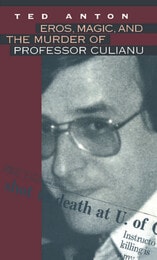
Eros, Magic, and the Murder of Professor Culianu
Ted Anton
Northwestern University Press, 1996
Winner of 1997 Carl Sandburg Award
On May 21, 1991, University of Chicago professor Ioan Culianu was murdered execution-style on campus. The crime stunned the school, terrified students, and mystified the FBI. The case remains unsolved. In Eros, Magic, and the Murder of Professor Culianu, award-winning investigative reporter Ted Anton shows that the murder is what Culianu's friends suspected all along: the first political assassination of a professor on American soil.
Essential Film History
The Evolution of Movie StorytellingCharles Ramírez Berg and John Bruns
University of Texas Press, 2026
A guide to the fundamentals of understanding film history, filmmaking, and film appreciation.
Film is not just a medium; it is also a language—and a global one at that. Essential Film History describes how this language emerged and how it has matured over the course of more than 125 years. Beginning with the experiments of the late nineteenth century, and tracking the development of cinematic storytelling, commercial distribution, and audience reception into the era of digital recording, Charles Ramírez Berg and John Bruns offer a comprehensive course in both the history and artistry of film.
Essential Film History breaks cinematic language into three core components: image, sound, and narrative. Between the 1890s and 1940s, this audiovisual language both consolidated and spread, becoming comprehensible worldwide. Since then, filmmakers have adapted and extended the language of cinema to suit an ever-growing range of aesthetic and narrative projects, from documentaries and full-length animation to avant-garde and made-for-TV movies. Covering major figures, studios, and events as well as key technological and sociopolitical developments, Essential Film History is an indispensable guide to the evolution of cinematic style.
Essentials of STEM Librarianship
Alexander J. Carroll and Joshua Borycz; Foreword by Carol Tenopir
American Library Association, 2025
Amid overall falling enrollment figures for higher education, the growing success of STEM programs bucks the trend. Ensuring that these programs flourish has become a priority for administrators at the provost level and above. But this emphasis on STEM poses challenges for academic libraries, many of which have instead historically focused on the humanities and social sciences. This primer helps to fill that knowledge gap, demystifying the scientific teaching and research processes for LIS students and current academic librarians alike. Regardless of their background or level of experience, readers of this guide will
- gain an overview of the contemporary STEM teaching and research enterprise by learning about the roles and needs of STEM community members such as program administrators, tenure track principal investigators (PIs), non-tenure track teaching faculty, research staff, graduate students, and undergraduate students;
- become familiarized with the “research group,” the organizational structure through which these different personas come together to advance the university research enterprise;
- get pointers on building teaching and learning programs that enhance student success and designing research support services that integrate into STEM researchers' actual workflows;
- receive proven outreach strategies for engaging STEM communities;
- learn approaches for incorporating AI (artificial intelligence) and LLMs (large language models) into information literacy programs for scientists and engineers; and
- discover how library leaders can support both nascent and established STEM librarians to advance STEM education and research at their local institutions.
Ethnographic Film
Revised EditionBy Karl G. Heider
University of Texas Press, 2006
From reviews of the first edition:
“Ethnographic Film can rightly be considered a film primer for anthropologists.”
—Choice
“This is an interesting and useful book about what it means to be ethnographic and how this might affect ethnographic filmmaking for the better. It obviously belongs in all departments of anthropology, and most ethnographic filmmakers will want to read it.”
—Ethnohistory
Even before Robert Flaherty released Nanook of the North in 1922, anthropologists were producing films about the lifeways of native peoples for a public audience, as well as for research and teaching. Ethnographic Film (1976) was one of the first books to provide a comprehensive introduction to this field of visual anthropology, and it quickly became the standard reference.
In this new edition, Karl G. Heider thoroughly updates Ethnographic Film to reflect developments in the field over the three decades since its publication, focusing on the work of four seminal filmmakers—Jean Rouch, John Marshall, Robert Gardner, and Timothy Asch. He begins with an introduction to ethnographic film and a history of the medium. He then considers many attributes of ethnographic film, including the crucial need to present "whole acts," "whole bodies," "whole interactions," and "whole people" to preserve the integrity of the cultural context. Heider also discusses numerous aspects of making ethnographic films, from ethics and finances to technical considerations such as film versus video and preserving the filmed record. He concludes with a look at using ethnographic film in teaching.
Everyday Genres
Writing Assignments across the DisciplinesMary Soliday
Southern Illinois University Press, 2011
Soliday provides an overview of the contemporary theory and research in Writing across the Curriculum programs, focusing specifically on the implementation of the Writing Fellows Program at the City College of New York. Drawing on her direct observations of colleagues and students at the school, she addresses the everyday challenges that novice writers face, such as developing an appropriate "stance" in one's writing, and the intricacies of choosing and developing content.
The volume then goes on to address some of the most pressing questions being asked by teachers of composition: To what extent can writing be separated from its situation? How can rhetorical expertise be shared across fields? And to what degree is writing ability local rather than general? Soliday argues that, while writing is closely connected to situation, general rhetorical principles can still be capably applied if those situations are known. The key to improving writing instruction, she maintains, is to construct contexts that expose writers to the social actions that genres perform for readers.
Supplementing the author's case study are six appendixes, complete with concrete examples and helpful teaching tools to establish effective classroom practices and exercises in Writing across the Curriculum programs. Packed with useful information and insight, Everyday Genres is an essential volume for both students and teachers seeking to expand their understanding of the nature of writing.
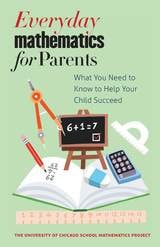
Everyday Mathematics for Parents
What You Need to Know to Help Your Child SucceedThe University of Chicago School Mathematics Project
University of Chicago Press, 2017
The Everyday Mathematics (EM) program was developed by the University of Chicago School Mathematics Project (UCSMP) and is now used in more than 185,000 classrooms by almost three million students. Its research-based learning delivers the kinds of results that all school districts aspire to. Yet despite that tremendous success, EMoften leaves parents perplexed. Learning is accomplished not through rote memorization, but by actually engaging in real-life math tasks. The curriculum isn’t linear, but rather spirals back and forth, weaving concepts in and out of lessons that build overall understanding and long-term retention. It’s no wonder that many parents have difficulty navigating this innovative mathematical and pedagogic terrain.
Now help is here. Inspired by UCSMP’s firsthand experiences with parents and teachers, Everyday Mathematics for Parents will equip parents with an understanding of EM and enable them to help their children with homework—the heart of the great parental adventure of ensuring that children become mathematically proficient.
Featuring accessible explanations of the research-based philosophy and design of the program, and insights into the strengths of EM, this little book provides the big-picture information that parents need. Clear descriptions of how and why this approach is different are paired with illustrative tables that underscore the unique attributes of EM. Detailed guidance for assisting students with homework includes explanations of the key EM concepts that underlie each assignment. Resources for helping students practice math more at home also provide an understanding of the long-term utility of EM. Easy to use, yet jam-packed with knowledge and helpful tips, Everyday Mathematics for Parents will become a pocket mentor to parents and teachers new to EM who are ready to step up and help children succeed. With this book in hand, you’ll finally understand that while this may not be the way that you learned math, it’s actually much better.
Everyday Writing Center
A Community of PracticeAnne E. Geller, Michele Eodice, Frankie Condon, Meg Carroll, Elizabeth H. Boquet
Utah State University Press, 2007
The Everyday Writing Center challenges some of the most comfortable traditions in its field, and it does so with a commitment and persuasiveness that one seldom sees in scholarly discussion. The book, at its core, is an argument for a new writing center consciousness--one that makes the most of the writing center's unique, and uniquely fluid, identity.
Writing center specialists live with a liminality that has been acknowledged but not fully explored in the literature. Their disciplinary identity is with the English department, but their mission is cross-disciplinary; their research is pedagogical, but they often report to central administration. Their education is in humanities, but their administrative role demands constant number-crunching. This fluid identity explains why Trickster--an icon of spontaneity, shape-shifting, and the creative potential of chaos--has come to be a favorite cultural figure for the authors of this book.
Adapting Lewis Hyde and others, these authors use Trickster to develop a theme of ordinary disruptions ("the everyday") as a source of provocative learning moments that can liberate both student writers and writing center staff. At the same time, the authors parlay Etienne Wenger's concept of "community of practice" into an ethos for a dynamic, learner-centered pedagogy that is especially well-suited to the peculiar teaching situation of the writing center.
Through Trickster, they question not only accepted approaches to writing center pedagogy, but conventional approaches to race, time, leadership, and collaboration as well. They encourage their field to exploit the creative potential in ordinary events that are normally seen as disruptive or defeating, and they challenge traditions in the field that tend to isolate a writing center director from the department and campus.
Yet all is not random, for the authors anchor this high-risk/high-yield approach in their commitment to a version of Wenger's community of practice. Conceiving of themselves, their colleagues, student writers, and student tutors as co-learners engaged together in a dynamic life of learning, the authors find a way to ground the excess and randomness of the everyday, while advancing an ethic of mutual respect and self-challenge.
Committed to testing a region beyond the edge of convention, the authors of The Everyday Writing Center constantly push themselves and their field toward deeper, more significant research, and more reflective, dynamic teaching.
Evolving Paradigms in Interpreter Education
Elizabeth A. Winston
Gallaudet University Press, 2013
This volume brings together a cadre of world-renowned interpreting educators and researchers who conduct a rich exploration of paradigms, both old and new, in interpreter education. They review existing research, explicate past and current practices, and call for a fresh look at the roots of interpreter education in anticipation of the future. Expert commentary accompanies each chapter to provide a starting point for reflection on and discussion of the growing needs in this discipline.
Volume coeditor Christine Monikowski begins by considering how interpreter educators can balance their responsibilities of teaching, practice, and research. Her chapter is accompanied by commentary about the capacity to “academize” what has been thought of as a semi-profession. Helen Tebble shares research on medical interpreting from an applied linguistic perspective. Terry Janzen follows with the impact of linguistic theory on interpretation research methodology. Barbara Shaffer discusses how interpreting theory shapes the interpreter’s role. Elizabeth A. Winston, also a volume coeditor, rounds out this innovative collection with her chapter on infusing evidence-based teaching practices into interpreting education. Noted interpreter educators and researchers also provide an international range of insights in this collection, including Rico Peterson, Beppie van den Bogaerde, Karen Bontempo, Ian Mason, Ester Leung, David Quinto-Pozos, Lorraine Leeson, Jemina Napier, Christopher Stone, Debra Russell, and Claudia Angelelli.
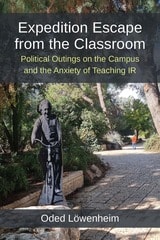
Expedition Escape from the Classroom
Political Outings on the Campus and the Anxiety of Teaching IROded Löwenheim
University of Michigan Press, 2024
Expedition Escape from the Classroom offers a unique narrative where teaching and its inherent challenges intersect with the intricacies of global politics, history, and identity. While recounting his academic experiment, Löwenheim grapples with the changing landscape of academia in a neoliberal age, while illustrating how personal vulnerabilities can transform into powerful tools for growth, exploration, and enlightenment. Whether you’re an educator, student, or just a curious reader, Expedition Escape from the Classroom promises a journey of reflection, critical thinking, and profound revelations.
Exploring Composition Studies
Sites, Issues, PerspectivesKelly Ritter and Paul Matsuda
Utah State University Press, 2012
Kelly Ritter and Paul Kei Matsuda have created an essential introduction to the field of composition studies for graduate students and instructors new to the study of writing. The book offers a careful exploration of this diverse field, focusing specifically on scholarship of writing and composing. Within this territory, the authors draw the boundaries broadly, to include allied sites of research such as professional and technical writing, writing across the curriculum programs, writing centers, and writing program administration.
Importantly, they represent composition as a dynamic, eclectic field, influenced by factors both within the academy and without. The editors and their sixteen seasoned contributors have created a comprehensive and thoughtful exploration of composition studies as it stands in the early twenty-first century. Given the rapid growth of this field and the evolution of it research and pedagogical agendas over even the last ten years, this multi-vocal introduction is long overdue.

Exploring Environmental Science with Children and Teens
Eileen G. Harrington
American Library Association, 2014
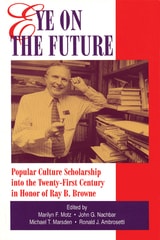
Eye on the Future
Popular Culture Scholarship into the Twenty-First Century in Honor of Ray B. BrowneMarilyn F. Motz
University of Wisconsin Press, 1994
This collection includes essays by scholars from around the world and five of Ray Browne's essays which he considers signal. The purpose of this book is to chart Popular Culture Studies into the next century.