Results by title
1214 books match the query 'Subjects & Themes' and 51 start with e
Early Christians and Their Art
Mikeal C. Parsons
SBL Press, 2023
Early Modern Women Journal Volume 12.2
Edited by Mihoko Suzuki
Arizona Center for Medieval and Renaissance Studies, 2018

Early Modern Women Journal v.10.1
Anne J. Cruz
Arizona Center for Medieval and Renaissance Studies, 2000
Early Modern Women Journal v.10.2
Robert E. Bjork
Arizona Center for Medieval and Renaissance Studies, 2000
Early Modern Women Journal v.11.1
Sharonah Frederick
Arizona Center for Medieval and Renaissance Studies, 2000
Early Modern Women Journal v.11.2
Sharonah Frederick
Arizona Center for Medieval and Renaissance Studies, 2000
Early Modern Women Journal v.9.2
Sharonah Frederick
Arizona Center for Medieval and Renaissance Studies, 2000
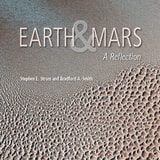
Earth and Mars
A ReflectionStephen E. Strom and Bradford A. Smith
University of Arizona Press, 2015
Earth and Mars is a fusion of art and science, a blend of images and essays celebrating the successful creation of our life-sustaining planet and the beauty and mystery of Mars. Through images of terrestrial landscapes and photographs selected from recent NASA and European Space Agency missions to Mars, Earth and Mars reveals the profound beauty resulting from the action of volcanism, wind, and water. The accompanying text provides a context for appreciating the role of these elemental forces in shaping the surfaces of each planet, as well as the divergent evolutionary paths that led to an Earth that is teeming with life, and Mars that is seemingly lifeless.
Earth and Mars inspires reflection on the extraordinarily delicate balance of forces that has resulted in our good fortune: to be alive and sentient on a bountiful blue world.
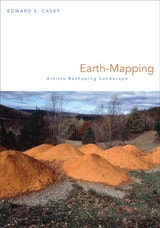
Earth-Mapping
Artists Reshaping LandscapeEdward S. Casey
University of Minnesota Press, 2005
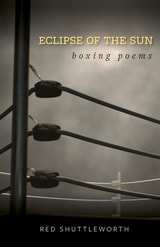
Eclipse of the Sun
Boxing PoemsRed Shuttleworth
University of Nevada Press, 2023
In this striking poetry collection, Red Shuttleworth, who holds the record as the oldest active boxer (professional or amateur), offers evocative imagery that unapologetically reveals the life of a boxer. From the inspiring hopes of an early career to agonizing defeats, the poems in Eclipse of the Sun take readers on a journey from moderate successes to the realization that a dream of a promising future has become the reality of the long haul of a journeyman. Along the way, Shuttleworth rubs elbows with greats like Muhammad Ali, Chickie Ferrara, and Ron Lyle, exposing the resolute path and difficult end of a hard-lived life.
This collection is an homage to boxing at its grittiest levels, and to fighters who persevere—with hope, blood, and bone—against sense and loss. Few professional boxers earn a living in the ring, and even fewer arrive in their forties with any money left from their sport. In this collection, boxers attain poverty rather than riches, end up in post-career menial jobs, and have no pension plan to fall back on. Shuttleworth’s poetry is a visceral inside look at the brutality and humanity at the heart of boxing.
Eclogues and Georgics
Vergil, Translated by James Bradley Wells
University of Wisconsin Press, 2022
The accompanying introductory essays situate Vergil’s poems in a rich literary tradition. Wells provides historical context and literary analysis of these two works, eschewing facile interpretations of these oft examined texts and ensconcing them in the society and culture from which they originated. These annotated essays, a pronunciation guide, and a glossary, alongside Wells’s bold vision for what translation choices can reveal, guide readers as they explore this ancient and famously difficult poetry.
Ecologies of a Storied Planet in the Anthropocene
Serpil Oppermann
West Virginia University Press, 2023
Ecologies of a Storied Planet in the Anthropocene is a tour de force. With transdisciplinarity and theoretical lucidity, it rethinks the Anthropocene from a material ecocritical perspective, envisioning innovative modes of knowledge for deeper understandings of Anthropocene ecologies. Focusing on nonhuman agencies, Serpil Oppermann shows in fascinating detail how to better imagine an ecological future on our storied planet that has suffered enormously from an anthropocentric mindset.
Ecopoetics
Essays in the FieldAngela Hume and Gillian Osborne
University of Iowa Press, 2018
Ecopoetics: Essays in the Field makes a formidable intervention into the emerging field of ecopoetics. The volume’s essays model new and provocative methods for reading twentieth and twenty-first century ecological poetry and poetics, drawing on the insights of ecocriticism, contemporary philosophy, gender and sexuality studies, black studies, Native studies, critical race theory, and disability studies, among others.
Contributors offer readings of a diverse range of poets, few of whom have previously been read as nature writers—from midcentury Beat poet Michael McClure, Objectivist poet George Oppen, and African American poets Melvin Tolson and Robert Hayden; to contemporary writers such as Diné poet Sherwin Bitsui, hybrid/ collage poets Claudia Rankine and Evelyn Reilly, emerging QPOC poet Xandria Phillips, and members of the Olimpias disability culture artists’ collective. While addressing preconceptions about the categories of nature writing and ecopoetics, contributors explore, challenge, and reimagine concepts that have been central to environmental discourse, from apocalypse and embodiment to toxicity and sustainability.
This collection of essays makes the compelling argument that ecopoetics should be read as “coextensive with post-1945 poetry and poetics,” rather than as a subgenre or movement within it. It is essential reading for any student or scholar working on contemporary literature or in the environmental humanities today.
Contributors: Joshua Bennett, Rob Halpern, Matt Hooley, Angela Hume, Lynn Keller, Petra Kuppers, Michelle Niemann, Gillian Osborne, Samia Rahimtoola, Joan Retallack, Joshua Schuster, Jonathan Skinner.
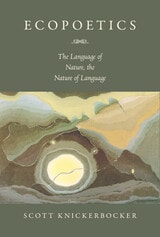
Ecopoetics
The Language of Nature, the Nature of LanguageScott Knickerbocker
University of Massachusetts Press, 2012
Ecopoetics probes the complex relationship between artifice and the natural world in the work of modern American poets—in particular Wallace Stevens, Elizabeth Bishop, Richard Wilbur, and Sylvia Plath. These poets relate to nature as a deep wellspring of meaning, although they all avoid using language the way most nature writers do, merely to reflect or refer directly to the world. Each of these poets, in his or her own distinct way, employs instead what Knickerbocker terms sensuous poesis, the process of rematerializing language through sound effects and other formal devices as a sophisticated response to nonhuman nature.
Rather than attempt to erase the artifice of their own poems, to make them seem more natural and thus supposedly closer to nature, the poets in this book unapologetically embrace artifice—not for its own sake but in order to perform and enact the natural world. Indeed, for them, artifice is natural. In examining their work, Knickerbocker charts a new direction for ecocriticism.
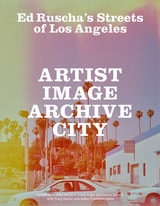
Ed Ruscha's Streets of Los Angeles
Artist, Image, Archive, CityAndrew Perchuk
J. Paul Getty Trust, The, 2025
In 1966, Ed Ruscha drove a car rigged with a motorized camera to capture Los Angeles’ most iconic street: Sunset Boulevard. He created a time capsule of its famed facades, beginning a sixty-year-long commitment to documenting the changing urban landscape of postwar Los Angeles. The Streets of Los Angeles project that comprises these photographs is likely the most comprehensive artistic record of any city, with over 900,000 images of major thoroughfares. Ruscha’s photographs constitute an unparalleled visual chronicle of both iconic and everyday sites in L.A., including popular music venues, neighborhood restaurants, and billboards promoting Hollywood’s latest blockbusters.
In this volume, scholars from disciplines such as urban planning, cultural geography, architecture, art history, and musicology explore the Streets of Los Angeles Archive as a rich repository for analyzing Ruscha’s practice and the city’s visual culture. Using his photographs and new data visualizations, the authors consider what it means to interpret an archive mostly accessible through digital technologies, and they demonstrate how histories of art have been indelibly reshaped since the advent of the information age in the 1960s.
This publication was created using Quire™, a multiformat publishing tool from Getty. The free online edition of this open-access publication is available at www.getty.edu/publications/ruscha/ and includes video, data visualizations, and zoomable illustrations. Free PDF and EPUB downloads of the book are also available.
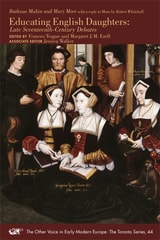
Educating English Daughters
Late Seventeenth-Century DebatesBathsua Makin and Mary More
Iter Press, 2016
This edition offers texts from Bathsua Makin and Mary More, and Robert Whitehall’s response to More’s argument. Makin describes the appropriate education for London merchants’ daughters, arguing that girls should be educated and should aspire to follow learned women in history, and that educated women improve their families and themselves. More argues that women have the right to an education, and that such an education shows that the inequality of married women under English law is a man-made institution. More’s argument drew objections from her Oxford reader, Robert Whitehall, who preserved her manuscript with his own. Makin and More enjoyed a measure of public recognition and esteem, yet after their deaths, they and their texts were largely ignored until the late twentieth century.
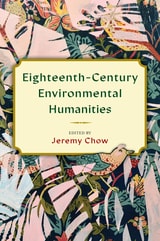
Eighteenth-Century Environmental Humanities
Jeremy Chow
Bucknell University Press, 2023
Elephant
Soren Stockman
Four Way Books, 2022
Elusive Kinship
Disability and Human Rights in Postcolonial LiteratureChristopher Krentz
Temple University Press, 2022
Characters with disabilities are often overlooked in fiction, but many occupy central places in literature by celebrated authors like Chinua Achebe, Salman Rushdie, J. M. Coetzee, Anita Desai, Jhumpa Lahiri, Edwidge Danticat, and others. These authors deploy disability to do important cultural work, writes Christopher Krentz in his innovative study, Elusive Kinship. Such representations not only relate to the millions of disabled people in the global South, but also make more vivid such issues as the effects of colonialism, global capitalism, racism and sexism, war, and environmental disaster.
Krentz is the first to put the fields of postcolonial studies, studies of human rights and literature, and literary disability in conversation with each other in a book-length study. He enhances our appreciation of key texts of Anglophone postcolonial literature of the global South, including Things Fall Apart and Midnight’s Children. In addition, he uncovers the myriad ways fiction gains energy, vitality, and metaphoric force from characters with extraordinary bodies or minds.
Depicting injustices faced by characters with disabilities is vital to raising awareness and achieving human rights. Elusive Kinship nudges us toward a fuller understanding of disability worldwide.
Emily Dickinson's Shakespeare
Paraic Finnerty
University of Massachusetts Press, 2006
Páraic Finnerty clarifies the essential role that Shakespeare had in Dickinson's life by locating her allusions to his writings within a nineteenth-century American context and by treating reading as a practice that is shaped, to a large extent, by culture. In the process, he throws new light on Shakespeare's multifaceted presence in Dickinson's world: in education, theater, newspapers, public lectures, reading clubs, and literary periodicals.
Through analysis of letters, journals, diaries, records, periodicals, newspapers, and marginalia, Finnerty juxtaposes Dickinson's engagement with Shakespeare with the responses of her contemporaries. Her Shakespeare emerges as an immoral dramatist and highly moral poet; a highbrow symbol of class and cultivation and a lowbrow popular entertainer; an impetus behind the emerging American theater criticism and an English author threatening American creativity; a writer culturally approved for women and yet one whose authority women often appropriated to critique their culture. Such a context allows the explication of Dickinson's specific references to Shakespeare and further conjecture about how she most likely read him.
Finnerty also examines those of Dickinson's responses to Shakespeare that deviated from what might have been expected and approved of by her culture. Imaginatively departing from the commonplace, Dickinson chose to admire three of Shakespeare's most powerful and transgressive female characters—Cleopatra, Queen Margaret, and Lady Macbeth—instead of his more worthy and virtuous heroines. More startling, although the poet found resonance for her own life in Hamlet, Romeo and Juliet, and Macbeth, she chose, in the racially charged atmosphere of nineteenth-century America, to identify with Shakespeare's most controversial character, Othello, thereby defying expectations once again.
Emoticoncert
Maya Pindyck
Four Way Books, 2016
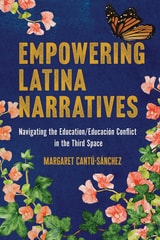
Empowering Latina Narratives
Navigating the Education/Educación Conflict in the Third SpaceMargaret Cantú-Sánchez
University of Arizona Press, 2025
In this groundbreaking book, author Margaret Cantú-Sánchez takes on the U.S. educational system. Cantú-Sánchez introduces the concept of the education/educación conflict, where Latinas navigate the clash between home and school epistemologies under Anglocentric, assimilationist pedagogies.
By analyzing literature, such as Barbara Renaud González’s Golondrina, Why Did You Leave Me?, and education testimonios from seminal works like This Bridge Called My Back and Telling to Live, Cantú-Sánchez reveals how Latina/Chicana protagonists and students negotiate this conflict through a mestizaje of epistemologies—blending elements of both home and school cultures within the third space of education.
Cantú-Sánchez utilizes an interdisciplinary approach, deploying critical race theory, Chicana third-space feminism, and other pedagogical theories like sentipensante (a sensing/thinking) pedagogy employed by education scholar Laura Rendon, among others. By providing pivotal insights and strategies, she demonstrates how educators can implement culturally relevant pedagogies in their classrooms from K–12 through higher education, fostering environments where Latina/Chicana students can thrive without forsaking their cultural identities.
Empowering Latina Narratives not only identifies the challenges Latina/Chicana students face but also offers a roadmap for overcoming them, making this book an essential resource for scholars, educators, and students committed to culturally inclusive education.
Enchanted by Prairie
Bill Witt
University of Iowa Press, 2009
Witt gives us close-ups of pasque flower shoots covered with ice in spring, coneflowers dancing in a summer breeze, and prairie dropseed in its autumn colors as well as such prairie companions as sandhill cranes, northern harriers, and bison. His panoramic visions of prairie landscapes in all seasons focus on the personal pleasure and spiritual sustenance that connecting with prairies, even small and neglected ones, can bring us. Osha Davidson’s essay compares today’s prairie remnants with yesterday’s expanses and calls for us to restore balance to this damaged landscape. Altogether, Enchanted by Prairie celebrates today’s prairie landscape and encourages us, in Davidson’s words, to restore its “beauty and scents and textures and sounds.”
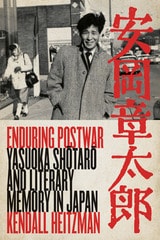
Enduring Postwar
Yasuoka Shotaro and Literary Memory in JapanKendall Heitzman
Vanderbilt University Press, 2019
For a long period, Yasuoka was at the center of the Japanese literary establishment, serving on prize committees and winning the major literary prizes of the era: the Akutagawa, the Noma, the Yomiuri, and the Kawabata. But what makes Yasuoka fascinating as a writer is the way that he consciously, deliberately resisted accepted narratives of modern Japanese history through his approach to personal and collective memory.
In Enduring Postwar, the first literary and biographical study of Yasuoka in English, Kendall Heitzman explores the element of memory in Yasuoka's work in the context of his life and evolving understanding of postwar Japan.
Enemies of All Humankind
Fictions of Legitimate ViolenceSonja Schillings
Dartmouth College Press, 2016
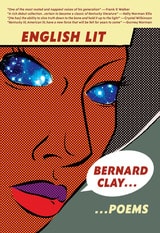
English Lit
PoemsBernard Clay
Ohio University Press, 2021
Autobiographical poetry from one of Kentucky’s rising Affrilachian literary stars.
Bernard Clay’s autobiographical poetry debut, English Lit, juxtaposes the roots of Black male identity against an urban and rural Kentucky landscape. Hailed as one of the most authentic voices of his generation, Clay artfully renders coming-of-age in the predominately Black West End of Louisville, Kentucky. Balancing the spirited grit of a farmer and the careful lyricism of a poet, English Lit is a triumph of new Affrilachian—African American and Appalachian—literature.
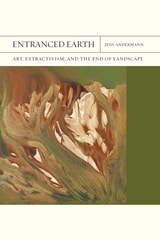
Entranced Earth
Art, Extractivism, and the End of LandscapeJens Andermann
Northwestern University Press, 2023
A sweeping analysis of the lasting effects of neocolonial extractivism in Latin American aesthetic modernity from 1920 to the present
Looking to the extractive frontier as a focal point of Latin American art, literature, music, and film, Jens Andermann asks what emerges at the other end of landscape. Art in the Global South has long represented and interrogated “insurgent nature”—organic and inorganic matter, human and nonhuman life, thrown into turmoil.
In Entranced Earth: Art, Extractivism, and the End of Landscape, Andermann traces the impact of despaisamiento—world-destroying un-landscaping—throughout the Latin American modernist archive. At the same time, he explores innovative, resilient modes of allyship forged between diverse actors through their shared experiences of destruction. From the literary regionalism of the 1930s to contemporary bio art, from modernist garden architecture to representations of migration and displacement in sound art and film, Entranced Earth tracks the crisis of landscape and environmental exhaustion beyond despair toward speculative, experimental forms of survival.
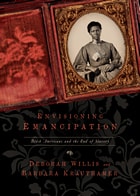
Envisioning Emancipation
Black Americans and the End of SlaveryDeborah Willis
Temple University Press, 2017
The Emancipation Proclamation is one of the most important documents in American history. As we commemorate its 150th anniversary, what do we really know about those who experienced slavery?
In their pioneering book, Envisioning Emancipation, renowned photographic historian Deborah Willis and historian of slavery Barbara Krauthamer have amassed 150 photographs—some never before published—from the antebellum days of the 1850s through the New Deal era of the 1930s. The authors vividly display the seismic impact of emancipation on African Americans born before and after the Proclamation, providing a perspective on freedom and slavery and a way to understand the photos as documents of engagement, action, struggle, and aspiration.
Envisioning Emancipation illustrates what freedom looked like for black Americans in the Civil War era. From photos of the enslaved on plantations and African American soldiers and camp workers in the Union Army to Juneteenth celebrations, slave reunions, and portraits of black families and workers in the American South, the images in this book challenge perceptions of slavery. They show not only what the subjects emphasized about themselves but also the ways Americans of all colors and genders opposed slavery and marked its end.
Filled with powerful images of lives too often ignored or erased from historical records, Envisioning Emancipation provides a new perspective on American culture.
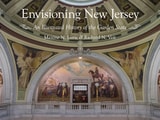
Envisioning New Jersey
An Illustrated History of the Garden StateLurie, Maxine N
Rutgers University Press, 2016
Winner of the 2017 New Jersey Studies Academic Alliance Author Award
See New Jersey history as you read about it! Envisioning New Jersey brings together 650 spectacular images that illuminate the course of the state’s history, from prehistoric times to the present. Readers may think they know New Jersey’s history—the state’s increasing diversity, industrialization, and suburbanization—but the visual record presented here dramatically deepens and enriches that knowledge.
Compiled by the authors of New Jersey: A History of the Garden State, this volume is intended as an illustrated companion to that earlier volume. Envisioning New Jersey also stands on its own because essays synthesizing each era accompany the illustrations. A fascinating gold mine of images from the state’s past, Envisioning New Jersey is the first illustrated book on the Garden State that covers its complete history, capturing the amazing transformation of New Jersey over time.
View sample pages (http://issuu.com/rutgersuniversitypress/docs/lurie_veit_envisioning_sample)
Thanks to the New Jersey Historical Commission, the New Jersey Council for the Humanities, and generous individual donors for making this project possible.
Epic Ambition
Hercules and the Politics of Emulation in Valerius Flaccus' ArgonauticaJessica Blum-Sorensen
University of Wisconsin Press, 2023
Focusing especially on Hercules, Blum-Sorensen explores how Valerius’ characters—and, by extension, their Roman audience—misinterpret exemplars of past achievement, or apply them to sad effect in changed circumstances. By reading such models as normative guides to epic triumph, Valerius’ Argonauts find themselves enacting tragic outcomes: effectively, the characters impose their nostalgic longing for epic triumph on the events before them, even as Valerius and his audience anticipate the tragedy awaiting his heroes. Valerius thus questions Rome’s reliance on the past as a guide to the present, allowing for doubt about the empire’s success under the new Flavian regime. It is the literary tradition’s exchange between triumphant epic and tragedy that makes the Argo’s voyage a perfect vehicle for Valerius’ exploration: the tensions between genres both raise and prohibit resolution of anxieties about how the new age—mythological or real—will turn out.
Epic Landscapes
Benjamin Henry Latrobe and the Art of WatercolorJulia Sienkewicz
University of Delaware Press, 2011
Published by University of Delaware Press. Distributed worldwide by Rutgers University Press.
Epic and Exile
Novels of the German Popular Front, 1933-1945Hunter Bivens
Northwestern University Press, 2015
Erou
Maya Phillips
Four Way Books, 2019
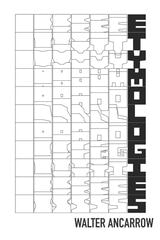
Etymologies
Walter Ancarrow
Omnidawn, 2023
Walter Ancarrow’s collection Etymologies considers language as a process, rather than as a singular fixed history. These poems build imaginative worlds with a variety of creative word uses. They form a playful amalgamation of linguistic interpretations that flips and questions conventional narratives about word origins—including the idea that clear origins even exist. Throughout the collection, Ancarrow questions the intent of writers who use etymology in attempts to prove a specific meaning for any word. In so doing, Etymologies pays particular attention to relationships between the cultures and conflicts, the migrations and hegemonies, that create our words, and it considers how their meanings are furthered by us as we keep them alive through speech.
Etymologies won Omnidawn’s 2021 Open Poetry Book Prize, selected by John Yau.
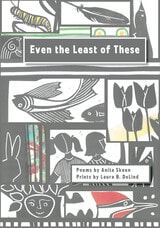
Even the Least of These
Anita Skeen
Michigan State University Press, 2024
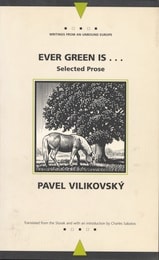
Ever Green Is...
Selected ProsePavel Vilikovsky
Northwestern University Press, 2002

Every Hour of the Light
The Paintings of Mary Sipp GreenMary Sipp Green
The Artist Book Foundation, 2014
American landscape painter Mary Sipp Green, based in the bucolic Berkshire Hills of Massachusetts, has a superlative ability to engage the viewer in the emotive atmosphere of her landscapes and seascapes. The intensely saturated colors in her works evoke an immediate sense of place and a unique perspective on an intimate tableau. Sipp Green achieves an ethereal, nuanced quality in her paintings that imparts a refined and inimitable serenity. In Every Hour of the Light: The Paintings of mary Sipp Green, many of the subjects she paints—salt marshes, barns, meadows, rivers, and the occasional cityscape—are captured in the exquisite twilight of early evenings or a luminescent sunrise. The effect is dreamy yet grounded and familiar.
Sipp Green states, "While my preferred medium has always been oil on linen, my methods, techniques, and aesthetic aims have all undergone significant transformations since I first began. I learned my craft in the studio, painting still lifes and portraits, as well as landscapes drawn directly from nature. Over time, I became increasingly engaged with more abstract and spiritual aspects of the landscape form and I began to pursue a less representational, more expressive style." When describing her "diffuse quality of color," she explains, "I use many layers of paint, allowing each to dry before the next is applied. Along the way, the surface of the paint is often refigured in unpredictable ways, and there is much that has to be scraped, sanded, destroyed and reapplied before the essence of a place, its mood and atmosphere, finally emerges onto the canvas."
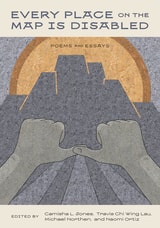
Every Place on the Map Is Disabled
Poems and EssaysCamisha L. Jones, Michael Northen, Naomi Ortiz, and Travis Chi Wing Lau
Northwestern University Press, 2026
An anthology of poems and essays by and celebrating Disabled writers
Declaring that Disabled people exist, innovate, thrive, and persevere, Every Place on the Map Is Disabled imagines the world we deserve. Its contributors spotlight the wisdom Disabled people embody from living within and navigating the economic and medical systems, communities, and families that often oppress their existence. This anthology is an intersectional compass pointing to the creative ways Disabled people build bridges to each other through Disability poetics and perspectives.
The contributing poets write about love, resistance, loss, pain, beauty, and culture. They capture tender and life-affirming moments where one Disabled person recognizes themself in another. The essays illustrate how Disability poetics suggest avenues for embracing the full spectrum of disability experiences. Every Place on the Map Is Disabled offers students, scholars, members of disability communities, and any reader a direction for paving a wider path toward a collective survival.
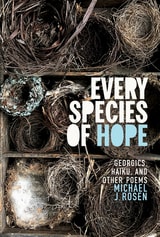
Every Species of Hope
Georgics, Haiku, and Other PoemsMichael J. Rosen
The Ohio State University Press, 2017
At the center of this book is a suite of poems inspired by Virgil’s Georgics, or “poems of pastoral instruction.” In Rosen’s case, he is more the student than the teacher. Likewise, five short sections of haiku continue his meditation on—or mediation of—art and nature. As he has written, “Haiku provides a brief and mirror-like calm in the choppy waters—in the undertow—of current events: a stillness in time where more than our singular lives can be reflected.”
Illustrated with two dozen pages from the author’s own journal, Every Species of Hope is the consummation of decades of observation, humility, and awe.
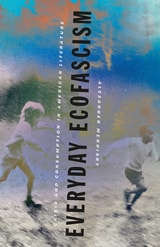
Everyday Ecofascism
Crisis and Consumption in American LiteratureAlexander Menrisky
University of Minnesota Press, 2025
A timely look into how fascist ideas permeate contemporary culture well beyond the far right
As challenges posed by climate change have intensified in the twenty-first century, right-wing figures in the United States and abroad have increasingly framed anti-immigrant, anti-Indigenous, and white-supremacist sentiments in terms of environmental survival. Everyday Ecofascism explores the insidious nature of this tendency, revealing how permutations of these perspectives in fact resonate across the political spectrum. Drawing on comparative studies of fascism writ large, Alexander Menrisky demonstrates that ecofascism is best understood not as a uniquely right-wing ideology but as a political genre that reinforces white supremacy and other forms of domination.
Presenting a view of fascism as a complex power network that plays out on scales both large and small, Menrisky shows how extremist sentiments have crept into everyday language, stories, and ideas. Through a literary and cultural studies lens, he illuminates ecofascism’s narrative patterns and their easy permeation of environmentalist discourses, from back-to-the-land movements to the resurgence of psychedelic drugs, food localism, and pandemic politics. Opposite his analysis of ecofascism in action, Menrisky sheds important light on narrative resistances to dominant conceptions of race, nation, and territory by Native, queer, and women-of-color writers who have countered ethnonationalism for generations.
Bridging past and present, Menrisky powerfully nails down the emergent concept of ecofascism and forms a basis for understanding phenomena like Covid-19, ecological utopianism, and psychedelic environmentalism that detangles ecofascist tendencies from justice-oriented visions of place-based belonging.
Retail e-book files for this title are screen-reader friendly.
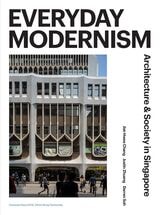
Everyday Modernism
Architecture and Society in SingaporeJiat-Hwee Chang and Justin Zhuang
National University of Singapore Press, 2022
A richly illustrated account of the development of Singapore’s modern built environment.
Everyday Modernism is the first comprehensive documentation of Singapore’s modern built environment. Through a lens of social, cultural, and architectural histories, the book uncovers the many untold stories of the Southeast Asian city-state’s modernization, from the rise of heroic skyscrapers, such as the Pearl Bank Apartments, to the spread of typical utilitarian buildings like the multistory parking garage. It investigates how modernism, through both form and function, radically transformed Singapore and made its inhabitants into modern citizens. The most intensive period of such change, the author shows, happened in the 1960s and 1970s under the rise of a developmental state that sought to safeguard its new-found independence. The book also looks both earlier and later, however, ranging from the 1930s to the 1980s to cover a wider range of histories, building types, and architectural styles, expanding from the International Style and Brutalism into Art Deco and even a touch of Postmodernism. The book’s essays are richly illustrated with hundreds of archival images and illustrations, as well as contemporary photos by architectural photographer Darren Soh. By examining the evolution of the once exceptional into the typical and by learning how abstract spaces become lived places, the book traces how modernism has become part of everyday life in Singapore.
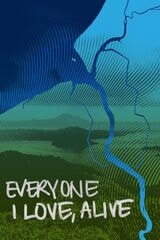
Everyone I Love, Alive
Jason Bayani
Omnidawn, 2025
With this collection of poems, Jason Bayani leans into traditions of lyric, song, and prayer to cultivate life while existing within a time of empire and societal collapse. Everyone I Love, Alive wrestles with form to summon both the living and the dead. Bayani’s rich language calls us to experience a connection to cultural heritage and, even during times of oppression, to find the compassion and awareness needed to drive change. These poems show how not only our love and desires—but also our rage and resistance—can be the very things that keep us alive.
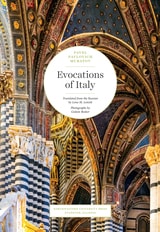
Evocations of Italy
Pavel Pavlovic Muratov and Lena Lencek (Trans.)
Northwestern University Press, 2026
In 1907, Pavel Muratov, a budding littérateur and art connoisseur from Moscow, set off for Italy with his wife, three friends, and a dozen books on the Italian Renaissance. This journey, the first of over a dozen he would make in a decade, inspired an obsession with the country’s art and culture that would produce, in the words of Clive James, “one of the most dazzling books of its type ever written.” First published in Russian between 1911 and 1924, Evocations of Italy(Obrazy Italii) chronicles Muratov’s encounters with the art, myth, and land of Italy. A classic of the Silver Age, it built on the tradition of Italian travelogues by Goethe, Stendhal, John Ruskin, and Henry James and defined the idea of Italy for generations of Russian artists and writers. Finally available in English, this three-volume collector's edition illuminates the personalities, conditions, and dreams that gave us the Italian Renaissance. At once intimate and authoritative, and here richly illustrated with photographs that echo Muratov’s shimmering juxtapositions of image and sensation, Evocations of Italy is as timely and compelling a guide today as it was a hundred years ago.

Evoking Newark
Fifty YearsCamilo José Vergara
Rutgers University Press, 2027
Evoking Newark is a systematic photographic documentation of Newark, NJ, from 1977-2024. This project creates a flexible framework for tracing Newark’s evolution. In this ambitious volume, award-winning photographer Camilo José Vergara creates an indelible record of the city, beginning along its most important commercial thoroughfares, such as Broad, Market, Springfield Ave., Clinton Ave., Central Ave., and MLK Jr. Blvd. He also takes a closer look at landmarks as well as more modest buildings whose folksy character caught his eye. As an urban documentary photographer, Vergara frequently returned to re-photograph Newark in order to track changes over time. For almost fifty years, he identified multiple street intersections that were particularly revealing settings for charting developments in the city.
Vergara examines in particular the slow renewal of these main thoroughfares, the demolition of high-rise housing projects, the ruination and clearing of industrial sites, the building of multi-family houses in once-vacant lots, and the construction of skyscrapers and cultural institutions. To complete the project, he added photos of graffiti and murals that comment on local and national events celebrating African American and Hispanic heroes and heroines and memorials remembering the dead. With these efforts at careful documentation, Brick City demonstrates the usefulness of a time-based documentary approach to the study of post-industrial urban areas. The photographs are accompanied by detailed captions about the locations portrayed, and in many cases by Vergara's own observations and transcripts of his interviews with local people as well as overheard conversations. The photos and captions are one way of telling us that “this happened,” and a means of refreshing the memories of viewers who have experienced Newark generations ago--recollections that contribute to their sense of identity.
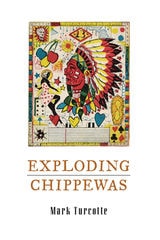
Exploding Chippewas
Mark Turcotte
Northwestern University Press, 2002
Everything this poet touches is volatile—the poet himself, the people and world around him, ideas and mythologies, the ghosts of memory and the dream of possible futures, all seem to burst into fragments. Mark Turcotte uses poetry to gather up the pieces—the shards of joy and grief, peace and doubt, strength and temptation, questions and answers—as he tries to define and rediscover what is lost when everyday life becomes explosive.
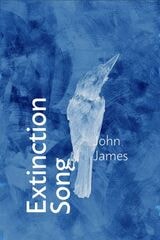
Extinction Song
John James
Tupelo Press, 2026
Extinction Song begins with a tender depiction of early parenthood, as the speaker cradles his newborn son while imagining a dystopian climate future. The poems open into a broader consideration of overlapping and interrelated systems, from the confines of received knowledge to the closed circuit of ideology to the circularity of pollutive environmental cycles. Attentive to the levels of sound and of visual architecture, these poems highlight both destruction and unseen possibilities. By turns meditative and probing, and sometimes slyly funny, Extinction Song unwinds the perils and the joys of our precarious climate future.
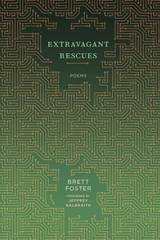
Extravagant Rescues
PoemsBrett Foster; foreword by Jeffrey Galbraith
Northwestern University Press, 2019
The poems ask questions with hymnlike couplets, in a language of the gospel of empathy. We are allowed to rethink our choices, question and be wary of our machinery, and, in the end, with metaphors that channel feelings of loss, humor, and compassion, we are reminded “to come, and dream, with eyes wide open / and set within the vessels of our waking selves, / of ever more intricate schemes, extravagant rescues.”
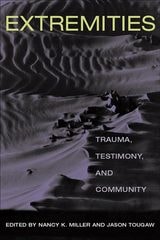
Extremities
Trauma, Testimony, and CommunityEdited by Nancy K. Miller and Jason Tougaw
University of Illinois Press, 2002
How do we come to terms with what can't be forgotten?
How do we bear witness to extreme experiences that challenge the limits of language? This remarkable volume explores the emotional, political, and aesthetic dimensions of testimonies to trauma as they translate private anguish into public space. Nancy K. Miller and Jason Tougaw have assembled a collection of essays that trace the legacy of the Holocaust and subsequent events that have shaped twentieth-century history and still haunt contemporary culture.
Extremities combines personal and scholarly approaches to a wide range of texts that bear witness to shocking and moving accounts of individual trauma: Toni Morrison's Beloved, Sylvia Plath's "Daddy" and "Lady Lazarus," Kathryn Harrison's The Kiss, Tatana Kellner's Holocaust art, Ruth Klüger's powerful memoir Still Alive, and Binjamin Wilkomirski's controversial narrative of concentration camp suffering Fragments. The book grapples with the cultural and social effects of historical crises, including the Montreal Massacre, the Warsaw Ghetto Uprising, and the medical catastrophes of HIV/AIDS and breast cancer.
Developing insights from autobiography, psychoanalysis, feminist theory and gender studies, the authors demonstrate that testimonies of troubling and taboo subjects do more than just add to the culture of confession–-they transform identities and help reimagine the boundaries of community. Extremities offers an original and timely interpretive guide to the growing field of trauma studies. The volume includes essays by Ross Chambers, Sandra M. Gilbert, Susan Gubar, Marianne Hirsch, Wayne Koestenbaum, Eve Kosofsky Sedgwick, and others.
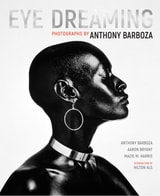
Eye Dreaming
Photographs by Anthony BarbozaAnthony Barboza
J. Paul Getty Trust, The, 2022
Anthony Barboza (b. 1944) is a celebrated artist and writer who has made thousands of photographs in the studio and on the street since 1963. A member of the Kamoinge collective of photographers in New York, Barboza is largely self-taught and has an inimitable, highly intuitive vision that he refers to as “eye dreaming,” or “a state of mind that’s almost like meditation.” Throughout the years he has made countless commercial images, including celebrity portraits, advertisements, and album covers. His personal photographic projects illuminate his deep investment in the art and concerns of Black communities, not only in the United States but also around the globe.
This lavishly illustrated volume follows Barboza’s prolific career from his youth in New Bedford, Massachusetts, to his formative years in New York in the 1960s, to the present day. An introduction by renowned author and critic Hilton Als underscores Barboza’s importance and impact. An essay by curator Aaron Bryant contextualizes Barboza’s life and career as they map against major civil rights events in the United States. In an intimate interview between the artist and curator Mazie M. Harris, Barboza offers astute, humorous, and intimate musings on his long career, foundational influences, and artistic legacy. This monograph, the first on the artist, will appeal to aficionados of photography and Black art and culture.
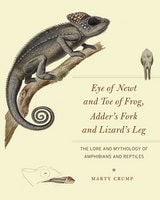
Eye of Newt and Toe of Frog, Adder's Fork and Lizard's Leg
The Lore and Mythology of Amphibians and ReptilesMarty Crump
University of Chicago Press, 2015
Frogs are worshipped for bringing nourishing rains, but blamed for devastating floods. Turtles are admired for their wisdom and longevity, but ridiculed for their sluggish and cowardly behavior. Snakes are respected for their ability to heal and restore life, but despised as symbols of evil. Lizards are revered as beneficent guardian spirits, but feared as the Devil himself.
In this ode to toads and snakes, newts and tuatara, crocodiles and tortoises, herpetologist and science writer Marty Crump explores folklore across the world and throughout time. From creation myths to trickster tales; from associations with fertility and rebirth to fire and rain; and from the use of herps in folk medicines and magic, as food, pets, and gods, to their roles in literature, visual art, music, and dance, Crump reveals both our love and hatred of amphibians and reptiles—and their perceived power. In a world where we keep home terrariums at the same time that we battle invasive cane toads, and where public attitudes often dictate that the cute and cuddly receive conservation priority over the slimy and venomous, she shows how our complex and conflicting perceptions threaten the conservation of these ecologically vital animals.
Sumptuously illustrated, Eye of Newt and Toe of Frog, Adder’s Fork and Lizard’s Leg is a beautiful and enthralling brew of natural history and folklore, sobering science and humor, that leaves us with one irrefutable lesson: love herps. Warts, scales, and all.