Results by title
461 books match the query 'Teaching' and 13 start with e
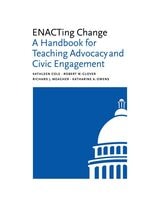
ENACTing Change
A Handbook for Teaching Advocacy and Civic EngagementKathleen Cole, Robert W. Glover, Richard J. Meagher, and Katharine A. Owens
Brandeis University Press, 2025
ENACT: The Educational Network for Active Civic Transformation aims to teach college students about democracy through engagement with the state legislative process. Built on the values of knowledge, cooperation, justice, and integrity, ENACT is a national, intercollegiate nonpartisan network. The program empowers students to be active participants in democratic processes by connecting with policymakers and community organizations, conducting research and analysis, and informing public policy with evidence and expertise.
ENACTing Change introduces teachers to the philosophy and practice of the ENACT model—which includes workshops, courses, an online network, as well as pilot projects and other initiatives—while providing detailed guidance on how to incorporate the model into their courses, regardless of discipline or educational settings. The book offers instructors recommendations for developing and teaching courses that engage in state-level policy advocacy with a focus on learning outcomes. ENACTing Change takes instructors through each step of the course design process, from how to build the relationships needed to teach the class to the next steps for students to work in the community after ENACT.

Educating Film-Makers
Past, Present and FutureDuncan Petrie and Rod Stoneman
Intellect Books, 2014
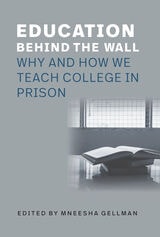
Education Behind the Wall
Why and How We Teach College in PrisonEdited by Mneesha Gellman
Brandeis University Press, 2022
An edited volume reflecting on different aspects of teaching in prison and different points of view.
This book seeks to address some of the major issues faced by faculty who are teaching college classes for incarcerated students. Composed of a series of case studies meant to showcase the strengths and challenges of teaching a range of different disciplines in prison, this volume brings together scholars who articulate some of the best practices for teaching their expertise inside alongside honest reflections on the reality of educational implementation in a constrained environment. The book not only provides essential guidance for faculty interested in developing their own courses to teach in prisons, but also places the work of higher education in prisons in philosophical context with regards to racial, economic, social, and gender-based issues. Rather than solely a how-to handbook, this volume also helps readers think through the trade-offs that happen when teaching inside, and about how to ensure the full integrity of college access for incarcerated students.
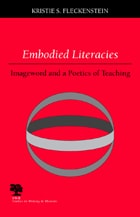
Embodied Literacies
Imageword and a Poetics of TeachingKristie S. Fleckenstein
Southern Illinois University Press, 2003
Embodied Literacies: Imageword and a Poetics of Teaching is a response to calls to enlarge the purview of literacy to include imagery in its many modalities and various facets. Kristie S. Fleckenstein asserts that all meaning, linguistic or otherwise, is a result of the transaction between image and word. She implements the concept of imageword—a mutually constitutive fusion of image and word—to reassess language arts education and promote a double vision of reading and writing. Utilizing an accessible fourfold structure, she then applies the concept to the classroom, reconfiguring what teachers do when they teach, how they teach, what they teach with, and how they teach ethically.
Fleckenstein does not discount the importance of text in the quest for literacy. Instead, she places the language arts classroom and teacher at the juncture of image and word to examine the ways imagery enables and disables the teaching of and the act of reading and writing. Learning results from the double play of language and image, she argues. Helping teachers and students dissolve the boundaries between text and image, the volume outlines how to see reading and writing as something more than words and language and to disestablish our definitions of literacy as wholly linguistic.
Embodied Literacies: Imageword and a Poetics of Teaching comes at a critical time in our cultural history. Echoing the opinion that postmodernity is a product of imagery rather than textuality, Fleckenstein argues that we must evolve new literacies when we live in a culture saturated by images on computer screens, televisions, even billboards. Decisively and clearly, she demonstrates the importance of incorporating imagery—which is inextricably linked to our psychological, social, and textual lives—into our epistemologies and literacy teaching.
Empathy and the Other
Difference, Connection, and the Teaching of WritingLisa Blankenship
Utah State University Press, 2026
Empathy and the Other: Difference, Connection, and the Teaching of Writing focuses on the theoretical basis for empathy as a pedagogical concern, adding to important conversations happening in writing studies about how to foster empathetic understanding and practices for teachers and students. It offers ways for higher education classrooms to become sites for the cultivation of a critical form of empathy that can help address the most important challenges of our time.
Drawing on the study of empathy in rhetorical theory and related fields, teacher-scholars from a variety of institutions and backgrounds offer pedagogical rationales and approaches for fostering empathetic, inclusive, and antiracist pedagogies centered around five key themes related to empathetic teaching: difference, citizenship, storytelling, assessment, and process. A reflective and critical approach to empathetic teaching—as presented by the authors in this collection—can begin to address forces of social division, particularly in the ways we read and write about others. Teaching grounded in empathetic principles can offer students ways of relating to one another across cultural, religious, class, ethnic, political, and ideological differences.
Empathy and the Other is a companion volume to Enacting Empathy: Stories and Strategies from the Writing Classroom, which features vignettes and praxis pieces focused on classroom experiences and reflections on teaching empathy. The two collections may stand alone or be read together and are of great interest to writing teachers and graduate students invested in social justice in the classroom.
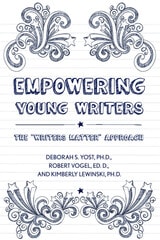
Empowering Young Writers
The "Writers Matter" ApproachDeborah S Yost
Temple University Press, 2014
Launched in middle schools in the fall of 2005, the "Writers Matter" approach was designed to discover ways to improve the fit between actual English curricula, district/state standards and, more recently, the Common Core Curriculum Standards for writing instruction. Adapted from Erin Gruwell's successful Freedom Writers Program, "Writers Matter" develops students' skills in the context of personal growth, understanding others, and making broader connections to the world.
Empowering Young Writers explains and expands on the practical aspects of the "Writers Matter" approach, emphasizing a focus on free expression and establishing connections between the curriculum and students' personal lives. Program creator Robert Vogel, and his co-authors offer proven ways to motivate adolescents to write, work diligently to improve their writing skills, and think more critically about the world.
This comprehensive book will help teachers, administrators, and education students apply and reproduce the "Writers Matter" approach more broadly, which can have a profound impact on their students' lives and social development.
Enacting Empathy
Stories and Strategies from the Writing ClassroomLisa Blankenship
Utah State University Press, 2026
Featuring vignettes and praxis pieces focused on classroom experiences and reflections on teaching empathy, Enacting Empathy: Stories and Strategies from the Composition Classroom provides inspiration and consideration of how and why teachers might adopt an emphasis on empathy. Contributors locate empathy in the particulars of writing assignments, classroom discussions, responses to students, interpretations of texts, and connections with communities.
The challenges and means of understanding one another—as we encounter one another in words, images, and texts—are a central focus of the writing classroom. Teaching for and about empathy has become only more important as we have experienced increased social division, greater recognition and attention to identity, and an emphasis on attending to personal experiences and stories as part of larger efforts to support social justice. With its possibilities for critical reflection and revision, writing is a key tool for developing empathy. Empathy likewise can make us more present, accountable, and socially engaged in our writing. This collection explores how empathy might best be put into practice in the composition classroom, featuring teaching resources, assignment designs, and reflections on empathy and teaching writing for diverse institutional contexts.
The first edited collection in at least thirty years to present strategies for teaching empathy in composition classrooms, Enacting Empathy is a companion volume to Empathy and the Other: Difference, Connection, and the Teaching of Writing, which focuses on the theoretical basis for empathy as a pedagogical concern. The two volumes may stand alone or be read together and are of great interest to writing teachers and graduate students invested in social justice in the classroom.
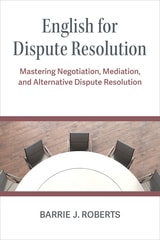
English for Dispute Resolution
Mastering Negotiation, Mediation, and Alternative Dispute ResolutionBarrie J. Roberts
University of Michigan Press, 2025
Whether they are using English for Dispute Resolution as a self-study resource or a course textbook, readers can use the book to develop their own unique negotiation and mediation styles in English and improve their professional-level English skills and soft skills for any purpose. Chapters introduce Alternative Dispute Resolution, negotiation ethics, competitive and collaborative negotiation, negotiation game theory, apologies, drafting written agreements, and mediation. After an engaging hypothetical case that introduces the chapter’s key points, each chapter provides warm-up questions, readings about dispute resolution theory and strategies, language tips, and activities and sample phrases to practice applying chapter lessons to real-world disputes. Chapters also invite readers to explore topics of interest, such as dispute resolution in their home countries, personal and professional lives, and current events, and the growing use of Artificial Intelligence (AI) in ADR. Readers will simultaneously build confidence in their English and cross-cultural dispute resolution skills.
English for Dispute Resolution offers readers:
- Lessons that explain the theories behind Alternative Dispute Resolution, negotiation ethics, competitive and collaborative negotiation, and mediation
- Activities that help them develop their own unique negotiation strategies and styles along with critical thinking, problem-solving, reading, writing, listening, and speaking.
- Step-by-step guidance, sample sentences, and practice activities for applying chapter lessons to real-world disputes.
- Opportunities to explore topics of interest, such as dispute resolution in their home countries, personal and professional lives and current events, and the growing use of Artificial Intelligence (AI) in ADR.
- Key ADR terms and idioms in plain, accessible English.
- Specific tips to improve cross-cultural communication for negotiating and mediating in English.
- A companion website with downloadable checklists, forms, and sample language that can be used for classroom role-plays and real-world negotiations and mediations.

Equal Play
Title IX and Social ChangeNancy Hogshead-Makar
Temple University Press, 2007
One of the least-understood issues in federal sports policy, Title IX of the Educational Amendments of 1972 reflects the nation's aspirational belief that girls and boys, women and men, deserve equal educational opportunities in athletics. Equal Play shows how this ideal has been implemented-and thwarted-by actions in every branch of the federal government.
This reader addresses issues in sports before Title IX and the backlash that has resulted from the policy being instituted. The editors have collected the best scholarly writing on the landmark events of the last four decades and couples these with new original essays, primary documents from court cases, administrative regulations, and relevant supporting sources. The result is the most comprehensive single-volume work on the subject.
Equal Play includes essays by many well-known sports journalists who discuss how government actions have shaped, supported, and hindered the goal of gender equality in school athletics. They discuss the history of women in sports, analyze the meaning of "equal opportunity" for female athletes, and examine shifts in arguments for and against Title IX. Equal Play will interest anyone who is concerned with gender issues in American athletics and the growth of college sports.
Contributors include: Susan Cahn, Donna de Varona, Julie Foudy, Jessica Gavora, Bil Gilbert, Christine Grant, Mariah Burton Nelson, Gary R. Roberts, Don Sabo, Larry Schwartz, Michael Sokolove, Welch Suggs, Nancy Williamson, and the editors.
Equity and Inclusion in Higher Education
Strategies for TeachingEdited by Rita Kumar and Brenda Refaei
University of Minnesota Press, 2020
Americans’ perception of college students does not correlate with the reality of the rich diversity seen on university campuses. Over 60% of Americans believe the average age of a college student is 20 years old but, in fact, it’s 26.4 years old. Demographics in the classroom are shifting and instructors bear a responsibility to adjust their teaching style and curriculum to be inclusive for all students.
Equity and Inclusion for Higher Education Strategies for Teaching, edited by Rita Kumar and Brenda Refaei, details the necessity for an inclusive curriculum with examples of discipline-specific activities and modules. The intersectionality of race, age, socioeconomic status, and ability all embody the diversity college instructors encounter in their classrooms. Through the chapters in this book, the contributors make apparent the "hidden curriculum," which is taught implicitly instead of explicitly. The editors focus on learner-centered environments and accessibility of classroom materials for traditionally marginalized students; a critical part of the labor needed to create an inclusive curriculum.
This text provides instructors with resources to create equity-based learning environments. It challenges instructors to see beyond Eurocentric curriculums and expand their pedagogy to include intercultural competence. The contributors challenge the student/instructor dichotomy and embrace collaboration between the two to construct a curriculum that fits all students' needs. The resources and examples in this book demonstrate the importance of inclusion and equity in the classroom. A companion community page provides examples and tools from the editors and contributing authors, which allows for readers to add materials from their own classrooms. This book and collaborative toolkit allow instructors to begin intentional practice of an inclusive curriculum and implement changes to promote respect for diversity.
Everyday Writing Center
A Community of PracticeAnne E. Geller, Michele Eodice, Frankie Condon, Meg Carroll, Elizabeth H. Boquet
Utah State University Press, 2007
The Everyday Writing Center challenges some of the most comfortable traditions in its field, and it does so with a commitment and persuasiveness that one seldom sees in scholarly discussion. The book, at its core, is an argument for a new writing center consciousness--one that makes the most of the writing center's unique, and uniquely fluid, identity.
Writing center specialists live with a liminality that has been acknowledged but not fully explored in the literature. Their disciplinary identity is with the English department, but their mission is cross-disciplinary; their research is pedagogical, but they often report to central administration. Their education is in humanities, but their administrative role demands constant number-crunching. This fluid identity explains why Trickster--an icon of spontaneity, shape-shifting, and the creative potential of chaos--has come to be a favorite cultural figure for the authors of this book.
Adapting Lewis Hyde and others, these authors use Trickster to develop a theme of ordinary disruptions ("the everyday") as a source of provocative learning moments that can liberate both student writers and writing center staff. At the same time, the authors parlay Etienne Wenger's concept of "community of practice" into an ethos for a dynamic, learner-centered pedagogy that is especially well-suited to the peculiar teaching situation of the writing center.
Through Trickster, they question not only accepted approaches to writing center pedagogy, but conventional approaches to race, time, leadership, and collaboration as well. They encourage their field to exploit the creative potential in ordinary events that are normally seen as disruptive or defeating, and they challenge traditions in the field that tend to isolate a writing center director from the department and campus.
Yet all is not random, for the authors anchor this high-risk/high-yield approach in their commitment to a version of Wenger's community of practice. Conceiving of themselves, their colleagues, student writers, and student tutors as co-learners engaged together in a dynamic life of learning, the authors find a way to ground the excess and randomness of the everyday, while advancing an ethic of mutual respect and self-challenge.
Committed to testing a region beyond the edge of convention, the authors of The Everyday Writing Center constantly push themselves and their field toward deeper, more significant research, and more reflective, dynamic teaching.
Evolving Creative Mindsets
Thinking through the ArtsLynn F. C Yau
Hong Kong University Press, 2025
For decades, arts education in Hong Kong has struggled to find its place within an exam-driven school system. In Evolving Creative Mindsets, Lynn F. C. Yau argues that the arts are not an extracurricular luxury but a vital force in shaping innovative minds. Drawing on over fourteen years of research and conversations with artists and educators, Yau makes a compelling case for integrating the arts more deeply into education, both as a subject and as a way of thinking.
From fostering critical problem-solving skills to preparing students for an unpredictable world, the arts provide tools for creativity and meaningful learning. This book is an essential resource for policymakers, educators, arts institutions, and those invested in reimagining the role of the arts in education.
Exploring Composition Studies
Sites, Issues, PerspectivesKelly Ritter and Paul Matsuda
Utah State University Press, 2012
Kelly Ritter and Paul Kei Matsuda have created an essential introduction to the field of composition studies for graduate students and instructors new to the study of writing. The book offers a careful exploration of this diverse field, focusing specifically on scholarship of writing and composing. Within this territory, the authors draw the boundaries broadly, to include allied sites of research such as professional and technical writing, writing across the curriculum programs, writing centers, and writing program administration.
Importantly, they represent composition as a dynamic, eclectic field, influenced by factors both within the academy and without. The editors and their sixteen seasoned contributors have created a comprehensive and thoughtful exploration of composition studies as it stands in the early twenty-first century. Given the rapid growth of this field and the evolution of it research and pedagogical agendas over even the last ten years, this multi-vocal introduction is long overdue.