Results by title
94 books match the query 'Techniques' and 4 start with e
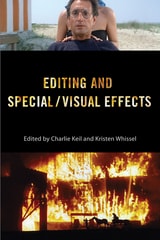
Editing and Special/Visual Effects
Keil, Charlie
Rutgers University Press, 2016
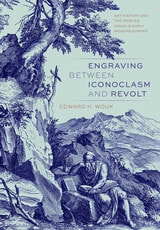
Engraving Between Iconoclasm and Revolt
Art History and the Printed Image in Early Modern EuropeEdward H. Wouk
University of Chicago Press, 0
An alternative history of Renaissance art from a Netherlandish perspective and focusing on printed images.
Through his treatises, letters, and support of printmaking projects, Bruges-born humanist Dominicus Lampsonius (1532–1599) tested the limits of what it meant to be an artist in the early modern period. This book—the first monographic study of Lampsonius to appear in the English language—investigates the convergence of art history, aesthetics, cultural politics, and theology in Lampsonius’s writings, with a particular focus on his novel theory of the printed image as a work of art.
In Lampsonius’s art history, painting recedes and engraving comes to the fore. This inversion of traditional hierarchies entailed a remaking of the Renaissance image as a graphic and replicable phenomenon. Here was a new way of looking at the image: not as a painted likeness of the sacred or the world, but rather as a graphic representation formed from the attenuated patterns of the engraved surface. In both meaning and making, printed images deflected the threats of iconoclasm precisely because, as manufactured objects, they could never be confused for what they represented—the sacred “prototype” they explicitly did not resemble. Tracing Lampsonius’s evolving views against the religious, political, and cultural upheaval of the Dutch Revolt, Edward H. Wouk considers the lasting implications of his efforts to change the course of art history.

Engraving the Savage
The New World and Techniques of CivilizationMichael Gaudio
University of Minnesota Press, 2008
In 1585, the British painter and explorer John White created images of Carolina Algonquian Indians. These images were collected and engraved in 1590 by the Flemish publisher and printmaker Theodor de Bry and were reproduced widely, establishing the visual prototype of North American Indians for European and Euro-American readers.
In this innovative analysis, Michael Gaudio explains how popular engravings of Native American Indians defined the nature of Western civilization by producing an image of its “savage other.” Going beyond the notion of the “savage” as an intellectual and ideological construct, Gaudio examines how the tools, materials, and techniques of copperplate engraving shaped Western responses to indigenous peoples. Engraving the Savage demonstrates that the early visual critics of the engravings attempted-without complete success-to open a comfortable space between their own “civil” image-making practices and the “savage” practices of Native Americans-such as tattooing, bodily ornamentation, picture-writing, and idol worship. The real significance of these ethnographic engravings, he contends, lies in the traces they leave of a struggle to create meaning from the image of the American Indian.
The visual culture of engraving and what it shows, Gaudio reasons, is critical to grasping how America was first understood in the European imagination. His interpretations of de Bry’s engravings describe a deeply ambivalent pictorial space in between civil and savage-a space in which these two organizing concepts of Western culture are revealed in their making.
Michael Gaudio is assistant professor of art history at the University of Minnesota.
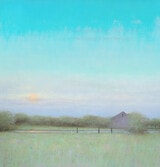
Every Hour of the Light
The Paintings of Mary Sipp GreenMary Sipp Green
The Artist Book Foundation, 2014
American landscape painter Mary Sipp Green, based in the bucolic Berkshire Hills of Massachusetts, has a superlative ability to engage the viewer in the emotive atmosphere of her landscapes and seascapes. The intensely saturated colors in her works evoke an immediate sense of place and a unique perspective on an intimate tableau. Sipp Green achieves an ethereal, nuanced quality in her paintings that imparts a refined and inimitable serenity. In Every Hour of the Light: The Paintings of mary Sipp Green, many of the subjects she paints—salt marshes, barns, meadows, rivers, and the occasional cityscape—are captured in the exquisite twilight of early evenings or a luminescent sunrise. The effect is dreamy yet grounded and familiar.
Sipp Green states, "While my preferred medium has always been oil on linen, my methods, techniques, and aesthetic aims have all undergone significant transformations since I first began. I learned my craft in the studio, painting still lifes and portraits, as well as landscapes drawn directly from nature. Over time, I became increasingly engaged with more abstract and spiritual aspects of the landscape form and I began to pursue a less representational, more expressive style." When describing her "diffuse quality of color," she explains, "I use many layers of paint, allowing each to dry before the next is applied. Along the way, the surface of the paint is often refigured in unpredictable ways, and there is much that has to be scraped, sanded, destroyed and reapplied before the essence of a place, its mood and atmosphere, finally emerges onto the canvas."