Results by title
56 books match the query 'Thought' and 3 start with e
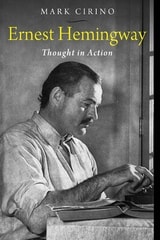
Ernest Hemingway
Thought in ActionMark Cirino
University of Wisconsin Press, 2012
In Cirino’s analysis of Hemingway’s work through this lens—including such celebrated classics as A Farewell to Arms, The Old Man and the Sea, and “Big Two-Hearted River” and less-appreciated works including Islands in the Stream and “Because I Think Deeper”—an entirely different Hemingway hero emerges: intelligent, introspective, and ruminative.

Ethics and Theological Disclosures
The Thought of Robert SokolowskiGuy Mansini, O.S.B.
Catholic University of America Press, 2003
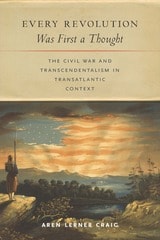
Every Revolution Was First a Thought
The Civil War and Transcendentalism in Transatlantic ContextAren Lerner Craig
University of Massachusetts Press, 2025
Tracing the impact of transcendental philosophy on Union soldiers and their loved ones during the American Civil War
Scholars of the American Civil War have long wondered about the seemingly earnest and sincere sentimental commitment that most Northern soldiers had to their nation and the North’s cause. Unlike many others in other wars, Union soldiers appeared to embrace the war with an unusual conviction and sacrificed their lives with a rare nobility. Their grieving relatives were also buoyed up by their steadfast beliefs in the righteousness of the cause. What was so different about this war, and this period of American history, and what encouraged such an outlook?
In Every Revolution Was First a Thought, Aren Lerner Craig argues that in the Civil War era the American Transcendentalist movement provided a coherent worldview that fostered powerful idealism around issues of character, gender, race, and nationhood, even in the worst of times. Through an exploration of diaries, newspaper editorials, popular songs, and more, Craig demonstrates how Transcendentalist thought moved from elite intellectual circles to the public, providing people a firm belief in the power of individual agency to shape the world and a view of spirituality in which each person was divine, and thus beyond death and destruction. Transcendentalist tenets proved strong enough to withstand the devastation of war and inspired high levels of faith and optimism in soldiers and civilians alike throughout the conflict.
Craig traces the origins of Transcendentalism across the Atlantic, to ideas from Scottish Realism and German Idealism, and connects these philosophies to writings and speeches of major figures like Ralph Waldo Emerson, Henry David Thoreau, and Margaret Fuller. This intellectual history offers a new interpretation of Transcendental thought and its role in the Civil War.