303 books match the query 'Time' and 8 start with e
cover of Each Hour Redeem: Time and Justice in African American Literature

Each Hour Redeem

Time and Justice in African American Literature

Daylanne K. English

University of Minnesota Press, 2013


Each Hour Redeem advances a major reinterpretation of African American literature from the late eighteenth century to the present by demonstrating how its authors are centrally concerned with racially different experiences of time. Daylanne K. English argues that, from Phillis Wheatley to Suzan-Lori Parks, African American writers have depicted distinctive forms of temporality to challenge racial injustices supported by dominant ideas of time. The first book to explore the representation of time throughout the African American literary canon, Each Hour Redeem illuminates how the pervasive and potent tropes of timekeeping provide the basis for an overarching new understanding of the tradition.


Combing literary, historical, legal, and philosophical approaches, Each Hour Redeem examines a wide range of genres, including poetry, fiction, drama, slave narratives, and other forms of nonfiction. English shows that much of African American literature is characterized by “strategic anachronism,” the use of prior literary forms to investigate contemporary political realities, as seen in Walter Mosley’s recent turn to hard-boiled detective fiction. By contrast, “strategic presentism” is exemplified in the Black Arts Movement and the Harlem Renaissance and their investment in contemporary political potentialities, for example, in Langston Hughes and Amiri Baraka’s adaptation of the jazz of their eras for poetic form and content. Overall, the book effectively demonstrates how African American writers have employed multiple and complex conceptions of time not only to trace racial injustice but also to help construct a powerful literary tradition across the centuries.

[more]
cover of Economics and the Antagonism of Time: Time, Uncertainty, and Choice in Economic Theory

Economics and the Antagonism of Time

Time, Uncertainty, and Choice in Economic Theory

Douglas Vickers

University of Michigan Press, 1994
Presenting a rigorous examination of the place and significance of time in economic theory, Douglas Vickers takes up the interrelated issues of uncertainty, ignorance, and criteria of choice. In the discussion of these questions he explains that the conventional thought-forms of probability are not generally applicable to theory-building in economics. To remedy this he provides a completely new paradigm of choice.The extent to which time has influenced, or been excluded from, economic theory is discussed on four levels: the banishment of time in general equilibrium theory; the incorporation of logical time, in pseudotemporal dynamic analysis in some widely adopted mathematically structured systems; the construction of ceteris paribus dynamics based on conventionally determined behavior; and the analysis of in-time economics, or the results of incorporating into economic theorizing historic time, ignorance, and uncertainty in a nonprobabilistic sense. A scheme of choice and decision making is presented that incorporates the concept of “potential surprise” in place of probability.Economic theorists and scholars in related disciplines will appreciate the originality of the book’s critique of the neoclassical system; its tracing of some of the most relevant intellectual history that sets off the traditions of Keynes and the post-Keynesians from the neoclassical system; the clarification of the meaning of—and the dissent from—probability theorizing in economics; and the treatment of the relevant epistemological foundations of the subject.
[more]
cover of Emergency: Reading the Popol Vuh in a Time of Crisis

Emergency

Reading the Popol Vuh in a Time of Crisis

Edgar Garcia

University of Chicago Press, 2022

Nine short essays exploring the K’iche’ Maya story of creation, the Popol Vuh.
 
Written during the lockdown in Chicago in the depths of the COVID-19 pandemic, these essays consider the Popol Vuh as a work that was also written during a time of feverish social, political, and epidemiological crisis as Spanish missionaries and colonial military deepened their conquest of indigenous peoples and cultures in Mesoamerica. What separates the Popol Vuh from many other creation texts is the disposition of the gods engaged in creation. Whereas the book of Genesis is declarative in telling the story of the world’s creation, the Popol Vuh is interrogative and analytical: the gods, for example, question whether people actually need to be created, given the many perfect animals they have already placed on earth.
 
Emergency uses the historical emergency of the Popol Vuh to frame the ongoing emergencies of colonialism that have surfaced all too clearly in the global health crisis of COVID-19. In doing so, these essays reveal how the authors of the Popol Vuh—while implicated in deep social crisis—nonetheless insisted on transforming emergency into scenes of social, political, and intellectual emergence, translating crisis into creativity and world creation.
 
[more]
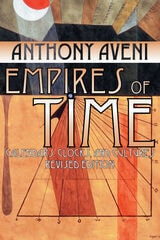
cover of Empires of Time: Calendars, Clocks, and Cultures, Revised Edition

Empires of Time

Calendars, Clocks, and Cultures, Revised Edition

Anthony Aveni

University Press of Colorado, 2002

"Aveni . . . explores the interplay of culture and time in this edifying and readable cross-cultural study of timekeeping through the ages."

—The Sciences


[more]
cover of Encyclical Letter Magnifica Humanitas: On Safeguarding the Human Person in the Time of Artificial Intelligence

Encyclical Letter Magnifica Humanitas

On Safeguarding the Human Person in the Time of Artificial Intelligence

Pope Leo XIV

Catholic University of America Press, 2026
"Humanity, created by God in all its grandeur, is today facing a pivotal choice: either to construct a new Tower of Babel or to build the city in which God and humanity dwell together. Each generation inherits the task of shaping its own era, of guiding history to become a place where the dignity of every person is safeguarded, justice is promoted and fraternity is made possible." Thus begins the first encyclical of the first pope from the United States, written during the country's 250th anniversary and addressing a topic - artificial intelligence - whose industry is centered in the United States. Yet Pope Leo's message is for everyone of good will throughout the world, to remind them of the principles of Catholic social teaching, the grandeur of being human, and the dignity of work as signposts in navigating the challenges and opportunities of an economy shaped by AI. This handsome paperback version from The Catholic University of America Press, the publishers of the pope's doctoral thesis, will spark reflection and action upon Pope Leo's words.
[more]
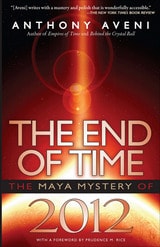
cover of End of Time: The Maya Mystery of 2012

End of Time

The Maya Mystery of 2012

Anthony Aveni

University Press of Colorado, 2009
December 21, 2012. The Internet, bookshelves, and movie theaters are full of prophecies, theories, and predictions that this date marks the end of the world, or at least the end of the world as we know it. Whether the end will result from the magnentic realignment of the north and south poles, bringing floods, earthquakes, death, and destruction; or from the return of alien caretakers to enlighten or enslave us; or from a global awakening, a sudden evolution of Homo sapiens into non-corporeal beings—theories of great, impending changes abound. In The End of Time, award-winning astronomer and Maya researcher Anthony Aveni explores these theories, explains their origins, and measures them objectively against evidence unearthed by Maya archaeologists, iconographers, and epigraphers. He probes the latest information astronomers and earth scientists have gathered on the likelihood of Armageddon and the oft-proposed link between the Maya Long Count cycle and the precession of the equinoxes. He then expands on these prophecies to include the broader context of how other cultures, ancient and modern, thought about the “end of things” and speculates on why cataclysmic events in human history have such a strong appeal within American pop culture.
[more]
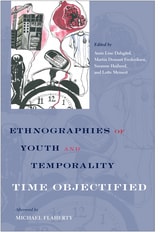
cover of Ethnographies of Youth and Temporality: Time Objectified

Ethnographies of Youth and Temporality

Time Objectified

Anne Line Dalsgard

Temple University Press, 2014

As we experience and manipulate time—be it as boredom or impatience—it becomes an object: something materialized and social, something that affects perception, or something that may motivate reconsideration and change. The editors and contributors to this important new book, Ethnographies of Youth and Temporality, have provided a diverse collection of ethnographic studies and theoretical explorations of youth experiencing time in a variety of contemporary socio-cultural settings.
 
The essays in this volume focus on time as an external and often troubling factor in young people’s lives, and shows how emotional unrest and violence but also creativity and hope are responses to troubling times. The chapters discuss notions of time and its and its “objectification” in diverse locales including the Georgian Republic, Brazil, Denmark and Uganda.
 
Based on long-term ethnographic fieldwork, the essays in Ethnographies of Youth and Temporality use youth as a prism to understand time and its subjective experience. 

In the series Global Youth, edited by Craig Jeffrey and Jane Dyson

[more]
cover of Ex Ante: Power and Prediction in the Real-Time Future

Ex Ante

Power and Prediction in the Real-Time Future

John Cheney-Lippold

University of Chicago Press, 2027

An incisive framework for understanding how predictive AI has reshaped our relationship with time.

Ex Ante argues that AI systems draw us into a new experience of time, a continuous stream of machine-generated futures that reshapes our relationship to ourselves, to capitalism, and to infrastructure. Unlike other predictive tools that help us prepare for what might come, these projections—produced by algorithms and sourced by massive flows of data—calibrate our actions moment by moment, second by second. 

In this book, John Cheney-Lippold offers a framework he calls the ex ante, Latin for “before the event,” as a way to consider how the future has become capitalism’s latest resource for exploitation. Through case studies spanning TikTok beauty filters that have fueled a surge in plastic surgery consultations, chess engines that redefine how the game is played, online sports betting platforms that commodify probability itself, hospital sepsis algorithms that transform the labor of nursing, and coordinated vehicle networks that collectively anticipate their surroundings to function, Ex Ante offers an exploration and powerful critique of our algorithmic present and the powers behind it.

[more]