81 books match the query 'Tradition' and 3 start with e
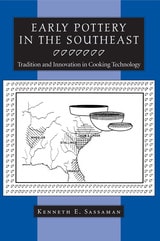
cover of Early Pottery in the Southeast: Tradition and Innovation in Cooking Technology

Early Pottery in the Southeast

Tradition and Innovation in Cooking Technology

Kenneth E. Sassaman

University of Alabama Press, 1993

A Dan Josselyn Memorial Publication

Among southeastern Indians pottery was an innovation that enhanced the economic value of native foods and the efficiency of food preparation. But even though pottery was available in the Southeast as early as 4,500 years ago, it took nearly two millenia before it was widely used. Why would an innovation of such economic value take so long to be adopted?

The answer lies in the social and political contexts of traditional cooking technology. Sassaman's book questions the value of using technological traits alone to mark temporal and spatial boundaries of prehistoric cultures and shows how social process shapes the prehistoric archaeological record.


[more]
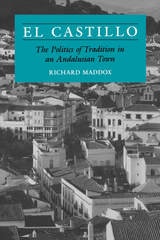
cover of El Castillo: The Politics of Tradition in an Andalusian Town

El Castillo

The Politics of Tradition in an Andalusian Town

Richard Maddox

University of Illinois Press, 1993

In his innovative ethnographic history of the southwestern Spanish town of Aracena, Richard Maddox explores how tradition has been authored, what it has authorized, and to what extent it has been authoritative. His investigation of the cultural, political, and religious discourses and practices of various socioeconomic groups in Aracena offers a richly detailed view of how both leading citizens and ordinary townspeople have interpreted, used, and contested traditions over the last three centuries.
 
Maddox argues that we can best understand culture in complex societies by taking into account the ways in which institutionally generated discourses and practices articulate with the informal, improvisational, and commonsense speech and customs that guide the conduct of everyday life. He bases his study on a wide range of published and unpublished materials, including biographies, notarial records, wills, tax and voting lists, historical surveys, records of property transactions and town council meetings, privately held documents, and interviews with men and women of Aracena.
 
Through a genealogical approach to traditional culture, Maddox demonstrates that traditions repeatedly have been transformed and reinvented in accordance with shifts in relationships of power and in response to changing political and socioeconomic conditions.
[more]
cover of Enduring Motives: The Archaeology of Tradition and Religion in Native America

Enduring Motives

The Archaeology of Tradition and Religion in Native America

Linea Sundstrom

University of Alabama Press, 2012

Enduring Motives examines tradition and religious beliefs as they are expressed in landscape, the built environment, visual symbols, stories, and ritual.
 
Bringing together archaeologists and Native American experts, this volume focuses on long-lived religious traditions of the native peoples of the Americas and how religion codifies, justifies, and reinforces these traditions by placing a high value on continuity of beliefs and practice.
 
Using clues from the archaeological record to piece together the oldest religions of the Americas, Enduring Motives is organized into four parts. Part 1 creates continuity through structure, iconography, and sacred stories that correspond to culture-specific symbolic representations of the universe. Part 2 explores the encoding of tradition in place and object, or how people use objects to enliven tradition and pass it on to future generations. Part 3 examines stability and change and shows how traditions can evolve over time without losing their core cultural significance. The final part recognizes deep-time traditions through the evidence of ancient cosmology and religious tradition.
 
Spanning cultures as diverse as the Aztec, Plains Indians, Hopi, Mississippian, and Southwest Pueblo, Enduring Motives brings to light new insights on ancient religious beliefs, practices, methods, and techniques, which allow otherwise intangible facets of culture to be productively explored.
 
 
Contributors
Wesley Bernardini / James S. Brown Jr. / Cheryl Claassen / John E. Clark / ArleneColman / Warren DeBoer /
Robert L. Hall /Kelley Hays-Gilpin / Alice Beck Kehoe /John E. Kelly / Stephen H. Lekson / ColinMcEwan /
John Norder / Jeffrey Quilter /Amy Roe / Peter G. Roe / Linea Sundstrom
[more]