83 books match the query 'Treatment' and 2 start with e

cover of Each Day I Like It Better: Autism, ECT, and the Treatment of Our Most Impaired Children

Each Day I Like It Better

Autism, ECT, and the Treatment of Our Most Impaired Children

Amy S. F. Lutz

Vanderbilt University Press, 2014

In the fall of 2009, Amy Lutz and her husband, Andy, struggled with one of the worst decisions parents could possibly face: whether they could safely keep their autistic ten-year-old son, Jonah, at home any longer. Multiple medication trials, a long procession of behavior modification strategies, and even an almost year-long hospitalization had all failed to control his violent rages. Desperate to stop the attacks that endangered family members, caregivers, and even Jonah himself, Amy and Andy decided to try the controversial procedure of electroconvulsive therapy or ECT. Over the last three years, Jonah has received 136 treatments. His aggression has greatly diminished, and for the first time Jonah, now fourteen, is moving to a less restricted school.


Each Day I Like It Better recounts the journeys of Jonah and seven other children and their families (interviewed by the author) in their quests for appropriate educational placements and therapeutic interventions. The author describes their varied, but mostly successful, experiences with ECT.


A survey of research on pediatric ECT is incorporated into the narrative, and a foreword by child psychiatrist Dirk Dhossche and ECT researcher and practitioner Charles Kellner explains how ECT works, the side effects patients may experience, and its current use in the treatment of autism, catatonia, and violent behavior in children.
[more]
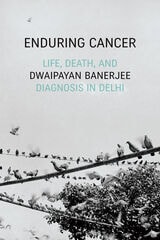
cover of Enduring Cancer: Life, Death, and Diagnosis in Delhi

Enduring Cancer

Life, Death, and Diagnosis in Delhi

Dwaipayan Banerjee

Duke University Press, 2020

In Enduring Cancer Dwaipayan Banerjee explores the efforts of Delhi's urban poor to create a livable life with cancer as patients and families negotiate an overextended health system unequipped to respond to the disease. Owing to long wait times, most urban poor cancer patients do not receive a diagnosis until it is too late to treat the disease effectively. Drawing on ethnographic fieldwork in the city's largest cancer care NGO and at India's premier public health hospital, Banerjee describes how, for these patients, a cancer diagnosis is often the latest and most serious in a long series of infrastructural failures. In the wake of these failures, Banerjee tracks how the disease then distributes itself across networks of social relations, testing these networks for strength and vulnerability. Banerjee demonstrates how living with and alongside cancer is to be newly awakened to the fragility of social ties, some already made brittle by past histories, and others that are retested for their capacity to support.
[more]