Results by title
171 books match the query 'True Crime' and 6 start with e
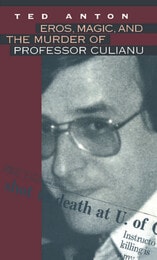
Eros, Magic, and the Murder of Professor Culianu
Ted Anton
Northwestern University Press, 1996
Winner of 1997 Carl Sandburg Award
On May 21, 1991, University of Chicago professor Ioan Culianu was murdered execution-style on campus. The crime stunned the school, terrified students, and mystified the FBI. The case remains unsolved. In Eros, Magic, and the Murder of Professor Culianu, award-winning investigative reporter Ted Anton shows that the murder is what Culianu's friends suspected all along: the first political assassination of a professor on American soil.
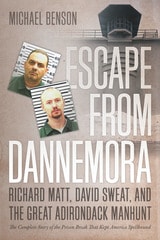
Escape from Dannemora
Richard Matt, David Sweat, and the Great Adirondack ManhuntMichael Benson
University Press of New England, 2017
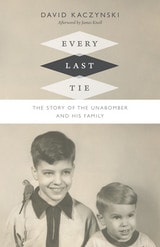
Every Last Tie
The Story of the Unabomber and His FamilyDavid Kaczynski
Duke University Press, 2016
Everyone against Us
Public Defenders and the Making of American JusticeAllen Goodman
University of Chicago Press, 2023
As a public defender, Allen Goodman faced cross-examination from family and friends every day: How could he work to help criminals? How could he live with himself? Presumed guilty by association, Goodman quickly learned that people didn’t really want an answer; they wanted a justification, perhaps even an apology. Ever the idealist, Goodman answered anyway: Everyone deserves justice.
Everyone against Us is Goodman’s testimony of his life as a public defender. In it, he documents his efforts to defend clients, both guilty and innocent, against routine police abuse, prosecutorial misconduct, and unjust sentencing. To work in criminal justice, Goodman shows, is to confront and combat vivid human suffering, of both victims and perpetrators. From sex trafficking, murder, and abuse to false conviction, torture, and systemic racism, Goodman describes the daily experiences that both rattled his worldview and motivated him to work ever harder. Part memoir, part exposé, Everyone against Us is the moving story of an embattled civil servant who staves off the worst abuses of the criminal justice system, at great personal cost.
Everything I Never Wanted to Know
Christine Hume
The Ohio State University Press, 2023
In Everything I Never Wanted to Know, Christine Hume confronts the stigma and vulnerability of women’s bodies in the US. She explores bodily autonomy and sexual assault alongside the National Sex Offender Registry in order to invoke not solutions but a willingness to complicate our ideas of justice and defend every human’s right to be treated like a member of the community. Feminist autobiography threads into historical narrative and cultural criticism about the Victorian-era Frozen Charlotte doll; the Nylon Riots of the 1940s; the movie Halloween; Larry Nassar, who practiced in Hume’s home state of Michigan; and other material. In these reflections on sexuality, gender, criminality, and violence, Hume asks readers to reconsider what we have collectively normalized and how we are each complicit, writing through the darkness of what we don’t want to see, what we’d rather not believe, and what some of us have long tried to forget.
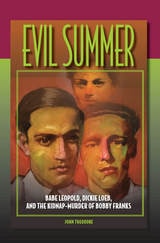
Evil Summer
Babe Leopold, Dickie Loeb, and the Kidnap-Murder of Bobby FranksJohn Theodore
Southern Illinois University Press, 2007
In 1924, fourteen-year-old Bobby Franks was abducted while walking home from school, killed by a chisel blow to his head, and later found stuffed in a culvert in a marshy wasteland at the Illinois-Indiana state line. Acid had been poured over his naked body. Evil Summer examines the shocking kidnapping and murder of Franks by two University of Chicago students, Nathan “Babe” Leopold and Richard “Dickie” Loeb, both from families of privilege.
In this new examination of the crime, author John Theodore takes readers into the minds of the two criminals as he focuses on three months in 1924. Theodore covers the killing, the confessions, the defense, and the sentencing surrounding the horrific murder, placing the killers’ actions and Clarence Darrow’s historic defense into the context of 1920s Chicago.
Theodore deftly investigates the psychological dimensions of the crime, revealing the murderers’ fantasies, relationships, sexuality, and motives. The author examines the killers’ past, outlining Loeb’s obsession with detective fiction and crime and his editorial on random killing—written at age nine—and Leopold’s nightly master-slave fantasies and fascination with Nietzsche.
Evil Summer, which includes twenty-three illustrations, meticulously traces the murder from inception to confession, including such details as the special-delivery ransom letter sent to Jacob Franks and the discovery of Leopold’s horn-rimmed eyeglasses lying on a railroad embankment near Bobby’s dead body. Theodore re-creates such scenes as the convergence of hundreds of people in front of the Franks home, Bobby’s body lying in a small white casket in the library, and Loeb being voyeuristically drawn to the home while Bobby’s classmates carry the casket to the hearse.
Worldwide press coverage reflected the public fascination with the case in what was then called “the trial of the century.” The story became a media circus: Chicago’s six daily newspapers battled vigorously for readers, two Daily News cub reporters became part of the story, and the Chicago Tribune carried a voting ballot asking readers whether radio station WGN should broadcast the courtroom spectacle. The changing drama was delivered to Chicagoans every morning and evening, and the public feasted on every press run.
More than a crime story, Evil Summer illuminates the dark side of American life in the 1920s, including the excesses of privileged youth, the troubled childhoods, the random victimization, the anti-Semitism, and the sexuality.