Results by title
141 books match the query 'Turkey' and 6 start with e
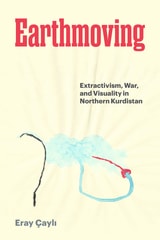
Earthmoving
Extractivism, War, and Visuality in Northern KurdistanEray Çayli
University of Texas Press, 2025
Focuses on contemporary art and media to examine the role of visuals in environmental violence and war in Northern Kurdistan.
Extractivism—exploiting the earth for resources—has long driven racial capitalism and colonialism. And yet, how does extractivism operate in a world where ecological and humanitarian sensibilities are unprecedentedly widespread? Eray Çaylı argues it does so by mobilizing these sensibilities in new ways. Extractivism is no longer only about moving the earth—displacing peoples, fossils, minerals, and waters—but also leaving those who witness this violent displacement sentimentally moved.
Earthmoving conceptualizes this duality. Derived from Çaylı’s years-long work in Northern Kurdistan, home to the world’s largest stateless nation—rendered stateless by colonial policies since the nineteenth century—Earthmoving focuses on the 2010s, a decade that began with peace talks between Turkey and the Kurdish liberation movement but ended with war. The decade saw extractivism intensify in the region and images of its harm proliferate across art and media. Together with contemporary artists, Çaylı shows that images challenge extractivism both by making its harm visible and by fostering self-reflexive and reciprocal collaboration that breaks with its valuation of the colonized and the racialized only in quantifiable and marketable terms.
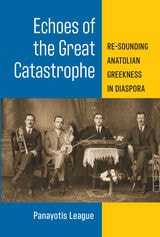
Echoes of the Great Catastrophe
Re-Sounding Anatolian Greekness in DiasporaPanayotis League
University of Michigan Press, 2021
Echoes of the Great Catastrophe: Re-sounding Anatolian Greekness in Diaspora explores the legacy of the Great Catastrophe—the death and expulsion from Turkey of 1.5 million Greek Christians following the Greco-Turkish War of 1919–1922—through the music and dance practices of Greek refugees and their descendants over the last one hundred years. The book draws extensively on original ethnographic research conducted in Greece (on the island of Lesvos in particular) and in the Greater Boston area, as well as on the author’s lifetime immersion in the North American Greek diaspora. Through analysis of handwritten music manuscripts, homemade audio recordings, and contemporary live performances, the book traces the routes of repertoire and style over generations and back and forth across the Atlantic Ocean, investigating the ways that the particular musical traditions of the Anatolian Greek community have contributed to their understanding of their place in the global Greek diaspora and the wider post-Ottoman world. Alternating between fine-grained musicological analysis and engaging narrative prose, it fills a lacuna in scholarship on the transnational Greek experience.
Euphrates River Valley Settlement
The Carchemish Sector in the Third Millennium BCE. Peltenburg
Council for British Research in the Levant, 2007
Europe's Steppe Frontier, 1500-1800
William H. McNeill
University of Chicago Press, 1964
Explorations in Ottoman Prehistory
Rudi Paul Lindner
University of Michigan Press, 2007
The origins of the Ottomans, whose enterprise ruled much of the Near East for more than half a millennium, have long tantalized and eluded scholars, many of whom have thrown up their hands in exasperation. While the later fourteenth- and fifteenth-century history of the Ottomans has become better known, the earlier years have proved an alluring and recalcitrant puzzle. A reconsideration of the sources and a canvass of new ones has long been overdue. Rudi Paul Lindner’s Explorations in Ottoman Prehistory is the first book in over sixty years to reassess the overture to Ottoman history.
In addition to conducting a critical examination of the Ottoman chronicles and the Byzantine annals, Lindner develops hitherto unutilized geographic data and previously unknown numismatic evidence and also draws on travelers’ descriptions of the Anatolian landscape in an earlier epoch. By investigating who the Ottomans were, where they came from, and where they settled and why, as well as what sort of relationships they had with their neighbors in the late thirteenth and early fourteenth centuries, Lindner makes an engaging and lucid contribution to an otherwise very small store of knowledge of Ottoman history in the early stages of the empire.
Rudi Paul Lindner is Professor of History at the University of Michigan and author of Nomads and Ottomans in Medieval Anatolia,part of Indiana University’s Uralic and Altaic Series.

Extraterritorial Dreams
European Citizenship, Sephardi Jews, and the Ottoman Twentieth CenturySarah Abrevaya Stein
University of Chicago Press, 2016
Sarah Abrevaya Stein traces the experiences of Mediterranean Jewish women, men, and families who lived through a tumultuous series of wars, border changes, genocides, and mass migrations, all in the shadow of the collapse of the Ottoman Empire and the ascendance of the modern passport regime. Moving across vast stretches of Europe, the Middle East, Asia, and the Americas, she tells the intimate stories of people struggling to find a legal place in a world ever more divided by political boundaries and competing nationalist sentiments. From a poor youth who reached France as a stowaway only to be hunted by the Parisian police as a spy to a wealthy Baghdadi-born man in Shanghai who willed his fortune to his Eurasian Buddhist wife, Stein tells stories that illuminate the intertwined nature of minority histories and global politics through the turbulence of the modern era.