Results by title
147 books match the query 'Urban & Land Use Planning' and 7 start with e
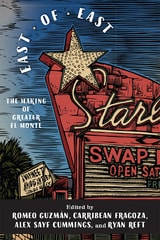
East of East
The Making of Greater El MonteRomeo Guzmán
Rutgers University Press, 2020
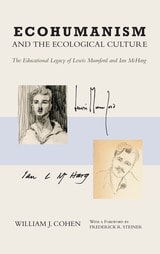
Ecohumanism and the Ecological Culture
The Educational Legacy of Lewis Mumford and Ian McHargWilliam J. Cohen
Temple University Press, 2019
Lewis Mumford, one of the most respected public intellectuals of the twentieth century, speaking at a conference on the future environments of North America, said, “In order to secure human survival we must transition from a technological culture to an ecological culture.” In Ecohumanism and the Ecological Culture, William Cohen shows how Mumford’s conception of an educational philosophy was enacted by Mumford’s mentee, Ian McHarg, the renowned landscape architect and regional planner at the University of Pennsylvania. McHarg advanced a new way to achieve an ecological culture―through an educational curriculum based on fusing ecohumanism to the planning and design disciplines.
Cohen explores Mumford’s important vision of ecohumanism—a synthesis of natural systems ecology with the myriad dimensions of human systems, or human ecology―and how McHarg actually formulated and made that vision happen. He considers the emergence of alternative energy systems and new approaches to planning and community development to achieve these goals.
The ecohumanism graduate curriculum should become the basis to train the next generation of planners and designers to lead us into the ecological culture, thereby securing the educational legacy of both Lewis Mumford and Ian McHarg.
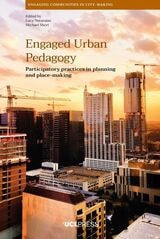
Engaged Urban Pedagogy
Participatory Practices in Planning and Place-MakingEdited by Lucy Natarajan and Michael Short
University College London, 2023
Engaged Urban Pedagogy presents a participatory approach to teaching about the built environment by exploring twelve examples of real-world engagement in urban planning involving people within, and beyond, the university. Starting with curriculum review, course content is analyzed in light of urban pasts, race, queer identity, lived experiences, and the concerns of urban professionals. Case studies then shift to focus on techniques for participatory critical pedagogy, including expanding the classroom with links to live place-making processes, connections made through digital co-design exercises, and student-led podcasting assignments. Finally, the book turns to activities beyond formal university teaching, such as those where school-age children learn about their own participation in urban processes together alongside university students and researchers. Drawing on foundational works of critical pedagogy, the contributors present a distinctly urban praxis that will help those in universities respond to the built environment challenges of today.
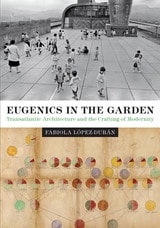
Eugenics in the Garden
Transatlantic Architecture and the Crafting of ModernityBy Fabiola López-Durán
University of Texas Press, 2018
Winner, Robert Motherwell Book Award, Outstanding Book on Modernism in the Arts, The Dedalus Foundation, 2019
As Latin American elites strove to modernize their cities at the turn of the twentieth century, they eagerly adopted the eugenic theory that improvements to the physical environment would lead to improvements in the human race. Based on Jean-Baptiste Lamarck’s theory of the “inheritance of acquired characteristics,” this strain of eugenics empowered a utopian project that made race, gender, class, and the built environment the critical instruments of modernity and progress.
Through a transnational and interdisciplinary lens, Eugenics in the Garden reveals how eugenics, fueled by a fear of social degeneration in France, spread from the realms of medical science to architecture and urban planning, becoming a critical instrument in the crafting of modernity in the new Latin world. Journeying back and forth between France, Brazil, and Argentina, Fabiola López-Durán uncovers the complicity of physicians and architects on both sides of the Atlantic, who participated in a global strategy of social engineering, legitimized by the authority of science. In doing so, she reveals the ideological trajectory of one of the most celebrated architects of the twentieth century, Le Corbusier, who deployed architecture in what he saw as the perfecting and whitening of man. The first in-depth interrogation of eugenics’ influence on the construction of the modern built environment, Eugenics in the Garden convincingly demonstrates that race was the main tool in the geopolitics of space, and that racism was, and remains, an ideology of progress.
Everyday Streets
Inclusive Approaches to Understanding and Designing StreetsEdited by Agustina Martire, Birgit Hausleitner, and Jane Clossick
University College London, 2023
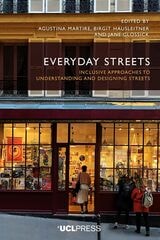
Everyday streets are both the most used and most undervalued of cities’ public spaces. They are places of social aggregation, bringing together people of different classes, genders, ages, ethnicities, and nationalities. They comprise not just the familiar outdoor spaces that we move through and interact in but also urban blocks, interiors, depths, and hinterlands, which are integral to streets’ nature and contribute to their vitality. Everyday Streets offers an inclusive approach to understanding and designing these streets through an analysis of them as found in cities around the globe. From the regular rectilinear urban blocks of Montreal to the carefully regulated narrow alleyways of Naples, and from the resilient market streets of London to the crammed commercial streets of Chennai, the streets in this book were all conceived with a certain level of control. Everyday Streets is a palimpsest of methods, perspectives, and recommendations that together provide a solid understanding of everyday streets, their degree of inclusiveness, and to what extent they could be more inclusive.

Evoking Newark
Fifty YearsCamilo José Vergara
Rutgers University Press, 2027
Evoking Newark is a systematic photographic documentation of Newark, NJ, from 1977-2024. This project creates a flexible framework for tracing Newark’s evolution. In this ambitious volume, award-winning photographer Camilo José Vergara creates an indelible record of the city, beginning along its most important commercial thoroughfares, such as Broad, Market, Springfield Ave., Clinton Ave., Central Ave., and MLK Jr. Blvd. He also takes a closer look at landmarks as well as more modest buildings whose folksy character caught his eye. As an urban documentary photographer, Vergara frequently returned to re-photograph Newark in order to track changes over time. For almost fifty years, he identified multiple street intersections that were particularly revealing settings for charting developments in the city.
Vergara examines in particular the slow renewal of these main thoroughfares, the demolition of high-rise housing projects, the ruination and clearing of industrial sites, the building of multi-family houses in once-vacant lots, and the construction of skyscrapers and cultural institutions. To complete the project, he added photos of graffiti and murals that comment on local and national events celebrating African American and Hispanic heroes and heroines and memorials remembering the dead. With these efforts at careful documentation, Brick City demonstrates the usefulness of a time-based documentary approach to the study of post-industrial urban areas. The photographs are accompanied by detailed captions about the locations portrayed, and in many cases by Vergara's own observations and transcripts of his interviews with local people as well as overheard conversations. The photos and captions are one way of telling us that “this happened,” and a means of refreshing the memories of viewers who have experienced Newark generations ago--recollections that contribute to their sense of identity.
Exploring the Architecture of Place in America’s Farmers Markets
Kathryn Clarke Albright
University of Minnesota Press, 2020
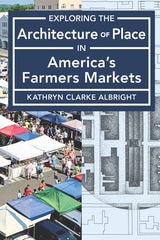
Architect, teacher, and founder of the Friends of the Farmers Market, Katheryn Clarke Albright combines historically informed architectural observation with interview material and images drawn from conversations with farmers, vendors, market managers and shoppers.
Using eight scales of interaction and interface, Albright presents in-depth case studies to demonstrate how architectural elements and spatial conditions foster social and economic exchange between vendors, shoppers, and the community at large. Albright looks ahead to an emerging typology—the mobile market—bringing local farmers and healthy foods to underserved neighborhoods.
The impact farmers markets make on their local communities inspires place-making, improves the local economy, and preserves rural livelihoods. Developed organically and distinctively out of the space they occupy, these markets create and revitalize communities as rich as the produce they sell.