Results by title
441 books match the query 'Women and literature' and 23 start with e
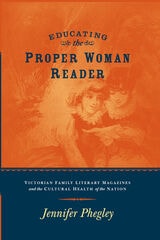
EDUCATING THE PROPER WOMAN READER
VICTORIAN FAMILY LITERARY MAGAZINES & CULTURAL HEALTH OF THE NATIONJennifer Phegley
The Ohio State University Press, 2004
Jennifer Phegley presents an examination of four mid-Victorian magazines that middle-class women read widely. Educating the Proper Woman Reader reevaluates prevailing assumptions about the vexed relationship between nineteenth-century women readers and literary critics.
While many scholars have explored the ways nineteenth-century critics expressed their anxiety about the dangers of women’s unregulated and implicitly uncritical reading practices, which were believed to threaten the sanctity of the home and the cultural status of the nation, Phegley argues that family literary magazines revolutionized the position of women as consumers of print by characterizing them as educated readers and able critics. Her analysis of images of influential women readers (in Harper’s), intellectual women readers (in The Cornhill), independent women readers (in Belgravia), and proto-feminist women readers/critics (in Victoria) indicates that women played a significant role in determining the boundaries of literary culture within these magazines. She argues that these publications supported women’s reading choices, inviting them to define literary culture rather than to consume it passively.
Not only does this book revise our understanding of nineteenth-century attitudes toward women readers, but it also takes a fresh look at the transatlantic context of literary production. Further, Phegley demonstrates the role these publications played in improving cultural literacy among women of the middle classes as well as the interplay between fiction and essays of the time by writers such as Mary Braddon, Charles Dickens, George Eliot, Elizabeth Gaskell, G. H. Lewes, Harriet Martineau, Margaret Oliphant, George Sala, William Thackeray, and Anthony Trollope.

Early Modern Women's Writing and Sor Juana Ines de la Cruz
Stephanie Merrim
Vanderbilt University Press, 1999
Early modern women writers whose works are explored include Marie de Gournay, Margaret Fell Fox, Catalina de Erauso, Maria de Zayas, Ana Caro, Mme de Lafayette, Anne Bradstreet, St. Teresa, and Margaret Lucas Cavendish.
Merrim's study provides a full-bodied picture of the resources that the cultural and historical climates of the seventeenth century placed at the disposal of women writers, the manners in which women writers instrumentalized them, the building blocks and concerns of early modern women's writing, and the continuities between early modern and modern women's writing.
Written in an engaging, clear manner, this innovative study will be of interest not only to Hispanists but also to scholars in early modern studies, women's studies, history, and comparative literature.

Ecofeminist Literary Criticism
Theory, Interpretation, PedagogyEdited by Greta Gaard and Patrick D. Murphy
University of Illinois Press, 1998
Ecofeminism is a practical movement for social change that discerns interconnections among all forms of oppression: the exploitation of nature, the oppression of women, class exploitation, racism, colonialism. Against binary divisions such as self/other, culture/nature, man/woman, humans/animals, and white/non-white, ecofeminist theory asserts that human identity is shaped by more fluid relationships and by an acknowledgment of both connection and difference.
Once considered the province of philosophy and women's studies, ecofeminism in recent years has been incorporated into a broader spectrum of academic discourse. Ecofeminist Literary Criticism assembles some of the most insightful advocates of this perspective to illuminate ecofeminism as a valuable component of literary criticism.
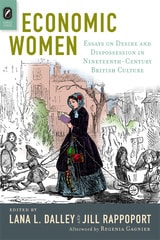
Economic Women
Essays on Desire and Dispossession in Nineteenth-Century British CultureEdited by Lana L. Dalley and Jill Rappoport
The Ohio State University Press, 2013
Edith Wharton in Context
Essays on IntertextualityAdeline R. Tintner
University of Alabama Press, 1999
Tintner provides a detailed analysis of the complex interplay between Wharton and James—how they influenced each other and how some of their writings operate as homages or personal jokes. So deeply was James in Wharton’s confidence, Tintner argues, that he provided her with source models for a number of her characters. In addition, Wharton found in his fiction structures for her own, especially for The Age of Innocence.
Tintner also brings her considerable knowledge of art history to bear in her study of art allusions in Wharton’s work. Wharton’s response both to the Italian painters active before Raphael and to the English Pre-Raphaelites of a generation before her own is analyzed here in three essays. These pieces demonstrate Wharton’s sensibility to changes in art tastes and collecting, the inheritance of Rossetti’s revolutionary paintings in the unfinished novel, The Buccaneers, and the importance of home in The Glimpses of the Moon, as demonstrated by Wharton’s use of Tiepolo’s fresco in the church of Scalzi.
Tintner concludes by considering Wharton’s literary legacy and who Wharton has figured in the imaginations of recent writers, including Richard Howard, Louis Auchincloss, and Cathleen Schine. Tintner finds some part of Wharton’s personality or work evoked in a number of contemporary works and argues that this presence signals the beginning of an increasing influence.
Educating Women
Cultural Conflict and Victorian LiteratureLaura Morgan Green
Ohio University Press, 2001
In 1837, when Queen Victoria came to the throne, no institution of higher education in Britain was open to women. By the end of the century, a quiet revolution had occurred: women had penetrated even the venerable walls of Oxford and Cambridge and could earn degrees at the many new universities founded during Victoria's reign. During the same period, novelists increasingly put intellectually ambitious heroines students, teachers, and frustrated scholars—at the center of their books. Educating Women analyzes the conflict between the higher education movement's emphasis on intellectual and professional achievement and the Victorian novel's continuing dedication to a narrative in which women's success is measured by the achievement of emotional rather than intellectual goals and by the forging of social rather than institutional ties.
Focusing on works by Charlotte Brontë, George Eliot, Anna Leonowens, and Thomas Hardy, Laura Morgan Green demonstrates that those texts are shaped by the need to mediate the conflict between the professionalism and publicity increasingly associated with education, on the one hand, and the Victorian celebration of women as emblems of domesticity, on the other. Educating Women shows that the nineteenth-century “heroines” of both history and fiction were in fact as indebted to domestic ideology as they were eager to transform it.

Edwardian Stories of Divorce
Janice Hubbard Harris
Rutgers University Press, 1996
Much as abortion in the United States today is a contentious issue used for scripting women's roles and potential into the national agenda, divorce was an issue dividing England in the Edwardian era. According to Janice Harris, anything and everything, from illicit sex and family values to the Garden of Eden, wrath of children, poverty of women, nature of cruelty, scandal of America, threat of Germany, and future of England were part of the debate over divorce. Living under marriage laws far more restrictive than those of their Protestant neighbors, Edwardian women and men campaigned for reform with a barrage of compelling stories. Organizing her analysis around three major sources of narrative on divorce––the Sunday papers, the Report of the Royal Commission on Divorce and Matrimonial causes, and the novel––Harris uncovers a war of words and a competition of tales. In raising questions about the winners, losers, and spoils, Harris expands our understanding of the history of divorce, the wars between the sexes, and the political import of those wars.
In the end, she presents a complex and lively story herself, one that illuminates battles over marriage and divorce taking place in our own era as well. This humane book on a long-neglected subject marks an important contribution to narrative studies and Edwardian history.
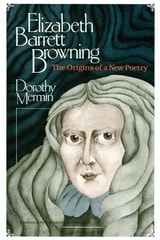
Elizabeth Barrett Browning
The Origins of a New PoetryDorothy Mermin
University of Chicago Press, 1989
Barrett Browning's place at the wellhead of a new female tradition remains the single most important fact about her in terms of literary history, and it was central to her self-consciousness as a poet. Mermin's study shows that Barrett Browning's anomalous situation was constantly present to her imagination and that questions of gender shaped almost everything she wrote. Mermin argues that Barrett Browning's poetry covertly inspects and dismantles the barriers set in her path by gender and that in her major works—Sonnets from the Portuguese, Aurora Leigh, her best political poems, "A Musical Instrument"—difficulty is turned into triumph, incorporating the author's femininity, her situation as a woman poet, and her increasingly substantial fame.
Mermin skillfully interweaves biography and close readings of the poems to show precisely how Barrett Browning's life as a woman writer is a part of the essential meaning of her art. Both her personal and her literary achievements are exceptionally well documented, especially for her formative years. Mermin makes extensive use of the poet's early essays, a diary covering most of her twenty-sixth year, and the enormous number of letters that have survived. Ranging from her earliest ambitions through her long periods of discouragement and illness to her happy married life with Robert Browning, this comprehensive study of Elizabeth Barrett Browning is essential reading for students of the Victorian period, English literature, and women's studies.
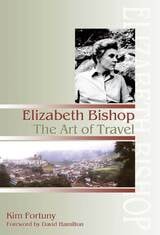
Elizabeth Bishop
Kim Fortuny
University Press of Colorado, 2003
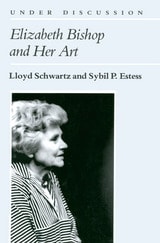
Elizabeth Bishop and Her Art
Lloyd Schwartz and Sybil P. Estess, Editors
University of Michigan Press, 1983
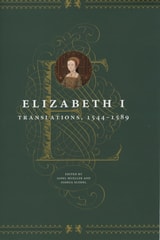
Elizabeth I
Translations, 1544-1589Elizabeth I
University of Chicago Press, 2008
Presenting original and modernized spellings in a facing-page format, these two volumes will answer the call to make all of Elizabeth’s writings available. They include her renderings of epistles of Cicero and Seneca, religious writings of John Calvin and Marguerite de Navarre, and Horace’s Ars poetica, as well as Elizabeth’s Latin Sententiae drawn from diverse sources, on the responsibilities of sovereign rule and her own perspectives on the monarchy. Editors Janel Mueller and Joshua Scodel offer introduction to each of the translated selections, describing the source text, its cultural significance, and the historical context in which Elizabeth translated it. Their annotations identify obscure meanings, biblical and classical references, and Elizabeth’s actual or apparent deviations from her sources.
The translations collected here trace Elizabeth’s steady progression from youthful evangelical piety to more mature reflections on morality, royal responsibility, public and private forms of grief, and the right way to rule. Elizabeth I: Translations is the queen’s personal legacy, an example of the very best that a humanist education can bring to the conduct of sovereign rule.
Elizabeth I
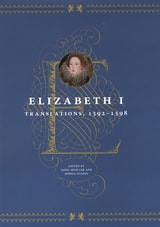
Translations, 1592-1598Elizabeth I
University of Chicago Press, 2009
Presenting original and modernized spellings in a facing-page format, these two volumes will answer the call to make all of Elizabeth’s writings available. They include her renderings of epistles of Cicero and Seneca, religious writings of John Calvin and Marguerite de Navarre, and Horace’s Ars poetica, as well as Elizabeth’s Latin Sententiae drawn from diverse sources, on the responsibilities of sovereign rule and her own perspectives on the monarchy. Editors Janel Mueller and Joshua Scodel offer introduction to each of the translated selections, describing the source text, its cultural significance, and the historical context in which Elizabeth translated it. Their annotations identify obscure meanings, biblical and classical references, and Elizabeth’s actual or apparent deviations from her sources.
The translations collected here trace Elizabeth’s steady progression from youthful evangelical piety to more mature reflections on morality, royal responsibility, public and private forms of grief, and the right way to rule. Elizabeth I: Translations is the queen’s personal legacy, an example of the very best that a humanist education can bring to the conduct of sovereign rule.
Ellen Glasgow
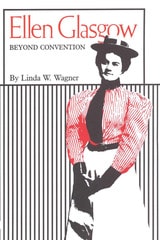
Beyond ConventionBy Linda W. Wagner
University of Texas Press, 1982
For many years Pulitzer Prize winner Ellen Glasgow has been regarded as a classic American regional novelist. But Glasgow is far more than a Southern writer, as Linda Wagner demonstrates in this fascinating reassessment of her work.
A Virginia lady, Glasgow began to write at a time when the highest praise for a literary woman was to be mistaken for a male writer. In her early fiction, published at the turn of the century, all attention is focused on male protagonists; the strong female characters who do appear early in these novels gradually fade into the background.
But Ellen Glasgow grew to become a woman who, born to be protected from the very life she wanted to chronicle, moved “beyond convention” to live her life on her own terms. And as her own self-image changed, the perspective of her novels became more feminine, the female characters moved to center stage, and their philosophies became central to her themes. Glasgow’s best novels, then—Barren Ground, Vein of Iron, and the romantic trilogy that includes The Sheltered Life—came late in her life, when she was no longer content to imitate fashionable male novelists.
Glasgow’s increased self-assurance as writer and woman led to a far greater awareness of craft. Her style became more highly imaged, more suggestive, as though she wished to widen the range of resources available to move her readers. She became a writer both popular and respected. Her novels appeared as selections of the Literary Guild and the Book-of-the-Month Club, and one became a best seller. At the same time she was chosen as one of the few female members of the Academy of Arts and Letters, and in 1942 she was awarded the Pulitzer Prize for her novel In This Our Life.

Emily Dickinson'S Gothic
Goblin With A GaugeDaneen Wardrop
University of Iowa Press, 1996
Emily Dickinson should stand as a major gothic author among her nineteenth-century American contemporaries, but two factors have previously prevented her inclusion in such company. Perhaps the most obvious is the problem of the genre: Dickinson writes gothic poetry, whereas gothic fiction defines the genre. In addition, her poetic personae have served over the decades to prompt critics to “protect” her; traditional critics concentrated on the sweet, romantic elements of her oeuvre. More recent readers, notably Sandra Gilbert and Susan Gubar, Jane Egerwein, and Cynthia Griffin Wolff, have begun studying Dickinson's gothic traits; Emily Dickinson's Gothic explores Dickinsonian gothicism with the systematic rigor it demands and deserves.
Emily Dickinson's Gothic also addresses sociohistorical concerns, from hallowed gothic conventions dating from Horace Walpole's eighteenth century to such modernist neogothic topics as rape, the void, and disjunctive language that appear in the latter nineteenth and early twentieth centuries. Wardrop recognizes the full extent to which the gothic pervades Dickinson's canon and the means by which the gothic determines her aesthetic. Such full consideration of women's gothicism allows the placement of Dickinson within a literary context, both in terms of American writers and in terms of women writers.
Encyclopedia of British Women Writers
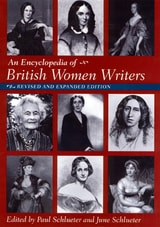
Schlueter, Paul
Rutgers University Press, 1999
Paul Schlueter and June Schlueter have individually and jointly written and edited a number of critical and reference works, including The English Novel: Twentieth Century Criticism (Vol. 2: Twentieth Century Novelists) and Modern American Literature (Supplement 2). Paul Schlueter's books include The Novels of Doris Lessing and Shirley Ann Grau. June Schlueter, Provost, and Dana Professor of English at Lafayette College, has edited Feminist Readings of Modern American Drama and Modern American Drama: The Female Canon.
Entitled to the Pedestal
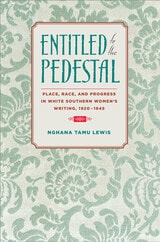
Place, Race, and Progress in White Southern Women’s Writing, 1920–1945Nghana tamu Lewis
University of Iowa Press, 2007
In this searching study, Nghana Lewis offers a close reading of the works and private correspondences, essays, and lectures of five southern white women writers: Julia Peterkin, Gwen Bristow, Caroline Gordon, Willa Cather, and Lillian Smith. At the core of this work is a sophisticated reexamination of the myth of southern white womanhood.
Lewis overturns the conventional argument that white women were passive and pedestal-bound. Instead, she argues that these figures were complicit in the day-to-day dynamics of power and authorship and stood to gain much from these arrangements at the expense of others.
At the same time that her examination of southern mythology explodes received wisdom, it is also a journey of self-discovery. As Lewis writes in her preface, “As a proud daughter of the South, I have always been acutely aware of the region’s rich cultural heritage, folks, and foodstuffs. How could I not be? I was born and reared in Lafayette, Louisiana, where an infant’s first words are not ‘da-da’ and ‘ma-ma’ but ‘crawfish boil’ and ‘fais-do-do.’ . . . I have also always been keenly familiar with its volatile history.” Where these conflicting images—and specifically the role of white southern women as catalysts, vindicators, abettors, and antagonists—meet forms the crux of this study. As such, this study of the South by a daughter of the South offers a distinctive perspective that illuminates the texts in novel and provocative ways.
Entre Guadalupe y Malinche
Tejanas in Literature and ArtEdited by Inés Hernández-Ávila and Norma Elia Cantú
University of Texas Press, 2016
Mexican and Mexican American women have written about Texas and their lives in the state since colonial times. Edited by fellow Tejanas Inés Hernández-Ávila and Norma Elia Cantú, Entre Guadalupe y Malinche gathers, for the first time, a representative body of work about the lives and experiences of women who identify as Tejanas in both the literary and visual arts.
The writings of more than fifty authors and the artwork of eight artists manifest the nuanced complexity of what it means to be Tejana and how this identity offers alternative perspectives to contemporary notions of Chicana identity, community, and culture. Considering Texas-Mexican women and their identity formations, subjectivities, and location on the longest border between Mexico and any of the southwestern states acknowledges the profound influence that land and history have on a people and a community, and how Tejana creative traditions have been shaped by historical, geographical, cultural, linguistic, social, and political forces. This representation of Tejana arts and letters brings together the work of rising stars along with well-known figures such as writers Gloria Anzaldúa, Emma Pérez, Alicia Gaspar de Alba, Carmen Tafolla, and Pat Mora, and artists such as Carmen Lomas Garza, Kathy Vargas, Santa Barraza, and more. The collection attests to the rooted presence of the original indigenous peoples of the land now known as Tejas, as well as a strong Chicana/Mexicana feminism that has its precursors in Tejana history itself.
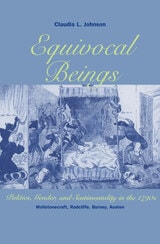
Equivocal Beings
Politics, Gender, and Sentimentality in the 1790s--Wollstonecraft, Radcliffe, Burney, AustenClaudia L. Johnson
University of Chicago Press, 1995
Demonstrating the interrelationships among politics, gender, and feeling in the fiction of this period, Johnson provides detailed readings of Wollstonecraft, Radcliffe, and Burney, and treats the qualities that were once thought to mar their work—grotesqueness, strain, and excess—as indices of ideological conflict and as strategies of representation during a period of profound political conflict. She maintains that the reactionary reassertion of male sentimentality as a political duty displaced customary gender roles, rendering women, in Wollstonecraft's words, "equivocal beings."
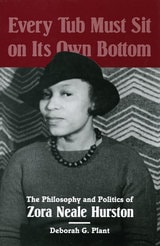
Every Tub Must Sit on Its Own Bottom
The Philosophy and Politics of Zora Neale HurstonDeborah G. Plant
University of Illinois Press, 1995
needed at this point in the evolving critical assessment of Hurston. It
is a paradigm for the study of individual African American women writers."
-- Alice Deck, University of Illinois at Urbana-Champaign
In a ground-breaking study
of Zora Neale Hurston, Deborah Plant takes issue with current notions
of Hurston as a feminist and earlier impressions of her as an intellectual
lightweight who disregarded serious issues of race in American culture.
Instead, Plant calls Hurston a "writer of resistance" who challenged
the politics of domination both in her life and in her work. One of the
great geniuses of the Harlem Renaissance, Hurston stands out as a strong
voice for African-American women. Her anthropological inquiries as well
as her evocative prose provide today's readers with a rich history of
African American folk culture, a folk culture through which Hurston expressed
her personal and political strategy of resistance and self-empowerment.
Through readings of Hurston's
fiction and autobiographical writings, Plant offers one of the first book-length
discussions of Hurston's personal philosophy of individualism and self-preservation.
From a discussion of Hurston's preacher father and influential mother,
whose guiding philosophy is reflected in the title of this book, to the
influence of Spinoza and Nietzsche, Plant puts into perspective the driving
forces behind Hurston's powerful prose.
This fresh look at one of
the most important writers of the twentieth century is sure to shape future
study of Hurston and her work.
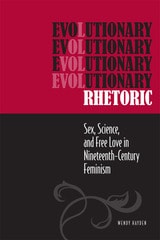
Evolutionary Rhetoric
Sex, Science, and Free Love in Nineteenth-Century FeminismWendy Hayden
Southern Illinois University Press, 2013
In Evolutionary Rhetoric, scholar Wendy Hayden provides a comprehensive examination of the relationship between scientific and feminist rhetorics in free-love feminism, studying the movement from its inception in the 1850s to its dark turn toward eugenics in the early 1900s. Hayden organizes her provocative study by scientific discipline—evolution, physiology, bacteriology, embryology, and heredity. Each chapter explores how free-love feminists adopted the evidence of that discipline in their arguments for increased sex education, women’s sexual rights, reproductive freedom, and the abolition of a marriage system that repressed the rights and the sexuality of women.
Hayden takes our conventional understanding of the relationship between nineteenth-century feminism and science and expands it. The author provides examples of the powerful words of free-love feminists to show exactly how these exceptional women used science as a rhetorical platform to promote feminist, and often radical, social reforms.
Considering why the free-love movement has not yet been studied, Hayden also discusses how the recovery of this movement may impact larger goals in the recovery of women’s rhetoric. This important and timely study of a long-forgotten movement adds to our understanding of the complexities of the history of feminism.
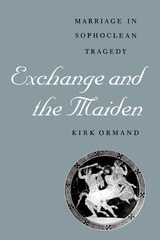
Exchange and the Maiden
Marriage in Sophoclean TragedyBy Kirk Ormand
University of Texas Press, 1999
Marriage is a central concern in five of the seven extant plays of the Greek tragedian Sophocles. In this pathfinding study, Kirk Ormand delves into the ways in which these plays represent and problematize marriage, thus offering insights into how Athenians thought about the institution of marriage.
Ormand takes a two-fold approach. He first explores the legal and economic underpinnings of Athenian marriage, an institution designed to guarantee the legitimate continuation of patrilineal households. He then shows how Sophocles' plays Trachiniae, Electra, Antigone, Ajax, and Oedipus Tyrannus both reinforce and critique this ideology by representing marriage as a homosocial exchange between men, in which women are objects who may attempt—but always fail—to become self-acting subjects.
These fresh readings provide the first systematic study of marriage in Sophocles. They draw important connections between drama and marriage as rituals concerned with controlling potentially disruptive female subjectivities.
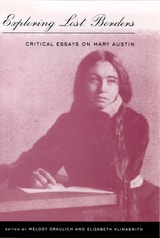
Exploring Lost Borders
Critical Essays On Mary AustinMelody Graulich
University of Nevada Press, 1999
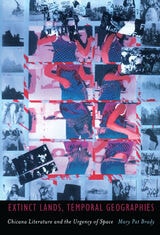
Extinct Lands, Temporal Geographies
Chicana Literature and the Urgency of SpaceMary Pat Brady
Duke University Press, 2002
The history of the American Southwest in large part entails the transformation of lived, embodied space into zones of police surveillance, warehouse districts, highway interchanges, and shopping malls—a movement that Chicana writers have contested from its inception. Brady examines this long-standing engagement with space, first in the work of early newspaper essayists and fiction writers who opposed Anglo characterizations of Northern Sonora that were highly detrimental to Mexican Americans, and then in the work of authors who explore border crossing. Through the writing of Sandra Cisneros, Cherríe Moraga, Terri de la Peña, Norma Cantú, Monserrat Fontes, Gloria Anzaldúa, and others, Brady shows how categories such as race, gender, and sexuality are spatially enacted and created—and made to appear natural and unyielding. In a spatial critique of the war on drugs, she reveals how scale—the process by which space is divided, organized, and categorized—has become a crucial tool in the management and policing of the narcotics economy.