Results by title
1296 books match the query 'Women authors' and 52 start with e
Each and Her
Valerie Martínez
University of Arizona Press, 2010
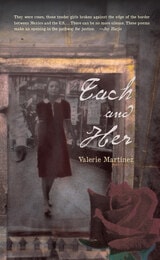
Martínez departs from traditional narrative to reveal the hidden effects and outcomes of the horrific and heart-wrenching cases of femicide. These poems—lyric fragments and prose passages that form a collage—have an intricate relation to one another, creating a complex literary quilt that feels like it can be read from the beginning, the end, or anywhere in between. Martínez is personally invested in the topic, evoking the loss of her sister, and Each and Her emerges as a biography of sorts and a compelling homage to all those who have suffered. Other authors may elaborate on or investigate this topic, but Martínez humanizes it by including names, quotations, realistic details, and stark imagery.
The women of Juárez, like other women around the world, are ravaged by inequality, discontinuity, politics, and economic plagues that contribute to gender violence. Martínez offers us a poignant and alarming glance into another world with these never-before-told stories. Her refreshing and explosive voice will keep readers transfixed and intrigued about these events and emotions—removed from us and yet so close to the heart.
Early Modern Women Journal v14.2
Bernadette Andrea
Arizona Center for Medieval and Renaissance Studies, 2020
Early Modern Women on the Fall
An AnthologyMichelle M. Dowd
Arizona Center for Medieval and Renaissance Studies, 2012

Early Modern Women's Writing and Sor Juana Ines de la Cruz
Stephanie Merrim
Vanderbilt University Press, 1999
Early modern women writers whose works are explored include Marie de Gournay, Margaret Fell Fox, Catalina de Erauso, Maria de Zayas, Ana Caro, Mme de Lafayette, Anne Bradstreet, St. Teresa, and Margaret Lucas Cavendish.
Merrim's study provides a full-bodied picture of the resources that the cultural and historical climates of the seventeenth century placed at the disposal of women writers, the manners in which women writers instrumentalized them, the building blocks and concerns of early modern women's writing, and the continuities between early modern and modern women's writing.
Written in an engaging, clear manner, this innovative study will be of interest not only to Hispanists but also to scholars in early modern studies, women's studies, history, and comparative literature.
Early Modern Women
An Interdisciplinary Journal, volume 16 number 1 (Fall 2021)The University of Chicago Press
University of Chicago Press Journals, 2021
Early Modern Women
An Interdisciplinary Journal, volume 16 number 2 (Spring 2022)The University of Chicago Press
University of Chicago Press Journals, 2022
Early Modern Women
An Interdisciplinary Journal, volume 17 number 1 (Fall 2022)The University of Chicago Press
University of Chicago Press Journals, 2022
Early Modern Women
An Interdisciplinary Journal, volume 17 number 2 (Spring 2023)The University of Chicago Press
University of Chicago Press Journals, 2023
Early Modern Women
An Interdisciplinary Journal, volume 18 number 1 (Fall 2023)The University of Chicago Press
University of Chicago Press Journals, 2023
Early Modern Women
An Interdisciplinary Journal, volume 18 number 2 (Spring 2024)The University of Chicago Press
University of Chicago Press Journals, 2024
Early Modern Women
An Interdisciplinary Journal, volume 19 number 1 (Fall 2024)The University of Chicago Press
University of Chicago Press Journals, 2024
Early Modern Women
An Interdisciplinary Journal, volume 19 number 2 (Spring 2025)The University of Chicago Press
University of Chicago Press Journals, 2025
Early Modern Women
An Interdisciplinary Journal, volume 20 number 1 (Fall 2025)The University of Chicago Press
University of Chicago Press Journals, 2025
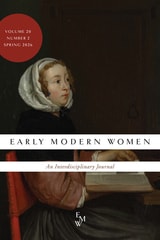
Early Modern Women
An Interdisciplinary Journal, volume 20 number 2 (Spring 2026)The University of Chicago Press
University of Chicago Press Journals, 2026
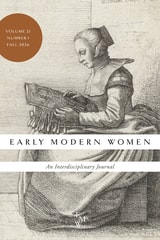
Early Modern Women
An Interdisciplinary Journal, volume 21 number 1 (Fall 2026)The University of Chicago Press
University of Chicago Press Journals, 2026
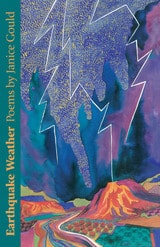
Earthquake Weather
PoemsJanice Gould
University of Arizona Press, 1996
Showing a steady courage in the midst of this alienation, her words are also stark testimony to the struggle of an individual caught in social and emotional contexts defined by others. In Earthquake Weather, as in an evolving friendship, Gould opens herself to the reader in stages. "I did not know how lonely I was / till we began to talk," she writes in an opening section, setting the introspective tone of what’s to come. She begins with a focus on those universal truths that both bind us and isolate us from each other: the pain of loss, the finality of death, our longing to see beneath the surface of things. Next, the poet turns to her growing-up years during the Vietnam War and the civil rights movement. She describes a family in turmoil and an Indian heritage that, oddly, was one of the factors that made her feel most disconnected from other people. And she writes poignantly about her increasing alienation from prescribed sexual roles. "What’s wrong with me? / Where do I belong? Why / am I here? Why can’t I / hold on?" Finally, as in a trusting friendship, Gould offers the reader vivid word portraits of relationships in her life—women she has loved and who have loved her.
Erotic and deeply personal, these poems serve as both a reconciliation and affirmation of her individuality. "Yet would you deny / that between women desire exists / that in our friendship a delicate / and erotic strand of fire unites us?" The poems in this book, says critic Toby Langen, are most powerful for their "courageous drawing on experience and feelings." They will speak to many general readers as well as anyone interested in questions of gender and identity, including students of literature, lesbian/women’s studies, social/cultural studies, or American Indian studies.
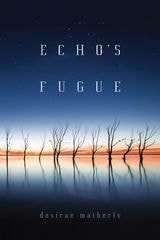
Echo's Fugue
Desirae Matherly
The Ohio State University Press, 2019
Through a series of variations on the theme of love—unrequited, polyamorous, monogomous, scandalous, adulterous—Desirae Matherly’s Echo’s Fugue explores love in all its failures and delusions. Patterned on the unfinished The Art of Fugue by Johann Sebastian Bach which has been a mystery for centuries, Echo’s Fugue undertakes Bach’s project in prose—the tantalizing numerical correspondences throughout, the repetition of a single theme, the unfinished final piece.
Matherly’s essays appear as letters, indexes, narrative, or sentence diagrams, each defying the rules of the blank page. Song lyrics, obsession, Greek mythology, psychology, game theory, and human sexuality form a fragmented narrative about loss and unhealthy attachments. Mimicry of Bach’s fugues leads the author to questions about love, sex, desire, the “Bach or Stravinsky” paradigm in game theory, and relationships considered taboo by mainstream standards.
What authority speaks clearest with regard to love, sex, and desire—and is objectivity even possible? The final essay attempts to resolve this question while echoing the puzzle of Bach’s final unfinished fugue.
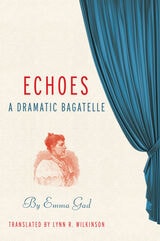
Echoes
A Dramatic BagatelleEmma Gad, Translated by Lynn R. Wilkinson
University of Wisconsin Press, 2021
Although it was labeled a “bagatelle,” Echoes, like most of Gad’s other plays, is quite funny. The play brings together three individuals in the out-of-the-way cottage of an old servant. Countess Clara takes refuge with Maren, her former nursemaid, during a sudden downpour and is soon joined by Niels, her former tutor, who claims to be passing by on his way to a church, where he hopes to find important historical documents. During Clara’s conversations with the two, it comes out that she is considering marriage to a count who lives nearby, even though she finds him and his way of life unattractive, and that she and Niels had been in love years before.
Gad’s graceful dialogue manages to touch on questions hotly debated in the last decades of the nineteenth century, such as the ability of individuals to break with the past or with outmoded or repressive conventions, while also making audiences laugh. Despite the play’s lighthearted wittiness, Echoes is an inventive example of turn-of-the-century avant-garde theater.

Ecofeminist Literary Criticism
Theory, Interpretation, PedagogyEdited by Greta Gaard and Patrick D. Murphy
University of Illinois Press, 1998
Ecofeminism is a practical movement for social change that discerns interconnections among all forms of oppression: the exploitation of nature, the oppression of women, class exploitation, racism, colonialism. Against binary divisions such as self/other, culture/nature, man/woman, humans/animals, and white/non-white, ecofeminist theory asserts that human identity is shaped by more fluid relationships and by an acknowledgment of both connection and difference.
Once considered the province of philosophy and women's studies, ecofeminism in recent years has been incorporated into a broader spectrum of academic discourse. Ecofeminist Literary Criticism assembles some of the most insightful advocates of this perspective to illuminate ecofeminism as a valuable component of literary criticism.
Ecstasy of Regret
PoemsDannye Powell
University of Arkansas Press, 2002
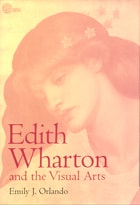
Edith Wharton and the Visual Arts
Emily J. Orlando
University of Alabama Press, 2008
An insightful look at representations of women’s bodies and female authority.
This work explores Edith Wharton's career-long concern with a 19th-century visual culture that limited female artistic agency and expression. Wharton repeatedly invoked the visual arts--especially painting—as a medium for revealing the ways that women's bodies have been represented (as passive, sexualized, infantalized, sickly, dead). Well-versed in the Italian masters, Wharton made special use of the art of the Pre-Raphaelite Brotherhood, particularly its penchant for producing not portraits of individual women but instead icons onto whose bodies male desire is superimposed.
Emily Orlando contends that while Wharton's early work presents women enshrined by men through art, the middle and later fiction shifts the seat of power to women. From Lily Bart in The House of Mirth to Undine Spragg in The Custom of the Country and Ellen Olenska in The Age of Innocence, women evolve from victims to vital agents, securing for themselves a more empowering and satisfying relationship to art and to their own identities.
Orlando also studies the lesser-known short stories and novels, revealing Wharton’s re-workings of texts by Browning, Poe, Balzac, George Eliot, Sir Joshua Reynolds, and, most significantly, Dante Gabriel Rossetti. Edith Wharton and the Visual Arts is the first extended study to examine the presence in Wharton's fiction of the Pre-Raphaelite poetry and painting of Rossetti and his muses, notably Elizabeth Siddall and Jane Morris. Wharton emerges as one of American literature's most gifted inter-textual realists, providing a vivid lens through which to view issues of power, resistance, and social change as they surface in American literature and culture.
Edith Wharton in Context
Essays on IntertextualityAdeline R. Tintner
University of Alabama Press, 1999
Tintner provides a detailed analysis of the complex interplay between Wharton and James—how they influenced each other and how some of their writings operate as homages or personal jokes. So deeply was James in Wharton’s confidence, Tintner argues, that he provided her with source models for a number of her characters. In addition, Wharton found in his fiction structures for her own, especially for The Age of Innocence.
Tintner also brings her considerable knowledge of art history to bear in her study of art allusions in Wharton’s work. Wharton’s response both to the Italian painters active before Raphael and to the English Pre-Raphaelites of a generation before her own is analyzed here in three essays. These pieces demonstrate Wharton’s sensibility to changes in art tastes and collecting, the inheritance of Rossetti’s revolutionary paintings in the unfinished novel, The Buccaneers, and the importance of home in The Glimpses of the Moon, as demonstrated by Wharton’s use of Tiepolo’s fresco in the church of Scalzi.
Tintner concludes by considering Wharton’s literary legacy and who Wharton has figured in the imaginations of recent writers, including Richard Howard, Louis Auchincloss, and Cathleen Schine. Tintner finds some part of Wharton’s personality or work evoked in a number of contemporary works and argues that this presence signals the beginning of an increasing influence.
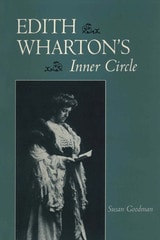
Edith Wharton's Inner Circle
By Susan Goodman
University of Texas Press, 1994
When Edith Wharton became friends with Henry James, she joined a group of men who became her "inner circle." This group included both well-known figures, such as James, Percy Lubbock, and Bernard Berenson, and several now forgotten, including John Hugh Smith, Walter Berry, Gaillard Lapsley, Robert Norton, and Howard Sturgis.
Drawing on unpublished archival material by and about members of the circle, Susan Goodman here presents an intimate view of this American expatriate community, as well as the larger transatlantic culture it mirrored. She explores how the group, which began forming around 1904 and lasted until Wharton's death in 1937, defined itself against the society its founders had left in the United States, while simultaneously criticizing and accommodating the one it found in Europe. Tracing Wharton's individual relationships with these men and their relationships with one another, she examines literary kinships and movements in the biographical and feminist context of gender, exile, and aesthetics. She also relates the group to other literary circles, such as the Bloomsbury group and Gertrude Stein's salon.
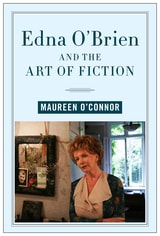
Edna O'Brien and the Art of Fiction
Maureen O'Connor
Bucknell University Press, 2022
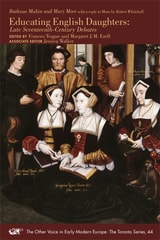
Educating English Daughters
Late Seventeenth-Century DebatesBathsua Makin and Mary More
Iter Press, 2016
This edition offers texts from Bathsua Makin and Mary More, and Robert Whitehall’s response to More’s argument. Makin describes the appropriate education for London merchants’ daughters, arguing that girls should be educated and should aspire to follow learned women in history, and that educated women improve their families and themselves. More argues that women have the right to an education, and that such an education shows that the inequality of married women under English law is a man-made institution. More’s argument drew objections from her Oxford reader, Robert Whitehall, who preserved her manuscript with his own. Makin and More enjoyed a measure of public recognition and esteem, yet after their deaths, they and their texts were largely ignored until the late twentieth century.
Elizabeth Manning Hawthorne
A Life in LettersElizabeth Manning Hawthorne
University of Alabama Press, 2006
An annotated selection of unpublished letters by Nathaniel Hawthorne's sister.
Retrieved from seven different libraries, this corpus of letters was preserved by the Manning family chiefly for their value as records of Nathaniel Hawthorne's life and work; but they ironically also illuminate the life and mind of a fascinating correspondent and citizen of New England with incisive views and commentaries on her contemporaries, her role as a woman writer, Boston and Salem literary culture, and family life in mid-19th-century America.
This book illuminates Elizabeth's early life; the trauma caused for sister and brother by the death of their father; her and her brother's education; and the tensions the two children experienced when they moved in with their mother's family, the welthier Mannings, instead of the poorer though socially more venerable Hawthornes, following their father's death. The letters portray Elizabeth's constrained relationship with Nathaniel's wife Sofia Peabody and counter Sophia's portrayal of her sister-in-law as a recluse, oddity, and “queer scribbler.”
These 118 letters also reveal Elizabeth Hawthorne's tremendous gifts as a thinker, correspondent, and essayist, her interest in astronomy, a lifelong drive toward self-edification in many fields, and her extraordinary relationship with Nathaniel. As a sibling and a fellow author, they were sometimes lovingly codependent and sometimes competitive. Finally, her writing reveals the larger worlds of politics, war, the literary landscape, class, family life, and the freedoms and constraints of a woman's role, all by a heretofore understudied figure.
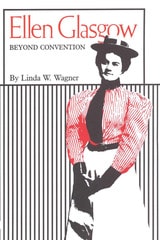
Ellen Glasgow
Beyond ConventionBy Linda W. Wagner
University of Texas Press, 1982
For many years Pulitzer Prize winner Ellen Glasgow has been regarded as a classic American regional novelist. But Glasgow is far more than a Southern writer, as Linda Wagner demonstrates in this fascinating reassessment of her work.
A Virginia lady, Glasgow began to write at a time when the highest praise for a literary woman was to be mistaken for a male writer. In her early fiction, published at the turn of the century, all attention is focused on male protagonists; the strong female characters who do appear early in these novels gradually fade into the background.
But Ellen Glasgow grew to become a woman who, born to be protected from the very life she wanted to chronicle, moved “beyond convention” to live her life on her own terms. And as her own self-image changed, the perspective of her novels became more feminine, the female characters moved to center stage, and their philosophies became central to her themes. Glasgow’s best novels, then—Barren Ground, Vein of Iron, and the romantic trilogy that includes The Sheltered Life—came late in her life, when she was no longer content to imitate fashionable male novelists.
Glasgow’s increased self-assurance as writer and woman led to a far greater awareness of craft. Her style became more highly imaged, more suggestive, as though she wished to widen the range of resources available to move her readers. She became a writer both popular and respected. Her novels appeared as selections of the Literary Guild and the Book-of-the-Month Club, and one became a best seller. At the same time she was chosen as one of the few female members of the Academy of Arts and Letters, and in 1942 she was awarded the Pulitzer Prize for her novel In This Our Life.
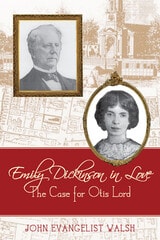
Emily Dickinson in Love
The Case for Otis LordWalsh, John Evangelist
Rutgers University Press, 2012
From the award-winning author of Poe the Detective: The Curious Circumstances Behind "The Mystery of Marie Roget" comes a compelling argument for the identity of Emily Dickinson’s true love
Proud of my broken heart
Since thou didst break it,
Proud of the pain I
Did not feel till thee . . .
Those words were written by Emily Dickinson to a married man. Who was he?
For a century or more the identity of Emily Dickinson’s mysterious “Master” has been eagerly sought, especially since three letters from her to him were found and published in 1955. In Emily Dickinson in Love, John Evangelist Walsh provides the first book-length treatment of this fascinating subject, offering a solution based wholly on documented facts and the poet’s own writings.
Crafting the affair as a love story of rare appeal, and writing with exquisite attention to detail, in Part I Walsh reveals and meticulously proves the Master to be Otis Lord, a friend of the poet’s father and a man of some reputation in law and politics. Part II portrays the full dimensions of their thirty-year romance, most of it clandestine, including a series of secret meetings in Boston.
After uncovering and confirming the Master’s identity, Walsh fits that information into known events of Emily’s life to make sense of facts long known but little understood—Emily’s decision to dress always in white, for instance, or her extreme withdrawal from a normal existence when she had previously been an active, outgoing friend to many men and women.
In a lengthy section of Notes and Sources, Walsh presents his proofs in abundant detail, demonstrating that the evidence favors one man so irresistibly that there is left no room for doubt. Each reader will decide if he has truly succeeded in making the case for Otis Lord.
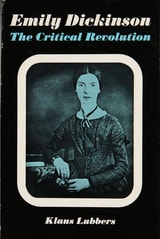
Emily Dickinson
The Critical RevolutionKlaus Lubbers
University of Michigan Press, 2025
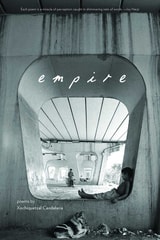
Empire
Xochiquetzal Candelaria
University of Arizona Press, 2011
This distinctive collection ranges from the frighteningly whimsical image of Cortés dancing gleefully around a cannon to the haunting and poignant discovery of a dead refugee boy seemingly buried within the poet herself. The blending of styles works to blur the lines between subjects, creating a textured narrative full of both imagination and nuance.
Ultimately, Empire situates individual experience in the wider social context, highlighting the power of poetry as song, performance, testimony, and witness. Addressing themes such as war, family, poverty, gender, race, and migration, Candelaria gives us a dialogue between historical and personal narratives, as well as discreet “conversations” between content and form.
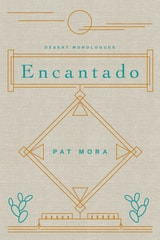
Encantado
Desert MonologuesPat Mora
University of Arizona Press, 2018
Each poem forms a story that reveals the complex and emotional journeys we take through life. Mora meanders through the thoughts of Encantado’s residents—the mothers and sisters, brothers and fathers in whom we see slivers of ourselves and our loved ones—and paints a portrait of a community through its inhabitants’ own diverse voices. Even the river has a voice we understand.
Inspired by both the real and imagined stories around her, Mora transports us to the heart of what it means to join in a chorus of voices. A community. A town. Encantado.
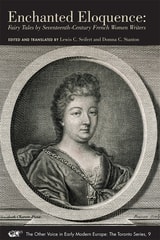
Enchanted Eloquence
Fairy Tales by Seventeenth–Century French Women WritersEdited and Translated by Lewis C. Seifert and Domna C. Stanton
Iter Press, 2010
—Jack Zipes
Professor of German, Emeritus, University of Minnesota
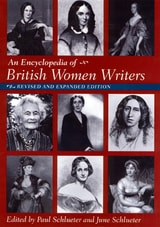
Encyclopedia of British Women Writers
Schlueter, Paul
Rutgers University Press, 1999
Paul Schlueter and June Schlueter have individually and jointly written and edited a number of critical and reference works, including The English Novel: Twentieth Century Criticism (Vol. 2: Twentieth Century Novelists) and Modern American Literature (Supplement 2). Paul Schlueter's books include The Novels of Doris Lessing and Shirley Ann Grau. June Schlueter, Provost, and Dana Professor of English at Lafayette College, has edited Feminist Readings of Modern American Drama and Modern American Drama: The Female Canon.
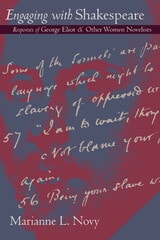
Engaging with Shakespeare
Responses of George Eliot and other Women NovelistsMarianne L. Novy
University of Iowa Press, 1998
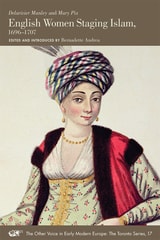
English Women Staging Islam, 1696-1707
Delarivier Manley and Mary Pix
Iter Press, 2012

Enraptured Space
Gender, Class, and Ecology in the Work of Paula MeehanKathryn J. Kirkpatrick
West Virginia University Press, 2025
In Paula Meehan, Kirkpatrick has found a powerful poet to both study and love, and her reading of Meehan’s poetry and prose through the lenses of gender studies, the environmental humanities, and social class offers a passionate endorsement of Meehan’s radical interventions in the canon of Irish poetry. This work explores eight volumes of Meehan’s poetry, including Dharmakaya, Painting Rain, and Geomantic.
Entitled to the Pedestal
Place, Race, and Progress in White Southern Women’s Writing, 1920–1945Nghana tamu Lewis
University of Iowa Press, 2007
In this searching study, Nghana Lewis offers a close reading of the works and private correspondences, essays, and lectures of five southern white women writers: Julia Peterkin, Gwen Bristow, Caroline Gordon, Willa Cather, and Lillian Smith. At the core of this work is a sophisticated reexamination of the myth of southern white womanhood.
Lewis overturns the conventional argument that white women were passive and pedestal-bound. Instead, she argues that these figures were complicit in the day-to-day dynamics of power and authorship and stood to gain much from these arrangements at the expense of others.
At the same time that her examination of southern mythology explodes received wisdom, it is also a journey of self-discovery. As Lewis writes in her preface, “As a proud daughter of the South, I have always been acutely aware of the region’s rich cultural heritage, folks, and foodstuffs. How could I not be? I was born and reared in Lafayette, Louisiana, where an infant’s first words are not ‘da-da’ and ‘ma-ma’ but ‘crawfish boil’ and ‘fais-do-do.’ . . . I have also always been keenly familiar with its volatile history.” Where these conflicting images—and specifically the role of white southern women as catalysts, vindicators, abettors, and antagonists—meet forms the crux of this study. As such, this study of the South by a daughter of the South offers a distinctive perspective that illuminates the texts in novel and provocative ways.
Equivocal Beings
Politics, Gender, and Sentimentality in the 1790s--Wollstonecraft, Radcliffe, Burney, AustenClaudia L. Johnson
University of Chicago Press, 1995
Demonstrating the interrelationships among politics, gender, and feeling in the fiction of this period, Johnson provides detailed readings of Wollstonecraft, Radcliffe, and Burney, and treats the qualities that were once thought to mar their work—grotesqueness, strain, and excess—as indices of ideological conflict and as strategies of representation during a period of profound political conflict. She maintains that the reactionary reassertion of male sentimentality as a political duty displaced customary gender roles, rendering women, in Wollstonecraft's words, "equivocal beings."

Erase Genesis
Rebecca Gayle Howell
Bridwell Press, 2025
In Erase Genesis, critically-acclaimed Kentucky poet and translator Rebecca Gayle Howell transforms the KJV creation story for the climate change age. Devoted to the same three chapters, Howell’s erasures raise a new myth—a story of the Earth’s intimacy with us. Here, man is not given dominion. Instead, the trees and the waters keep eternity, and the Lord Woman seeds tenderness as the only way forward.
A book-length poem with its roots in art, ecopoetry, progressive spirituality, and literary translation—Erase Genesis dismantles centuries of hurt as we bare our beginning anew, in abundance with Earth’s divine call:
“Be light and / let be”
Erou
Maya Phillips
Four Way Books, 2019
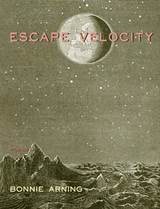
Escape Velocity
Bonnie Arning
University Press of Colorado, 2017
From the moment of a marriage’s heated inception to its period of luminous crowding and onward into distance and darkness, Bonnie Arning’s Escape Velocity asks if it’s possible to exist outside the only universe we’ve ever known. In modes both lyric and narrative, we are given a peephole into the height and decline of a marriage that begins beneath the moving lights of Las Vegas, Nevada, and traverses the devastating terrain of gambling, miscarriage, infidelity, and violence.
Arning gives voice to divergent aspects of love and violence through her use of math problems, erasures, dictionary entries, structured stanzas, and sprawling free verse. This multiplicity of forms comes together to explore everything from pop culture references of domestic violence to cultural notions of victims and victimhood. However dark, collectively these poems tell a love story—an acceptance of our capability to love those who hurt us, but also the love-of-self required to slowly and steadily reach "the velocity to be everleaving."
In the tradition of Eavan Boland and Louise Glück, Arning wrestles down and examines the terrible without flinching. We journey with her, engrossed by each difficult truth: a precipice near which we are both terrified to stand and transfixed by its unnerving insistence on beauty.
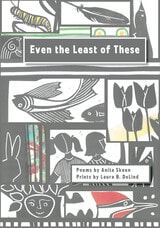
Even the Least of These
Anita Skeen
Michigan State University Press, 2024

Everybody’s Family Romance
Reading Incest in Neoliberal AmericaGillian Harkins
University of Minnesota Press, 2009
In the 1990s, a boom in autobiographical novels and memoirs about incest emerged, making incest one of the hottest topics to connect daytime TV talk shows, the self-help industry, and the literary publishing circuit. In Everybody's Family Romance, Gillian Harkins places this proliferation of incest literature at the center of transformations in the political and economic climate of the late twentieth century.
Harkins's interdisciplinary approach reveals how women's narratives about incest were co-opted by-and yet retained resistant strains against-the cultural logics of the neoliberal state. Across chapters examining legal cases on recovered memory, popular journalism, and novels and memoirs by Dorothy Allison, Carolivia Herron, Kathryn Harrison, and Sapphire, Harkins demonstrates that incest narratives look backward into the past. In these accounts, images of incest forge links between U.S. chattel slavery and the distributive impasses of the welfare state and between decades-distant childhoods and emergent memories of the present.
In contrast to recent claims that incest narratives eclipse broader frameworks of political and economic power, Harkins argues that their emergence exposes changing structural relations between the family and the nation and, in doing so, transforms the analyses of American familial sexual violence.
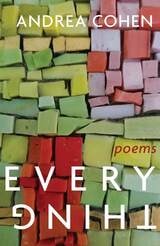
Everything
Andrea Cohen
Four Way Books, 2021
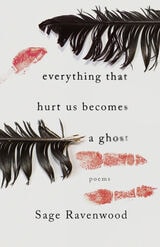
Everything That Hurt Us Becomes a Ghost
PoemsSage Ravenwood
Gallaudet University Press, 2023
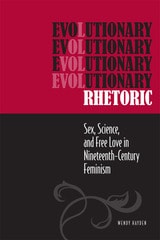
Evolutionary Rhetoric
Sex, Science, and Free Love in Nineteenth-Century FeminismWendy Hayden
Southern Illinois University Press, 2013
In Evolutionary Rhetoric, scholar Wendy Hayden provides a comprehensive examination of the relationship between scientific and feminist rhetorics in free-love feminism, studying the movement from its inception in the 1850s to its dark turn toward eugenics in the early 1900s. Hayden organizes her provocative study by scientific discipline—evolution, physiology, bacteriology, embryology, and heredity. Each chapter explores how free-love feminists adopted the evidence of that discipline in their arguments for increased sex education, women’s sexual rights, reproductive freedom, and the abolition of a marriage system that repressed the rights and the sexuality of women.
Hayden takes our conventional understanding of the relationship between nineteenth-century feminism and science and expands it. The author provides examples of the powerful words of free-love feminists to show exactly how these exceptional women used science as a rhetorical platform to promote feminist, and often radical, social reforms.
Considering why the free-love movement has not yet been studied, Hayden also discusses how the recovery of this movement may impact larger goals in the recovery of women’s rhetoric. This important and timely study of a long-forgotten movement adds to our understanding of the complexities of the history of feminism.
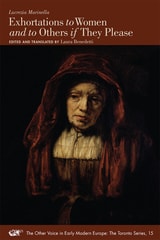
Exhortations to Women and to Others If They Please
Lucrezia Marinella
Iter Press, 2012
—Maria Galli Stampino
Associate Professor of French and Italian
University of Miami
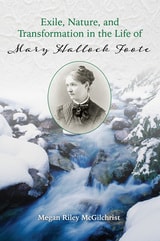
Exile, Nature, and Transformation in the Life of Mary Hallock Foote
Megan Riley McGilchrist
University of Nevada Press, 2021
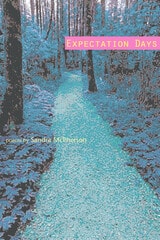
Expectation Days
Sandra McPherson
University of Illinois Press, 2007
From movie making to medical misadventures, meditations on widowhood to feminist protestations, Expectation Days is a dazzling portrayal of instances in Sandra McPherson’s life. Her autobiographical collection uses peculiar and exact language to reflect on a wide range of activities that include grouse hunting, going through airport security after 9/11, and climbing a coastal cliff. From being an unintended child to ceremonializing a lifetime “served,” McPherson speaks in both clear and distressing voices from the state of speechless fear that is bereavement.
Will the little figures ever reach the monument?
A doctor orders me to be on watch.
Will the mist pass over their cheeks
and clear the strollers’ eyes?
If so, I’ll see it. I’m on watch.
I train my eyes on paintings
to see if there is any change.
--from “On Suicide Watch”
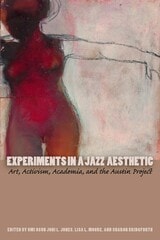
Experiments in a Jazz Aesthetic
Art, Activism, Academia, and the Austin ProjectEdited by Omi Osun Joni L. Jones, Lisa L. Moore, and Sharon Bridgforth
University of Texas Press, 2010
In Austin, Texas, in 2002, a group of artists, activists, and academics led by performance studies scholar Omi Osun Joni L. Jones formed the Austin Project (tAP), which meets annually in order to provide a space for women of color and their allies to build relationships based on trust, creativity, and commitment to social justice by working together to write and perform work in the jazz aesthetic.
Inspired by this experience, this book is both an anthology of new writing and a sourcebook for those who would like to use creative writing and performance to energize their artistic, scholarly, and activist practices. Theoretical and historical essays by Omi Osun Joni L. Jones describe and define the African American tradition of art-making known as the jazz aesthetic, and explain how her own work in this tradition inspired her to start tAP.
Key artists in the tradition, from Bessie Award–winning choreographer Laurie Carlos and writer/performer Robbie McCauley to playwrights Daniel Alexander Jones and Carl Hancock Rux, worked with the women of tAP as mentors and teachers. This book brings together never-before-published, must-read materials by these nationally known artists and the transformative writing of tAP participants. A handbook for workshop leaders by Lambda Literary Award–winning writer Sharon Bridgforth, tAP's inaugural anchor artist, offers readers the tools for starting similar projects in their own communities. A full-length script of the 2005 tAP performance is an original documentation of the collaborative, breath-based, body work of the jazz aesthetic in theatre, and provides both a script for use by theatre artists and an invaluable documentation of a major transformative movement in contemporary performance.