353 books match the query 'World War II' and 3 start with e
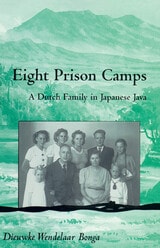
cover of Eight Prison Camps: A Dutch Family in Japanese Java

Eight Prison Camps

A Dutch Family in Japanese Java

Dieuwke Wendelaar Bonga

Ohio University Press, 1996

Eldest daughter of eight children, the author grew up in Surakarta, Java, in what is now Indonesia. In the months following the bombing of Pearl Harbor, however, Dutch nationals were rounded up by Japanese soldiers and put in internment camps. Her father and brother were sent to separate men’s camps, leaving the author, her mother, and the five younger children in the women’s camp. In this and later seven other prison camps in central Java, their lives gradually deteriorated from early days of fear and crowding to near starvation, forced labor, beatings, and seeing others disappear or die. On the family’s return to Holland after the war, they found a nation recovering from German occupation and largely ignorant of the horror of the Far East experience.
[more]
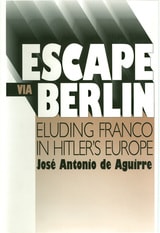
cover of Escape Via Berlin: Eluding Franco In Hitler's Europe

Escape Via Berlin

Eluding Franco In Hitler's Europe

Jose Antonio Aguirre

University of Nevada Press, 1991
José Antonio de Aguirre, the exiled President of the Basque Republic, found himself caught between the Spanish Nationalists and the Gestapo as the Germans invaded France in 1940. This book is first and foremost the exciting account of a miraculous escape from the Germans, but it contains far more than mere adventure; threaded into the story are pictures of democracy and dictatorship and their effects on the lives of individuals, of religion in war, of human progress and decency surviving every adversity, of optimism where it might be least expected. Here is a man, by temperament a philosopher and by career the president of his people, interpreting 1940s Europe for his readers and explaining how people in Berlin, Antwerp, and Paris felt. This annotated edition, published nearly 50 years after the book first appeared, attests to the timeliness and foresight of Aguirre's message. Annotations and introduction by Robert Clark.
[more]
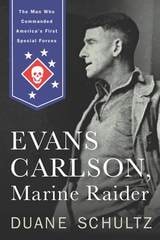
cover of Evans Carlson, Marine Raider: The Man Who Commanded America's First Special Forces

Evans Carlson, Marine Raider

The Man Who Commanded America's First Special Forces

Duane Schultz

Westholme Publishing, 2014

On August 17, 1942, ten days after American marines had stormed Guadalcanal in the Solomon Islands, two U.S. submarines secretly delivered a small force from the newly formed 2nd Marine Raider Battalion to Japanese-occupied Makin Island one thousand miles to the north. The raid was intended to gather intelligence and divert attention from the main American attack to the south. News of the success of this special operation took hold of the American imagination and provided a much needed boost to morale. The battalion’s leader was Evans Carlson, a forty-six-year-old career marine office who had most recently served in China as a military observer. Carlson was also a friend of President Franklin D. Roosevelt and he had proposed to him the creation of a small elite raider force similar to the British Commandos. Having accompanied Chinese guerrillas in their war against Japan, Carlson incorporated some of their tactics into his raider training, including a method of esprit de corps called “gung ho,” a word still used today for loyal enthusiasm. Carlson’s raiders went on to conduct a lengthy operation behind enemy lines in Guadalcanal, contributing to the American victory. After months of exertion, Carlson fell ill and returned stateside. Despite his notoriety and willingness to return to the front, this decorated officer would never command again.
            In Evans Carlson, Marine Raider: The Man Who Commanded America’s First Special Forces, psychologist and acclaimed history writer Duane Schultz presents a fascinating and absorbing portrait of this complex officer. Son of a Congregational preacher, Carlson left home at an early age, and when he was just seventeen, the tall, lanky underage teenager bluffed his way into the army. He began his eventful military career against Pancho Villa, and continued through World War I and the unrest in Central America and in China. Despite Carlson’s personal bravery, loyalty, and long service, Schultz reveals that his active career was cut short by the Marine command who were envious of the attention he and his men received from the press and public; foreshadowing the paranoia of the McCarthy era, he was also rumored to be a communist. His raiders remained staunchly loyal to their former commander, and when he died in 1947, they ensured he would be buried in Arlington National Cemetery. Famed army and political cartoonist Bill Mauldin said, “There were only two brass hats whom ordinary GIs respected: Dwight Eisenhower and Evans Carlson.” This is Carlson’s story.
[more]