Results by title
118 books match the query 'Youth' and 4 start with e
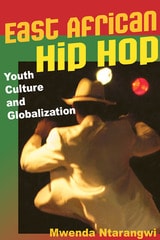
East African Hip Hop
Youth Culture and GlobalizationMwenda Ntarangwi
University of Illinois Press, 2008
In this book, Mwenda Ntarangwi analyzes how young hip hop artists in the East African nations of Kenya, Uganda, and Tanzania showcase the opportunities and challenges brought by the globalization of music. Combining local popular music traditions with American and Jamaican styles of rap, East African hip hop culture reflects the difficulty of creating commercially accessible music while honoring tradition and East African culture. Ntarangwi pays special attention to growing cross-border exchanges within East African hip hop, collaborations in recording music and performances, and themes and messages that transcend local geographic boundaries.
In using hip hop as a medium for discussing changes in East African political, economic, and social conditions, artists vocalize their concerns about economic policies, African identity, and political establishments, as well as important issues of health (such as HIV/AIDS), education, and poverty. Through three years of fieldwork, rich interviews with artists, and analysis of live performances and more than 140 songs, Ntarangwi finds that hip hop provides youth an important platform for social commentary and cultural critique and calls attention to the liberating youth music culture in East Africa.
Engaging Young People in Civic Life
James Youniss
Vanderbilt University Press, 2009
The thirteen original essays are based on research in schools and in settings beyond the schoolyard where civic life is experienced. One focus is on programs for those schools in poor communities that tend to overlook civic education. Another chapter reports on how two city governments—Hampton, Virginia, and San Francisco—have invited youth to participate on boards and in agencies. A cluster of chapters focuses on the civic education programs in Canada and Western Europe, where, as in the United States, immigration and income inequality raise challenges to civic life.
Ethnographies of Youth and Temporality
Time ObjectifiedAnne Line Dalsgard
Temple University Press, 2014
In the series Global Youth, edited by Craig Jeffrey and Jane Dyson
Everyday Ruptures
Children, Youth, and Migration in Global PerspectiveCati Coe
Vanderbilt University Press, 2011
The book is organized around four themes:
• how children's agency is affected by institutions, families, and beliefs
• how families and individuals create and maintain kin ties in conditions of rupture
• how emotion and affect are linked to global divisions and flows
• how the actions of states create ruptures and continuities