Results by title
28167 books match the query 'History' and 842 start with e
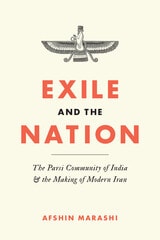
Exile and the Nation
The Parsi Community of India and the Making of Modern IranBy Afshin Marashi
University of Texas Press, 2020
Honorable Mention, Hamid Naficy Iranian Studies Book Award from the Association of Iranian Studies
In the aftermath of the seventh-century Islamic conquest of Iran, Zoroastrians departed for India. Known as the Parsis, they slowly lost contact with their ancestral land until the nineteenth century, when steam-powered sea travel, the increased circulation of Zoroastrian-themed books, and the philanthropic efforts of Parsi benefactors sparked a new era of interaction between the two groups.Tracing the cultural and intellectual exchange between Iranian nationalists and the Parsi community during the late nineteenth and early twentieth centuries, Exile and the Nation shows how this interchange led to the collective reimagining of Parsi and Iranian national identity—and the influence of antiquity on modern Iranian nationalism, which previously rested solely on European forms of thought. Iranian nationalism, Afshin Marashi argues, was also the byproduct of the complex history resulting from the demise of the early modern Persianate cultural system, as well as one of the many cultural heterodoxies produced within the Indian Ocean world. Crossing the boundaries of numerous fields of study, this book reframes Iranian nationalism within the context of the connected, transnational, and global history of the modern era.
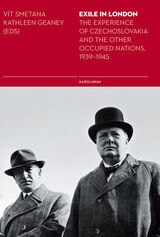
Exile in London
The Experience of Czechoslovakia and the Other Occupied Nations, 1939–1945Edited by Vít Smetana and Kathleen Brenda Geaney
Karolinum Press, 2018
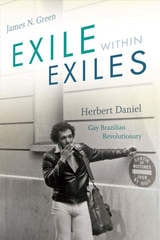
Exile within Exiles
Herbert Daniel, Gay Brazilian RevolutionaryJames N. Green
Duke University Press, 2018
Exile, Non-Belonging and Statelessness in Grangaud, Jabès, Lubin and Luca
No Man's LanguageGreg Kerr
University College London, 2021
Poetry has often been understood as a powerful vector of collective belonging. The idea that certain poets are emblematic of a national culture is one of the chief means by which literature historicizes itself, inscribes itself in a shared cultural past, and supplies modes of belonging to those who consume it. But, how does the exiled, migrant, or translingual poet complicate this narrative? For Armen Lubin, Ghérasim Luca, Edmond Jabès, and Michelle Grangaud, the practice of poetry is inseparable from a sense of restlessness or unease. Ranging across borders within and beyond the Francosphere—from Algeria, Armenia, Egypt, and Romania—this book shows how a poetic practice inflected by exile, statelessness, or non-belonging has the potential to disrupt long-held assumptions about the relation between subjects, the language they use, and the place from which they speak.
Exiled Memories
Stories of Iranian DiasporaZohreh T. Sullivan
Temple University Press, 2001
These are the words of one Iranian emigre, driven from Tehran by the revolution of 1979. They are echoed time and again in this powerful portrayal of loss and survival. Impelled by these word and her own concerns about nationality and identity, Zohreh Sullivan has gathered together here the voices of sixty exiles and emigres. The speakers come from various ethnic and religious backgrounds and range in age from thirteen to eighty-eight. Although most are from the middle class, they work in a variety of occupations in the United States. But whatever their differences, here they engage in remembering the past, producing a discourse about their lives, and negotiating the troubled transitions from one culture to another.
Unlike man other Iranian oral history projects, Exiled Memories looks at the reconstruction of memory and identity through diasporic narratives, through a focus on the Americas rather than on Iran. The narratives included here reveal the complex ways in which events and places transform identities, how overnight radical s become conservatives, friends become enemies, the strong become weak. Indeed, the narratives themselves serve this function -- serving to transfer or transform power and establish credibility. They reveal a diverse group of people in the process of knitting the story of themselves with the story of the collective after it has been torn apart.

Exiled in L.A.
The Untold Story of Leopold Fischer’s Domestic ArchitectureVolker M. Welter
J. Paul Getty Trust, The, 0
In 1936, Leopold Fischer (1901–1975), in exile from Nazi Germany, arrived in California, where he created a small but distinct oeuvre of mostly domestic architecture. In contrast to his famous peers Rudolph Schindler and Richard Neutra, immigrants whose Southern California buildings are frequently examined—and who, like Fischer, studied with the modernist architect Adolf Loos—Fischer and his California structures have, until now, escaped the attention of architectural history.
Exiled in L.A. examines Fischer’s important, yet overlooked, contributions to Southern California architecture. As the whereabouts of Fischer’s archives remain unknown, Volker M. Welter grounds the designer’s California works in comparison with his pre-exile projects and the compositions of fellow architects in California. In the 1920s, Fischer created experimental working-class housing estates in Germany that pioneered ecological construction and living practices. Comparable to their predecessors, Fischer's California buildings revolve around the “functioning, the organization of a home,” as he defined domestic architecture in 1926. Featuring new photography and detailed architectural plans, this book is an original contribution to the literature on Southern California’s built heritage.
Exiled in the Homeland
Zionism and the Return to Mandate PalestineBy Donna Robinson Divine
University of Texas Press, 2009
Offering a new perspective on Zionism, Exiled in the Homeland draws on memoirs, newspaper accounts, and archival material to examine closely the lives of the men and women who immigrated to Palestine in the early twentieth century. Rather than reducing these historic settlements to a single, unified theme, Donna Robinson Divine's research reveals an extraordinary spectrum of motivations and experiences among these populations.
Though British rule and the yearning for a Jewish national home contributed to a foundation of solidarity, Exiled in the Homeland presents the many ways in which the message of emigration settled into the consciousness of the settlers. Considering the benefits and costs of their Zionist commitments, Divine explores a variety of motivations and outcomes, ranging from those newly arrived immigrants who harnessed their ambition for the goal of radical transformation to those who simply dreamed of living a better life. Also capturing the day-to-day experiences in families that faced scarce resources, as well as the British policies that shaped a variety of personal decisions on the part of the newcomers, Exiled in the Homeland provides new keys to understanding this pivotal chapter in Jewish history.
Exiles and Citizens
Spanish Republicans in MexicoBy Patrcia W. Fagen
University of Texas Press, 1973
At the end of the Spanish civil war, Mexico was the only country to offer open refuge to the thousands of Republican emigrés who fled from Spain in 1939–1940. Exiles and Citizens is a study of these political exiles, especially those with intellectual and professional backgrounds and ambitions. It focuses on their adjustment to Mexico, on their continued ties to Spain, and on their impact on Mexican development.
The critical dilemma faced by the Spanish exiles was that, despite having fought for their political and social ideals in Spain, they forfeited in exile their active role in Spanish history. In Mexico they found a political and social system that seemed to include many of the ideals that had inspired the Spanish Republic; moreover, they were able to incorporate themselves economically, professionally, and intellectually into Mexican national life. Yet, because they were not native-born citizens, they had little or no creative part to play in the politics of their adopted country.
For Mexico, the impact of the refugees from Spain was enormous. Integrated from the first into nearly all intellectual, professional, and cultural fields, their skills proved an important catalyst to Mexican development. Yet, outside these fields, Mexico was never an effective "melting pot." The Republicans themselves were divided in their loyalties, and the Mexicans, from the beginning, were reluctant to encourage the full participation of their guests in national affairs.
Two goals were shared by most of the exiles: to ensure that the world would remember the liberal, creative, and open Spain they had created and thus reject Franco; to show their gratitude by working for the benefit and progress of Mexico. These goals, although frequently contradictory, sustained the emigration and gave meaning to exile. The refugees tried to maintain their identity by coming together in formal and informal associations that were intended either to act on behalf of the homeland or to re-create the Spanish Republican structures and values in exile. To maintain a Spanish identity, however, proved difficult, and for the second and third generations in Mexico, the initial goals had already lost their meaning. For them, economic and professional, as well as familial, ties were strongly Mexican.
Spanish Republicans in Mexico represented a fairly rare phenomenon: a large group of skilled, relatively well educated immigrants to a country where persons of their attainments and status were not numerous. Moreover, as political exiles, they approached the problems of acculturation differently from economic emigrants. Patricia Fagen's study thus offers a further understanding of an important exile community and the characteristics that set it apart from other examples of immigrant experiences. In addition, the study sheds new light on the intellectual history of Mexico and the far-reaching effects of the Spanish civil war.

Exiles and Expatriates in the History of Knowledge, 1500–2000
Peter Burke
Brandeis University Press, 2017

Exit Zero
Family and Class in Postindustrial ChicagoChristine J. Walley
University of Chicago Press, 2012
In 1980, Christine J. Walley’s world was turned upside down when the steel mill in Southeast Chicago where her father worked abruptly closed. In the ensuing years, ninety thousand other area residents would also lose their jobs in the mills—just one example of the vast scale of deindustrialization occurring across the United States. The disruption of this event propelled Walley into a career as a cultural anthropologist, and now, in Exit Zero, she brings her anthropological perspective home, examining the fate of her family and that of blue-collar America at large.
This book is part of a project that also includes a documentary film.

Exit Zero
Family and Class in Postindustrial ChicagoChristine J. Walley
University of Chicago Press, 2012
Winner of CLR James Book Prize from the Working Class Studies Association and 2nd Place for the Victor Turner Prize in Ethnographic Writing.
In 1980, Christine J. Walley’s world was turned upside down when the steel mill in Southeast Chicago where her father worked abruptly closed. In the ensuing years, ninety thousand other area residents would also lose their jobs in the mills—just one example of the vast scale of deindustrialization occurring across the United States. The disruption of this event propelled Walley into a career as a cultural anthropologist, and now, in Exit Zero, she brings her anthropological perspective home, examining the fate of her family and that of blue-collar America at large.
This book is part of a project that also includes a documentary film.
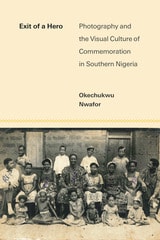
Exit of a Hero
Photography and the Visual Culture of Commemoration in Southern NigeriaOkechukwu Nwafor
University of Michigan Press, 2026
In Exit of a Hero, Okechukwu Nwafor explores the cultural, political, and socioeconomic implications of photography in commemorative practices in southern Nigeria from the nineteenth century to the present. Focusing on obituary and commemorative photographs of late nineteenth and early twentieth-century Lagos to contemporary funeral posters, booklets, and social media posts, Nwafor tracks the historical evolution of the iconic and heroic image. He argues that the quest to produce an ideal memorial body is not just a personal aesthetic choice but a deliberate photographic project that resonates with the Igbo aspirations for heroic achievement.
Exit of a Hero asserts that the visual canonization transforms the deceased from a fallible being to an unimpeachable character who transcends underachievement, imperfection, and failed social performance to emerge as a saintly icon of the Igbo public sphere. In seeking an alternative, hyper-visible public self, social media reclaims the lost hero image of the deceased, reconstituting the contested Igbo public space as a lived reality where heroes and icons are actively and eternally commemorated. Nwafor unveils the creative imaginations of colonial subjects and postcolonial citizens as memorialization has become entangled within the intersecting discursive spaces of print culture and the public sphere.
Exit-Voice Dynamics and the Collapse of East Germany
The Crisis of Leninism and the Revolution of 1989Steven Pfaff
Duke University Press, 2006
East Germany was the first domino to fall when the Soviet bloc began to collapse in 1989. Its topple was so swift and unusual that it caught many area specialists and social scientists off guard; they failed to recognize the instability of the Communist regime, much less its fatal vulnerability to popular revolt. In this volume, Steven Pfaff identifies the central mechanisms that propelled the extraordinary and surprisingly bloodless revolution within the German Democratic Republic (GDR). By developing a theory of how exit-voice dynamics affect collective action, Pfaff illuminates the processes that spurred mass demonstrations in the GDR, led to a peaceful surrender of power by the hard-line Leninist elite, and hastened German reunification. While most social scientific explanations of collective action posit that the option for citizens to emigrate—or exit—suppresses the organized voice of collective public protest by providing a lower-cost alternative to resistance, Pfaff argues that a different dynamic unfolded in East Germany. The mass exit of many citizens provided a focal point for protesters, igniting the insurgent voice of the revolution.
Pfaff mines state and party records, police reports, samizdat, Church documents, and dissident manifestoes for his in-depth analysis not only of the genesis of local protest but also of the broader patterns of exit and voice across the entire GDR. Throughout his inquiry, Pfaff compares the East German rebellion with events occurring during the same period in other communist states, particularly Czechoslovakia, China, Poland, and Hungary. He suggests that a trigger from outside the political system—such as exit—is necessary to initiate popular mobilization against regimes with tightly centralized power and coercive surveillance.
Exodus and Its Aftermath
Jewish Refugees in the Wartime Soviet InteriorAlbert Kaganovitch
University of Wisconsin Press, 2023
Albert Kaganovitch reconstructs the conditions that gave rise to this upsurge in antisemitic sentiment and provides new statistical data on the number of Jewish refugees who lived in the Urals, Siberia, and Middle Volga areas. The book’s insights into the regional distribution and concentration of these émigrés offer a behind-the-scenes look at the largest and most intensive Jewish migration in history.
Exodus!
Religion, Race, and Nation in Early Nineteenth-Century Black AmericaEddie S. Glaude Jr.
University of Chicago Press, 2000
Exodus! shows how this biblical story inspired a pragmatic tradition of racial advocacy among African Americans in the early nineteenth century—a tradition based not on race but on a moral politics of respectability. Eddie S. Glaude, Jr., begins by comparing the historical uses of Exodus by black and white Americans and the concepts of "nation" it generated. He then traces the roles that Exodus played in the National Negro Convention movement, from its first meeting in 1830 to 1843, when the convention decided—by one vote—against supporting Henry Highland Garnet's call for slave insurrection.
Exodus! reveals the deep historical roots of debates over African-American national identity that continue to rage today. It will engage anyone interested in the story of black nationalism and the promise of African-American religious culture.
Exotic Switzerland?
Looking Outward in the Age of EnlightenmentEdited by Noémie Étienne, Claire Brizon, Chonja Lee, and Étienne Wismer
Diaphanes, 2020
Expanding American Anthropology, 1945-1980
A Generation ReflectsEdited by Alice Beck Kehoe and Paul L. Doughty
University of Alabama Press, 2012
Expanding Class
Power and Everyday Politics in Industrial Communities, The Netherlands 1850–1950Don Kalb
Duke University Press, 1998
Expanding Class compares Brabant’s quaint central shoemaking district to its electrical boomtown Eindhoven, home of the enormous Philips Corporation. It introduces the concept of "flexible familism," a sociological phenomenon in which family daughters were employed to facilitate a cheap and ample labor force. Industrialists manipulated and fostered flexible familism to ensure the discipline and loyalty of the working-class community. By using the industrial Netherlands as a paradigm, Kalb reveals new and productive ways to examine class construction and the development of labor history in other countries over the past thirty years, steering a path between the two schools of thought—cultural and economic—that have dominated labor history discussions in recent years.
Expanding historical counsciousness
the development of the Holocaust Educational FoundationAnita. Weiner
Northwestern University Press, 2003
Expanding the American Mind
Books and the Popularization of KnowledgeBeth Luey
University of Massachusetts Press, 2010
Expanding the American Mind begins by comparing fiction and nonfiction—their relative respectability in the eyes of reading experts and in the opinions of readers themselves. It then traces the roots of popularization from the Middle Ages to the present, examining changes in literacy, education, and university politics. Focusing on the period since World War II, it examines the ways that curricular reform has increased interest in popularization as well as the impact of specialization and professionalization among the faculty. It looks at the motivations of academic authors and the risks and rewards that come from writing for a popular audience. It also explains how experts write for nonexperts—the rhetorical devices they use and the voices in which they communicate.
Beth Luey also looks at the readers of popularizations—their motivations for reading, the ways they evaluate nonfiction, and how they choose what to read. This is the first book to use surveys and online reader responses to study nonfiction reading. It also compares the experience of reading serious nonfiction with that of reading other genres.
Using publishers' archives and editor-author correspondence, Luey goes on to examine what editors, designers, and marketers in this very competitive business do to create and sell popularizations to the largest audience possible. In a brief afterword she discusses popularization and the Web. The result is a highly readable and engaging survey of this distinctive genre of writing.
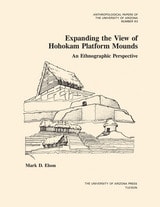
Expanding the View of Hohokam Platform Mounds
An Ethnographic PerspectiveMark D. Elson
University of Arizona Press, 1998
Using this information, he develops a number of important new generalizations about how people used mounds. Elson then applies these data to the study of a prehistoric settlement system in the eastern Tonto Basin of Arizona that contained five platform mounds. He argues that the mounds were used variously as residences and ceremonial facilities by competing descent groups and were an indication of hereditary leadership. They were important in group integration and resource management; after abandonment they served as ancestral shrines. Elson's study provides a fresh approach to an old puzzle and offers new suggestions regarding variability among Hohokam populations. Its innovative use of comparative data and analyses enriches our understanding of both Hohokam culture and other ancient societies.
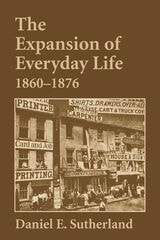
Expansion of Everyday Life, 1860–1876
Daniel Sutherland
University of Arkansas Press, 2000
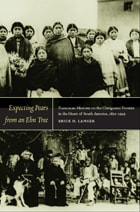
Expecting Pears from an Elm Tree
Franciscan Missions on the Chiriguano Frontier in the Heart of South America, 1830–1949Erick D. Langer
Duke University Press, 2009
Expecting Pears from an Elm Tree is based on twenty years of research, including visits to the sites of nearly every mission discussed and interviews with descendants of mission Indians, Indian chiefs, Franciscan friars, mestizo settlers, and teachers. Langer chronicles how, beginning in the 1840s, the establishment of missions fundamentally changed the relationship between the Chiriguano villages and national society. He looks at the Franciscan missionaries’ motives, their visions of ideal missions, and the realities they faced. He also examines mission life from the Chiriguano point of view, considering their reasons for joining missions and their resistance to conversion, as well as the interrelated issues of Indian acculturation and the development of the mission economy, particularly in light of the relatively high rates of Indian mortality and outmigration. Expanding his focus, Langer delves into the complex interplay of Indians, missionaries, frontier society, and the national government until the last remaining missions were secularized in 1949. He concludes with a comparative analysis between colonial and republican-era missions throughout Latin America.

Expedition of Hernando de Soto West of the Mississippi, 1541–1543
Proceedings of the de Soto Symposia, 1988 and 1990Gloria Young
University of Arkansas Press, 1999
Back by popular demand and new in paperback, this spirited collection of nearly twenty papers celebrates the 450th anniversary of Hernando de Soto’s epic expedition across the Southeast and West.
Originally presented at two symposia conducted by the University Museum at the University of Arkansas, the collection offers an array of viewpoints and diverse approaches to de Soto scholarship. Archaeologists, anthropologists, historians, museum curators, and folklorists all contribute to this lively debate on the Spanish explorer and his travels.
The book focuses on research that challenges traditional interpretation of de Soto’s entrada and travel route, particularly after the expedition crossed the Mississippi River. David H. Dye hypothesizes a route across the river and the alluvial plain by linking the narrative accounts with geography and archaeological knowledge. Phyllis A. Morse asserts that the Parkin site is the location of the capital of Casqui, one of the polities visited by de Soto. Charles M. Hudson repostulates his version of the expedition route, which in 1988 severely challenged the De Soto Commission theory of 1939. Ann M. Early redraws the trail in the uplands of the Ouachita Mountains And Frank E. Schambach tests the possibility that the expedition wandered through Caddoan territory in east Texas after de Soto’s death.
Several chapters examine the Native Americans whom de Soto and his expedition encountered in their journey; other contributions provide a fresh look at the chronicles of the expedition that have survived. What emerges is a redrawn map of de Soto’s exploration—and a deeper understanding of the impact of European contact on the New World.
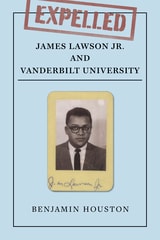
Expelled
James Lawson Jr. and Vanderbilt UniversityBenjamin Houston
Vanderbilt University Press, 2026
In February 1960, as lunch counter sit-ins began in Southern cities, national attention focused on Nashville, where demonstrations were carried out by an unusually organized and disciplined group of students tutored extensively in nonviolent direct action. Their mentor was Reverend James Lawson Jr., a graduate student at Vanderbilt University Divinity School with longstanding nonviolent credentials. His workshops with Nashville students, exploring Gandhian style philosophies and tactics, had predated the famed Greensboro sit-ins.
As demonstrations continued in Nashville and successive sit-ins saw violence erupt downtown, local Black ministers demanded an audience with Mayor Ben West. At this meeting, an exchange occurred that was misconstrued by subsequent newspaper reportage. Shortly thereafter, Lawson was summarily expelled from Vanderbilt, one semester shy of graduating.
Lawson’s ouster triggered a wave of repercussions and headlines. After extended negotiations with their superiors were rebuffed, a large contingent of Divinity School faculty resigned en masse. Simmering dissension between the university’s professors, Board of Trust, and administrators kept the crisis ongoing. Sustained criticism of Vanderbilt both within the city and nationally made for a turbulent situation as Lawson’s expulsion came to symbolize profound tensions about civil rights and racial justice.
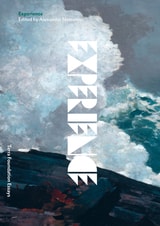
Experience
Edited by Alexander Nemerov
Terra Foundation for American Art, 2017
The fourth volume in the Terra Foundation Essays series, Experience considers the possibility of immediacy, or the idea that we can directly relate to the past by way of an artifact or work of art. Without discounting the matrix of codes involved in both the production and reception of art, contributors to Experience emphasize the sensibility of the interpreter; the techniques of art historical writing, including its affinity with fiction and its powers of description; the emotional charge—the punctum—that certain representations can deliver. These and other topics are examined through seven essays, addressing different periods in American art.
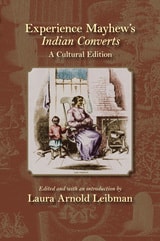
Experience Mayhew's Indian Converts
A Cultural EditionLaura Arnold Leibman
University of Massachusetts Press, 2008
First published in 1727 under the title Indian Converts, or Some account of the lives and dying speeches of a considerable number of the Christianized Indians of Martha's Vineyard, in New-England, Experience Mayhew's history of the Wampanoag Indians on Martha's Vineyard provides a rare look at the lives and culture of four generations of Native Americans in colonial America. Dividing his treatment into four sections—Indian Ministers, Good Men, Religious Women, and Pious Children—Mayhew details the books that different age groups were reading, provides insights into early New England pedagogy and childrearing practices, and describes each individual in terms of genealogy, religious practice, way of life, and place of residence.
In addition to drawing on his own firsthand knowledge of the community and transcriptions of oral testimony he and others collected, Mayhew inserts translations of Wampanoag texts that have since been lost. Although the book has been out of print since the early nineteenth century, scholars have long recognized its importance for understanding the history of New England's Native communities. In an extensive introduction to this new scholarly edition, Laura Arnold Leibman places Indian Converts in a broader cultural context and explores its significance. She shows how Mayhew's biographies illuminate the theological upheavals that rocked early eighteenth-century New England on the eve of the Great Awakening, shifts that altered not only the character of Puritanism but also the landscape of Wampanoag religious and cultural life. An accompanying online archive that includes over 600 images and documents further contextualizes Mayhew's work and provide suggestions for students' investigations of the text.

Experiencing America's Story through Fiction
Historical Novels for Grades 7-12Hilary Susan Crew
American Library Association, 2014
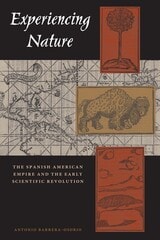
Experiencing Nature
The Spanish American Empire and the Early Scientific RevolutionBy Antonio Barrera-Osorio
University of Texas Press, 2006
As Spain colonized the Americas during the sixteenth century, Spanish soldiers, bureaucrats, merchants, adventurers, physicians, ship pilots, and friars explored the natural world, gathered data, drew maps, and sent home specimens of America's vast resources of animals, plants, and minerals. This amassing of empirical knowledge about Spain's American possessions had two far-reaching effects. It overturned the medieval understanding of nature derived from Classical texts and helped initiate the modern scientific revolution. And it allowed Spain to commodify and control the natural resources upon which it built its American empire.
In this book, Antonio Barrera-Osorio investigates how Spain's need for accurate information about its American colonies gave rise to empirical scientific practices and their institutionalization, which, he asserts, was Spain's chief contribution to the early scientific revolution. He also conclusively links empiricism to empire-building as he focuses on five areas of Spanish activity in America: the search for commodities in, and the ecological transformation of, the New World; the institutionalization of navigational and information-gathering practices at the Spanish Casa de la Contratación (House of Trade); the development of instruments and technologies for exploiting the natural resources of the Americas; the use of reports and questionnaires for gathering information; and the writing of natural histories about the Americas.
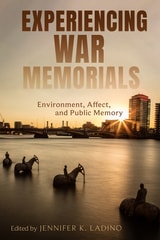
Experiencing War Memorials
Environment, Affect, and Public MemoryEdited by Jennifer K. Ladino
University of Alabama Press, 2026
Examines the emotional, formal, and environmental dimensions of war commemoration
Experiencing War Memorials is a compelling edited collection of essays that examines how war is commemorated through public memorials and the powerful emotions and ideologies these sites generate. Drawing on fields such as war studies, affect studies, public memory studies, and the environmental humanities, the volume demonstrates that commemoration is not only an intellectual act but an embodied, affective experience.
Through diverse case studies, contributors analyze how memorials shape public feelings about fast and slow violence, including battles, massacres, and incarceration. The essays reveal how materials, landscapes, narrative conventions, and innovative memorial forms guide emotional responses such as grief, pride, ambivalence, and outrage while making injustice perceptible. Against the backdrop of ongoing debates over heritage and violence, the collection insists on the importance of attending to the messy and disordered emotional dimensions of public memory. Some essays explore varied human and animal experiences, including military working dogs; scrutinize unsettling sites such as Confederate monuments and overlooked Holocaust locations; and consider digital, ecological, and pandemic-era memorials that expand the boundaries of commemoration.
Edited by Jennifer K. Ladino, Experiencing War Memorials offers nuanced insights into how memorial practices shape national identities, ethical understanding, and the possibilities for social change, illuminating the profound ways public remembrance influences how societies feel, remember, and reckon with violence in all its forms. This volume will appeal to scholars and students of memory studies, war and cultural studies, environmental humanities, and American studies, as well as museum professionals, artists, and readers interested in the politics and emotions of public commemoration.
Experientia, Volume 2
Linking Text and ExperienceColleen Shantz
SBL Press, 2012
Experimental Americans
Celo and Utopian Community in the Twentieth CenturyGeorge L. Hicks
University of Illinois Press, 2001
From colonial times to the present, the United States has been home to a steady stream of utopian experimental communities. In Experimental Americans, George L. Hicks takes us inside one of the longer-lived of such communities, Celo Community in western North Carolina, to explore the dynamics of intentional communities in America.
Founded in 1937 by Arthur Morgan, first chairman of the Tennessee Valley Authority, Celo (pronounced see-lo) established its own rules of land tenure and taxation, conducted its internal business by consensus, and did not require its members to accept any particular ideology or religious creed. Drawing on extensive fieldwork in Celo and among its local neighbors, consultation of Celo's documentary records, and interviews with ex-members, Hicks traces the Community's ups and downs. Attacked for its opposition to World War II, Celo was revived by pacifists released from prisons and Civilian Public Service camps after the war; debilitated in the 1950s by bitter feuds with ex-members, it was buoyed up in the 1960s by the radical enthusiasm of new currents in the nation.
Hicks assesses the Community's success in creating alternatives to mainstream social relations and examines the interactions between Celo and its neighboring community. He considers variations in paths taken by utopian communities, with a look at a close cousin of Celo, the Macedonia Community in Georgia. He also discusses the Community's "post-utopian" phase, marked by a shift in the late 1970s from social goals to straightforward land management.
While utopian communities might hope to secede from American society in varying degrees and to institute new and improved cultural models, nonetheless they express in many ways the attempt--characteristic of the nation itself--to balance individualism and egalitarianism. By providing the context, utopian and conventional, within which Celo and other experimental communities emerge and change, Experimental Americans illuminates an ongoing encounter with persistent tensions and contradictions in America's cultural postulates.
Experimental Beijing
Gender and Globalization in Chinese Contemporary ArtSasha Su-Ling Welland
Duke University Press, 2018
Experimental Latin American Cinema
History and AestheticsBy Cynthia Tompkins
University of Texas Press, 2013
While there are numerous film studies that focus on one particular grouping of films—by nationality, by era, or by technique—here is the first single volume that incorporates all of the above, offering a broad overview of experimental Latin American film produced over the last twenty years.
Analyzing seventeen recent films by eleven different filmmakers from Argentina, Brazil, Cuba, Mexico, Paraguay, and Peru, Cynthia Tompkins uses a comparative approach that finds commonalities among the disparate works in terms of their influences, aesthetics, and techniques. Tompkins introduces each film first in its sociohistorical context before summarizing it and then subverting its canonical interpretation. Pivotal to her close readings of the films and their convergences as a collective cinema is Tompkins’s application of Deleuzian film theory and the concept of the time-image as it pertains to the treatment of time and repetition. Tompkins also explores such topics as the theme of decolonization, the consistent use of montage, paratactically structured narratives, and the fusion of documentary conventions and neorealism with drama. An invaluable contribution to any dialogue on the avant-garde in general and to filmmaking both in and out of Latin America, Experimental Latin American Cinema is also a welcome and insightful addition to Latin American studies as a whole.
Experimental Practice
Technoscience, Alterontologies, and More-Than-Social MovementsDimitris Papadopoulos
Duke University Press, 2018
Experimenting the Human
Art, Music, and the Contemporary PosthumanG Douglas Barrett
University of Chicago Press, 2023
In Experimenting the Human, G Douglas Barrett argues that experimental music speaks to the contemporary posthuman, a condition in which science and technology decenter human agency amid the uneven temporality of postwar global capitalism. Time moves forward for some during this period, while it seems to stand still or even move backward for others. Some say we’re already posthuman, while others endure the extended consequences of never having been considered fully human in the first place. Experimental music reflects on this state, Barrett contends, through its interdisciplinary involvements in postwar science, technology, and art movements.
Rather than pursuing the human's beyond, experimental music addresses the social and technological conditions that support such a pursuit. Barrett locates this tendency of experimentalism throughout its historical entanglements with cybernetics, and in his intimate analysis of Alvin Lucier’s neurofeedback music, Pamela Z’s BodySynth performances, Nam June Paik’s musical robotics, Pauline Oliveros’s experiments with radio astronomy, and work by Laetitia Sonami, Yasunao Tone, and Jerry Hunt. Through a unique meeting of music studies, media theory, and art history, Experimenting the Human provides fresh insights into what it means to be human.
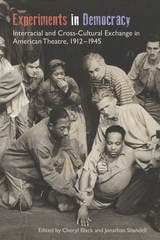
Experiments in Democracy
Interracial and Cross-Cultural Exchange in American Theatre, 1912-1945Edited by Cheryl Black and Jonathan Shandell
Southern Illinois University Press, 2016
In Experiments in Democracy, edited by Cheryl Black and Jonathan Shandell, theatre historians examine a wide range of performances—from Broadway, folk plays and dance productions to scripted political rallies and radio dramas. Contributors look at such diverse groups as the Theatre Union, La Unión Martí-Maceo, and the American Negro Theatre, as well as individual playwrights and their works, including Theodore Browne’s folk opera Natural Man, Josefina Niggli’s Soldadera, and playwright Lynn Riggs’s Cherokee Night and Green Grow the Lilacs (the basis for the musical Oklahoma!). Exploring the ways progressive artists sought to connect isolated racial and cultural groups in pursuit of a more just and democratic society, contributors take into account the blind spots, compromised methods, and unacknowledged biases at play in their practices and strategies. Essays demonstrate how the gap between the ideal of American democracy and its practice—mired in entrenched systems of white privilege, economic inequality, and social prejudice—complicated the work of these artists.
Focusing on questions of race, ethnicity, gender, and sexuality on the stage in the decades preceding the Civil Rights era, Experiments in Democracy fills an important gap in our understanding of the history of the American stage—and sheds light on these still-relevant questions in contemporary American society.

Experiments in the Dark
Visualizing Capital Art Studio, ZanzibarPamila Gupta
University of Michigan Press, 2027
What kind of history are photographs? Experiments in the Dark explores this question through the lens of a twentieth-century East African Indian Ocean photo studio collection, Capital Arts Studio (CAS), and its proprietors Ranchhod and Rohit Oza in Stone Town, Zanzibar. Pamila Gupta gathers and reads a range of photographs and genres from the studio, exploring how they relate to Zanzibar’s vibrant visual cultures during the Omani sultanate, British colonial, and postrevolution periods. Gupta’s reading of this little-known photographic archive brings the work into a broader historical context of the Indian Ocean in a visual archive that has endured despite the forces of history.
Through a blend of archival reconstruction and curation, personal reflection, and interviews with Rohit Oza, the son of the studio’s founder Ranchhod Oza, Gupta focuses on the construction and curation of the CAS collection and what this archive can tell us about the South Asian and Goan diasporas, the wider Indian Ocean world, African fashion, urban lives, and image making in Zanzibar from 1930 to 2024.
Experiments with Body Agent Architecture
The 586-year-old Spiritello in Il Regno DigitaleAlessandro Ayuso
University College London, 2022
Experiments with Body Agent Architecture proposes the notion of body agents: non-ideal, animate, and highly specific figures integrated with design to enact particular notions of embodied subjectivity in architecture. Body agents present opportunities for architects to increase imaginative and empathic qualities in their designs.
Beginning with narrative writing from the viewpoint of a body agent who finds himself uncomfortably inhabiting a digital milieu, the book combines speculative historical fiction and original design experiments. It focuses on the process of creating multimedia design experiments, moving from the design of the body itself as an original prosthetic to architectural proposals emanating from the body.
A fragmented history of the figure in architecture is charted and woven into the designs, with chapters examining Michelangelo’s enigmatic figures in his drawings for the New Sacristy in the early sixteenth century, Gian Lorenzo Bernini’s physically ephemeral putti adorning chapels and churches in the seventeenth century, and Austrian artist-architect Walter Pichler’s personal and prescient figures of the twentieth century.
Experiments with Empire
Anthropology and Fiction in the French AtlanticJustin Izzo
Duke University Press, 2019

Explaining Christian Origins and Early Judaism
Contributions from Cognitive and Social SciencePetri Luomanen
SBL Press, 2016
Now in paperback!
Cognitive science of religion is a radically new paradigm in the study of religion. Historians of religion have shown increasing interest in this approach. The book is in four parts: an introduction to cognitive and social-scientific approaches, applications of cognitive science, applications of conceptual blending theory, and applications of socio-cognitive analyses.
Features:
- Paperback format of an essential Brill resource
- Essays that combine cognitive analysis with historical and social-scientific approaches to biblical materials, Christian origins, and early Judaism
- Research for historians of religion, biblical scholars, and those working in the cognitive science of religion.
Explaining Economic Backwardness
Post-1945 Polish Historians on Eastern EuropeAnna Sosnowska
Central European University Press, 2019
Explaining Modern Social Reality
The Basic Concepts in Norbert Elias’s Figurational SociologyKire Sharlamanov
Central European University Press, 2026
At the center of the discussion is Elias’s landmark work, The Civilizing Process, with particular attention to class structures, changing patterns of behavior, and the development of the modern state. The book also explores figurational sociology, one of Elias’s most influential contributions to social theory.
An innovative and original thinker, Elias challenged established concepts and introduced new analytical tools, including the influential notion of habitus. The chapters examine his theory of knowledge, his reflections on violence and de-civilization, his analyses of nations and nationalism, and his work on emotions and shame. The book further traces Elias’s dialogue with major thinkers such as Edmund Husserl, Karl Mannheim, Max Weber, Sigmund Freud, and Talcott Parsons, showing how he reinterpreted their ideas in distinctive ways. The book concludes with an overview of the most important critiques of Elias’s work and its continuing relevance today.
Exploration and Exchange
A South Seas Anthology, 1680-1900Edited by Jonathan Lamb, Vanessa Smith, and Nicholas Thomas
University of Chicago Press, 2001
As George Vason's anguished narrative shows, European encounters with Pacific peoples often proved as wrenching to the Europeans as to the natives. This anthology gathers some of the most vivid accounts of these cultural exchanges for the first time, placing the works of well-known figures such as Captain James Cook and Robert Louis Stevenson alongside the writings of lesser-known explorers, missionaries, beachcombers, and literary travelers who roamed the South Seas from the late seventeenth through the late nineteenth centuries.
Here we discover the stories of the British buccaneers and privateers who were lured to the Pacific by stories of fabulous wealth; of the scientists, cartographers, and natural historians who tried to fit the missing bits of terra incognita into a universal scheme of knowledge; and of the varied settlers who established a permanent European presence in Polynesia and Australia. Through their detailed commentary on each piece and their choice of selections, the editors—all respected scholars of the literature and cultures of the Pacific—emphasize the mutuality of impact of these colonial encounters and the continuity of Pacific cultures that still have the power to transform visitors today.
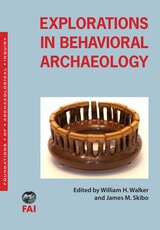
Explorations in Behavioral Archaeology
William H. Walker and James M. Skibo
University of Utah Press, 2015
Behavioral archaeology, defined as the study of people-object interactions in all times and places, emerged in the 1970s, in large part because of the innovative work of Michael Schiffer and colleagues. This volume provides an overview of how behavioral archaeology has evolved and how it has affected the field of archaeology at large.
The contributors to this volume are Schiffer’s former students, from his first doctoral student to his most recent. This generational span has allowed for chapters that reflect Schiffer’s research from the 1970s to 2012. They are iconoclastic and creative and approach behavioral archaeology from varied perspectives, including archaeological inference and chronology, site formation processes, prehistoric cultures and migration, modern material culture variability, the study of technology, object agency, and art and cultural resources. Broader questions addressed include models of inference and definitions of behavior, study of technology and the causal performances of artifacts, and the implications of artifact causality in human communication and the flow of behavioral history.
Explorations in Early Southeast Asian History
The Origins of Southeast Asian StatecraftKenneth R. Hall and John K. Whitmore, Editors
University of Michigan Press, 1976
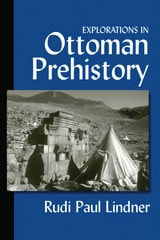
Explorations in Ottoman Prehistory
Rudi Paul Lindner
University of Michigan Press, 2007
The origins of the Ottomans, whose enterprise ruled much of the Near East for more than half a millennium, have long tantalized and eluded scholars, many of whom have thrown up their hands in exasperation. While the later fourteenth- and fifteenth-century history of the Ottomans has become better known, the earlier years have proved an alluring and recalcitrant puzzle. A reconsideration of the sources and a canvass of new ones has long been overdue. Rudi Paul Lindner’s Explorations in Ottoman Prehistory is the first book in over sixty years to reassess the overture to Ottoman history.
In addition to conducting a critical examination of the Ottoman chronicles and the Byzantine annals, Lindner develops hitherto unutilized geographic data and previously unknown numismatic evidence and also draws on travelers’ descriptions of the Anatolian landscape in an earlier epoch. By investigating who the Ottomans were, where they came from, and where they settled and why, as well as what sort of relationships they had with their neighbors in the late thirteenth and early fourteenth centuries, Lindner makes an engaging and lucid contribution to an otherwise very small store of knowledge of Ottoman history in the early stages of the empire.
Rudi Paul Lindner is Professor of History at the University of Michigan and author of Nomads and Ottomans in Medieval Anatolia,part of Indiana University’s Uralic and Altaic Series.
Explorations in Political Psychology
Shanto Iyengar and William J. McGuire, eds.
Duke University Press, 1993
historical evolution as an area of inquiry to the rich and eclectic array of theories, concepts, and methods that mark it as an emerging discipline.
In introductory essays, editors Shanto Iyengar and William J. McGuire identify the points of exchange between the disciplines represented and discuss the issues that make up the subfields of political psychology. Bringing together leading scholars from social psychology and political science, the following sections discuss attitude research (the study of political attitudes and opinions); cognition and information-processing (the relationship between the structures of human information-processing and political and policy preferences); and decision making (how people make decisions about political preferences).
As a comprehensive introduction to a growing field of interdisciplinary concern, Explorations in Political Psychology will prove a useful guide for historians, social psychologists, and political scientists with an interest in individual political behavior.
Contributors. Stephen Ansolabehere, Donald Granberg, Shanto Iyengar, Robert Jervis, Milton Lodge, Roger D. Masters, William J. McGuire, Victor C. Ottati, Samuel L. Popkin, William M. Runyan, David O. Sears, Patrick Stroh, Denis G. Sullivan, Philip E. Tetlock, Robert S. Wyer, Jr.
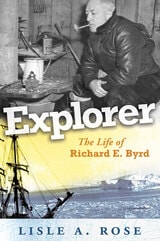
Explorer
The Life of Richard E. ByrdLisle A. Rose
University of Missouri Press, 2008
“Danger was all that thrilled him,” Dick Byrd’s mother once remarked, and from his first pioneering aviation adventures in Greenland in 1925, through his daring flights to the top and bottom of the world and across the Atlantic, Richard E. Byrd dominated the American consciousness during the tumultuous decades between the world wars. He was revered more than Charles Lindbergh, deliberately exploiting the public’s hunger for vicarious adventure. Yet some suspected him of being a poseur, and a handful reviled him as a charlatan who claimed great deeds he never really accomplished.
Then he overreached himself, foolishly choosing to endure a blizzard-lashed six-month polar night alone at an advance weather observation post more than one hundred long miles down a massive Antarctic ice shelf. His ordeal proved soul-shattering, his rescue one of the great epics of polar history. As his star began to wane, enemies grew bolder, and he struggled to maintain his popularity and political influence, while polar exploration became progressively bureaucratized and militarized. Yet he chose to return again and again to the beautiful, hateful, haunted secret land at the bottom of the earth, claiming, not without justification, that he was “Mayor of this place.”
Lisle A. Rose has delved into Byrd’s recently available papers together with those of his supporters and detractors to present the first complete, balanced biography of one of recent history’s most dynamic figures. Explorer covers the breadth of Byrd’s astonishing life, from the early days of naval aviation through his years of political activism to his final efforts to dominate Washington’s growing interest in Antarctica. Rose recounts with particular care Byrd’s two privately mounted South Polar expeditions, bringing to bear new research that adds considerable depth to what we already know. He offers views of Byrd’s adventures that challenge earlier criticism of him—including the controversy over his claim to being the first to have flown over the North Pole in 1926—and shows that the critics’ arguments do not always mesh with historical evidence.
Throughout this compelling narrative, Rose offers a balanced view of an ambitious individual who was willing to exaggerate but always adhered to his principles—a man with a vision of himself and the world that inspired others, who cultivated the rich and famous, and who used his notoriety to espouse causes such as world peace. Explorer paints a vivid picture of a brilliant but flawed egoist, offering the definitive biography of the man and armchair adventure of the highest order.
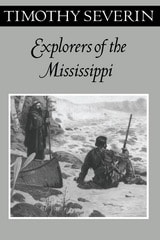
Explorers Of The Mississippi
Timothy Severin
University of Minnesota Press, 2002
Spirited stories of the heroes and scoundrels who explored the Big Muddy—now back in print!
The Mississippi River has intrigued the footloose for centuries. Here, for the first time in paperback, are briskly told biographies of the chief protagonists in the drama, with Old Man River as the constant and invincible antagonist. From conquistadors to nineteenth-century gentlemen explorers, Timothy Severin depicts the disasters and adventures of familiar, but often misunderstood, figures in American history, as well as the chicanery of others, less well known, who used the river for their own purposes.