Results by title
3703 books match the query '19th Century' and 105 start with e
Emily Dickinson's Approving God
Divine Design and the Problem of SufferingPatrick J. Keane
University of Missouri Press, 2008
Emily Dickinson's Music Book and the Musical Life of an American Poet
George Boziwick
University of Massachusetts Press, 2022
After years of studying piano as a young woman in her family home in Amherst, Massachusetts, Emily Dickinson curated her music book, a common practice at the time. Now part of the Dickinson Collection in the Houghton Library of Harvard University, this bound volume of 107 pieces of published sheet music includes the poet’s favorite instrumental piano music and vocal music, ranging from theme and variation sets to vernacular music, which was also enjoyed by the family’s servants.
Offering a fresh historical perspective on a poetic voice that has become canonical in American literature, this original study brings this artifact to life, documenting Dickinson’s early years of musical study through the time her music was bound in the early 1850s, which tellingly coincided with the writing of her first poems. Using Dickinson’s letters and poems alongside newspapers and other archival sources, George Boziwick explores the various composers, music sellers, and publishers behind this music and Dickinson’s attendance at performances, presenting new insights into the multiple layers of meaning that music held for her.
Emily Dickinson
Monarch of PerceptionDomhnall Mitchell
University of Massachusetts Press, 2000
Emily Dickinson has often been pictured as a sensitive but isolated poet—someone who published very little in her lifetime and limited herself to lyrics, considered to be the kind of poems most removed from social and political life. In recent years, scholars have challenged that view, and this book extends the discussion in valuable new directions.
Domhnall Mitchell begins by focusing on three historical phenomena—the railroad, the Dickinson homestead, and horticulture—and argues that poems about trains, home, and flowers engage with their meanings in ways that extend beyond the confines of the aesthetic. He shows how Dickinson's poems and letters reveal the full complexity of her position as a woman situated within a larger social and economic class.
In the second half of the book, Mitchell considers the ideological, textual, and editorial implications of Dickinson's strategic privatization of her art. He relates the particular forms of her manuscripts' appearance, distribution, and collation to aspects of her social as well as her literary consciousness. In a chapter that is certain to provoke debate, he explores what it means to read individual poems and letters in manuscript versions rather than in printed editions. By paying close attention to textual evidence, he makes the case that various features of the manuscripts are actually matters of accident or immediate convenience rather than the visual markers of a new aesthetic principle.
Mitchell closes by using the theories of Mikhail Bakhtin to explore the contradictions of a “private” poetry that engages verbally in multiple areas of nineteenth-century life and discourse. By attending to the contemporaneous particularities of recurrent words and images, he demonstrates that Dickinson could stay at home and still be at home in history, too.
Emmanuel Appadocca; or, Blighted Life
A Tale of the BoucaneersMaxwell Philip
University of Massachusetts Press, 1997
This 1854 novel traces a mulatto son's quest for vengeance against his white father, a sugar planter who abandoned him and his mother. Intent on redeeming his mother's honor and outraged by the cruelty and greed that slavery has engendered Appadocca sails the seas with a band of ruthless pirates on a ship named the Black Schooner. The novel, written by the important activist and intellectual Michel Maxwell Philip (1829–1888) deals with themes, symbols, and literary techniques that are reminiscent of other major authors such as Melville, Douglass, and Stowe. This new edition with scholarly commentaries and annotations will reorient our understanding of the development of Caribbean literature in relation to English and American literary production.
Emotional Reinventions
Realist-Era Representations Beyond SympathyMelanie V. Dawson
University of Michigan Press, 2015
Empire And Imperialism
Peter Cain
St. Augustine's Press, 1999
The 1870s is a key decade in the evolution of British thinking about the nature, purpose, and future of empire. Increasing economic competition began to disturb the complacent assumption about Britain's leadership in technology and in the world economy. The growth of other countries, most notably the United States and Germany, put in question Britain's survival as a great power. These changes set in motion a reappraisal of Britain's empire and its importance to the motherland, and a heated debated as to whether colonialism and imperialism were a burden rather than a benefit to Britain. The discussion of the 1870s set the agenda for the debates of the next half-century. This volume documents the writing central to the debate; it includes contributions by such leading British thinkers and statesmen as J. A. Froude, Robert Lowe, Edward Dicey, Frederic Seebohm, Lord Carnarvon, Gladstone, Julius Vogel, and Lord Blachford.

Empire City
The Making And Meaning OfDavid Scobey
Temple University Press, 2003
Author David Scobey paints a remarkable panorama of New York's uneven development, a city-building process careening between obsessive calculation and speculative excess. Envisioning a new kind of national civilization, "bourgeois urbanists" attempted to make New York the nation's preeminent city. Ultimately, they created a mosaic of grand improvements, dynamic change, and environmental disorder. Empire City sets the stories of the city's most celebrated landmarks -- Central Park, the Brooklyn Bridge, the downtown commercial center -- within the context of this new ideal of landscape design and a politics of planned city building. Perhaps such an ambitious project for guiding growth, overcoming spatial problems, and uplifting public was bound to fail; still, it grips the imagination.
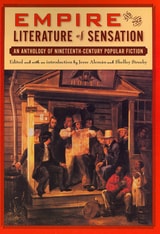
Empire and The Literature of Sensation
An Anthology of Nineteenth-Century Popular FictionAlemán, Jesse
Rutgers University Press, 2007
Most of the accounts, although widely distributed in nineteenth-century newspapers, pamphlets, or dime store novels, have long been out of print. Reprinted here for the first time are novelettes by two superstars of the cheap fiction industry, Ned Buntline and George Lippard. Also included are selections from one of the first dime novels as well as the narratives of Leonora Siddons and Sophia Delaplain, both who claim in their autobiographical pamphlets to have cross-dressed as men and participated in the Texas rebellion and Cuban filibustering.
Originally written for entertainment and enormously popular in their day, these sensational thrillers reveal for today's audiences how the rhetoric of empire was circulated for mass consumption and how imperialism generated domestic and cultural instability during the period of the American literary renaissance.
Empire of Neglect
The West Indies in the Wake of British LiberalismChristopher Taylor
Duke University Press, 2018
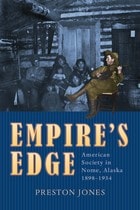
Empire's Edge
American Society in Nome, Alaska, 1898-1934Preston Jones
University of Alaska Press, 2006
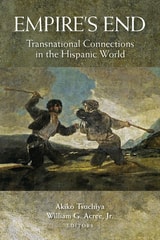
Empire's End
Transnational Connections in the Hispanic WorldAkiko Tsuchiya
Vanderbilt University Press, 2015
Empire's End showcases the work of scholars of literature, cultural studies, and history, centering on four interrelated issues crucial to understanding the end of the Spanish empire: the mappings of the Hispanic Atlantic, race, human rights, and the legacies of empire.
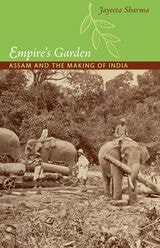
Empire's Garden
Assam and the Making of IndiaJayeeta Sharma
Duke University Press, 2011
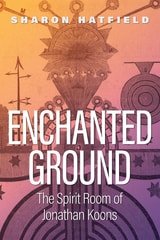
Enchanted Ground
The Spirit Room of Jonathan KoonsSharon Hatfield
Ohio University Press, 2018
In Enchanted Ground, Sharon Hatfield brings to life the true story of a nineteenth-century farmer-turned-medium, Jonathan Koons, one of thousands of mediums throughout the antebellum United States. In the hills outside Athens, Ohio, Koons built a house where it was said the dead spoke to the living, and where ancient spirits communicated the wisdom of the ages. Curious believers, in homespun and in city attire, traveled from as far as New Orleans to a remote Appalachian cabin whose marvels would rival any of P. T. Barnum’s attractions.
Yet Koons’s story is much more than showmanship and sleight of hand. His enterprise, not written about in full until now, embodied the excitement and optimism of citizens breaking free from societal norms. Reform-minded dreamers were drawn to Koons’s seances as his progressive brand of religion displaced the gloomy Calvinism of previous generations. As heirs to the Second Great Awakening, which stretched from New York State to the far reaches of the Northwest Territory, the curious, the faithful, and Koons himself were part of a larger, uniquely American moment that still marks the cultural landscape today.

Encyclopedia of Romantic Nationalism in Europe, Vol. 1 and 2
Edited by Joep Leerssen
Amsterdam University Press, 2016
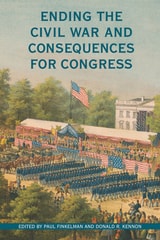
Ending the Civil War and Consequences for Congress
Paul Finkelman
Ohio University Press, 2019
The social changes and human and economic costs of the Civil War led to profound legal and constitutional developments after it ended, not least of which were the Fourteenth and Fifteenth Amendments and the many laws devised to protect the civil rights of newly freed African Americans. These amendments and laws worked for a while, but they were ineffective or ineffectively enforced for more than a century.
In Ending the Civil War and the Consequences for Congress, contributors explore how the end of the war both continued the trauma of the conflict and enhanced the potential for the new birth of freedom that Lincoln promised in the Gettysburg Address. Collectively, they bring their multidisciplinary expertise to bear on the legal, economic, social, and political aspects of the aftermath of the war and Reconstruction era. The book concludes with the reminder of how the meaning of the war has changed over time. The Civil War is no longer the “felt” history it once was, Clay Risen reminds us, and despite the work of many fine scholars it remains contested.
Contributors: Jenny Bourne, Carole Emberton, Paul Finkelman, Lorien Foote, William E. Nelson, Clay Risen, Anne Sarah Rubin, and Peter Wallenstein
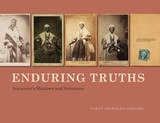
Enduring Truths
Sojourner's Shadows and SubstanceDarcy Grimaldo Grigsby
University of Chicago Press, 2015
Featuring the largest collection of Truth’s photographs ever published, Enduring Truths is the first book to explore how she used her image, the press, the postal service, and copyright laws to support her activism and herself. Darcy Grimaldo Grigsby establishes a range of important contexts for Truth’s portraits, including the strategic role of photography and copyright for an illiterate former slave; the shared politics of Truth’s cartes de visite and federal banknotes, which were both created to fund the Union cause; and the ways that photochemical limitations complicated the portrayal of different skin tones. Insightful and powerful, Enduring Truths shows how Truth made her photographic portrait worth money in order to end slavery—and also became the strategic author of her public self.
Enemies for a Day
Antisemitism and Anti-Jewish Violence in Lithuania under the TsarsDarius Staliunas
Central European University Press, 2015
It begins by illustrating how widespread anti-Jewish feelings were among the Christian population in 19 th century, focusing on blood libel accusations as well as describing the role of modern antisemitism. Secondly, it tries to identify the structural preconditions as well as specific triggers that turned anti-Jewish feelings into collective violence and analyzes the nature of this violence. Lastly, pogroms in Lithuania are compared to anti-Jewish violence in other regions of the Russian Empire and East Galicia.
This research is inspired by the cultural turn in social sciences, an approach that assumes that violence is filled with meaning, which is “culturally constructed, discursively mediated, symbolically saturated, and ritually regulated.” The author argues that pogroms in Lithuania instead followed a communal pattern of ethnic violence and was very different from deadly pogroms in other parts of the Russian Empire.
Enemy Within
Culture Wars and Political Identity in Novels of the French Third RepublicGilbert D. Chaitin
The Ohio State University Press, 2008
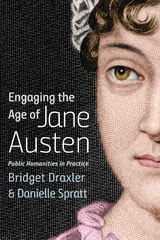
Engaging the Age of Jane Austen
Public Humanities in PracticeBridget Draxler and Danielle Spratt
University of Iowa Press, 2018
Humanities scholars, in general, often have a difficult time explaining to others why their work matters, and eighteenth-century literary scholars are certainly no exception. To help remedy this problem, literary scholars Bridget Draxler and Danielle Spratt offer this collection of essays to defend the field’s relevance and demonstrate its ability to help us better understand current events, from the proliferation of media to ongoing social justice battles.
The result is a book that offers a range of approaches to engaging with undergraduates, non-professionals, and broader publics into an appreciation of eighteenth-century literature. Essays draw on innovative projects ranging from a Jane Austen reading group held at the public library to students working with an archive to digitize an overlooked writer’s novel.
Reminding us that the eighteenth century was an exhilarating age of lively political culture—marked by the rise of libraries and museums, the explosion of the press, and other platforms for public intellectual debates—Draxler and Spratt provide a book that will not only be useful to eighteenth-century scholars, but can also serve as a model for other periods as well. This book will appeal to librarians, archivists, museum directors, scholars, and others interested in digital humanities in the public life.
Contributors: Gabriela Almendarez, Jessica Bybee, Nora Chatchoomsai, Gillian Dow, Bridget Draxler, Joan Gillespie, Larisa Good, Elizabeth K. Goodhue, Susan Celia Greenfield, Liz Grumbach, Kellen Hinrichsen, Ellen Jarosz, Hannah Jorgenson, John C. Keller, Naz Keynejad, Stephen Kutay, Chuck Lewis, Nicole Linton, Devoney Looser, Whitney Mannies, Ai Miller, Tiffany Ouellette, Carol Parrish, Paul Schuytema, David Spadafora, Danielle Spratt, Anne McKee Stapleton, Jessica Stewart, Colleen Tripp, Susan Twomey, Nikki JD White, Amy Weldon
Engineering Manhood
Race and the Antebellum Virginia Military InstituteJonson Miller
Lever Press, 2020

Engineering Security
The Corps of Engineers and Third System Defense Policy, 1815–1861Mark A. Smith
University of Alabama Press, 2009
Thorough examination of the antebellum fortifications that formed the backbone of U.S. military defense during the National Period
The system of coastal defenses built by the federal government after the War of 1812 was more than a series of forts standing guard over a watery frontier. It was an integrated and comprehensive plan of national defense developed by the US Army Corps of Engineers, and it represented the nation’s first peacetime defense policy.
Known as the Third System since it replaced two earlier attempts, it included coastal fortifications but also denoted the values of the society that created it. The governing defense policy was one that combined permanent fortifications to defend seaports, a national militia system, and a small regular army. The Third System remained the defense paradigm in the United States from 1816 to 1861, when the onset of the Civil War changed the standard. In addition to providing the country with military security, the system also provided the context for the ongoing discussion in Congress over national defense through annual congressional debates on military funding.
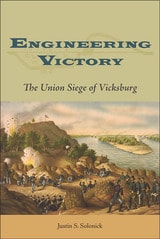
Engineering Victory
The Union Siege of VicksburgJustin S. Solonick
Southern Illinois University Press, 2015
On May 25, 1863, after driving the Confederate army into defensive lines surrounding Vicksburg, Mississippi, Union major general Ulysses S. Grant and his Army of the Tennessee laid siege to the fortress city. With no reinforcements and dwindling supplies, the Army of Vicksburg finally surrendered on July 4, yielding command of the Mississippi River to Union forces and effectively severing the Confederacy. In this illuminating volume, Justin S. Solonick offers the first detailed study of how Grant’s midwesterners serving in the Army of the Tennessee engineered the siege of Vicksburg, placing the event within the broader context of U.S. and European military history and nineteenth-century applied science in trench warfare and field fortifications. In doing so, he shatters the Lost Cause myth that Vicksburg’s Confederate garrison surrendered due to lack of provisions. Instead of being starved out, Solonick explains, the Confederates were dug out.
After opening with a sophisticated examination of nineteenth-century military engineering and the history of siege craft, Solonick discusses the stages of the Vicksburg siege and the implements and tactics Grant’s soldiers used to achieve victory. As Solonick shows, though Grant lacked sufficient professional engineers to organize a traditional siege—an offensive tactic characterized by cutting the enemy’s communication lines and digging forward-moving approach trenches—the few engineers available, when possible, gave Union troops a crash course in military engineering. Ingenious midwestern soldiers, in turn, creatively applied engineering maxims to the situation at Vicksburg, demonstrating a remarkable ability to adapt in the face of adversity. When instruction and oversight were not possible, the common soldiers improvised. Solonick concludes with a description of the surrender of Vicksburg, an analysis of the siege’s effect on the outcome of the Civil War, and a discussion of its significance in western military history.
Solonick’s study of the Vicksburg siege focuses on how the American Civil War was a transitional one with its own distinct nature, not the last Napoleonic war or the herald of modern warfare. At Vicksburg, he reveals, a melding of traditional siege craft with the soldiers’ own inventiveness resulted in Union victory during the largest, most successful siege in American history.
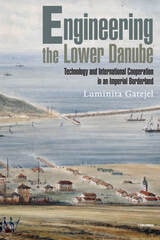
Engineering the Lower Danube
Technology and Territoriality in an Imperial Borderland, Late Eighteenth and Nineteenth CenturiesLuminita Gatejel
Central European University Press, 2023
The Lower Danube—the stretch of Europe’s second longest river between the Romanian-Serbian border and the confluence to the Black Sea—was effectively transformed during the late eighteenth and nineteenth centuries. In describing this lengthy undertaking, Luminita Gatejel proposes that remaking two key stretches—the Iron Gates and the delta—not only physically altered the river but also redefined it in a legal and political sense.
Since the late eighteenth century, military conflicts and peace treaties changed the nature of sovereignty over the area, as the expansionist tendencies of the Habsburg and British Empires encountered rival Ottoman and Russian imperial plans. The inconvenience that the river’s physical shape obstructed free navigation and the growth of commercial traffic, was an increasing concern to all parties. This book shows that alongside imperial aspirations, transnational actors like engineers, commissioners and entrepreneurs were the driving force behind the river regulation. In this highly original, deeply researched, and carefully crafted study, Gatejel explores the formation of international cooperation, the emergence of technical expertise and the emergence of engineering as a profession. This constellation turned the Lower Danube into a laboratory for experimenting with new forms of international cooperation, economic integration, and nature transformation.

England in 1819
The Politics of Literary Culture and the Case of Romantic HistoricismJames Chandler
University of Chicago Press, 1998
"1819? At first sight, it might not seem a 'hot date'; but as James Chandler argues in his powerful book, it would be a mistake to overlook a year of such exceptional political conflagration and literary pyrotechnics in British history. Chandler's study is a wide-ranging, enormously ambitious, densely packed, closely argued work."—John Brewer, New Republic
"The book's largest argument, and the source of its considerable revelations, is that late twentieth-century practices of cultural history-writing have their roots in the peculiar Romantic historicism born in post-Waterloo Britain."—Jon Klancher, Times Literary Supplement
"A monumental work of scholarship."—Terry Eagleton, The Independent
England's Great Transformation
Law, Labor, and the Industrial RevolutionMarc W. Steinberg
University of Chicago Press, 2016
Building his argument on three case studies—the Hanley pottery industry, Hull fisheries, and Redditch needlemakers—Steinberg employs both local and national analyses to emphasize the ways in which these master-servant laws allowed employers to use the criminal prosecutions of workers to maintain control of their labor force. Steinberg provides a fresh perspective on the dynamics of labor control and class power, integrating the complex pathways of Marxism, historical institutionalism, and feminism, and giving readers a subtle yet revelatory new understanding of workplace control and power during England’s Industrial Revolution.
English Lessons
The Pedagogy of Imperialism in Nineteenth-Century ChinaJames L. Hevia
Duke University Press, 2003
Hevia analyzes British Foreign Office documents, diplomatic memoirs, auction house and museum records, nineteenth-century scholarly analyses of Chinese history and culture, campaign records, and photographs. He shows how Britain refigured its imperial project in
China as a cultural endeavor through examinations of the circulation of military loot in Europe, the creation of an art history of “things Chinese,” the construction of a field of knowledge about China, and the Great Game rivalry between Britain, Russia, and the Qing empire in Central Asia. In so doing, he illuminates the impact of these elements on the colonial project and the creation of a national consciousness in China.
Enslaved, Indentured, Free
Five Black Women on the Upper Mississippi, 1800–1850Mary Elise Antoine
Wisconsin Historical Society Press, 2022
Focusing on these five women, Mary Elise Antoine explores the history of slavery in the Upper Mississippi River Valley, relying on legal documents, military records, court transcripts, and personal correspondence. Whether through perseverance, self-purchase, or freedom suits—including one suit that was used as precedent in Dred and Harriet Scott’s freedom suits years later—each of these women ultimately secured her freedom, thanks in part to the bonds they forged with one another.
Entanglements of Empire
Missionaries, Maori, and the Question of the BodyTony Ballantyne
Duke University Press, 2015
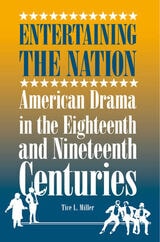
Entertaining the Nation
American Drama in the Eighteenth and Nineteenth CenturiesTice L. Miller
Southern Illinois University Press, 2007
In this survey of eighteenth- and nineteenth-century American drama, Tice L. Miller examines American plays written before a canon was established in American dramatic literature and provides analyses central to the culture that produced them. Entertaining the Nation: American Drama in the Eighteenth and Nineteenth Centuries evaluates plays in the early years of the republic, reveals shifts in taste from the classical to the contemporary in the 1840s and 1850s, and considers the increasing influence of realism at the end of the nineteenth century.
Miller explores the relationship between American drama and societal issues during this period. While never completely shedding its English roots, says Miller, the American drama addressed issues important on this side of the Atlantic such as egalitarianism, republicanism, immigration, slavery, the West, Wall Street, and the Civil War.
In considering the theme of egalitarianism, the volume notes Alexis de Tocqueville’s observation in 1831 that equality was more important to Americans than liberty. Also addressed is the Yankee character, which became a staple in American comedy for much of the nineteenth century.
Miller analyzes several English plays and notes how David Garrick’s reforms in London were carried over to the colonies. Garrick faced an increasingly middle-class public, offers Miller, and had to make adjustments to plays and to his repertory to draw an audience.
The volumealso looks at the shift in drama that paralleled the one in political power from the aristocrats who founded the nation to Jacksonian democrats. Miller traces how the proliferation of newspapers developed a demand for plays that reflected contemporary society and details how playwrights scrambled to put those symbols of the outside world on stage to appeal to the public. Steamships and trains, slavery and adaptations of Uncle Tom’s Cabin, and French influences are presented as popular subjects during that time.
Entertaining the Nation effectively outlines the civilizing force of drama in the establishment and development of the nation, ameliorating differences among the various theatergoing classes, and provides a microcosm of the changes on and off the stage in America during these two centuries.
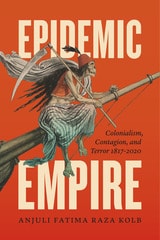
Epidemic Empire
Colonialism, Contagion, and Terror, 1817–2020Anjuli Fatima Raza Kolb
University of Chicago Press, 2021
Terrorism is a cancer, an infection, an epidemic, a plague. For more than a century, this metaphor has figured insurgent violence as contagion in order to contain its political energies. In Epidemic Empire, Anjuli Fatima Raza Kolb shows that this trope began in responses to the Indian Mutiny of 1857 and tracks its tenacious hold through 9/11 and beyond. The result is the first book-length study to approach the global War on Terror from a postcolonial literary perspective.
Raza Kolb assembles a diverse archive from colonial India, imperial Britain, French and independent Algeria, the postcolonial Islamic diaspora, and the neoimperial United States. Anchoring her book are studies of four major writers in the colonial-postcolonial canon: Rudyard Kipling, Bram Stoker, Albert Camus, and Salman Rushdie. Across these sources, she reveals the tendency to imagine anticolonial rebellion, and Muslim insurgency specifically, as a virulent form of social contagion. Exposing the long history of this broken but persistent narrative, Epidemic Empire is a major contribution to the rhetorical history of our present moment.
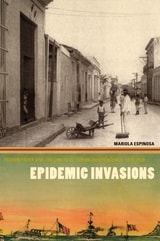
Epidemic Invasions
Yellow Fever and the Limits of Cuban Independence, 1878-1930Mariola Espinosa
University of Chicago Press, 2009
In the early fall of 1897, yellow fever shuttered businesses, paralyzed trade, and caused tens of thousand of people living in the southern United States to abandon their homes and flee for their lives. Originating in Cuba, the deadly plague inspired disease-control measures that not only protected U.S. trade interests but also justified the political and economic domination of the island nation from which the pestilence came. By focusing on yellow fever, Epidemic Invasions uncovers for the first time how the devastating power of this virus profoundly shaped the relationship between the two countries.
Yellow fever in Cuba, Mariola Espinosa demonstrates, motivated the United States to declare war against Spain in 1898, and, after the war was won and the disease eradicated, the United States demanded that Cuba pledge in its new constitution to maintain the sanitation standards established during the occupation. By situating the history of the fight against yellow fever within its political, military, and economic context, Espinosa reveals that the U.S. program of sanitation and disease control in Cuba was not a charitable endeavor. Instead, she shows that it was an exercise in colonial public health that served to eliminate threats to the continued expansion of U.S. influence in the world.
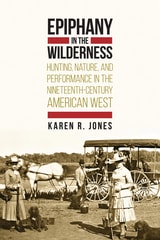
Epiphany in the Wilderness
Hunting, Nature, and Performance in the Nineteenth-Century American WestKaren R. Jones
University Press of Colorado, 2016
Whether fulfilling subsistence needs or featured in stories of grand adventure, hunting loomed large in the material and the imagined landscape of the nineteenth-century West. Epiphany in the Wilderness explores the social, political, economic, and environmental dynamics of hunting on the frontier in three “acts,” using performance as a trail guide and focusing on the production of a “cultural ecology of the chase” in literature, art, photography, and taxidermy.
Using the metaphor of the theater, Jones argues that the West was a crucial stage that framed the performance of the American character as an independent, resourceful, resilient, and rugged individual. The leading actor was the all-conquering masculine hunter hero, the sharpshooting man of the wilderness who tamed and claimed the West with each provident step. Women were also a significant part of the story, treading the game trails as plucky adventurers and resilient homesteaders and acting out their exploits in autobiographical accounts and stage shows.
Epiphany in the Wilderness informs various academic debates surrounding the frontier period, including the construction of nature as a site of personal challenge, gun culture, gender adaptations and the crafting of the masculine wilderness hero figure, wildlife management and consumption, memorializing and trophy-taking, and the juxtaposition of a closing frontier with an emerging conservation movement.
The University Press of Colorado gratefully acknowledges the generous support of the Charles Redd Center for Western Studies at Brigham Young University toward the publication of this book.
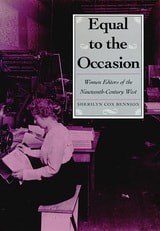
Equal To The Occasion
Women Editors On The Nineteenth-Century WestSherilyn Cox Bennion
University of Nevada Press, 1990
Bennion provides in-depth portraits of nineteenth-century women editors of the West and their diverse publications. The book's title takes its name from an 1898 editorial in the Wasatch Wave which described Piute Pioneer editor Candace Alice De Witt as a "maiden fair, fully equal to the occasion."Equal to the Occasion delves into the lives, publications, and historical contexts in which approximately thirty-five female editors of newspapers and other periodicals worked in the nineteenth-century West. The book covers the period from 1854, when the West's first woman editor began her work, through the turn of the century; it includes research gathered from thirteen western states. With its in-depth portraits of pioneering women editors and its appendix listing more than two hundred women and the major repositories where their extant publications are kept, Equal to the Occasion rescues from obscurity a whole panoply of nineteenth-century western women.
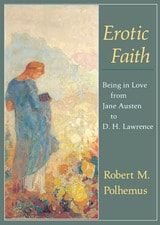
Erotic Faith
Being in Love from Jane Austen to D. H. LawrenceRobert M. Polhemus
University of Chicago Press, 1990
Drawing on a wide range of disciplines, Polhemus shows the reciprocity of love as subject, the novel as form, and faith as motive in important works by Jane Austen, Walter Scott, the Brontës, Dickens, George Eliot, Trollope, Thomas Hardy, Joyce, D. H. Lawrence, Virginia Woolf, and Samuel Beckett. Throughout, Polhemus relates the novelists' representation of love to that of such artists as Botticelli, Vermeer, Claude Lorrain, Redon, and Klimt. Juxtaposing their paintings with nineteenth- and twentieth-century texts both reveals the ways in which novels develop and individualize common erotic and religious themes and illustrates how the novel has influenced our perception of all art.
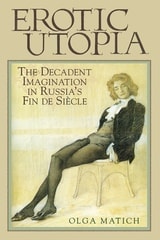
Erotic Utopia
The Decadent Imagination in Russia's Fin de SiecleOlga Matich
University of Wisconsin Press, 2007
The first generation of Russian modernists experienced a profound sense of anxiety resulting from the belief that they were living in an age of decline. What made them unique was their utopian prescription for overcoming the inevitability of decline and death both by metaphysical and physical means. They intertwined their mystical erotic discourse with European degeneration theory and its obsession with the destabilization of gender. In Erotic Utopia, Olga Matich suggests that same-sex desire underlay their most radical utopian proposal of abolishing the traditional procreative family in favor of erotically induced abstinence.
“Offers a fresh perspective and a wealth of new information on early Russian modernism. . . . It is required reading for anyone interested in fin-de-siècle Russia and in the history of sexuality in general.”—Bernice Glatzer Rosenthal, Slavic and East European Journal
“Thoroughly entertaining.”—Avril Pyman, Slavic Review
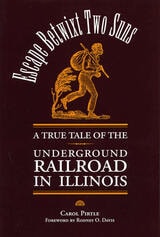
Escape Betwixt Two Suns
A True Tale of the Underground Railroad in IllinoisCarol Pirtle. Foreword by Rodney O. Davis
Southern Illinois University Press, 2000
Although the northern Illinois chapters of the story of Susan “Sukey” Richardson’s escape from slavery on the Underground Railroad are documented, the part played by southern Illinois in that historic episode has remained obscure. Carol Pirtle changes that with her investigation into the 1843 suit Andrew Borders lodged against William Hayes, charging his neighbor with helping slaves from the Borders estate escape to Galesburg. In conjunction with her probe into the past, Pirtle also discovered the Hayes correspondence.
Pirtle documents Hayes’s involvement in the Illinois Underground Railroad through approximately two hundred letters received by Hayes from the early 1820s until his death in 1849. Many of these letters specifically corroborate his participation in the escape of slaves from the Borders estate. One such letter came from T. A. Jones in 1843: “You Dear Sir are to me an unknown friend, yet I believe you are a friend to the poor down trodden Slave. This is as good an introduction as I want from any man. My brother, our cause is a holy one.” Letters written by Galesburg residents show that several prominent citizens of that community also assisted in the affair, proving that Knox College administrators and trustees were active in the Underground Railroad.
Pirtle also includes excerpts from the trial transcript from the 1844 civil case against Hayes, which was tried in Pinckneyville, Illinois. She researched newspaper accounts of the event, most notably those in the Western Citizen and the Sparta Herald. Records of the Covenanter Presbyterian church of which Hayes was a member provide partial explanations of Hayes’s motives.
Telling the story of Hayes and his involvement with Susan Richardson and the Underground Railroad, Pirtle provides insight into the work of abolitionists in Illinois. Escape Betwixt Two Suns, in fact, is one of the few books to substantiate the legends of the Underground Railroad. She tells the story of a quiet man who made a difference, of a man deserving the accolades of a hero.
Essays on the Modern Japanese Church
Christianity in Meiji JapanYamaji Aizan; Translated by Graham Squires, with Introductory Essays by Graham Squires and A. Hamish Ion
University of Michigan Press, 2000
Establishing Congress
The Removal to Washington, D.C., and the Election of 1800Kenneth R. Bowling
Ohio University Press, 2005
Establishing Congress: The Removal to Washington, D.C., and the Election of 1800 focuses on the end of the 1790s, when, in rapid succession, George Washington died, the federal government moved to Washington, D.C., and the election of 1800 put Thomas Jefferson and the Democratic-Republican Party in charge of the federal government.
Establishing Congress dispels the myths and misinformation that surround the federal government’s move to Washington and demonstrates that the election of 1800 changed American party politics forever, establishing the success of the American experiment in government and completing the founding of the Republic. It also contends that the lame-duck session of Congress had far-reaching implications for the governance of the District of Columbia. Later chapters examine aspects of the political iconography of the Capitol—one illuminating Jefferson’s role in turning the building into a temple for the legislature and an instrument for nation-building, another analyzing the fascinating decades-long debate over whether to bury George Washington in the Capitol.
The book considers as well the political implications of social life in early Washington, examining the political lobbying by Washington women within a social context and detailing the social and political life in the city’s homes, hotels, boardinghouses, and eating messes. Establishing Congress is an invaluable reference work for anyone interested in these pivotal moments in American history.
Eternal People
A NovelDavid Milofsky
University Press of Colorado, 1998
Europe (in Theory)
Roberto M. Dainotto
Duke University Press, 2007
Dainotto synthesizes a vast array of literary, philosophical, and historical works by authors from different parts of Europe. He scrutinizes theories that came to dominate thinking about the continent, including Montesquieu’s invention of Europe’s north-south divide, Hegel’s “two Europes,” and Madame de Staël’s idea of opposing European literatures: a modern one from the North, and a pre-modern one from the South. At the same time, Dainotto brings to light counter-narratives written from Europe’s margins, such as the Spanish Jesuit Juan Andrés’s suggestion that the origins of modern European culture were eastern rather than northern and the Italian Orientalist Michele Amari’s assertion that the South was the cradle of a social democracy brought to Europe via Islam.
Evangelical Gotham
Religion and the Making of New York City, 1783–1860Kyle B. Roberts
University of Chicago Press, 2016
Ever Faithful
Race, Loyalty, and the Ends of Empire in Spanish CubaDavid Sartorius
Duke University Press, 2013
Every Revolution Was First a Thought
The Civil War and Transcendentalism in Transatlantic ContextAren Lerner Craig
University of Massachusetts Press, 2025
Tracing the impact of transcendental philosophy on Union soldiers and their loved ones during the American Civil War
Scholars of the American Civil War have long wondered about the seemingly earnest and sincere sentimental commitment that most Northern soldiers had to their nation and the North’s cause. Unlike many others in other wars, Union soldiers appeared to embrace the war with an unusual conviction and sacrificed their lives with a rare nobility. Their grieving relatives were also buoyed up by their steadfast beliefs in the righteousness of the cause. What was so different about this war, and this period of American history, and what encouraged such an outlook?
In Every Revolution Was First a Thought, Aren Lerner Craig argues that in the Civil War era the American Transcendentalist movement provided a coherent worldview that fostered powerful idealism around issues of character, gender, race, and nationhood, even in the worst of times. Through an exploration of diaries, newspaper editorials, popular songs, and more, Craig demonstrates how Transcendentalist thought moved from elite intellectual circles to the public, providing people a firm belief in the power of individual agency to shape the world and a view of spirituality in which each person was divine, and thus beyond death and destruction. Transcendentalist tenets proved strong enough to withstand the devastation of war and inspired high levels of faith and optimism in soldiers and civilians alike throughout the conflict.
Craig traces the origins of Transcendentalism across the Atlantic, to ideas from Scottish Realism and German Idealism, and connects these philosophies to writings and speeches of major figures like Ralph Waldo Emerson, Henry David Thoreau, and Margaret Fuller. This intellectual history offers a new interpretation of Transcendental thought and its role in the Civil War.
Everyday Forms of State Formation
Revolution and the Negotiation of Rule in Modern MexicoGilbert M. Joseph and Daniel Nugent, eds.
Duke University Press, 1994
Structured in the form of a dialogue between a distinguished array of Mexicanists and comparative social theorists, this volume boldly reassesses past analyses of the Mexican revolution and suggests new directions for future study. Showcasing a wealth of original archival and ethnographic research, this collection provides a new and deeper understanding of Mexico’s revolutionary experience. It also speaks more broadly to a problem of extraordinary contemporary relevance: the manner in which local societies and self-proclaimed "revolutionary" states are articulated historically. The result is a unique collection bridging social history, anthropology, historical sociology, and cultural studies in its formulation of new approaches for rethinking the multifaceted relationship between power, culture, and resistance.
Contributors. Ana María Alonso, Armando Bartra, Marjorie Becker, Barry Carr, Philip Corrigan, Romana Falcón, Gilbert M. Joseph, Alan Knight, Florencia E. Mallon, Daniel Nugent, Elsie Rockwell, William Roseberry, Jan Rus, Derek Sayer, James C. Scott
Everyone’s Theater
Literature and Daily Life in England, 1860–1914Michael Meeuwis
University of Michigan Press, 2019
Nearly all residents of England and its colonies between 1860 and 1914 were active theatergoers, and many participated in the amateur theatricals that defined late Victorian life. The Victorian theater was not an abstract figuration of the world as a stage, but a media system enmeshed in mass lived experience that fulfilled in actuality the concept of a theatergoing nation. Everyone’s Theater turns to local history, the words of everyday Victorians found in their diaries and production records, to recover this lost chapter of theater history in which amateur drama domesticates the stage. Professional actors and playwrights struggled to make their productions compatible with ideas and techniques that could be safely reproduced in the home—and in amateur performances from Canada to India. This became the first true English national theater: a society whose myriad classes found common ground in theatrical display. Everyone’s Theater provides new ways to extend Victorian literature into the dimension of voice, sound, and embodiment, and to appreciate the pleasures of Victorian theatricality.

Evil by Design
The Creation and Marketing of the Femme FataleElizabeth K. Menon
University of Illinois Press, 2000
Evil by Design documents the search for the origins of the iconic “femme fatale.” Depicted as a dangerous, depraved, and deadly woman, this image was found frequently in Salon paintings from 1885 to 1910.
Elizabeth K. Menon’s study is the first to use popular sources to make the critical link between the femme fatale and the rise of feminism. In addition to the Salon paintings, Menon sifts through a variety of popular sources, including French illustrated journals, literature, posters, and decorative arts. Over 120 images depict women with serpents, evil flowers, and even miniature men having their hearts cooked. She argues that the evolution of the femme fatale, with both literary and visual links to the biblical Eve figure, came as a response to increasing feminism and the desire by men to halt its spread.
Evolutionary Rhetoric
Sex, Science, and Free Love in Nineteenth-Century FeminismWendy Hayden
Southern Illinois University Press, 2013
In Evolutionary Rhetoric, scholar Wendy Hayden provides a comprehensive examination of the relationship between scientific and feminist rhetorics in free-love feminism, studying the movement from its inception in the 1850s to its dark turn toward eugenics in the early 1900s. Hayden organizes her provocative study by scientific discipline—evolution, physiology, bacteriology, embryology, and heredity. Each chapter explores how free-love feminists adopted the evidence of that discipline in their arguments for increased sex education, women’s sexual rights, reproductive freedom, and the abolition of a marriage system that repressed the rights and the sexuality of women.
Hayden takes our conventional understanding of the relationship between nineteenth-century feminism and science and expands it. The author provides examples of the powerful words of free-love feminists to show exactly how these exceptional women used science as a rhetorical platform to promote feminist, and often radical, social reforms.
Considering why the free-love movement has not yet been studied, Hayden also discusses how the recovery of this movement may impact larger goals in the recovery of women’s rhetoric. This important and timely study of a long-forgotten movement adds to our understanding of the complexities of the history of feminism.
Exodus!
Religion, Race, and Nation in Early Nineteenth-Century Black AmericaEddie S. Glaude Jr.
University of Chicago Press, 2000
Exodus! shows how this biblical story inspired a pragmatic tradition of racial advocacy among African Americans in the early nineteenth century—a tradition based not on race but on a moral politics of respectability. Eddie S. Glaude, Jr., begins by comparing the historical uses of Exodus by black and white Americans and the concepts of "nation" it generated. He then traces the roles that Exodus played in the National Negro Convention movement, from its first meeting in 1830 to 1843, when the convention decided—by one vote—against supporting Henry Highland Garnet's call for slave insurrection.
Exodus! reveals the deep historical roots of debates over African-American national identity that continue to rage today. It will engage anyone interested in the story of black nationalism and the promise of African-American religious culture.
Expansion of Everyday Life, 1860–1876
Daniel Sutherland
University of Arkansas Press, 2000