Results by title
3258 books match the query 'Art' and 101 start with e
Engaging Diverse Communities
A Guide to Museum Public RelationsMelissa A. Johnson
University of Massachusetts Press, 2020
Melissa A. Johnson interviews communicators at cultural heritage museums to understand the challenges of representing communities based on racial and ethnic, generational, immigrant, and language identities. Exploring how communications professionals function as cultural intermediaries by negotiating competing and intersecting identities and mastering linguistic and visual code-switching, she presents an analysis of the communication tactics of more than two hundred art, history, African American, American Indian, and other diverse museums. Engaging Diverse Communities illuminates best public relations practices, especially in media relations, digital press relations, website content production, social media, and event planning. This essential text for museum professionals also addresses visual aesthetics, cultural expression, and counter-stereotypes, and offers guidance on how to communicate cultural attractiveness.
English Embroidery from the Metropolitan Museum of Art, 1580-1700
‘Twixt Art and NatureMelinda Watt
Bard Graduate Center, 2009
Engraving Between Iconoclasm and Revolt
Art History and the Printed Image in Early Modern EuropeEdward H. Wouk
University of Chicago Press, 0
An alternative history of Renaissance art from a Netherlandish perspective and focusing on printed images.
Through his treatises, letters, and support of printmaking projects, Bruges-born humanist Dominicus Lampsonius (1532–1599) tested the limits of what it meant to be an artist in the early modern period. This book—the first monographic study of Lampsonius to appear in the English language—investigates the convergence of art history, aesthetics, cultural politics, and theology in Lampsonius’s writings, with a particular focus on his novel theory of the printed image as a work of art.
In Lampsonius’s art history, painting recedes and engraving comes to the fore. This inversion of traditional hierarchies entailed a remaking of the Renaissance image as a graphic and replicable phenomenon. Here was a new way of looking at the image: not as a painted likeness of the sacred or the world, but rather as a graphic representation formed from the attenuated patterns of the engraved surface. In both meaning and making, printed images deflected the threats of iconoclasm precisely because, as manufactured objects, they could never be confused for what they represented—the sacred “prototype” they explicitly did not resemble. Tracing Lampsonius’s evolving views against the religious, political, and cultural upheaval of the Dutch Revolt, Edward H. Wouk considers the lasting implications of his efforts to change the course of art history.

Engraving the Savage
The New World and Techniques of CivilizationMichael Gaudio
University of Minnesota Press, 2008
In 1585, the British painter and explorer John White created images of Carolina Algonquian Indians. These images were collected and engraved in 1590 by the Flemish publisher and printmaker Theodor de Bry and were reproduced widely, establishing the visual prototype of North American Indians for European and Euro-American readers.
In this innovative analysis, Michael Gaudio explains how popular engravings of Native American Indians defined the nature of Western civilization by producing an image of its “savage other.” Going beyond the notion of the “savage” as an intellectual and ideological construct, Gaudio examines how the tools, materials, and techniques of copperplate engraving shaped Western responses to indigenous peoples. Engraving the Savage demonstrates that the early visual critics of the engravings attempted-without complete success-to open a comfortable space between their own “civil” image-making practices and the “savage” practices of Native Americans-such as tattooing, bodily ornamentation, picture-writing, and idol worship. The real significance of these ethnographic engravings, he contends, lies in the traces they leave of a struggle to create meaning from the image of the American Indian.
The visual culture of engraving and what it shows, Gaudio reasons, is critical to grasping how America was first understood in the European imagination. His interpretations of de Bry’s engravings describe a deeply ambivalent pictorial space in between civil and savage-a space in which these two organizing concepts of Western culture are revealed in their making.
Michael Gaudio is assistant professor of art history at the University of Minnesota.
Entering Cultural Communities
Diversity and Change in the Nonprofit ArtsGrams, Diane
Rutgers University Press, 2008
The chapters in this book draw on interviews with leaders, staff, volunteers, and audience members from eighty-five nonprofit cultural organizations to explore how they are trying to increase participation and the extent to which they have been successful. The insiders' accounts point to the opportunities and challenges involved in such efforts, from the reinvention of programs and creation of new activities, to the addition of new departments and staff dynamics, to partnerships with new groups. The authors differentiate between "relational" and "transactional" practices, the former term describing efforts to build connections with local communities and the latter describing efforts to create new consumer markets for cultural products. In both cases, arts leaders report that, although positive results are difficult to measure conclusively, long-term efforts bring better outcomes than short-term activities.
The organizations discussed include large, medium, and small nonprofits located in urban, suburban, and rural areas—from large institutions such as the Smithsonian, the Walker Art Center, the Museum of Fine Arts Houston, and the San Francisco Symphony to many cultural organizations that are smaller, but often known nationally for their innovative work, such as AS220, The Loft Literary Center, Armory Center for the Arts, Appalshop, and the Western Folklife Center.
Entranced Earth
Art, Extractivism, and the End of LandscapeJens Andermann
Northwestern University Press, 2023
A sweeping analysis of the lasting effects of neocolonial extractivism in Latin American aesthetic modernity from 1920 to the present
Looking to the extractive frontier as a focal point of Latin American art, literature, music, and film, Jens Andermann asks what emerges at the other end of landscape. Art in the Global South has long represented and interrogated “insurgent nature”—organic and inorganic matter, human and nonhuman life, thrown into turmoil.
In Entranced Earth: Art, Extractivism, and the End of Landscape, Andermann traces the impact of despaisamiento—world-destroying un-landscaping—throughout the Latin American modernist archive. At the same time, he explores innovative, resilient modes of allyship forged between diverse actors through their shared experiences of destruction. From the literary regionalism of the 1930s to contemporary bio art, from modernist garden architecture to representations of migration and displacement in sound art and film, Entranced Earth tracks the crisis of landscape and environmental exhaustion beyond despair toward speculative, experimental forms of survival.
Entre Guadalupe y Malinche
Tejanas in Literature and ArtEdited by Inés Hernández-Ávila and Norma Elia Cantú
University of Texas Press, 2016
Mexican and Mexican American women have written about Texas and their lives in the state since colonial times. Edited by fellow Tejanas Inés Hernández-Ávila and Norma Elia Cantú, Entre Guadalupe y Malinche gathers, for the first time, a representative body of work about the lives and experiences of women who identify as Tejanas in both the literary and visual arts.
The writings of more than fifty authors and the artwork of eight artists manifest the nuanced complexity of what it means to be Tejana and how this identity offers alternative perspectives to contemporary notions of Chicana identity, community, and culture. Considering Texas-Mexican women and their identity formations, subjectivities, and location on the longest border between Mexico and any of the southwestern states acknowledges the profound influence that land and history have on a people and a community, and how Tejana creative traditions have been shaped by historical, geographical, cultural, linguistic, social, and political forces. This representation of Tejana arts and letters brings together the work of rising stars along with well-known figures such as writers Gloria Anzaldúa, Emma Pérez, Alicia Gaspar de Alba, Carmen Tafolla, and Pat Mora, and artists such as Carmen Lomas Garza, Kathy Vargas, Santa Barraza, and more. The collection attests to the rooted presence of the original indigenous peoples of the land now known as Tejas, as well as a strong Chicana/Mexicana feminism that has its precursors in Tejana history itself.

Entrepreneurial Arts and Cultural Leadership
Traits of Success in Nonprofit TheatreBonnie Fogel and Brett Ashley Crawford
Intellect Books, 2025
Entrepreneurial Arts and Cultural Leadership focuses on real-world strategies for developing the entrepreneurial mindset necessary for leading and sustaining nonprofit arts organizations. Bonnie Fogel and Brett Ashley Crawford examine the leadership traits that drive innovation, adaptability, and long-term viability in the ever-evolving arts sector.
Through the case study of Imagination Stage, they highlight how successful nonprofit theater leaders can navigate financial instability, advocate for equity and inclusion, and implement sustainable business models in a landscape forever impacted by national and global events. With practical insights, tools, and a resource-rich appendix, this book offers arts managers, educators, and nonprofit leaders a roadmap for resilience and growth. Whether you are an advanced student, a researcher, or an arts executive seeking inspiration, this book provides an essential framework for building the future of nonprofit theatre.
Entry Points
The Vera List Center Field Guide on Art and Social Justice No. 1Carin Kuoni and Chelsea Haines, editors
Duke University Press, 2016
Enveloping Worlds
Toward a Discourse of Immersive PerformanceE.B. Hunter and Scott Magelssen, Editors
University of Michigan Press, 2025
2026 Association for Theatre in Higher Education Edited Works Award Winner
Enveloping Worlds is a collection of essays that analyzes the phenomenon of immersive, participatory performance as it has developed in the US. As this collection demonstrates, immersive performance offers three-dimensional multisensory experiences, inviting audience members to be participants in the unfolding of the story, and challenging pre-existing ideas about the function of performance and entertainment. Enveloping Worlds questions audience agency and choice, the space and boundaries of performance, modes of immersion, empathy and engagement, and ethical considerations through fifteen essays.
Case studies in the volume include the Choctaw Cultural Center in Oklahoma and Choctaw sovereignty; a Black artist’s autoethnographic performance challenging White audiences’ entitlement to full inclusion; Immersive Van Gogh experiences and their scenographers; telephone performance during the COVID-19 lockdowns; Diane Paulus’s The Donkey Show; the Battle of Atlanta panorama; an antebellum-themed department store display from the 1920s; escape rooms; Disney Parks; remotely staged plays about aging and dementia; tiki bars; anachronistic costuming at Renaissance Festivals; the technologies that shape the boundaries of immersive worlds; and tabletop role-playing games. Taken together, these essays contribute a rich discussion of immersive performance across radically different contexts, offering analytical models and terminology with which to clarify and advance this emergent discourse.
Epic Landscapes
Benjamin Henry Latrobe and the Art of WatercolorJulia Sienkewicz
University of Delaware Press, 2011
Published by University of Delaware Press. Distributed worldwide by Rutgers University Press.
Epistemologies of Aesthetics
Dieter Mersch
Diaphanes, 2015
In Epistemologies of Aesthetics, Dieter Mersch deconstructs and displaces the terminology that typically accompanies the question of the relationship between art and scientific truth. Identifying artistic practices as modes of thought that do not make use of language in a way that can easily be translated into scientific discourse, Mersch advocate for an aesthetic mode of thought beyond the “linguistic turn,” a way of thinking that cannot be substituted by any other disciplinary system. A sophisticated reflection on the epistemological status of the aesthetic by one of Germany’s leading philosophers, Epistemologies of Aesthetics will be of great interest within this growing field of study.
Eros Ideologies
Writings on Art, Spirituality, and the DecolonialLaura E. Pérez
Duke University Press, 2018
Erotic Islands
Art and Activism in the Queer CaribbeanLyndon K. Gill
Duke University Press, 2018
Esotericism, Art and Imagination
Arthur Versluis
Michigan State University Press, 2008
Esotericism, Art, and Imagination is a uniquely wide-ranging collection of articles by scholars in the field of Western esotericism, focusing on themes of poetry, drama, film, literature, and art. Included here are articles illuminating such diverse topics as the Gnostic fiction of Philip Pullman, alchemical images, the Tarot, surrealism, esoteric films, and much more. This collection reveals the richness and complexity of the intersections between esotericism, artistic creators, and their works. Authors include Joscelyn Godwin, Cathy Gutierrez, M. E. Warlick, Eric Wilson, and many others.
Essay Film and Narrative Techniques
Screen-writing Non-fictionEdited by Romana Turina and Kiki Tianqi Yu
Intellect Books, 2025
Uniting filmmakers and practice-led researchers, Essay Film and Narrative Techniques: Screen-writing Non-fiction explores the evolving language of essay film through various methods of narration, including production diaries, self-critiques, interviews, and theoretical analyses. Including canonical works and unconventional approaches, this collection emphasizes how essay films blur the lines between personal expression and collective storytelling.
In this volume, renowned scholars and practitioners unpack the conceptual and contextual dimensions of screenwriting for essay film, considering its role as both a cinematic and research tool. Whether reflecting on the personal camera or hybrid creative methodologies, the essays provide invaluable insights into how essay films are written and realized.
With its interdisciplinary scope and innovative approach, this work is a beneficial resource for academics, filmmakers, and students of documentary and experimental cinema, offering a nuanced understanding of how screenwriting shapes nonfiction storytelling.
Essential Economics for Heritage
Peter G. Gould
University College London, 2025
Essential Economics for Heritage provides tools from economics that will aid scholars, professionals, and students in heritage-related fields, such as archaeology, museum and site management, research, presentation, and conservation. With a wealth of practical examples ranging from wealthier countries in the Global North to nations that depend on heritage as a key economic resource, this guide applies relevant economic theory and business analysis to issues regularly faced in the field, from heritage tourism and sustainability to the role of heritage in economic development, investment decision making, and financing for heritage organizations.
Eternal Sovereigns
Indigenous Artists, Activists, and Travelers Reframing RomeGloria Jane Bell
Duke University Press, 2024
Ethno Music Gatherings
Pedagogy Experience, ImpactEdited by Lee Higgins and Sarah Jane Gibson
Intellect Books, 2024
This book presents key findings from a four-year project that sought to understand Ethno, an organized residential folk, world, and traditional music program for young people ranging in age from eighteen to thirty. First held in Sweden in 1990, Ethno now hosts gatherings in more than forty countries. The authors examine the complexity of an Ethno music experience with three focuses: pedagogy and professional development, participant experience, and impact beyond the gathering.
Drawing on data from participant observations, interviews, social media analysis, onsite and video observations, surveys, and questionnaires, the authors ask critical questions concerning Ethno’s history, ethos, pedagogy, and philosophical ideals. Considering its history and current practices, the following themes are explored: non-formal music making, personal authenticity, holistic praxis, musical possible selves, intercultural music exchange, sustainability, social media engagement, song sharing, and future practices. As a collection of integrated thought, the book’s purpose is to illuminate new understandings of what Ethno does and in so doing present synergies and divergencies with the wider field of music education.
Ethnographic Experiments with Artists, Designers and Boundary Objects
Exhibiting the FieldFrancisco Martínez
University College London, 2021
Richly illustrated, Ethnographic Experiments with Artists, Designers and Boundary Objects reflects on the experimental skills and practices shared by ethnographers and curators. Francisco Martínez highlights relationships between contemporary art, design, and anthropology and imagines creative ways to develop new infrastructure that supports vital interdisciplinary work. Attentive to the experimental nature of exhibitions, Martínez models a new approach to both ethnography and objecthood across disciplinary boundaries.
Euripides and the Poetics of Sorrow
Art, Gender, and Commemoration in Alcestis, Hippolytus, and HecubaCharles Segal
Duke University Press, 1993
Alcestis, Hippolytus, and Hecuba, the three early plays interpreted here, are linked by common themes of violence, death, lamentation and mourning, and by their implicit definitions of male and female roles. Segal shows how these plays draw on ancient traditions of poetic and ritual commemoration, particularly epic song, and at the same time refashion these traditions into new forms. In place of the epic muse of martial glory, Euripides, Segal argues, evokes a muse of sorrows who transforms the suffering of individuals into a "common grief for all the citizens," a community of shared feeling in the theater.
Like his predecessors in tragedy, Euripides believes death, more than any other event, exposes the deepest truth of human nature. Segal examines the revealing final moments in Alcestis, Hippolytus, and Hecuba, and discusses the playwright's use of these deaths--especially those of women--to question traditional values and the familiar definitions of male heroism. Focusing on gender, the affective dimension of tragedy, and ritual mourning and commemoration, Segal develops and extends his earlier work on Greek drama. The result deepens our understanding of Euripides' art and of tragedy itself.
Europe and Love in Cinema
Edited by Luisa Passerini, Jo Labanyi, and Karen Diehl
Intellect Books, 2012
Europe and Love in Cinema explores the relationship between love and Europeanness in a wide range of films from the 1920s to the present. A critical look at the manner in which love—in its broadest sense—is portrayed in cinema from across Europe and the United States, this volume exposes constructed notions of "Europeanness" that both set Europe apart and define some parts of it as more "European" than others. Through the international distribution process, these films in turn engage with ideas of Europe from both outside and within, while some, treated extensively in this volume, even offer alternative models of love. A bracing collection of essays from top film scholars, Europe and Love in Cinema demonstrates the centrality of desire to film narrative and explores multiple models of love within Europe's frontiers.
Even the Least of These
Anita Skeen
Michigan State University Press, 2024

Every Hour of the Light
The Paintings of Mary Sipp GreenMary Sipp Green
The Artist Book Foundation, 2014
American landscape painter Mary Sipp Green, based in the bucolic Berkshire Hills of Massachusetts, has a superlative ability to engage the viewer in the emotive atmosphere of her landscapes and seascapes. The intensely saturated colors in her works evoke an immediate sense of place and a unique perspective on an intimate tableau. Sipp Green achieves an ethereal, nuanced quality in her paintings that imparts a refined and inimitable serenity. In Every Hour of the Light: The Paintings of mary Sipp Green, many of the subjects she paints—salt marshes, barns, meadows, rivers, and the occasional cityscape—are captured in the exquisite twilight of early evenings or a luminescent sunrise. The effect is dreamy yet grounded and familiar.
Sipp Green states, "While my preferred medium has always been oil on linen, my methods, techniques, and aesthetic aims have all undergone significant transformations since I first began. I learned my craft in the studio, painting still lifes and portraits, as well as landscapes drawn directly from nature. Over time, I became increasingly engaged with more abstract and spiritual aspects of the landscape form and I began to pursue a less representational, more expressive style." When describing her "diffuse quality of color," she explains, "I use many layers of paint, allowing each to dry before the next is applied. Along the way, the surface of the paint is often refigured in unpredictable ways, and there is much that has to be scraped, sanded, destroyed and reapplied before the essence of a place, its mood and atmosphere, finally emerges onto the canvas."
Everyday Apocalypse
Art, Empire, and the End of the WorldDavid Dark
Vanderbilt University Press, 2025
This revised edition of the book includes a foreword by Hanif Abdurraqib, an extensive afterword, updates in light of the passage of time since its publication, and new insights from the author, whose outspokenness has placed him outside of circles in which he was once supported and celebrated.
Everyday Genius
Self-Taught Art and the Culture of AuthenticityGary Alan Fine
University of Chicago Press, 2004
Fine considers the differences among folk art, outsider art, and self-taught art, explaining the economics of this distinctive art market and exploring the dimensions of its artistic production and distribution. Interviewing dealers, collectors, curators, and critics and venturing into the backwoods and inner-city homes of numerous self-taught artists, Fine describes how authenticity is central to the system in which artists—often poor, elderly, members of a minority group, or mentally ill—are seen as having an unfettered form of expression highly valued in the art world. Respected dealers, he shows, have a hand in burnishing biographies of the artists, and both dealers and collectors trade in identities as much as objects.
Revealing the inner workings of an elaborate and prestigious world in which money, personalities, and values affect one another, Fine speaks eloquently to both experts and general readers, and provides rare access to a world of creative invention-both by self-taught artists and by those who profit from their work.
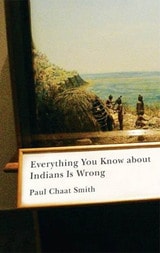
Everything You Know about Indians Is Wrong
Paul Chaat Smith
University of Minnesota Press, 2009
Forceful and eloquent essays on the American Indian in culture and history
In this sweeping work of memoir and commentary, leading cultural critic Paul Chaat Smith illustrates with dry wit and brutal honesty the contradictions of life in “the Indian business.”
Raised in suburban Maryland and Oklahoma, Smith dove head first into the political radicalism of the 1970s, working with the American Indian Movement until it dissolved into dysfunction and infighting. Afterward he lived in New York, the city of choice for political exiles, and eventually arrived in Washington, D.C., at the newly minted National Museum of the American Indian (“a bad idea whose time has come”) as a curator. In his journey from fighting activist to federal employee, Smith tells us he has discovered at least two things: there is no one true representation of the American Indian experience, and even the best intentions sometimes result in catastrophe.
Everything You Know about Indians Is Wrong is a highly entertaining and, at times, searing critique of the deeply disputed role of American Indians in the United States. In “A Place Called Irony,” Smith whizzes through his early life, showing us the ironic pop culture signposts that marked this Native American’s coming of age in suburbia: “We would order Chinese food and slap a favorite video into the machine—the Grammy Awards or a Reagan press conference—and argue about Cyndi Lauper or who should coach the Knicks.” In “Lost in Translation,” Smith explores why American Indians are so often misunderstood and misrepresented in today’s media: “We’re lousy television.” In “Every Picture Tells a Story,” Smith remembers his Comanche grandfather as he muses on the images of American Indians as “a half-remembered presence, both comforting and dangerous, lurking just below the surface.”
Smith walks this tightrope between comforting and dangerous, offering unrepentant skepticism and, ultimately, empathy. “This book is called Everything You Know about Indians Is Wrong, but it’s a book title, folks, not to be taken literally. Of course I don’t mean everything, just most things. And ‘you’ really means we, as in all of us.”

Evil by Design
The Creation and Marketing of the Femme FataleElizabeth K. Menon
University of Illinois Press, 2000
Evil by Design documents the search for the origins of the iconic “femme fatale.” Depicted as a dangerous, depraved, and deadly woman, this image was found frequently in Salon paintings from 1885 to 1910.
Elizabeth K. Menon’s study is the first to use popular sources to make the critical link between the femme fatale and the rise of feminism. In addition to the Salon paintings, Menon sifts through a variety of popular sources, including French illustrated journals, literature, posters, and decorative arts. Over 120 images depict women with serpents, evil flowers, and even miniature men having their hearts cooked. She argues that the evolution of the femme fatale, with both literary and visual links to the biblical Eve figure, came as a response to increasing feminism and the desire by men to halt its spread.
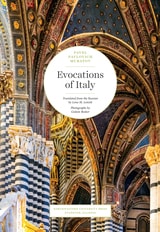
Evocations of Italy
Pavel Pavlovic Muratov and Lena Lencek (Trans.)
Northwestern University Press, 2026
In 1907, Pavel Muratov, a budding littérateur and art connoisseur from Moscow, set off for Italy with his wife, three friends, and a dozen books on the Italian Renaissance. This journey, the first of over a dozen he would make in a decade, inspired an obsession with the country’s art and culture that would produce, in the words of Clive James, “one of the most dazzling books of its type ever written.” First published in Russian between 1911 and 1924, Evocations of Italy(Obrazy Italii) chronicles Muratov’s encounters with the art, myth, and land of Italy. A classic of the Silver Age, it built on the tradition of Italian travelogues by Goethe, Stendhal, John Ruskin, and Henry James and defined the idea of Italy for generations of Russian artists and writers. Finally available in English, this three-volume collector's edition illuminates the personalities, conditions, and dreams that gave us the Italian Renaissance. At once intimate and authoritative, and here richly illustrated with photographs that echo Muratov’s shimmering juxtapositions of image and sensation, Evocations of Italy is as timely and compelling a guide today as it was a hundred years ago.

Evoking Newark
Fifty YearsCamilo José Vergara
Rutgers University Press, 2027
Evoking Newark is a systematic photographic documentation of Newark, NJ, from 1977-2024. This project creates a flexible framework for tracing Newark’s evolution. In this ambitious volume, award-winning photographer Camilo José Vergara creates an indelible record of the city, beginning along its most important commercial thoroughfares, such as Broad, Market, Springfield Ave., Clinton Ave., Central Ave., and MLK Jr. Blvd. He also takes a closer look at landmarks as well as more modest buildings whose folksy character caught his eye. As an urban documentary photographer, Vergara frequently returned to re-photograph Newark in order to track changes over time. For almost fifty years, he identified multiple street intersections that were particularly revealing settings for charting developments in the city.
Vergara examines in particular the slow renewal of these main thoroughfares, the demolition of high-rise housing projects, the ruination and clearing of industrial sites, the building of multi-family houses in once-vacant lots, and the construction of skyscrapers and cultural institutions. To complete the project, he added photos of graffiti and murals that comment on local and national events celebrating African American and Hispanic heroes and heroines and memorials remembering the dead. With these efforts at careful documentation, Brick City demonstrates the usefulness of a time-based documentary approach to the study of post-industrial urban areas. The photographs are accompanied by detailed captions about the locations portrayed, and in many cases by Vergara's own observations and transcripts of his interviews with local people as well as overheard conversations. The photos and captions are one way of telling us that “this happened,” and a means of refreshing the memories of viewers who have experienced Newark generations ago--recollections that contribute to their sense of identity.
Ex Voto
Votive Giving Across CulturesEdited by Ittai Weinryb
Bard Graduate Center, 2015
The contributors to this comparative study examine ex votos across a range of locations and time periods, including the classical Mediterranean world, medieval Europe, the period of the Catholic Reform, and on to Mexico, Shinto and Buddhist Japan, and Muslim Iran. Voluminous and diverse, Ex Voto will appeal in a wide range of fields, including history, religion, and anthropology.
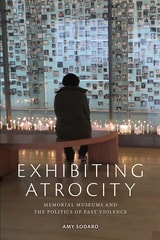
Exhibiting Atrocity
Memorial Museums and the Politics of Past ViolenceSodaro, Amy
Rutgers University Press, 2018
Today, nearly any group or nation with violence in its past has constructed or is planning a memorial museum as a mechanism for confronting past trauma, often together with truth commissions, trials, and/or other symbolic or material reparations. Exhibiting Atrocity documents the emergence of the memorial museum as a new cultural form of commemoration, and analyzes its use in efforts to come to terms with past political violence and to promote democracy and human rights.
Through a global comparative approach, Amy Sodaro uses in-depth case studies of five exemplary memorial museums that commemorate a range of violent pasts and allow for a chronological and global examination of the trend: the U.S. Holocaust Memorial Museum in Washington, DC; the House of Terror in Budapest, Hungary; the Kigali Genocide Memorial Centre in Rwanda; the Museum of Memory and Human Rights in Santiago, Chile; and the National September 11 Memorial Museum in New York. Together, these case studies illustrate the historical emergence and global spread of the memorial museum and show how this new cultural form of commemoration is intended to be used in contemporary societies around the world.
Download open access ebook.
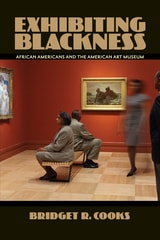
Exhibiting Blackness
African Americans and the American Art MuseumBridget R. Cooks
University of Massachusetts Press, 2011
In Exhibiting Blackness, art historian Bridget R. Cooks analyzes the curatorial strategies, challenges, and critical receptions of the most significant museum exhibitions of African American art. Tracing two dominant methodologies used to exhibit art by African Americans—an ethnographic approach that focuses more on artists than their art, and a recovery narrative aimed at correcting past omissions—Cooks exposes the issues involved in exhibiting cultural difference that continue to challenge art history, historiography, and American museum exhibition practices. By further examining the unequal and often contested relationship between African American artists, curators, and visitors, she provides insight into the complex role of art museums and their accountability to the cultures they represent.
Exhibiting Jewish Culinary Culture
András Koerner
Central European University Press, 2024
András Koerner is the author of a number of critically acclaimed, award-winning CEU Press titles on the cultural history of Hungarian Jews and Jewish cuisine. This volume continues that tradition by discussing the phenomenon of exhibits on Jewish culinary culture in museums and galleries around the world.
The first part of the book provides an overview of the cultural history of "foodism" and the proliferation of Jewish museums. In addition, it examines the role of cuisine in Jewish identity. It offers an analysis of the history and recent examples of exhibitions on Jewish culinary culture, a subject that has not received scholarly attention until now.
The second part complements this by offering a detailed case study of the book’s subject. It showcases a 2022 exhibition in Budapest on the History of Hungarian Jewish Culinary Culture. András Koerner was the co-curator of the show, thus he is able to offer an insider’s account of its implementation – concept, scope, goals, audience, and design. He also openly discusses the compromises made and mistakes committed in the exhibition’s preparatory work.
This subjective account, quite different from the dry objectivity of catalogues, offers an unusual, behind-the-scenes look at how a complex exhibition like this is prepared. At the same time, the book’s appendix includes images of the display boards and some of the exhibited objects – thus it can also stand for a valuable ex-post catalogue.
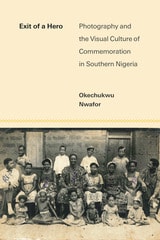
Exit of a Hero
Photography and the Visual Culture of Commemoration in Southern NigeriaOkechukwu Nwafor
University of Michigan Press, 2026
In Exit of a Hero, Okechukwu Nwafor explores the cultural, political, and socioeconomic implications of photography in commemorative practices in southern Nigeria from the nineteenth century to the present. Focusing on obituary and commemorative photographs of late nineteenth and early twentieth-century Lagos to contemporary funeral posters, booklets, and social media posts, Nwafor tracks the historical evolution of the iconic and heroic image. He argues that the quest to produce an ideal memorial body is not just a personal aesthetic choice but a deliberate photographic project that resonates with the Igbo aspirations for heroic achievement.
Exit of a Hero asserts that the visual canonization transforms the deceased from a fallible being to an unimpeachable character who transcends underachievement, imperfection, and failed social performance to emerge as a saintly icon of the Igbo public sphere. In seeking an alternative, hyper-visible public self, social media reclaims the lost hero image of the deceased, reconstituting the contested Igbo public space as a lived reality where heroes and icons are actively and eternally commemorated. Nwafor unveils the creative imaginations of colonial subjects and postcolonial citizens as memorialization has become entangled within the intersecting discursive spaces of print culture and the public sphere.
Exotic Switzerland?
Looking Outward in the Age of EnlightenmentEdited by Noémie Étienne, Claire Brizon, Chonja Lee, and Étienne Wismer
Diaphanes, 2020
Experience
Edited by Alexander Nemerov
Terra Foundation for American Art, 2017
The fourth volume in the Terra Foundation Essays series, Experience considers the possibility of immediacy, or the idea that we can directly relate to the past by way of an artifact or work of art. Without discounting the matrix of codes involved in both the production and reception of art, contributors to Experience emphasize the sensibility of the interpreter; the techniques of art historical writing, including its affinity with fiction and its powers of description; the emotional charge—the punctum—that certain representations can deliver. These and other topics are examined through seven essays, addressing different periods in American art.
Experimental Beijing
Gender and Globalization in Chinese Contemporary ArtSasha Su-Ling Welland
Duke University Press, 2018
Experimenting the Human
Art, Music, and the Contemporary PosthumanG Douglas Barrett
University of Chicago Press, 2023
In Experimenting the Human, G Douglas Barrett argues that experimental music speaks to the contemporary posthuman, a condition in which science and technology decenter human agency amid the uneven temporality of postwar global capitalism. Time moves forward for some during this period, while it seems to stand still or even move backward for others. Some say we’re already posthuman, while others endure the extended consequences of never having been considered fully human in the first place. Experimental music reflects on this state, Barrett contends, through its interdisciplinary involvements in postwar science, technology, and art movements.
Rather than pursuing the human's beyond, experimental music addresses the social and technological conditions that support such a pursuit. Barrett locates this tendency of experimentalism throughout its historical entanglements with cybernetics, and in his intimate analysis of Alvin Lucier’s neurofeedback music, Pamela Z’s BodySynth performances, Nam June Paik’s musical robotics, Pauline Oliveros’s experiments with radio astronomy, and work by Laetitia Sonami, Yasunao Tone, and Jerry Hunt. Through a unique meeting of music studies, media theory, and art history, Experimenting the Human provides fresh insights into what it means to be human.
Experiments in a Jazz Aesthetic
Art, Activism, Academia, and the Austin ProjectEdited by Omi Osun Joni L. Jones, Lisa L. Moore, and Sharon Bridgforth
University of Texas Press, 2010
In Austin, Texas, in 2002, a group of artists, activists, and academics led by performance studies scholar Omi Osun Joni L. Jones formed the Austin Project (tAP), which meets annually in order to provide a space for women of color and their allies to build relationships based on trust, creativity, and commitment to social justice by working together to write and perform work in the jazz aesthetic.
Inspired by this experience, this book is both an anthology of new writing and a sourcebook for those who would like to use creative writing and performance to energize their artistic, scholarly, and activist practices. Theoretical and historical essays by Omi Osun Joni L. Jones describe and define the African American tradition of art-making known as the jazz aesthetic, and explain how her own work in this tradition inspired her to start tAP.
Key artists in the tradition, from Bessie Award–winning choreographer Laurie Carlos and writer/performer Robbie McCauley to playwrights Daniel Alexander Jones and Carl Hancock Rux, worked with the women of tAP as mentors and teachers. This book brings together never-before-published, must-read materials by these nationally known artists and the transformative writing of tAP participants. A handbook for workshop leaders by Lambda Literary Award–winning writer Sharon Bridgforth, tAP's inaugural anchor artist, offers readers the tools for starting similar projects in their own communities. A full-length script of the 2005 tAP performance is an original documentation of the collaborative, breath-based, body work of the jazz aesthetic in theatre, and provides both a script for use by theatre artists and an invaluable documentation of a major transformative movement in contemporary performance.

Experiments in the Dark
Visualizing Capital Art Studio, ZanzibarPamila Gupta
University of Michigan Press, 2027
What kind of history are photographs? Experiments in the Dark explores this question through the lens of a twentieth-century East African Indian Ocean photo studio collection, Capital Arts Studio (CAS), and its proprietors Ranchhod and Rohit Oza in Stone Town, Zanzibar. Pamila Gupta gathers and reads a range of photographs and genres from the studio, exploring how they relate to Zanzibar’s vibrant visual cultures during the Omani sultanate, British colonial, and postrevolution periods. Gupta’s reading of this little-known photographic archive brings the work into a broader historical context of the Indian Ocean in a visual archive that has endured despite the forces of history.
Through a blend of archival reconstruction and curation, personal reflection, and interviews with Rohit Oza, the son of the studio’s founder Ranchhod Oza, Gupta focuses on the construction and curation of the CAS collection and what this archive can tell us about the South Asian and Goan diasporas, the wider Indian Ocean world, African fashion, urban lives, and image making in Zanzibar from 1930 to 2024.

Exploring Digital Cultural Heritage
Access, Use, Value and SustainabilityEdited by Eirini Goudarouli, Anna-Maria Sichani, and Jane Winters
University of London Press, 2026
An accessible starting point for those interested in the past, present, and future of digital cultural heritage.
The digitization of cultural heritage has reshaped humanities research and professional practice, though its full impact is still emerging. As more cultural heritage becomes born-digital, new archives and collections introduce complexity, challenges, and shared methods across sectors. Exploring Digital Cultural Heritage examines interpretations, contexts, and uses across four themes—access, use and reuse, value(s), and sustainability—spanning digitized and born-digital materials. Drawing on case studies and practical examples, it provides an overview of the concepts, processes, and technologies shaping digital cultural heritage, as well as its future challenges and directions.
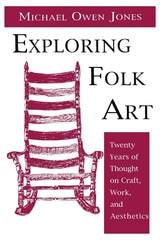
Exploring Folk Art
Michael Owen Jones
Utah State University Press, 1993
Jones explores the human impulse to create, the necessity for having aesthetically satisfying experiences, and the craving for tradition. He also considers topics such as making chairs, remodeling houses, using and preserving soda-fountain slang, preparing and eating food, and sculpting lifelike figures out of cement.
Exposing the Film Apparatus
Global Laboratory PerspectivesGiovanna Fossati
Amsterdam University Press, 2026
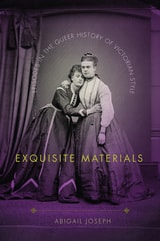
Exquisite Materials
Episodes in the Queer History of Victorian StyleAbigail Joseph
University of Delaware Press, 2011
Published by University of Delaware Press. Distributed worldwide by Rutgers University Press.

Extra/Ordinary
Craft and Contemporary ArtMaria Elena Buszek, ed.
Duke University Press, 2011
Contributors. Elissa Auther, Anthea Black, Betty Bright, Nicole Burisch, Maria Elena Buszek, Jo Dahn, M. Anna Fariello, Betsy Greer, Andrew Jackson, Janis Jefferies, Louise Mazanti, Paula Owen, Karin E. Peterson, Lacey Jane Roberts, Kirsty Robertson, Dennis Stevens, Margaret Wertheim
Extraordinary Partnerships
How the Arts and Humanities are Transforming AmericaChristine Henseler, editor
Lever Press, 2020
Extreme Cinema
The Transgressive Rhetoric of Today's Art Film CultureFrey, Mattias
Rutgers University Press, 2016
From Shortbus to Shame and from Oldboy to Irreversible, film festival premieres regularly make international headlines for their shockingly graphic depictions of sex and violence. Film critics and scholars alike often regard these movies as the work of visionary auteurs, hailing directors like Michael Haneke and Lars von Trier as heirs to a tradition of transgressive art. In this provocative new book, Mattias Frey offers a very different perspective on these films, exposing how they are also calculated products, designed to achieve global notoriety in a competitive marketplace.
EyeMinded
Living and Writing Contemporary ArtKellie Jones
Duke University Press, 2011
Eyesight Alone
Clement Greenberg's Modernism and the Bureaucratization of the SensesCaroline A. Jones
University of Chicago Press, 2006
Caroline Jones's magisterial study widens Greenberg's fundamental tenet of "opticality"-the idea that modernist art is apprehended through "eyesight alone"-to a broader arena, examining how the critic's emphasis on the specular resonated with a society increasingly invested in positivist approaches to the world. Greenberg's modernist discourse, Jones argues, developed in relation to the rationalized procedures that gained wide currency in the United States at midcentury, in fields ranging from the sense-data protocols theorized by scientific philosophy to the development of cultural forms, such as hi-fi, that targeted specific senses, one by one. Greenberg's attempt to isolate and celebrate the visual was one manifestation of a large-scale segmentation-or bureaucratization-of the body's senses. Working through these historical developments, Jones brings Greenberg's theories into contemporary philosophical debates about agency and subjectivity.
Eyesight Alone offers artists, art historians, philosophers, and all those interested in the arts a critical history of this generative figure, bringing his work fully into dialogue with the ideas that shape contemporary critical discourse and shedding light not only on Clement Greenberg but also on the contested history of modernism itself.