Results by title
679 books match the query 'Ecology' and 65 start with e

Enraptured Space
Gender, Class, and Ecology in the Work of Paula MeehanKathryn J. Kirkpatrick
West Virginia University Press, 2025
In Paula Meehan, Kirkpatrick has found a powerful poet to both study and love, and her reading of Meehan’s poetry and prose through the lenses of gender studies, the environmental humanities, and social class offers a passionate endorsement of Meehan’s radical interventions in the canon of Irish poetry. This work explores eight volumes of Meehan’s poetry, including Dharmakaya, Painting Rain, and Geomantic.
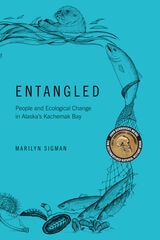
Entangled
People and Ecological Change in Alaska's Kachemak BayMarilyn Sigman
University of Alaska Press, 2018
Kachemak Bay is a place where people and the living resources they depend on have ebbed and flowed for thousands of years. The forces of the earth are dynamic here: they can change in an instant, shaking the ground beneath your feet or overturning kayaks in a rushing wave. Glaciers have advanced and receded over centuries. The climate, like the ocean, has shifted from warmer to colder and back again in a matter of decades. The ocean food web has been shuffled from bottom to top again and again.
In Entangled, Sigman contemplates the patterns of people staying and leaving, of settlement and displacement, nesting her own journey to Kachemak Bay within diasporas of her Jewish ancestors and of ancient peoples from Asia to the southern coast of Alaska. Along the way she weaves in scientific facts about the region as well as the stories told by Alaska’s indigenous peoples. It is a rhapsodic introduction to this stunning region and a siren call to protect the land’s natural resources in the face of a warming, changing world.
Environment at the Margins
Literary and Environmental Studies in AfricaByron Caminero-Santangelo
Ohio University Press, 2011
Environment at the Margins brings literary and environmental studies into a robust interdisciplinary dialogue, challenging dominant ideas about nature, conservation, and development in Africa and exploring alternative narratives offered by writers and environmental thinkers. The essays bring together scholarship in geography, anthropology, and environmental history with the study of African and colonial literatures and with literary modes of analysis. Contributors analyze writings by colonial administrators and literary authors, as well as by such prominent African activists and writers as Ngugi wa Thiong’o, Mia Couto, Nadine Gordimer, Wangari Maathai, J. M. Coetzee, Zakes Mda, and Ben Okri. These postcolonial ecocritical readings focus on dialogue not only among disciplines but also among different visions of African environments. In the process, Environment at the Margins posits the possibility of an ecocriticism that will challenge and move beyond marginalizing, limiting visions of an imaginary Africa.
Contributors:
Jane Carruthers
Mara Goldman
Amanda Hammar
Jonathan Highfield
David McDermott Hughes
Roderick P. Neumann
Rob Nixon
Anthony Vital
Laura Wright
Environment, Power, and Justice
Southern African HistoriesGraeme Wynn
Ohio University Press, 2022
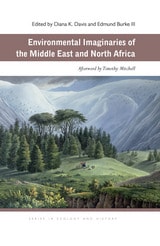
Environmental Imaginaries of the Middle East and North Africa
Diana K. Davis
Ohio University Press, 2011
The landscapes of the Middle East have captured our imaginations throughout history. Images of endless golden dunes, camel caravans, isolated desert oases, and rivers lined with palm trees have often framed written and visual representations of the region. Embedded in these portrayals is the common belief that the environment, in most places, has been deforested and desertified by centuries of misuse. It is precisely such orientalist environmental imaginaries, increasingly undermined by contemporary ecological data, that the eleven authors in this volume question. This is the first volume to critically examine culturally constructed views of the environmental history of the Middle East and suggest that they have often benefitted elites at the expense of the ecologies and the peoples of the region. The contributors expose many of the questionable policies and practices born of these environmental imaginaries and related histories that have been utilized in the region since the colonial period. They further reveal how power, in the form of development programs, notions of nationalism, and hydrological maps, for instance, relates to environmental knowledge production.
Contributors: Samer Alatout, Edmund Burke III, Shaul Cohen, Diana K. Davis, Jennifer L. Derr, Leila M. Harris, Alan Mikhail, Timothy Mitchell, Priya Satia, Jeannie Sowers, and George R. Trumbull IV
Environmental Movement in Majority and Minority Worlds
A Global PerspectiveDoyle, Timothy
Rutgers University Press, 2004
Environmental movements are among the most vibrant, diverse, and powerful social movements occurring today, across all corners of the globe. They range dramatically from government lobbyists raising campaign funds to save the North American spotted owl; to “Green Warriors” engaging in guerrilla conflict in the mountains of the Philippines; to small landholders and indigenous peoples vowing to die by meeting the waters of the Narmada River in India as it rises due to its damming.
Drawing on his primary fieldwork in six countries, environmental researcher Timothy Doyle argues that there is, in fact, no one global environmental movement; rather, there are many, and the differences among them far outweigh their similarities. Movements in the third world—such as those in India and the Philippines —tend to be oriented around issues of human health, shelter, food security, and survival; while those of the developed world—for example, the United States, England, Germany, and Australia —can afford to focus on post-materialist issues such as wilderness concerns and animal rights. Doyle also demonstrates that the consequences of these campaigns are as wide-ranging as their motives and methods.
Taking a much-needed step beyond the wealth of nation-centered accounts of environmentalism, this book makes an important contribution to studies concerned with global environmental problems and politics.

Environmental Physiology of the Amphibians
Edited by Martin E. Feder and Warren W. Burggren
University of Chicago Press, 1992

Environmentally Devastated Neighborhoods
Perceptions, Policies, and RealitiesGreenberg, Michael
Rutgers University Press, 1996
Envisioning Nature, Science, and Religion
Jim Proctor
Templeton Press, 2009
Contemporary scholarship has given rise to several modes of understanding biophysical and human nature, each entangled with related notions of science and religion. Envisioning Nature, Science, and Religion represents the culmination of three years of collaboration by an international group of fourteen natural scientists, social scientists, humanists, and theologians. The result is an intellectually stimulating volume that explores how the ideas of nature pertain to science and religion.
Envisioning Nature, Science, and Religion offers a blend of scholarly rigor and readable prose that will be appreciated by anyone engaged in the fields of religion, philosophy, and the natural sciences.
Escaping Nature
How to Survive Global Climate ChangeOrrin H. Pilkey, Charles O. Pilkey, Linda P. Pilkey-Jarvis, Norma J. Longo, Keith C. Pilkey, Fred B. Dodson, and Hannah L. Hayes
Duke University Press, 2024
Ethnobiology for the Future
Linking Cultural and Ecological DiversityEdited by Gary Paul Nabhan; Foreword by Paul E. Minnis
University of Arizona Press, 2016
In this important new collection, Gary Paul Nabhan puts forth a call for the future not only of ethnobiology but for the entire planet. He articulates and broadens the portfolio of ethnobiological principles and amplifies the tool kit for anyone engaged in the ethnobiosphere, those vital spaces of intense interaction among cultures, habitats, and creatures.
The essays are grouped into a trio of themes. The first group presents the big questions facing humanity, the second profiles tools and methodologies that may help to answer those questions, and the third ponders how to best communicate these issues not merely to other scholars, but to society at large. The essays attest to the ways humans establish and circumscribe their identities not only through their thoughts and actions, but also with their physical, emotional, and spiritual attachments to place, flora, fauna, fungi, and feasts.
Nabhan and his colleagues from across disciplines and cultures encourage us to be courageous enough to include ethical, moral, and even spiritual dimensions in work regarding the fate of biocultural diversity. The essays serve as cairns on the critical path toward an ethnobiology that is provocative, problem-driven, and, above all, inspiring.
Evolutionary Ecology and Archaeology
Applications to Problems in Human Evolution and PrehistoryJack M Broughton
University of Utah Press, 2009
Each of the twenty-four contributions represents a key benchmark in the field. Chapters are grouped by substantive topic and/or time period. Each of the following sections includes an introduction by the editors:
• Early Hominid Evolution and Behavior
• Pleistocene Foragers and Colonists
• Post-Glacial Adaptations
• Food Production Strategies
• Cooperation and Competition in Complex Societies
This volume’s broad range of research will foster sustained development of evolutionary ecology, and like Darwin’s work nearly 150 years ago will open wide fields of understanding of human prehistory.
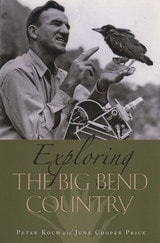
Exploring the Big Bend Country
By Peter Koch and June Cooper Price
University of Texas Press, 2007
Photographer-naturalist Peter Koch first visited the new Big Bend National Park in February, 1945, on assignment to take promotional pictures for the National Park Service. He planned to spend a couple of weeks—and ended up staying for the rest of his life. Koch's magnificent photographs and documentary film-lectures Big Bend, Life in a Desert Wilderness and Desert Gold introduced the park to people across the United States, drawing thousands of visitors to the Big Bend. His photographs and films of the region remain among the best ever produced, and are an invaluable visual record of the first four decades of Big Bend National Park.
In this highly readable book, Koch's daughter June Cooper Price draws on the newspaper columns her father wrote for the Alpine Avalanche, supplemented by his photographs, journal entries, and short pieces by other family members, to present Peter Koch's vision of the Big Bend. The book opens with his first "big adventure," a six-day photographic trip through Santa Elena Canyon on a raft made from agave flower stalks. From there, Koch takes readers hiking on mountain trails and driving the scenic loop around Fort Davis. He also describes "wax smuggling" and other ways of making a living on the Mexican border; ranching in the Big Bend; the prehistory and Native Americans of the region; collaborating with botanist Barton Warnock on books of Trans-Pecos wildflowers; and the history and beauty of Presidio County, the Rio Grande, and the Chihuahuan Desert.
This fascinating blend of firsthand adventures, natural history, and personal musings on anthropology and history creates an unforgettable portrait of both Peter Koch and the Big Bend region he so loved.
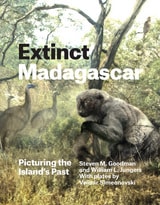
Extinct Madagascar
Picturing the Island's PastSteven M. Goodman and William L. Jungers
University of Chicago Press, 2014
In Extinct Madagascar, noted scientists Steven M. Goodman and William L. Jungers explore the recent past of these land animal extinctions. Beginning with an introduction to the geologic and ecological history of Madagascar that provides context for the evolution, diversification, and, in some cases, rapid decline of the Malagasy fauna, Goodman and Jungers then seek to recapture these extinct mammals in their environs. Aided in their quest by artist Velizar Simeonovski’s beautiful and haunting digital paintings—images of both individual species and ecosystem assemblages reproduced here in full color—Goodman and Jungers reconstruct the lives of these lost animals and trace their relationships to those still living.
Published in conjunction with an exhibition of Simeonovski’s artwork set to open at the Field Museum, Chicago, in the fall of 2014, Goodman and Jungers’s awe-inspiring book will serve not only as a sobering reminder of the very real threat of extinction, but also as a stunning tribute to Madagascar’s biodiversity and a catalyst for further research and conservation.
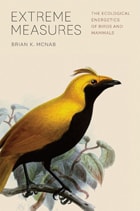
Extreme Measures
The Ecological Energetics of Birds and MammalsBrian K. McNab
University of Chicago Press, 2012
Along with reproduction, balancing energy expenditure with the limits of resource acquisition is essential for both a species and a population to survive. But energy is a limited resource, as we know well, so birds and mammals—the most energy-intensive fauna on the planet—must reduce energy expenditures to maintain this balance, some taking small steps, and others extreme measures.
Here Brian K. McNab draws on his over sixty years in the field to provide a comprehensive account of the energetics of birds and mammals, one fully integrated with their natural history. McNab begins with an overview of thermal rates—much of our own energy is spent maintaining our 98.6?F temperature—and explains how the basal rate of metabolism drives energy use, especially in extreme environments. He then explores those variables that interact with the basal rate of metabolism, like body size and scale and environments, highlighting their influence on behavior, distribution, and even reproductive output. Successive chapters take up energy and population dynamics and evolution. A critical central theme that runs through the book is how the energetic needs of birds and mammals come up against rapid environmental change and how this is hastening the pace of extinction.