Results by title
2728 books match the query 'Education' and 113 start with e
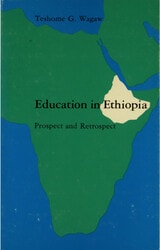
Education in Ethiopia
Prospect and RetrospectTeshome G. Wagaw
University of Michigan Press, 2025

Education in School and Non-School Settings
Edited by Mario D. Fantini and Robert L. Sinclair
University of Chicago Press, 1985

Education in Tokugawa Japan
R. P. Dore
University of Michigan Press, 1992
Education in a New Society
Renewing the Sociology of EducationEdited by Jal Mehta and Scott Davies
University of Chicago Press, 2018
The sociology of education, the contributors show, largely works with themes, concepts, and theories that were generated decades ago, even as both the actual world of education and the discipline of sociology have changed considerably. The moment has come, they argue, to break free of the past and begin asking new questions and developing new programs of empirical study. Both rallying cry and road map, Education in a New Society will galvanize the field.
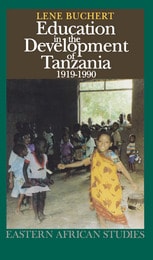
Education in the Development of Tanzania, 1919–1990
Lene Buchert
Ohio University Press, 1994
Deals with the realities of education in a debt-ridden African country trying to cope with the pressures of externally imposed educational budgets.
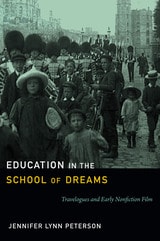
Education in the School of Dreams
Travelogues and Early Nonfiction FilmJennifer Lynn Peterson
Duke University Press, 2013
Peterson describes the travelogue's characteristic form and style and demonstrates how imperialist ideologies were realized and reshaped through the moving image. She argues that although educational films were intended to legitimate filmgoing for middle-class audiences, travelogues were not simply vehicles for elite ideology. As a form of instructive entertainment, these technological moving landscapes were both formulaic and also wondrous and dreamlike. Considering issues of spectatorship and affect, Peterson argues that scenics produced and disrupted viewers' complacency about their own place in the world.

Education, Culture, and Identity in Twentieth-Century China
Glen Peterson, Ruth Hayhoe, and Yongling Lu, Editors
University of Michigan Press, 2001
Unlike most studies of modern Chinese education that focus exclusively on the post-1949 era, Education, Culture, and Identity in Twentieth-Century China represents a deliberate attempt to break through the 1949 barrier and embrace the entire century. Culture emerges in this study as a deeper level factor that underlay the development of education in each period and shaped certain recurrent patterns, while identity involves a search for individual and collective meaning that went on under different regimes.
The product of a genuinely multidisciplinary effort to promote cross-fertilization among an international team of scholars in a wide range of disciplines, Education, Culture, and Identity in Twentieth-Century China will interest students and scholars of modern China, comparative and international education, educational policy, and international relations. It will also appeal to policy makers and professionals associated with international organizations.
Glen Peterson is Associate Professor of History, University of British Columbia. Ruth Hayhoe is Director, Hong Kong Institute of Education. Yongling Lu is a graduate student in the History Department, Stanford University.
Education, Justice, and Democracy
Edited by Danielle Allen and Rob Reich
University of Chicago Press, 2013
Education, Skills, and Technical Change
Implications for Future US GDP GrowthEdited by Charles R. Hulten and Valerie A. Ramey
University of Chicago Press, 2018
Education, Skills, and Technical Change explores various facets of these questions and provides an overview of educational attainment in the United States and the channels through which labor force skills and education affect GDP growth. Contributors to this volume focus on a range of educational and training institutions and bring new data to bear on how we understand the role of college and vocational education and the size and nature of the skills gap. This work links a range of research areas—such as growth accounting, skill development, higher education, and immigration—and also examines how well students are being prepared for the current and future world of work.
Educational Goods
Values, Evidence, and Decision-MakingHarry Brighouse, Helen F. Ladd, Susanna Loeb, and Adam Swift
University of Chicago Press, 2018
In Educational Goods, two philosophers and two social scientists address this very question. They begin by broadening the language for talking about educational policy: “educational goods” are the knowledge, skills, and attitudes that children develop for their own benefit and that of others; “childhood goods” are the valuable experiences and freedoms that make childhood a distinct phase of life. Balancing those, and understanding that not all of them can be measured through traditional methods, is a key first step. From there, they show how to think clearly about how those goods are distributed and propose a method for combining values and evidence to reach decisions. They conclude by showing the method in action, offering detailed accounts of how it might be applied in school finance, accountability, and choice. The result is a reimagining of our decision making about schools, one that will sharpen our thinking on familiar debates and push us toward better outcomes.
Educational Interpreting
How It Can SucceedElizabeth A. Winston
Gallaudet University Press, 2004
This incisive book explores the current state of educational interpreting and how it is failing deaf students. The contributors, all renowned experts in their field, include former educational interpreters, teachers of deaf students, interpreter trainers, and deaf recipients of interpreted educations.
Educational Interpreting presents the salient issues in three distinct sections. Part 1 focuses on deaf students—their perspectives on having interpreters in the classroom, the language myths that surround them, the accessibility of language to them, and their cognition. Part 2 raises questions about the support and training that interpreters receive from the school systems, the qualifications that many interpreters bring to an interpreted education, and the accessibility of everyday classrooms for deaf students placed in such environments. Part 3 presents a few of the possible suggestions for addressing the concerns of interpreted educations, and focuses primarily on the interpreter.
The contributors discuss the need to (1) define the core knowledge and skills interpreters must have and (2) develop standards of practice and assessment. They also stress that interpreters cannot effect the necessary changes alone; unless and until administrators, parents, teachers, and students recognize the inherent issues of access to education through mediation, little will change for deaf students.
Educational Leadership and Changing Contexts of Families, Communities, and Schools
Edited by Luvern L. Cunningham and Brad Mitchell
University of Chicago Press, 1990
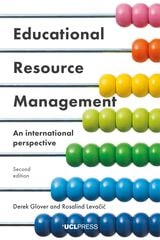
Educational Resource Management
An International PerspectiveEdited by Derek Glover and Rosalind Levacic
University College London, 2020
Opening with a detailed overview of funding and resource management in public and private institutions, the book looks at the criteria by which the effectiveness, efficiency, and equity of educational resource management can be judged. It goes on to explore cost structures, budgets, and the principles of asset management through case studies that draw on practitioner experiences as well as the authors’ own observations. Educational Resource Management concludes with a review of current tensions and points towards further study, providing a succinct yet comprehensive guide for school and college leaders.
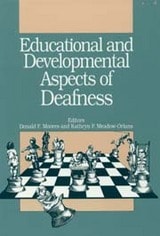
Educational and Developmental Aspects of Deafness
Donald F. Moores
Gallaudet University Press, 1990
Educational and Developmental Aspects of Deafness details the ongoing revolution in the education of deaf children. More than 20 researchers contributed their discoveries in anthropology, education, linguistics, psychology, sociology, and other major disciplines, with special concentration upon the education of deaf children.
Divided into two parts on education at home and in school, this incisive book documents breakthroughs such as the public's interest in sign language, the increasing availability of interpreters, the growing perception of deafness as a social condition, not a pathology, and other positive trends. It is unique as the first purely research-based text and reference point for further study of the education of deaf children.

El Jardín Silencioso
Una guía para los padres para criar a un niño sordoogden
Gallaudet University Press, 2017
La narradora Paty Corcoran es originaria de la Ciudad de México y ha trabajado como traductora, intérprete y locutora durante casi diez años. Vive en el sur de California con su esposo y sus tres hijos, donde también trabaja como guía turística bilingüe. Paty se graduó con honores de la Universidad Autónoma Metropolitana de la Ciudad de México con una licenciatura en Ciencias de la Comunicación.
For over 30 years, The Silent Garden has offered parents of deaf children the support and unbiased information needed to fully realize their children’s potential. This new Spanish edition, which contains the first five chapters of the completely updated 3rd English edition, will help parents navigate the complex and unique challenges they face. Accessible, practical, and, above all, open-minded, El Jardín Silencioso educates parents quickly and thoroughly about the many conflicting points of view on what is best for their deaf children. Authors Paul W. Ogden and David H. Smith, who are both deaf, present examples and research that guide parents through often unfamiliar territory. El Jardín Silencioso covers the topics of communication, coping mechanisms for parents, creating healthy family environments, fostering independence, and understanding the perspectives of siblings. Always encouraging, El Jardín Silencioso empowers parents to be the best advocates for their deaf children.
Audiobook narrator Paty Corcoran is a native of Mexico City and has worked as a translator, interpreter, and voice-talent for almost ten years. She lives in Southern California with her husband and three children, where she also works as a bilingual tour guide. Paty graduated with honors from Metropolitan Autonomous University in Mexico City with a degree in Communication Sciences.
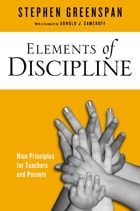
Elements of Discipline
Nine Principles for Teachers and ParentsStephen Greenspan
Temple University Press, 2012
Elements of Discipline is a timely and helpful book for teachers, parents, and day-care professionals that provides a simple set of rules for managing—successfully and humanely—a wide range of discipline situations and challenges. A well-respected child development specialist, Stephen Greenspan outlines his “ABC Theory of Discipline.” He combines an Affective approach, a Behavioral approach, and a Cognitive approach that, when used in a coordinated fashion, will contribute to greater child compliance and family/classroom harmony.
Greenspan suggests that, using his matrix, caregivers can provide the warmth, tolerance, and influence that will help children become competent in three socio-emotional domains—happiness, boldness, and niceness. He recommends caregivers pick and choose from the discipline literature in a manner that best suits their individual style and values.
Elements of Discipline is a lively guide to effective classroom or family management.

Elements of French Deaf Heritage
Ulf Hedberg
Gallaudet University Press, 2019
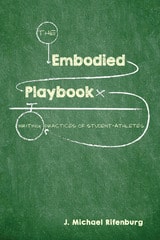
Embodied Playbook
Writing Practices of Student-AthletesJ. Michael Rifenburg
Utah State University Press, 2018
The Embodied Playbook discovers a new approach to understanding student literacy in a surprising place: the university athletics department. Through analysis of a yearlong case study of the men’s basketball team at the University of North Georgia, J. Michael Rifenburg shows that a deeper and more refined understanding of how humans learn through physical action can help writing instructors reach a greater range of students.
Drawing from research on embodiment theory, the nature and function of background knowledge, jazz improvisation, and other unexpected domains, The Embodied Playbook examines a valuable but unexplored form of literacy: the form used by student-athletes when learning and using scripted plays. All students’ extracurricular prior knowledge is vital for the work they undertake in the classroom, and student-athletes understand the strengths and constraints of written text much as they understand the text of game plays: through embodying text and performing it in a competitive space. The book focuses on three questions: What are plays and what do they do? How do student-athletes learn plays? How can teachers of composition and rhetoric better connect with student-athletes?
The Embodied Playbook reveals the literacy of the body as a rich and untapped resource for writing instruction. Given the numbers of students who are involved in athletics, whether intramural, community-related, or extracurricular, Rifenburg’s conclusions hold important implications not only for how we define literacy but also for how writing programs can serve all of their students most effectively.
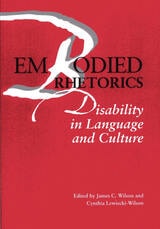
Embodied Rhetorics
Disability in Language and CultureEdited by James C. Wilson and Cynthia Lewiecki-Wilson
Southern Illinois University Press, 2001
Presenting thirteen essays, editors James C. Wilson and Cynthia Lewiecki-Wilson unite the fields of disability studies and rhetoric to examine connections between disability, education, language, and cultural practices. Bringing together theoretical and analytical perspectives from rhetorical studies and disability studies, these essays extend both the field of rhetoric and the newer field of disability studies.
The contributors span a range of academic fields including English, education, history, and sociology. Several contributors are themselves disabled or have disabled family members. While some essays included in this volume analyze the ways that representations of disability construct identity and attitudes toward the disabled, other essays use disability as a critical modality to rethink economic theory, educational practices, and everyday interactions. Among the disabilities discussed within these contexts are various physical disabilities, mental illness, learning disabilities, deafness, blindness, and diseases such as multiple sclerosis and AIDS.
Embracing Queer Students’ Diverse Identities at Historically Black Colleges and Universities
A Primer for Presidents, Administrators, and FacultySteve D. Mobley Jr.
Rutgers University Press, 2025
Emerging Issues and Trends in Education
Theodore S. Ransaw
Michigan State University Press, 2017
Empathy and the Other
Difference, Connection, and the Teaching of WritingLisa Blankenship
Utah State University Press, 2026
Empathy and the Other: Difference, Connection, and the Teaching of Writing focuses on the theoretical basis for empathy as a pedagogical concern, adding to important conversations happening in writing studies about how to foster empathetic understanding and practices for teachers and students. It offers ways for higher education classrooms to become sites for the cultivation of a critical form of empathy that can help address the most important challenges of our time.
Drawing on the study of empathy in rhetorical theory and related fields, teacher-scholars from a variety of institutions and backgrounds offer pedagogical rationales and approaches for fostering empathetic, inclusive, and antiracist pedagogies centered around five key themes related to empathetic teaching: difference, citizenship, storytelling, assessment, and process. A reflective and critical approach to empathetic teaching—as presented by the authors in this collection—can begin to address forces of social division, particularly in the ways we read and write about others. Teaching grounded in empathetic principles can offer students ways of relating to one another across cultural, religious, class, ethnic, political, and ideological differences.
Empathy and the Other is a companion volume to Enacting Empathy: Stories and Strategies from the Writing Classroom, which features vignettes and praxis pieces focused on classroom experiences and reflections on teaching empathy. The two collections may stand alone or be read together and are of great interest to writing teachers and graduate students invested in social justice in the classroom.
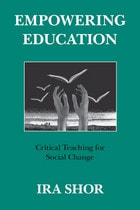
Empowering Education
Critical Teaching for Social ChangeIra Shor
University of Chicago Press, 1992
For Shor, empowering education is a student-centered, critical and democratic pedagogy for studying any subject matter and for self and social change. It takes shape as a dialogue in which teachers and students mutually investigate everyday themes, social issues, and academic knowledge. Through dialogue and problem-posing, students become active agents of their learning. This book shows how students can develop as critical thinkers, inspired learners, skilled workers, and involved citizens.
Shor carefully analyzes obstacles to and resources for empowering education, suggesting ways for teachers to transform traditional approaches into critical and democratic ones. He offers many examples and applications for the elementary grades through college and adult education.
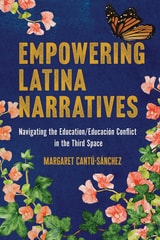
Empowering Latina Narratives
Navigating the Education/Educación Conflict in the Third SpaceMargaret Cantú-Sánchez
University of Arizona Press, 2025
In this groundbreaking book, author Margaret Cantú-Sánchez takes on the U.S. educational system. Cantú-Sánchez introduces the concept of the education/educación conflict, where Latinas navigate the clash between home and school epistemologies under Anglocentric, assimilationist pedagogies.
By analyzing literature, such as Barbara Renaud González’s Golondrina, Why Did You Leave Me?, and education testimonios from seminal works like This Bridge Called My Back and Telling to Live, Cantú-Sánchez reveals how Latina/Chicana protagonists and students negotiate this conflict through a mestizaje of epistemologies—blending elements of both home and school cultures within the third space of education.
Cantú-Sánchez utilizes an interdisciplinary approach, deploying critical race theory, Chicana third-space feminism, and other pedagogical theories like sentipensante (a sensing/thinking) pedagogy employed by education scholar Laura Rendon, among others. By providing pivotal insights and strategies, she demonstrates how educators can implement culturally relevant pedagogies in their classrooms from K–12 through higher education, fostering environments where Latina/Chicana students can thrive without forsaking their cultural identities.
Empowering Latina Narratives not only identifies the challenges Latina/Chicana students face but also offers a roadmap for overcoming them, making this book an essential resource for scholars, educators, and students committed to culturally inclusive education.
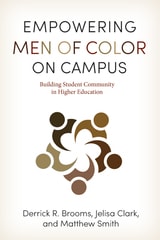
Empowering Men of Color on Campus
Building Student Community in Higher EducationBrooms, Derrick R.
Rutgers University Press, 2018
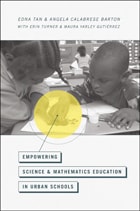
Empowering Science and Mathematics Education in Urban Schools
Edna Tan and Angela Calabrese Barton with Erin Turner and Maura Varley Gutiérrez
University of Chicago Press, 2012
Empowering Young Writers
The "Writers Matter" ApproachDeborah S Yost
Temple University Press, 2014
Launched in middle schools in the fall of 2005, the "Writers Matter" approach was designed to discover ways to improve the fit between actual English curricula, district/state standards and, more recently, the Common Core Curriculum Standards for writing instruction. Adapted from Erin Gruwell's successful Freedom Writers Program, "Writers Matter" develops students' skills in the context of personal growth, understanding others, and making broader connections to the world.
Empowering Young Writers explains and expands on the practical aspects of the "Writers Matter" approach, emphasizing a focus on free expression and establishing connections between the curriculum and students' personal lives. Program creator Robert Vogel, and his co-authors offer proven ways to motivate adolescents to write, work diligently to improve their writing skills, and think more critically about the world.
This comprehensive book will help teachers, administrators, and education students apply and reproduce the "Writers Matter" approach more broadly, which can have a profound impact on their students' lives and social development.
Enacting Empathy
Stories and Strategies from the Writing ClassroomLisa Blankenship
Utah State University Press, 2026
Featuring vignettes and praxis pieces focused on classroom experiences and reflections on teaching empathy, Enacting Empathy: Stories and Strategies from the Composition Classroom provides inspiration and consideration of how and why teachers might adopt an emphasis on empathy. Contributors locate empathy in the particulars of writing assignments, classroom discussions, responses to students, interpretations of texts, and connections with communities.
The challenges and means of understanding one another—as we encounter one another in words, images, and texts—are a central focus of the writing classroom. Teaching for and about empathy has become only more important as we have experienced increased social division, greater recognition and attention to identity, and an emphasis on attending to personal experiences and stories as part of larger efforts to support social justice. With its possibilities for critical reflection and revision, writing is a key tool for developing empathy. Empathy likewise can make us more present, accountable, and socially engaged in our writing. This collection explores how empathy might best be put into practice in the composition classroom, featuring teaching resources, assignment designs, and reflections on empathy and teaching writing for diverse institutional contexts.
The first edited collection in at least thirty years to present strategies for teaching empathy in composition classrooms, Enacting Empathy is a companion volume to Empathy and the Other: Difference, Connection, and the Teaching of Writing, which focuses on the theoretical basis for empathy as a pedagogical concern. The two volumes may stand alone or be read together and are of great interest to writing teachers and graduate students invested in social justice in the classroom.
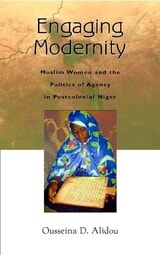
Engaging Modernity
Muslim Women and the Politics of Agency in Postcolonial NigerOusseina Alidou
University of Wisconsin Press, 2005
Engaging Modernity is Ousseina Alidou’s rich and compelling portrait of Muslim women in Niger as they confront the challenges and opportunities of the twentieth century. Contrary to Western stereotypes of passive subordination, these women are taking control of their own lives and resisting domination from indigenous traditions, westernization, and Islam alike.
Based on thorough scholarly research and extensive fieldwork—including a wealth of interviews—Alidou’s work offers insights into the meaning of modernity for Muslim women in Niger. Mixing biography with sociological data, social theory and linguistic analysis, this is a multilayered vision of political Islam, education, popular culture, and war and its aftermath. A gripping look at one of the Muslim world’s most powerful untold stories.
Runner-up for the Aidoo-Snyder Book Prize, Women’s Caucus of the African Studies Association
Engaging Museums
Rhetorical Education and Social JusticeLauren E. Obermark
Southern Illinois University Press, 2022
Museums offer an opportunity to reenvision rhetorical education through their address of hard, discomforting histories that challenge visitors to confront traumatic events and work toward a better future. While both museum studies and rhetoric center the audience in their scholarship and practices, this volume engages across and between these disciplines, allowing for a fuller theorization and enactment of rhetorical education’s connections to social justice. Engaging Museums works to fill gaps between the fields of rhetoric and social justice by going beyond classrooms to sites of public memory represented in museums.
This volume presents three distinct, diverse case studies of recently established historical museums taking on the rhetorically complex tasks of representing traumatic events: the National Underground Railroad Freedom Center, the National World War I Museum, and the Oklahoma City National Memorial Museum. Through rhetorical and comparative analysis of data collected from the museums and intersectional transdisciplinary frameworks, each chapter theorizes aspects of rhetoric—namely identification, collectivity, and memory—bringing rhetorical theory more firmly into current conversations surrounding civic engagement and social justice.
Obermark’s weave of voices and perspectives concludes with a critical focus on how memory may serve as a generative pedagogical topos for both public rhetoric and university-based rhetoric and writing classrooms. This book helps scholars, students, and teachers bring what museums do—difficult, complicated pedagogical work representing hard history—back inside the classroom and further into our civic discourse.
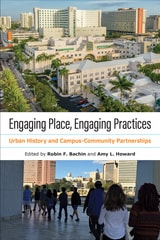
Engaging Place, Engaging Practices
Urban History and Campus-Community PartnershipsEdited by Robin F. Bachin and Amy L. Howard
Temple University Press, 2023
Colleges and universities in urban centers have often leveraged their locales to appeal to students while also taking a more active role in addressing local challenges. They embrace civic engagement, support service-learning, tailor courses to local needs, and even provide university-community collaborations such as lab schools and innovation hubs. Engaging Place, Engaging Practices highlights the significant role the academy, in general, and urban history, in particular, can play in fostering these critical connections.
The editors and contributors to this volume address topics ranging from historical injustices and affordable housing and land use to climate change planning and the emergence of digital humanities. These case studies reveal the intricate components of a city’s history and how they provide context and promote a sense of cultural belonging.
This timely book appreciates and emphasizes the critical role universities must play as intentional—and humble—partners in addressing the past, present, and future challenges facing cities through democratic community engagement.
Engaging Young People in Civic Life
James Youniss
Vanderbilt University Press, 2009
The thirteen original essays are based on research in schools and in settings beyond the schoolyard where civic life is experienced. One focus is on programs for those schools in poor communities that tend to overlook civic education. Another chapter reports on how two city governments—Hampton, Virginia, and San Francisco—have invited youth to participate on boards and in agencies. A cluster of chapters focuses on the civic education programs in Canada and Western Europe, where, as in the United States, immigration and income inequality raise challenges to civic life.
Engaging the Age of Jane Austen
Public Humanities in PracticeBridget Draxler and Danielle Spratt
University of Iowa Press, 2018
Humanities scholars, in general, often have a difficult time explaining to others why their work matters, and eighteenth-century literary scholars are certainly no exception. To help remedy this problem, literary scholars Bridget Draxler and Danielle Spratt offer this collection of essays to defend the field’s relevance and demonstrate its ability to help us better understand current events, from the proliferation of media to ongoing social justice battles.
The result is a book that offers a range of approaches to engaging with undergraduates, non-professionals, and broader publics into an appreciation of eighteenth-century literature. Essays draw on innovative projects ranging from a Jane Austen reading group held at the public library to students working with an archive to digitize an overlooked writer’s novel.
Reminding us that the eighteenth century was an exhilarating age of lively political culture—marked by the rise of libraries and museums, the explosion of the press, and other platforms for public intellectual debates—Draxler and Spratt provide a book that will not only be useful to eighteenth-century scholars, but can also serve as a model for other periods as well. This book will appeal to librarians, archivists, museum directors, scholars, and others interested in digital humanities in the public life.
Contributors: Gabriela Almendarez, Jessica Bybee, Nora Chatchoomsai, Gillian Dow, Bridget Draxler, Joan Gillespie, Larisa Good, Elizabeth K. Goodhue, Susan Celia Greenfield, Liz Grumbach, Kellen Hinrichsen, Ellen Jarosz, Hannah Jorgenson, John C. Keller, Naz Keynejad, Stephen Kutay, Chuck Lewis, Nicole Linton, Devoney Looser, Whitney Mannies, Ai Miller, Tiffany Ouellette, Carol Parrish, Paul Schuytema, David Spadafora, Danielle Spratt, Anne McKee Stapleton, Jessica Stewart, Colleen Tripp, Susan Twomey, Nikki JD White, Amy Weldon

Engineering Manhood
Race and the Antebellum Virginia Military InstituteJonson Miller
Lever Press, 2020
English Majors at Work
Career and Life PathwaysHelene Meyers
Rutgers University Press, 2027
English Majors at Work: Career and Life Pathways details the professional superpowers—the many marketable skills—gained from studying literature, creative writing, film, and popular culture. It prepares English majors to know themselves and their worth so that they can feed their bodies and souls in rapidly changing 21st century economies. Written for prospective and current English majors as well as recent grads, the book shows that skills associated with the major--innovative thinking, excellent written communication, and the ability to read people, rooms, and data---can sustain lifelong successful careers. It also provides real talk about internships, networking, and graduate school. In keeping with a major that focuses on storytelling and analysis, each chapter concludes with a lively discussion of a relevant literary or media text. English Majors at Work is an essential guide for literature students as well as the professors, career services professionals, and parents who advise them.
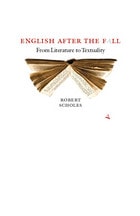
English after the Fall
From Literature to TextualityRobert Scholes
University of Iowa Press, 2011
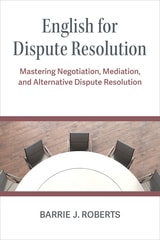
English for Dispute Resolution
Mastering Negotiation, Mediation, and Alternative Dispute ResolutionBarrie J. Roberts
University of Michigan Press, 2025
Whether they are using English for Dispute Resolution as a self-study resource or a course textbook, readers can use the book to develop their own unique negotiation and mediation styles in English and improve their professional-level English skills and soft skills for any purpose. Chapters introduce Alternative Dispute Resolution, negotiation ethics, competitive and collaborative negotiation, negotiation game theory, apologies, drafting written agreements, and mediation. After an engaging hypothetical case that introduces the chapter’s key points, each chapter provides warm-up questions, readings about dispute resolution theory and strategies, language tips, and activities and sample phrases to practice applying chapter lessons to real-world disputes. Chapters also invite readers to explore topics of interest, such as dispute resolution in their home countries, personal and professional lives, and current events, and the growing use of Artificial Intelligence (AI) in ADR. Readers will simultaneously build confidence in their English and cross-cultural dispute resolution skills.
English for Dispute Resolution offers readers:
- Lessons that explain the theories behind Alternative Dispute Resolution, negotiation ethics, competitive and collaborative negotiation, and mediation
- Activities that help them develop their own unique negotiation strategies and styles along with critical thinking, problem-solving, reading, writing, listening, and speaking.
- Step-by-step guidance, sample sentences, and practice activities for applying chapter lessons to real-world disputes.
- Opportunities to explore topics of interest, such as dispute resolution in their home countries, personal and professional lives and current events, and the growing use of Artificial Intelligence (AI) in ADR.
- Key ADR terms and idioms in plain, accessible English.
- Specific tips to improve cross-cultural communication for negotiating and mediating in English.
- A companion website with downloadable checklists, forms, and sample language that can be used for classroom role-plays and real-world negotiations and mediations.
Enhancing Diversity
Educators with DisabilitiesRonald J. Anderson
Gallaudet University Press, 1998

Envisioning Brazil
A Guide to Brazilian Studies in the United StatesEdited by Marshall C. Eakin and Paulo Roberto de Almeida
University of Wisconsin Press, 2005
Envisioning Brazil is a comprehensive and sweeping assessment of Brazilian studies in the United States. Focusing on synthesis and interpretation and assessing trends and perspectives, this reference work provides an overview of the writings on Brazil by United States scholars since 1945.
"The Development of Brazilian Studies in the United States," provides an overview of Brazilian Studies in North American universities. "Perspectives from the Disciplines" surveys the various academic disciplines that cultivate Brazilian studies: Portuguese language studies, Brazilian literature, art, music, history, anthropology, Amazonian ethnology, economics, politics, and sociology. "Counterpoints: Brazilian Studies in Britain and France" places the contributions of U.S. scholars in an international perspective. "Bibliographic and Reference Sources" offers a chronology of key publications, an essay on the impact of the digital age on Brazilian sources, and a selective bibliography.
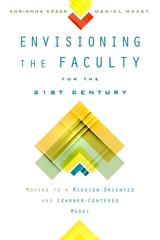
Envisioning the Faculty for the Twenty-First Century
Moving to a Mission-Oriented and Learner-Centered ModelKezar, Adrianna
Rutgers University Press, 2016

Equal Play
Title IX and Social ChangeNancy Hogshead-Makar
Temple University Press, 2007
One of the least-understood issues in federal sports policy, Title IX of the Educational Amendments of 1972 reflects the nation's aspirational belief that girls and boys, women and men, deserve equal educational opportunities in athletics. Equal Play shows how this ideal has been implemented-and thwarted-by actions in every branch of the federal government.
This reader addresses issues in sports before Title IX and the backlash that has resulted from the policy being instituted. The editors have collected the best scholarly writing on the landmark events of the last four decades and couples these with new original essays, primary documents from court cases, administrative regulations, and relevant supporting sources. The result is the most comprehensive single-volume work on the subject.
Equal Play includes essays by many well-known sports journalists who discuss how government actions have shaped, supported, and hindered the goal of gender equality in school athletics. They discuss the history of women in sports, analyze the meaning of "equal opportunity" for female athletes, and examine shifts in arguments for and against Title IX. Equal Play will interest anyone who is concerned with gender issues in American athletics and the growth of college sports.
Contributors include: Susan Cahn, Donna de Varona, Julie Foudy, Jessica Gavora, Bil Gilbert, Christine Grant, Mariah Burton Nelson, Gary R. Roberts, Don Sabo, Larry Schwartz, Michael Sokolove, Welch Suggs, Nancy Williamson, and the editors.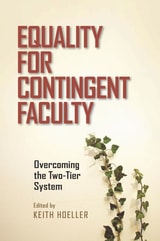
Equality for Contingent Faculty
Overcoming the Two-Tier SystemKeith Hoeller
Vanderbilt University Press, 2014
Equality for Contingent Faculty brings together eleven activists from the United States and Canada to describe the problem, share case histories, and offer concrete solutions. The book begins with three accounts of successful organizing efforts within the two-track system. The second part describes how the two-track system divides the faculty into haves and have-nots and leaves the majority without the benefit of academic freedom or the support of their institutions. The third part offers roadmaps for overcoming the deficiencies of the two-track system and providing equality for all professors, regardless of status or rank.
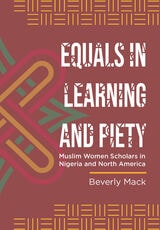
Equals in Learning and Piety
Muslim Women Scholars in Nigeria and North AmericaBeverly Mack
University of Wisconsin Press, 2023
Mack shows how women scholars instructed rural Hausa and Fulani women in Muslim ethics, doctrine, traditions, and behavior that followed and replaced the traumatic experience of warfare unleashed by the Jihad. She shows that these unique social engagements shaped people’s agency in the dynamic process of social change throughout the nineteenth century. Women imaginatively reconciled Muslim reformist doctrines and traditional practices in Nigeria, and these doctrines have continued to be influential in the diaspora, especially among Black American Muslims in the United States in the twenty-first century. With this major investigation of a little-studied phenomenon, Mack demonstrates the importance of women to the religious, political, and social transformation of Nigerian Muslim society.
Equity Engines
The Overlooked Colleges Delivering on Higher Education’s PromiseBecca Spindel Bassett
University of Chicago Press, 0
Shares novel insights into American colleges and universities that deliberately support the success of their first-generation, low-income students.
In American higher education, universities that prioritize inclusivity and equity over exclusivity and prestige are penalized rather than rewarded, both in terms of status and resources. Consequently, very few colleges and universities both enroll large shares of low-income students and graduate them at high rates. This is terrible news, both for the first-generation, low-income students with big aspirations and for a democratic society that relies on an educated citizenry and a representative government to function.
In Equity Engines, Becca Spindel Bassett shines a light on a small group of colleges that are quietly achieving the improbable. These “equity engines” open their doors widely to low-income students and graduate them at remarkably high rates. Immersing herself in two distinct institutions, a small private liberal arts university and a large regional public university, Bassett offers a window into the unseen mindsets and policies that drive universities toward equitable outcomes. By culturally and structurally centering first-generation, low-income students and challenging the superiority of exclusive, research-oriented cultures, the faculty, staff, and administrators of both institutions achieve extraordinary results.
Combining ethnography with sociological analysis, Equity Engines presents a detailed and nuanced depiction of the people and practices that power equity engines, the pressures that challenge their operation, and how we can transform American higher education to promote a more democratic and equitable society.
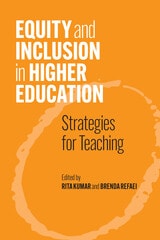
Equity and Inclusion in Higher Education
Strategies for TeachingEdited by Rita Kumar and Brenda Refaei
University of Minnesota Press, 2020
Americans’ perception of college students does not correlate with the reality of the rich diversity seen on university campuses. Over 60% of Americans believe the average age of a college student is 20 years old but, in fact, it’s 26.4 years old. Demographics in the classroom are shifting and instructors bear a responsibility to adjust their teaching style and curriculum to be inclusive for all students.
Equity and Inclusion for Higher Education Strategies for Teaching, edited by Rita Kumar and Brenda Refaei, details the necessity for an inclusive curriculum with examples of discipline-specific activities and modules. The intersectionality of race, age, socioeconomic status, and ability all embody the diversity college instructors encounter in their classrooms. Through the chapters in this book, the contributors make apparent the "hidden curriculum," which is taught implicitly instead of explicitly. The editors focus on learner-centered environments and accessibility of classroom materials for traditionally marginalized students; a critical part of the labor needed to create an inclusive curriculum.
This text provides instructors with resources to create equity-based learning environments. It challenges instructors to see beyond Eurocentric curriculums and expand their pedagogy to include intercultural competence. The contributors challenge the student/instructor dichotomy and embrace collaboration between the two to construct a curriculum that fits all students' needs. The resources and examples in this book demonstrate the importance of inclusion and equity in the classroom. A companion community page provides examples and tools from the editors and contributing authors, which allows for readers to add materials from their own classrooms. This book and collaborative toolkit allow instructors to begin intentional practice of an inclusive curriculum and implement changes to promote respect for diversity.
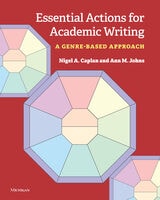
Essential Actions for Academic Writing
A Genre-Based ApproachNigel A. Caplan and Ann M. Johns
University of Michigan Press, 2022
Part I:
- Introduces students to rhetorical situation, genre, register, source use, and a framework for understanding how to approach any new writing task.
- Demonstrates that all writing responds to a context that includes the writer’s identity, the reader’s expectations, the purpose of the text, and the conventions that shape it.
- Explores the essential actions of academic writing (explain, summarize, synthesize, report and interpret data, argue, respond, and analyze).
- Provides examples of the genres and language that support each action.
- Offers four extended projects that combine the essential actions in different genres and contexts.
Essentials of English Grammar
Otto Jespersen
University of Alabama Press, 1964
A classic of English grammar, Essentials of English Grammar provides a common ground for the traditionalist and the structural or descriptive linguist. Jespersen’s work provides insight into the fundamental concepts that underlie the linguistic approach, but at the same time the foundation of the traditional approach is retained.
Ethical Considerations in Educating Children Who Are Deaf or Hard of Hearing
Kathee Mangan Christensen
Gallaudet University Press, 2011
The education of deaf or hard of hearing children has become as complex as the varying needs of each individual child. Teachers face classrooms filled with students who are culturally Deaf, hard of hearing, or post-lingually deaf; they might use American Sign Language, cochlear implants, hearing aids/FM systems, speech, Signed English, sign-supported speech, contact signing, nonverbal communication, or some combination of methods. Educators who decide what tools are best for these children are making far-reaching ethical decisions in each case. This collection features ten chapters that work as constructive conversations to make the diverse needs of these deaf students the primary focus.
The initial essays establish fundamental points of ethical decision-making and emphasize that every situation should be examined not with regard for what is “right or wrong,” but for what is “useful.” Absolute objectivity is unattainable due to social influences, while “common knowledge” is ruled out in favor of “common awareness.” Other chapters deal with the reality of interpreting through the professional’s eyes, of how they are assessed, participate, and are valued in the total educational process, including mainstream environments. The various settings of education for deaf children are profiled, from residential schools to life in three cultures for deaf Latino students, to self-contained high school programs. Ethical Considerations in Educating Deaf Children Who Are Deaf or Hard of Hearing offers an invaluable set of guidelines for administrators and educators of children with hearing loss in virtually every environment in a postmodern world.

Ethno Music Gatherings
Pedagogy Experience, ImpactEdited by Lee Higgins and Sarah Jane Gibson
Intellect Books, 2024
This book presents key findings from a four-year project that sought to understand Ethno, an organized residential folk, world, and traditional music program for young people ranging in age from eighteen to thirty. First held in Sweden in 1990, Ethno now hosts gatherings in more than forty countries. The authors examine the complexity of an Ethno music experience with three focuses: pedagogy and professional development, participant experience, and impact beyond the gathering.
Drawing on data from participant observations, interviews, social media analysis, onsite and video observations, surveys, and questionnaires, the authors ask critical questions concerning Ethno’s history, ethos, pedagogy, and philosophical ideals. Considering its history and current practices, the following themes are explored: non-formal music making, personal authenticity, holistic praxis, musical possible selves, intercultural music exchange, sustainability, social media engagement, song sharing, and future practices. As a collection of integrated thought, the book’s purpose is to illuminate new understandings of what Ethno does and in so doing present synergies and divergencies with the wider field of music education.

European Higher Education, Social Responsibility, and the Local Democratic Mission
Sjur Bergan
Temple University Press, 2025
Bergan outlines the political and institutional complexity of European universities. He explains how history, cultural traditions, and national identities impact education across Europe. He also describes the roles of the Council of Europe and U.S. higher education in the development of a transatlantic cooperation on the democratic mission of higher education. Other chapters explore education programs for developing and maintaining democracy and human rights, pragmatic and creative ways that European universities are working with their local communities, and the development of education opportunities for refugees.
Ultimately, Bergan’s book explores not only the local democratic mission of higher education as it has developed in Europe, but also how it could continue to develop, and why it is important it does so.
In the series Higher Education, Place, and Social Responsibility.