434 books match the query 'Ethics & Moral Philosophy' and 53 start with e
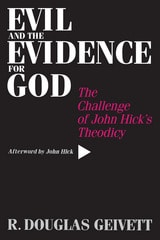
cover of Evil & the Evidence For God: The Challenge of John Hick's Theodicy

Evil & the Evidence For God

The Challenge of John Hick's Theodicy

R. Geivett

Temple University Press, 1995
"By appealing to recent scientific opinion that the universe may well have had an absolute beginning, Geivett develops an interesting, forceful argument for the rationality of belief in God. He then expounds the Augustinian free will theodicy and defends it against Hick's criticisms." --William L. Rowe How to reconcile the existence of evil with the belief in a benevolent God has long posed a philosophical problem to the system of Christian theism. John Hick's book, Evil and the Love of God, is perhaps the best known work to redress this difficulty in modern terms. Sharing Hick's interest in responding to the question of evil, R. Douglas Geivett constructs his own new "theodicy for today." But Geivett departs from Hick by embracing the Augustinian tradition of free will and returning the responsibility for evil to human beings themselves. Reviews "Moving from a comparison of the Irenaean and Augustinian traditions in theodicy to a powerfully original critique of Hick's influential 'soul-making' theodicy, Geivett presents a richly developed natural theology drawing on contemporary scientific opinion in support of an ex nihilo creation. Geivett's writing on natural theology is lucid and informed, honestly engaging many of that tradition's critics....This work is notable for its exceptionally thorough documentation and references, making it a valuable sourcebook for reflection on God and evil. A stimulating afterword by Hick himself significantly enriches this book's provocative analyses." --Religious Studies Review "Geivett details a natural theology and develops a way of understanding the existence of evil that places the fact of evil within, rather than in opposition to, a theistic view. Both the natural theology and the theodicy are rich and complex." --Keith E. Yandell, University of Wisconsin "In this interesting and worthwhile work, Geivett's statement of arguments in natural theology is fuller and fairer than that given by Hick in his writings. This book is an outstanding contribution to the field." --Richard L. Purtill, Western Washington University Contents Preface Part I: Two Traditions 1. The Problem of Evil 2. The Augustinian Tradition 3. John Hick's Theodicy Part II: Religious Epistemology 4. The Value of Natural Theology 5. The Danger of Dismissing Natural Theology 6. The Possibility of Natural Theology, Part 1: The Argument for a Non-Natural Reality 7. The Possibility of Natural Theology, Part 2: Personality, Power, and Providence 8. Explanation and Religious Ambiguity Part III: Theodicy Proper 9. John Hick's View of Divine Purpose 10. The Augustinian View of Divine Purpose 11. Free Will and Evil 12. Evil and the Afterlife Afterword by John Hick Notes Index About the Author(s) R. Douglas Geivett is Associate Professor of Philosophy at Biola University in La Mirada, California.
[more]
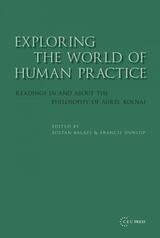
cover of Exploring the World of Human Practice: Readings in and about the Philosophy of Aurel Kolnai

Exploring the World of Human Practice

Readings in and about the Philosophy of Aurel Kolnai

Zoltán Balázs

Central European University Press, 2005

Aurel Kolnai was born in Budapest, in 1900 and died in London, in 1973. He was, according to Karl Popper and the late Bernard Williams, one of the most original, provocative, and sensitive philosophers of the twentieth century. Kolnai's moral philosophy is best described in his own words as intrinsicalist, non-naturalist, non-reductionist", which took its original impetus from Scheler's value ethics, and was developed by using a natural phenomenologist method. The unique combination of linguistic analysis and phenomenology yields highly original ideas on classical fields of moral theory, such as responsibility and free will, the meaning of right and wrong, the universalisability of ethical norms, the role of moral emotions, internalism vs externalism, to mention a few. The volume presents a selection of essays by Kolnai, including his main political theoretical work, "What is Politics About", available in English here for the first time. The second half of the book Kolnai's work is analyzed in a series of essays by eminent scholars
[more]
cover of Eyes Without Country: Searching for a Palestinian Strategy of Liberation

Eyes Without Country

Searching for a Palestinian Strategy of Liberation

Souad R. Dajani

Temple University Press, 1994

Since Israel's occupation of the West Bank and Gaza Strip in 1967, the quest for just and lasting peace has been a fountainhead of debate, negotiation, and violent friction. Souad Dajani traces the Palestinians' struggle and argues for a strategy of nonviolent civilian resistance based on deterrence and defense. This strategy would defeat Israel's political will to maintain their occupation and prepare Palestinians for a time beyond the interim period of self-rule agreed upon by Israel and the PLO in September 19932.

Dajani's formulation of nonviolent civilian resistance is examined against a backdrop of early developments in Mandate Palestine, the impact of Zionist ideology, and the realities of life for Palestinians under occupation. Her assessment of the role of the PLO, objectives of the Palestinian National Movement, developments since the Gulf War, and other factors crucial to an effective strategy raises critical questions surrounding the operation of nonviolent techniques for the Palestinian community, Israeli politics, and international actors, most prominently the United States.

[more]