Results by title
3745 books match the query 'Europe' and 151 start with e
Emperor Charles IV and the Origins of the Great Schism, c. 1375–1378
Dušan Coufal
Karolinum Press, 2025
Reveals how Emperor Charles IV’s efforts to secure the imperial coronation of his son intersect with the early stages of the Great Western Schism.
Emperor Otto I the Great made history in the Holy Roman Empire with a significant dynastic achievement: in 967, he persuaded the pope to crown his son co-emperor in Rome. Two centuries later, another renowned emperor, Frederick Barbarossa, attempted a similar feat, negotiating with four different popes for the coronation of his descendant, but ultimately failed. A lesser-known parallel can be found in the life of Emperor Charles IV of the Luxembourg dynasty in the fourteenth century. After the Papal Curia returned to Rome from Avignon in early 1377, Charles made concerted efforts in Italy, France, and Germany to secure the imperial coronation of his son, Wenceslas. However, this bold ambition coincided with an unprecedented crisis in relations between the "French” cardinals and the newly elected Italian pope, Urban VI. Recognizing that the final chapter of Charles IV’s biography is deeply intertwined with the early history of the Great Western Schism offers a fresh perspective on a subject that has long captivated international scholarship.
Empire in Question
Reading, Writing, and Teaching British ImperialismAntoinette Burton
Duke University Press, 2011
Empire of Tea
The Asian Leaf that Conquered the WorldMarkman Ellis, Richard Coulton, and Matthew Mauger
Reaktion Books, 2015
This impressively detailed book offers a rich cultural history of tea, from its ancient origins in China to its spread around the world. The authors recount tea’s arrival in London and follow its increasing salability and import via the East India Company throughout the eighteenth century, inaugurating the first regular exchange—both commercial and cultural—between China and Britain. They look at European scientists’ struggles to understand tea’s history and medicinal properties, and they recount the ways its delicate flavor and exotic preparation have enchanted poets and artists. Exploring everything from its everyday use in social settings to the political and economic controversies it has stirred—such as the Boston Tea Party and the First Opium War—they offer a multilayered look at what was ultimately an imperial industry, a collusion—and often clash—between the world’s greatest powers over control of a simple beverage that has become an enduring pastime.
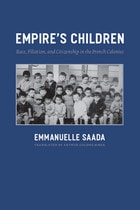
Empire's Children
Race, Filiation, and Citizenship in the French ColoniesEmmanuelle Saada
University of Chicago Press, 2012
Europe’s imperial projects were often predicated on a series of legal and scientific distinctions that were frequently challenged by the reality of social and sexual interactions between the colonized and the colonizers.When Emmanuelle Saada discovered a 1928 decree defining the status of persons of mixed parentage born in French Indochina—the métis—she found not only a remarkable artifact of colonial rule, but a legal bombshell that introduced race into French law for the first time. The decree was the culmination of a decades-long effort to resolve the “métis question”: the educational, social, and civil issues surrounding the mixed population. Operating at the intersection of history, anthropology, and law, Empire’s Children reveals the unacknowledged but central role of race in the definition of French nationality.
Through extensive archival work in both France and Vietnam, and a close reading of primary and secondary material from the Pacific islands and sub-Saharan and North Africa, Saada has created in Empire’s Children an original and compelling perspective on colonialism, law, race, and culture from the end of the nineteenth century until decolonization.
Empire-Building and Nation-Building in Central Europe
Zoltán László (1881–1961) in the Turmoil of the 20th CenturyKrisztián Csaplár-Degovics
Central European University Press, 2026
Before 1914, László established himself as a journalist, writer, academic, and willing agent of Austro-Hungarian imperial policy. In the interwar period and during the Second World War, his expertise as a propagandist found expression in racist circles.
By examining László’s life as a case study, the book offers a microhistorical perspective on how members of the educated middle classes became implicated in, and often willing participants of, imperial, racist, and totalitarian projects. It demonstrates how the lived experience of one individual illuminates the complex entanglement of ideology, identity, and power in East-Central Europe’s modern history.
Enchanted Islands
Picturing the Allure of Conquest in Eighteenth-Century FranceMary D. Sheriff
University of Chicago Press, 2018

Encyclopedia of Romantic Nationalism in Europe, Vol. 1 and 2
Edited by Joep Leerssen
Amsterdam University Press, 2016
Endless Empire
Spain's Retreat, Europe's Eclipse, America's DeclineEdited by Alfred W. McCoy, Josep M. Fradera, and Stephen Jacobson
University of Wisconsin Press, 2012
- erosion of economic and fiscal strength needed for military power on a global scale
- misuse of military power through micro-military misadventures
- breakdown of alliances among major powers
- weakened controls over the subordinate elites critical for any empire’s exercise of global power
- insufficient technological innovation to sustain global force projection.
Enemies for a Day
Antisemitism and Anti-Jewish Violence in Lithuania under the TsarsDarius Staliunas
Central European University Press, 2015
It begins by illustrating how widespread anti-Jewish feelings were among the Christian population in 19 th century, focusing on blood libel accusations as well as describing the role of modern antisemitism. Secondly, it tries to identify the structural preconditions as well as specific triggers that turned anti-Jewish feelings into collective violence and analyzes the nature of this violence. Lastly, pogroms in Lithuania are compared to anti-Jewish violence in other regions of the Russian Empire and East Galicia.
This research is inspired by the cultural turn in social sciences, an approach that assumes that violence is filled with meaning, which is “culturally constructed, discursively mediated, symbolically saturated, and ritually regulated.” The author argues that pogroms in Lithuania instead followed a communal pattern of ethnic violence and was very different from deadly pogroms in other parts of the Russian Empire.
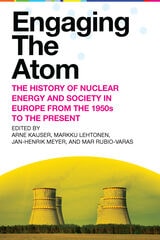
Engaging the Atom
The History of Nuclear Energy and Society in Europe from the 1950s to the PresentArne Kaijser
West Virginia University Press, 2021
With the aim of overcoming the disciplinary and national fragmentation that characterizes much research on nuclear energy, Engaging the Atom brings together specialists from a variety of fields to analyze comparative case studies across Europe and the United States. It explores evolving relationships between society and the nuclear sector from the origins of civilian nuclear power until the present, asking why nuclear energy has been more contentious in some countries than in others and why some countries have never gone nuclear, or have decided to phase out nuclear, while their neighbors have committed to the so-called nuclear renaissance. Contributors examine the challenges facing the nuclear sector in the context of aging reactor fleets, pressing climate urgency, and increasing competition from renewable energy sources.
Written by leading academics in their respective disciplines, the nine chapters of Engaging the Atom place the evolution of nuclear energy within a broader set of national and international configurations, including its role within policies and markets.
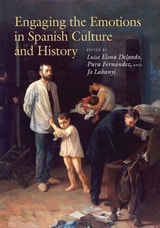
Engaging the Emotions in Spanish Culture and History
Luisa Elena Delgado
Vanderbilt University Press, 2016
The collection ranges across topics such as eighteenth-century sensibility, nineteenth-century concerns with the transmission of emotions, early twentieth-century cinematic affect, and the contemporary mobilization of political emotions including those regarding nonstate national identities. The complexities and effects of emotions are explored in a variety of forms—political rhetoric, literature, personal letters, medical writing, cinema, graphic art, soap opera, journalism, popular music, digital media—with attention paid to broader European and transatlantic implications.
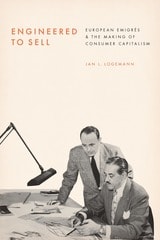
Engineered to Sell
European Émigrés and the Making of Consumer CapitalismJan L. Logemann
University of Chicago Press, 2019
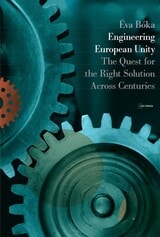
Engineering European Unity
The Quest for the Right Solution Across CenturiesÉva Bóka
Central European University Press, 2023
Which European and non-European ideas and practices facilitated the shaping of European unity? Or rather, which pursuits led to deadlocks in the cooperation between states?
The book seeks answers to these questions by surveying the historical attempts at realizing supranational patterns of governance in Europe since the Middle Ages. The main focus is on the nineteenth and twentieth century organizational models of European unification.
The analysis draws on an abundance of historical and legal source material. While the author encourages critical thinking about European integration, the exploration is admittedly based on specific values. Éva Bóka claims that the struggle for the humanization of power with its democratic creative force has been the major driver in the development of the system of liberties and the idea of European unity. The analysis of the historical process up to the Lisbon Treaty (2007) with the recognition of common, shared, and supported competences meets the author’s set of values to a great extent. The last part of the book examines whether the European Union can serve as a political and economic organizational model for other parts of the world.
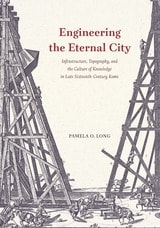
Engineering the Eternal City
Infrastructure, Topography, and the Culture of Knowledge in Late Sixteenth-Century RomePamela O. Long
University of Chicago Press, 2018
This portrait of an early modern Rome examines the many conflicts, failures, and successes that shaped the city, as decision-makers tried to control not only Rome’s structures and infrastructures but also the people who lived there. Taking up visual images of the city created during the same period—most importantly in maps and urban representations, this book shows how in a time before the development of modern professionalism and modern bureaucracies, there was far more wide-ranging conversation among people of various backgrounds on issues of engineering and infrastructure than there is in our own times. Physicians, civic leaders, jurists, cardinals, popes, and clerics engaged with painters, sculptors, architects, printers, and other practitioners as they discussed, argued, and completed the projects that remade Rome.
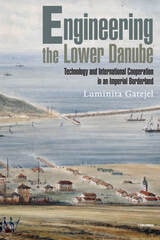
Engineering the Lower Danube
Technology and Territoriality in an Imperial Borderland, Late Eighteenth and Nineteenth CenturiesLuminita Gatejel
Central European University Press, 2023
The Lower Danube—the stretch of Europe’s second longest river between the Romanian-Serbian border and the confluence to the Black Sea—was effectively transformed during the late eighteenth and nineteenth centuries. In describing this lengthy undertaking, Luminita Gatejel proposes that remaking two key stretches—the Iron Gates and the delta—not only physically altered the river but also redefined it in a legal and political sense.
Since the late eighteenth century, military conflicts and peace treaties changed the nature of sovereignty over the area, as the expansionist tendencies of the Habsburg and British Empires encountered rival Ottoman and Russian imperial plans. The inconvenience that the river’s physical shape obstructed free navigation and the growth of commercial traffic, was an increasing concern to all parties. This book shows that alongside imperial aspirations, transnational actors like engineers, commissioners and entrepreneurs were the driving force behind the river regulation. In this highly original, deeply researched, and carefully crafted study, Gatejel explores the formation of international cooperation, the emergence of technical expertise and the emergence of engineering as a profession. This constellation turned the Lower Danube into a laboratory for experimenting with new forms of international cooperation, economic integration, and nature transformation.
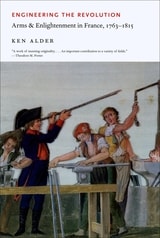
Engineering the Revolution
Arms and Enlightenment in France, 1763-1815Ken Alder
University of Chicago Press, 2010
Engineering the Revolution documents the forging of a new relationship between technology and politics in Revolutionary France, and the inauguration of a distinctively modern form of the “technological life.” Here, Ken Alder rewrites the history of the eighteenth century as the total history of one particular artifact—the gun—by offering a novel and historical account of how material artifacts emerge as the outcome of political struggle. By expanding the “political” to include conflict over material objects, this volume rethinks the nature of engineering rationality, the origins of mass production, the rise of meritocracy, and our interpretation of the Enlightenment and the French Revolution.
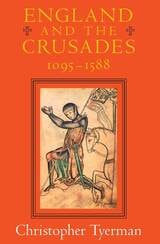
England and the Crusades, 1095-1588
Christopher Tyerman
University of Chicago Press, 1988
Drawing on a wide range of archival, chronicle, and literary evidence, Tyerman brings to life the royal personalities, foreign policy, political intrigue, taxation and fundraising, and the crusading ethos that gripped England for hundreds of years.
"An ambitious task to undertake. . . . Tyerman has done the job not only thoroughly but brilliantly. . . . A highly impressive study, deserving rich praise and wide readership."—Norman Housley, Times Literary Supplement
"Christopher Tyerman has written a wonderful book. . . . [He] manages to confront thorny issues in scholarship and to contribute new perspectives on them."—William Chester Jordan, American Historical Review
"Tyerman provides valuable insights into preaching, recruitment, and the funding and organisation of crusading expeditions. . . . Fascinating new perspectives on English history."—Edward Powell, Sunday Times
"Impressive. . . . Tyerman's research has yielded valuable evidence, and his admirably lucid argument sheds new light on a complex and bloody period in English history."—Virginia Quarterly Review

England in 1819
The Politics of Literary Culture and the Case of Romantic HistoricismJames Chandler
University of Chicago Press, 1998
"1819? At first sight, it might not seem a 'hot date'; but as James Chandler argues in his powerful book, it would be a mistake to overlook a year of such exceptional political conflagration and literary pyrotechnics in British history. Chandler's study is a wide-ranging, enormously ambitious, densely packed, closely argued work."—John Brewer, New Republic
"The book's largest argument, and the source of its considerable revelations, is that late twentieth-century practices of cultural history-writing have their roots in the peculiar Romantic historicism born in post-Waterloo Britain."—Jon Klancher, Times Literary Supplement
"A monumental work of scholarship."—Terry Eagleton, The Independent
England's Asian Renaissance
Su Fang Ng
University of Delaware Press, 2022
Published by the University of Delaware Press. Distributed worldwide by Rutgers University Press.
England's Great Transformation
Law, Labor, and the Industrial RevolutionMarc W. Steinberg
University of Chicago Press, 2016
Building his argument on three case studies—the Hanley pottery industry, Hull fisheries, and Redditch needlemakers—Steinberg employs both local and national analyses to emphasize the ways in which these master-servant laws allowed employers to use the criminal prosecutions of workers to maintain control of their labor force. Steinberg provides a fresh perspective on the dynamics of labor control and class power, integrating the complex pathways of Marxism, historical institutionalism, and feminism, and giving readers a subtle yet revelatory new understanding of workplace control and power during England’s Industrial Revolution.
English Pastoral Music
From Arcadia to Utopia, 1900-1955Eric Saylor
University of Illinois Press, 2017
English Society
1580-1680Wrightson, Keith
Rutgers University Press, 2003
English in Print from Caxton to Shakespeare to Milton
Valerie Hotchkiss and Fred C. Robinson
University of Illinois Press, 2007
Enigmas of Sacrifice
A Critique of Joseph M. Plunkett and the Dublin Insurrection of 1916W. J. Mc Cormack
Michigan State University Press, 2016
Enlightenment Biopolitics
A History of Race, Eugenics, and the Making of CitizensWilliam Max Nelson
University of Chicago Press, 2024
In Enlightenment Biopolitics, historian William Max Nelson pursues the ambitious task of tracing the context in which biopolitical thought emerged and circulated. He locates that context in the Enlightenment when emancipatory ideals sat alongside the horrors of colonialism, slavery, and race-based discrimination. In fact, these did not just coexist, Nelson argues; they were actually mutually constitutive of Enlightenment ideals.
In this book, Nelson focuses on Enlightenment-era visions of eugenics (including proposals to establish programs of selective breeding), forms of penal slavery, and spurious biological arguments about the supposed inferiority of particular groups. The Enlightenment, he shows, was rife with efforts to shape, harness, and “organize” the minds and especially the bodies of subjects and citizens. In his reading of the birth of biopolitics and its transformations, Nelson examines the shocking conceptual and practical connections between inclusion and exclusion, equality and inequality, rights and race, and the supposed “improvement of the human species” and practices of dehumanization.
Enlightenment Orientalism
Resisting the Rise of the NovelSrinivas Aravamudan
University of Chicago Press, 2011
Srinivas Aravamudan here reveals how Oriental tales, pseudo-ethnographies, sexual fantasies, and political satires took Europe by storm during the eighteenth century. Naming this body of fiction Enlightenment Orientalism, he poses a range of urgent questions that uncovers the interdependence of Oriental tales and domestic fiction, thereby challenging standard scholarly narratives about the rise of the novel.
Enlightenment Portraits
Edited by Michel Vovelle
University of Chicago Press, 1997
The Enlightenment's leading figures cast their light in an irregular and unequal way: areas and environments in which new ideas penetrated and took effect alternated with shadowy patches. The fundamental structures of society may have remained stable, but new ways of producing, of being, and of appearing made sometimes abrupt headway. Attitudes toward life, birth, love, marriage and sexuality, and death had begun to change.
The twilight of the Enlightenment came at the end of the eighteenth century, part of a sequence of events of which the French Revolutions was simply the paroxysm.
A subtle and complex study of the Enlightenment, this book allows contemporary readers to reflect on how nineteenth- and twentieth-century scholars have constructed their views on eighteenth-century man.
Enrico; or, Byzantium Conquered
A Heroic PoemLucrezia Marinella
University of Chicago Press, 2009
Lucrezia Marinella (1571–1653) is, by all accounts, a phenomenon in early modernity: a woman who wrote and published in many genres, whose fame shone brightly within and outside her native Venice, and whose voice is simultaneously original and reflective of her time and culture. In Enrico; or, Byzantium Conquered, one of the most ambitious and rewarding of her numerous narrative works, Marinella demonstrates her skill as an epic poet.
Now available for the first time in English translation, Enrico retells the story of the conquest of Byzantium in the Fourth Crusade (1202–04). Marinella intersperses historical events in her account of the invasion with numerous invented episodes, drawing on the rich imaginative legacy of the chivalric romance. Fast-moving, colorful, and narrated with the zest that characterizes Marinella’s other works, this poem is a great example of a woman engaging critically with a quintessentially masculine form and subject matter, writing in a genre in which the work of women poets was typically shunned.
Enserfment and Military Change in Muscovy
Richard Hellie
University of Chicago Press, 1971
Entangled Landscapes
Early Modern China and EuropeEdited by Yue Zhuang and Andrea M. Riemenschnitter
National University of Singapore Press, 2017
Entangled Landscapes focuses on the exchange of ideas of landscape practice between Europe and China in the sixteenth, seventeenth, and eighteenth centuries. Yue Zhuang and Andrea M. Riemenschnitter explore this through three themes—empire-building, mediators’ constraints, and aesthetic negotiations. They challenge our assumptions about how China and Europe influenced one another and go beyond well-documented outcomes like the jardin anglo-chinois and Européenerie styles. Interdisciplinary and revisionist, this brings the critical spirit of postcolonial studies to art history and will appeal to scholars in fields such as comparative literature and visual culture, history, and human geography.
Entangled Paths Toward Modernity
Contextualizing Socialism and Nationalism in the BalkansAugusta Dimou
Central European University Press, 2009
Entanglements of Empire
Missionaries, Maori, and the Question of the BodyTony Ballantyne
Duke University Press, 2015
Environmental Assessment in Countries in Transintion
Norman Lee
Central European University Press, 2000
Envisioning Socialism
Television and the Cold War in the German Democratic RepublicHeather L. Gumbert
University of Michigan Press, 2014
Envisioning Socialism examines television and the power it exercised to define the East Germans’ view of socialism during the first decades of the German Democratic Republic. In the first book in English to examine this topic, Heather L. Gumbert traces how television became a medium prized for its communicative and entertainment value. She explores the difficulties GDR authorities had defining and executing a clear vision of the society they hoped to establish, and she explains how television helped to stabilize GDR society in a way that ultimately worked against the utopian vision the authorities thought they were cultivating.
Gumbert challenges those who would dismiss East German television as a tool of repression that couldn’t compete with the West or capture the imagination of East Germans. Instead, she shows how, by the early 1960s, television was a model of the kind of socialist realist art that could appeal to authorities and audiences. Ultimately, this socialist vision was overcome by the challenges that the international market in media products and technologies posed to nation-building in the postwar period.
A history of ideas and perceptions examining both real and mediated historical conditions, Envisioning Socialism considers television as a technology, an institution, and a medium of social relations and cultural knowledge. The book will be welcomed in undergraduate and graduate courses in German and media history, the history of postwar Socialism, and the history of science and technologies.
Epistle to Marguerite de Navarre and Preface to a Sermon by John Calvin
Marie Dentière
University of Chicago Press, 2004
Dentière's Very Useful Epistle (1539) is the first explicit statement of reformed theology by a woman to appear in French. Addressed to Queen Marguerite of Navarre, sister of the French king Francis I, the Epistle asks the queen to help those persecuted for their religious beliefs. Dentière offers a stirring defense of women and asserts their right to teach the word of God in public. She defends John Calvin against his enemies and attacks the hierarchy of the Roman Catholic Church. Her Preface (1561) to one of Calvin's sermons criticizes immodesty and extravagance in clothing and warns the faithful to be vigilant. Undaunted in the face of suppression and ridicule, this outspoken woman persisted as an active voice in the Reformation.
Equal in Monastic Profession
Religious Women in Medieval FrancePenelope D. Johnson
University of Chicago Press, 1991
Johnson researched more than two dozen nunneries in northern France from the eleventh century through the thirteenth century, balancing a qualitative reading of medieval monastic documents with a quantitative analysis of a lengthy thirteenth-century visitation record which allows an important comparison of nuns and monks. A fascinating look at the world of medieval spirituality, this work enriches our understanding of women's role in premodern Europe and in church history.
Equaliberty in the Dutch Caribbean
Ways of Being Non/SovereignYvon van der Pijl
Rutgers University Press, 2022
Equality for Same-Sex Couples
The Legal Recognition of Gay Partnerships in Europe and the United StatesYuval Merin
University of Chicago Press, 2002
Merin begins by providing a historical overview of the transformation of marriage from antiquity to the present. He then identifies and critically compares four principal models for the legal regulation and recognition of same-sex partnerships: civil marriage, registered partnership, domestic partnership, and cohabitation. Merin concludes that all of the models except civil marriage discriminate against gays and lesbians just as the "separate but equal" doctrine discriminated against African Americans; thus, so-called alternatives to marriage, even if they provide the same rights and benefits as marriage, are inherently unequal and therefore unconstitutional.
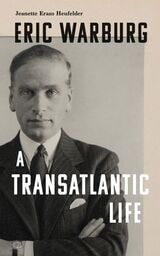
Eric Warburg
A Transatlantic LifeJeanette Erazo Heufelder
Haus Publishing, 2025
In Eric Warburg, Jeanette Erazo Heufelder tells the story of the nephew of the art historian Aby Warburg, whose world-famous library Eric saved from the Nazis. He was a Jew, a banker, a helper of escapees, an intelligence officer in the US Army, a transatlantic bridge builder, and a Cold Warrior. With the help of the cooperation channels he set up, West German and US social groups were aligned with the West amidst the turmoil of postwar Europe.
The history of the transatlantic partnership has become highly topical; since the Russian invasion of Ukraine on February 24, 2022, it has been invoked in Europe as a key reassurance. Eric Warburg’s life, and that of Aby Warburg’s library, tells the story of Europe's twentieth century, the legacy of which continues to inform and inspire the transatlantic partnership today.
Ernst Jünger and Germany
Into the Abyss, 1914-1945Thomas R. Nevin
Duke University Press, 1996
Ernst Jünger is in many ways Germany’s conscience, and much of the controversy surrounding him is at its source measured by his relation to the Nazis and Nazi culture. But as Nevin suggests, Jünger can more specifically and properly be regarded as the still living conscience of a Germany that existed before Hitler. Although his memoir of service as a highly decorated lieutenant in World War I made him a hero to the Nazis, he refused to join the party. A severe critic of the Weimar Republic, he has often been denounced as a fascist who prepared the way for the Reich, but in 1939 he published a parable attacking despotism. Close to the men who plotted Hitler’s assassination in 1944, he narrowly escaped prosecution and death. Drawing largely on Jünger’s untranslated work, much of which has never been reprinted in Germany, Nevin reveals Jünger’s profound ambiguities and examines both his participation in and resistance to authoritarianism and the cult of technology in the contexts of his Wilhelmine upbringing, the chaos of Weimar, and the sinister culture of Nazism.
Winner of Germany’s highest literary awards, Ernst Jünger is regularly disparaged in the German press. His writings, as this book indicates, put him at an unimpeachable remove from the Nazis, but neo-Nazi rightists in Germany have rushed to embrace him. Neither apology, whitewash, nor vilification, Ernst Jünger and Germany is an assessment of the complex evolution of a man whose work and nature has been viewed as both inspiration and threat.
Eros and Inwardness in Vienna
Weininger, Musil, DodererDavid S. Luft
University of Chicago Press, 2003
According to Luft, Otto Weininger viewed human beings as bisexual and applied this theme to issues of creativity and morality. Robert Musil developed a creative ethics that was closely related to his open, flexible view of sexuality and gender. And Heimito von Doderer portrayed his own sexual obsessions as a way of understanding the power of total ideologies, including his own attraction to National Socialism. For Luft, the significance of these three writers lies in their understandings of eros and inwardness and in the roles that both play in ethical experience and the formation of meaningful relations to the world-a process that continues to engage artists, writers, and thinkers today.
Eros and Inwardness in Vienna will profoundly reshape our understanding of Vienna's intellectual history. It will be important for anyone interested in Austrian or German history, literature, or philosophy.
Eros and Magic in the Renaissance
Ioan P. Couliano
University of Chicago Press, 1987
Renaissance magic, according to Ioan Couliano, was a scientifically plausible attempt to manipulate individuals and groups based on a knowledge of motivations, particularly erotic motivations. Its key principle was that everyone (and in a sense everything) could be influenced by appeal to sexual desire. In addition, the magician relied on a profound knowledge of the art of memory to manipulate the imaginations of his subjects. In these respects, Couliano suggests, magic is the precursor of the modern psychological and sociological sciences, and the magician is the distant ancestor of the psychoanalyst and the advertising and publicity agent.
In the course of his study, Couliano examines in detail the ideas of such writers as Giordano Bruno, Marsilio Ficino, and Pico della Mirandola and illuminates many aspects of Renaissance culture, including heresy, medicine, astrology, alchemy, courtly love, the influence of classical mythology, and even the role of fashion in clothing.
Just as science gives the present age its ruling myth, so magic gave a ruling myth to the Renaissance. Because magic relied upon the use of images, and images were repressed and banned in the Reformation and subsequent history, magic was replaced by exact science and modern technology and eventually forgotten. Couliano's remarkable scholarship helps us to recover much of its original significance and will interest a wide audience in the humanities and social sciences.
Erotic Tales of Medieval Germany
Translated by Albrecht Classen
Arizona Center for Medieval and Renaissance Studies, 2007
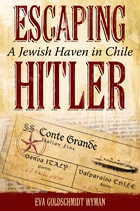
Escaping Hitler
A Jewish Haven in ChileEva Goldschmidt Wyman
University of Alabama Press, 2013
A family’s flight from Nazi terror to an unexpected refuge in Chile.
Escaping Hitler is the personal story of Eva Wyman and her family’s escape from Nazi Germany to Chile in the sociohistorical context of 1930s and 1940s, a time when the Chilean Nazi party had an active presence in the country’s major institutions.
Based primarily on interviews with German Jewish refugees and family correspondence, Eva Goldschmidt Wyman provides an intimate account of Jews in Germany in the 1930s as Nazi controls tightened and family members were taken to Riga concentration camp. Wyman recounts Kristallnacht in Stuttgart, where her father was principal of the Jewish school, his imprisonment in Dachau, and his release and immigration to Great Britain. Escaping Hitler details the family’s escape from Germany and subsequent life in Chile, providing an intimate look at daily life on the steam ship Conte Grande during the voyage from Italy to Chile in 1939, Nazi espionage and anti-Semitic activity in Chile, and the Nazi influence in South America in general.
Recounted in an intimate and personal style, Escaping Hitler immerses the reader in an extraordinary chapter of contemporary Jewish history both inside Germany and South America.
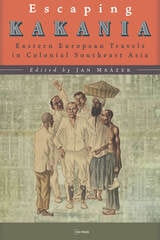
Escaping Kakania
Eastern European Travels in Colonial Southeast AsiaJan Mrázek
Central European University Press, 2024
Escaping Kakania is about fascinating characters—soldiers, doctors, scientists, writers, painters—who traveled from their eastern European homelands to colonial Southeast Asia. Their stories are told by experts on different countries in the two regions, who bring diverse approaches into a conversation that crosses disciplinary and national borders.
The 14 chapters deal with the diverse encounters of eastern Europeans with the many faces of colonial southeast Asia. Some essays directly engage with post-colonial studies, contributing to an ongoing critical re-evaluation of eastern European “semi-peripheral” (non-)involvement in colonialism. Other chapters disclose a range of perspectives and narratives that illuminate the plurality of the travelers’ positions while reflecting on the specificity of the eastern European experience.
The travellers moved—as do the chapter authors—between two regions that are off-centre, in-between, shiftingly “Eastern,” and disorientingly heterogeneous, thus complicating colonial and postcolonial notions of “Europe,” “East,” and East-West distinctions. Both at home and overseas, they navigated among a multiplicity of peoples, “races,” and empires, Occidents and Orients, fantasies of the Self and the Other, adopting/adapting/mimicking/rejecting colonialist identities and ideologies. They saw both eastern Europe and southeast Asia in a distinctive light, as if through each other—and so will the readers of Escaping Kakania.
Espana Pontifica
Papal Letters to Spain 1198-1303Peter Linehan
Catholic University of America Press, 2022
Essays in Ancient and Modern Historiography
Arnaldo Momigliano
University of Chicago Press, 2012
Essays on Scandinavian History
H. Arnold Barton
Southern Illinois University Press, 2008
Essays on Scandinavian History examines important aspects of the history of Sweden and its Nordic neighbors between the later eighteenth and the beginning of the twenty-first century. Historian H. Arnold Barton has selected thirteen of the numerous essays he has published over the past forty years on the history of Scandinavia.
This is a companion volume to Barton's The Old Country and the New, an essay collection on Swedish emigration and the Swedes in America. Included here are studies of the special significance of the eighteenth century in Sweden's history and culture, the relationship of King Gustaf III to the eighteenth-century Enlightenment, the impact of the American Revolution in Sweden, and Gustaf III's ambitions in the East Baltic region. Also detailed are the king's early reaction to the French Revolution and his efforts to organize a European coalition to crush it, a reassessment of the reign and internal reforms of Gustaf IV Adolf, and the Swedish succession crises of 1809 and 1810.
In addition, Barton examines the increasing tension between the Pan-Scandinavian movement and the rising Finnish national movement. He deals with the historians of the Danish Agrarian Reforms of 1784-1814, parallel developments in Finland and Norway between 1808 and 1917, the discovery of Norway abroad, Swedish national romanticism, and Sweden's transition from a warfare state to a welfare state, now exemplifying the rational and humane ideals of the twentieth century.
Essays on Scandinavian History highlights important topics in the history of the Scandinavian region, which has remained all too little known outside the Nordic lands themselves, while also offering broader perspectives on Europe since the mid-eighteenth century. Twelve keyed-to-text illustrations, a bibliography of Barton's publications on Scandinavian history, essay endnotes, and an index augment this work.
Essays on Some Maladies of Angola (1799)
José Pinto De Azeredo
Tagus Press, 2016
This first English-language edition of Essays on Some Maladies of Angola was translated by Stewart Lloyd-Jones (University of Stirling) and includes scholarly essays by Timothy Walker (University of Massachusetts Dartmouth), Adelino Cardoso (Universidade Nova de Lisboa), António Braz de Oliveira (Biblioteca Nacional de Portugal) and Manuel Silvério Marques (Universidade de Lisboa).
Estonian Life Stories
Tiina Kirss
Central European University Press, 2009
After a short period of independence, Estonia was occupied in World War II by the Red Army, then Nazi Germany, and again, for a lasting occupation, by the Soviets. No wonder that a greater part of the roughly one million Estonians had harshly eventful lives.
This anthology contains 25 selected life stories collected from Estonians who lived through the tribulations of the 20th century, and describe the travails of ordinary people under numerous regimes. The autobiographical accounts provide authentic perspectives on events of this period, where time is placed in the context of life-spans, and subjects grounded in personal experience. Most of the life stories reveal sufferings under foreign (Russian) oppression.
The volume is the product of a large-scale national project to record history by collecting autobiographical accounts, and a process of engaged selection for publication which followed. The variety of life-experiences recorded offers comparison across cultures, as well as an overview of the powerful neighbors as they relinquish and strengthen their hold on Estonia.