Results by title
2646 books match the query 'History & Criticism' and 68 start with e
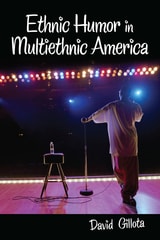
Ethnic Humor in Multiethnic America
Gillota, David
Rutgers University Press, 2013
Gillota investigates the manner in which various humorists respond to multiculturalism and the increasing diversity of the American population. Rather than looking at one or two ethnic groups at a time—as is common scholarly practice—the book focuses on the interplay between humorists from different ethnic communities. While some comic texts project a fantasy world in which diverse ethnic characters coexist in a rarely disputed harmony, others genuinely engage with the complexities and contradictions of multiethnic America.
The first chapter focuses on African American comedy with a discussion of such humorists as Paul Mooney and Chris Rock, who tend to reinforce a black/white vision of American race relations. This approach is contrasted to the comedy of Dave Chappelle, who looks beyond black and white and uses his humor to place blackness within a much wider multiethnic context.
Chapter 2 concentrates primarily on the Jewish humorists Sarah Silverman, Larry David, and Sacha Baron Cohen—three artists who use their personas to explore the peculiar position of contemporary Jews who exist in a middle space between white and other.
In chapter 3, Gillota discusses different humorous constructions of whiteness, from a detailed analysis of South Park to “Blue Collar Comedy” and the blog Stuff White People Like.
Chapter 4 is focused on the manner in which animated children’s film and the network situation comedy often project simplified and harmonious visions of diversity. In contrast, chapter 5 considers how many recent works, such as Harold and Kumar Go to White Castle and the Showtime series Weeds, engage with diversity in more complex and productive ways.
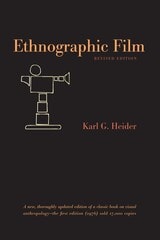
Ethnographic Film
Revised EditionBy Karl G. Heider
University of Texas Press, 2006
From reviews of the first edition:
“Ethnographic Film can rightly be considered a film primer for anthropologists.”
—Choice
“This is an interesting and useful book about what it means to be ethnographic and how this might affect ethnographic filmmaking for the better. It obviously belongs in all departments of anthropology, and most ethnographic filmmakers will want to read it.”
—Ethnohistory
Even before Robert Flaherty released Nanook of the North in 1922, anthropologists were producing films about the lifeways of native peoples for a public audience, as well as for research and teaching. Ethnographic Film (1976) was one of the first books to provide a comprehensive introduction to this field of visual anthropology, and it quickly became the standard reference.
In this new edition, Karl G. Heider thoroughly updates Ethnographic Film to reflect developments in the field over the three decades since its publication, focusing on the work of four seminal filmmakers—Jean Rouch, John Marshall, Robert Gardner, and Timothy Asch. He begins with an introduction to ethnographic film and a history of the medium. He then considers many attributes of ethnographic film, including the crucial need to present "whole acts," "whole bodies," "whole interactions," and "whole people" to preserve the integrity of the cultural context. Heider also discusses numerous aspects of making ethnographic films, from ethics and finances to technical considerations such as film versus video and preserving the filmed record. He concludes with a look at using ethnographic film in teaching.
Euripides and the Tragic Tradition
Ann Norris Michelini
University of Wisconsin Press, 2006
Evening the Score
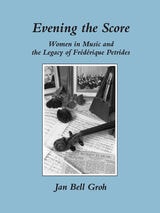
Women in Music and the Legacy of Frédérique PetridesJan Bell Groh
University of Arkansas Press, 1994
Despite the suffragist activities of the 1920s and the heightened pressures brought to bear on traditionally “male-only” institutions in American society during the past three decades, many vocations remain sanctuaries of male dominance. One such area is the classical music world; though, as Jan Bell Groh asserts in Evening the Score, inroads into this field have bene made, sometimes at great cost.
At the center of this work is a unique set of newsletters edited and published by Frédérique Petrides, one of America’s first and most influential female conductors. In Petride’s time, most women musicians were forced to ply their trade in all-female orchestras; through the thirty-seven issues of Women in Music published from 1935 to 1940, the achievements of these musicians were championed, and the prejudices, misconceptions, and deliberately discriminatory policies of many of their male counterparts were exposed and condemned.
Evening the Score is an ambitious endeavor that seeks not only to preserve these early documents and explain them within the context of the 1930s music industry but also to garner for Petrides the long-overdue praise to which she is entitled. It is at once a celebration and a source of inspiration.
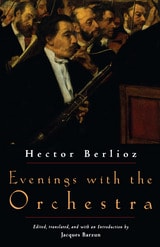
Evenings with the Orchestra
Hector Berlioz
University of Chicago Press, 1999
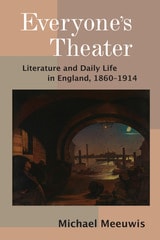
Everyone’s Theater
Literature and Daily Life in England, 1860–1914Michael Meeuwis
University of Michigan Press, 2019
Nearly all residents of England and its colonies between 1860 and 1914 were active theatergoers, and many participated in the amateur theatricals that defined late Victorian life. The Victorian theater was not an abstract figuration of the world as a stage, but a media system enmeshed in mass lived experience that fulfilled in actuality the concept of a theatergoing nation. Everyone’s Theater turns to local history, the words of everyday Victorians found in their diaries and production records, to recover this lost chapter of theater history in which amateur drama domesticates the stage. Professional actors and playwrights struggled to make their productions compatible with ideas and techniques that could be safely reproduced in the home—and in amateur performances from Canada to India. This became the first true English national theater: a society whose myriad classes found common ground in theatrical display. Everyone’s Theater provides new ways to extend Victorian literature into the dimension of voice, sound, and embodiment, and to appreciate the pleasures of Victorian theatricality.
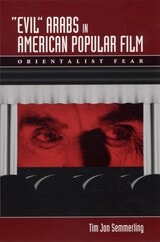
Evil Arabs in American Popular Film
Orientalist FearBy Tim Jon Semmerling
University of Texas Press, 2006
2006 — Runner-up, Arab American National Museum Book Awards
The "evil" Arab has become a stock character in American popular films, playing the villain opposite American "good guys" who fight for "the American way." It's not surprising that this stereotype has entered American popular culture, given the real-world conflicts between the United States and Middle Eastern countries, particularly since the oil embargo of the 1970s and continuing through the Iranian hostage crisis, the first and second Gulf Wars, and the ongoing struggle against al-Qaeda. But when one compares the "evil" Arab of popular culture to real Arab people, the stereotype falls apart. In this thought-provoking book, Tim Jon Semmerling further dismantles the "evil" Arab stereotype by showing how American cultural fears, which stem from challenges to our national ideologies and myths, have driven us to create the "evil" Arab Other.
Semmerling bases his argument on close readings of six films (The Exorcist, Rollover, Black Sunday, Three Kings, Rules of Engagement, and South Park: Bigger, Longer & Uncut), as well as CNN's 9/11 documentary America Remembers. Looking at their narrative structures and visual tropes, he analyzes how the films portray Arabs as threatening to subvert American "truths" and mythic tales—and how the insecurity this engenders causes Americans to project evil character and intentions on Arab peoples, landscapes, and cultures. Semmerling also demonstrates how the "evil" Arab narrative has even crept into the documentary coverage of 9/11. Overall, Semmerling's probing analysis of America's Orientalist fears exposes how the "evil" Arab of American popular film is actually an illusion that reveals more about Americans than Arabs.
Evolving Images
Jewish Latin American CinemaEdited by Nora Glickman and Ariana Huberman
University of Texas Press, 2017
Jews have always played an important role in the generation of culture in Latin America, despite their relatively small numbers in the overall population. In the early days of cinema, they served as directors, producers, screenwriters, composers, and broadcasters. As Latin American societies became more religiously open in the later twentieth century, Jewish characters and themes began appearing in Latin American films and eventually achieved full inclusion. Landmark films by Jewish directors in Argentina, Mexico, and Brazil, which are home to the largest and most influential Jewish communities in Latin America, have enjoyed critical and popular acclaim.
Evolving Images is the first volume devoted to Jewish Latin American cinema, with fifteen critical essays by leading scholars from Latin America, the United States, Europe, and Israel. The contributors address transnational and transcultural issues of Jewish life in Latin America, such as assimilation, integration, identity, and other aspects of life in the Diaspora. Their discussions of films with Jewish themes and characters show the rich diversity of Jewish cultures in Latin America, as well as how Jews, both real and fictional, interact among themselves and with other groups, raising the question of how much their ethnicity may be adulterated when adopting a combined identity as Jewish and Latin American. The book closes with a groundbreaking section on the affinities between Jewish themes in Hollywood and Latin American films, as well as a comprehensive filmography.
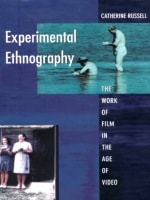
Experimental Ethnography
The Work of Film in the Age of VideoCatherine Russell
Duke University Press, 1999
Russell provides detailed analyses of more than thirty-five films and videos from the 1890s to the 1990s and discusses a wide range of film and videomakers, including Georges Méliès, Maya Deren, Peter Kubelka, Ray Birdwhistell, Jean Rouch, Su Friedrich, Bill Viola, Kidlat Tahimik, Margaret Mead, Tracey Moffatt, and Chantal Akerman. Arguing that video enables us to see film differently—not as a vanishing culture but as bodies inscripted in technology, Russell maps the slow fade from modernism to postmodern practices. Combining cultural critique with aesthetic analysis, she explores the dynamics of historical interruption, recovery, and reevaluation. As disciplinary boundaries dissolve, Russell contends, ethnography is a means of renewing the avant-gardism of “experimental” film, of mobilizing its play with language and form for historical ends. “Ethnography” likewise becomes an expansive term in which culture is represented from many different and fragmented perspectives.
Original in both its choice of subject and its theoretical and methodological
approaches, Experimental Ethnography will appeal to visual anthropologists, as well as film scholars interested in experimental and documentary practices.
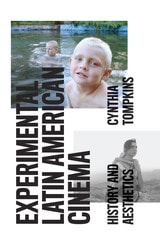
Experimental Latin American Cinema
History and AestheticsBy Cynthia Tompkins
University of Texas Press, 2013
While there are numerous film studies that focus on one particular grouping of films—by nationality, by era, or by technique—here is the first single volume that incorporates all of the above, offering a broad overview of experimental Latin American film produced over the last twenty years.
Analyzing seventeen recent films by eleven different filmmakers from Argentina, Brazil, Cuba, Mexico, Paraguay, and Peru, Cynthia Tompkins uses a comparative approach that finds commonalities among the disparate works in terms of their influences, aesthetics, and techniques. Tompkins introduces each film first in its sociohistorical context before summarizing it and then subverting its canonical interpretation. Pivotal to her close readings of the films and their convergences as a collective cinema is Tompkins’s application of Deleuzian film theory and the concept of the time-image as it pertains to the treatment of time and repetition. Tompkins also explores such topics as the theme of decolonization, the consistent use of montage, paratactically structured narratives, and the fusion of documentary conventions and neorealism with drama. An invaluable contribution to any dialogue on the avant-garde in general and to filmmaking both in and out of Latin America, Experimental Latin American Cinema is also a welcome and insightful addition to Latin American studies as a whole.
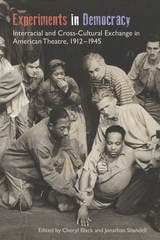
Experiments in Democracy
Interracial and Cross-Cultural Exchange in American Theatre, 1912-1945Edited by Cheryl Black and Jonathan Shandell
Southern Illinois University Press, 2016
In Experiments in Democracy, edited by Cheryl Black and Jonathan Shandell, theatre historians examine a wide range of performances—from Broadway, folk plays and dance productions to scripted political rallies and radio dramas. Contributors look at such diverse groups as the Theatre Union, La Unión Martí-Maceo, and the American Negro Theatre, as well as individual playwrights and their works, including Theodore Browne’s folk opera Natural Man, Josefina Niggli’s Soldadera, and playwright Lynn Riggs’s Cherokee Night and Green Grow the Lilacs (the basis for the musical Oklahoma!). Exploring the ways progressive artists sought to connect isolated racial and cultural groups in pursuit of a more just and democratic society, contributors take into account the blind spots, compromised methods, and unacknowledged biases at play in their practices and strategies. Essays demonstrate how the gap between the ideal of American democracy and its practice—mired in entrenched systems of white privilege, economic inequality, and social prejudice—complicated the work of these artists.
Focusing on questions of race, ethnicity, gender, and sexuality on the stage in the decades preceding the Civil Rights era, Experiments in Democracy fills an important gap in our understanding of the history of the American stage—and sheds light on these still-relevant questions in contemporary American society.
Experts in Action
Transnational Hong Kong–Style Stunt Work and PerformanceLauren Steimer
Duke University Press, 2021
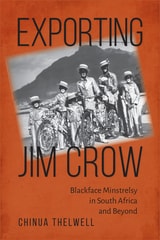
Exporting Jim Crow
Blackface Minstrelsy in South Africa and BeyondChinua Thelwell
University of Massachusetts Press, 2020
Chinua Thelwell brings blackface minstrelsy and performance culture into the discussion of apartheid's nineteenth-century origins and afterlife, employing a broad archive of South African newspapers and magazines, memoirs, minstrel songs and sketches, diaries, and interview transcripts. Exporting Jim Crow highlights blackface minstrelsy's cultural and social impact as it became a dominant form of entertainment, moving from its initial appearances on music hall stages to its troubling twentieth-century resurgence on movie screens and at public events. This carefully researched and highly original study demonstrates that the performance of race in South Africa was inherently political, contributing to racism and shoring up white racial identity.
Exporting Perilous Pauline
Pearl White and Serial Film CrazeEdited by Marina Dahlquist
University of Illinois Press, 2013
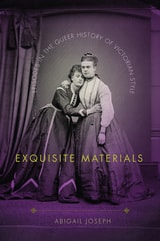
Exquisite Materials
Episodes in the Queer History of Victorian StyleAbigail Joseph
University of Delaware Press, 2011
Published by University of Delaware Press. Distributed worldwide by Rutgers University Press.
Extended Play
Sounding Off from John Cage to Dr. FunkensteinJohn Corbett
Duke University Press, 1994
Using cultural critique and textual theory, Corbett addresses a broad spectrum of issues, such as the status of recorded music in postmodern culture, the politics of self-censorship, experimentation, and alternativism in the music industry, and the use of metaphors of space and madness in the work of African American musicians. He follows these more theoretically oriented essays with a series of extensive profiles and in-depth interviews that offer contrasting and complementary perspectives on some of the world’s most creative musicians and their work. Included here are more than twenty original photographs as well as a meticulously annotated discography. The result is one of the most thoughtful, and most entertaining, investigations of contemporary music available today.
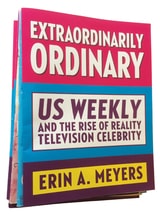
Extraordinarily Ordinary
Us Weekly and the Rise of Reality Television CelebrityErin A. Meyers
Rutgers University Press, 2020
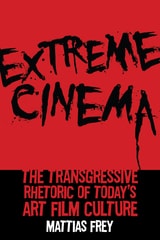
Extreme Cinema
The Transgressive Rhetoric of Today's Art Film CultureFrey, Mattias
Rutgers University Press, 2016
From Shortbus to Shame and from Oldboy to Irreversible, film festival premieres regularly make international headlines for their shockingly graphic depictions of sex and violence. Film critics and scholars alike often regard these movies as the work of visionary auteurs, hailing directors like Michael Haneke and Lars von Trier as heirs to a tradition of transgressive art. In this provocative new book, Mattias Frey offers a very different perspective on these films, exposing how they are also calculated products, designed to achieve global notoriety in a competitive marketplace.