Results by title
4743 books match the query 'Religion' and 158 start with e
Emily Dickinson's Approving God
Divine Design and the Problem of SufferingPatrick J. Keane
University of Missouri Press, 2008
Emma Lee
Juanita Brooks
Utah State University Press, 1975
Emotion and Devotion
The Meaning of Mary in Medieval Religious CulturesMiri Rubin
Central European University Press, 2009
Emotional and Priestly Logic of Plural Marriage, The
Kathleen Flake
Utah State University Press, 2010
Kathleen Flake, associate professor of American religious history at Vanderbilt University examines the logic of those women who thrived, rather than suffered, in early Mormon polygamy, and finds that the marriage covenant granted them priestly rights and independence through the powers of heaven.
Emperor Charles IV and the Origins of the Great Schism, c. 1375–1378
Dušan Coufal
Karolinum Press, 2025
Reveals how Emperor Charles IV’s efforts to secure the imperial coronation of his son intersect with the early stages of the Great Western Schism.
Emperor Otto I the Great made history in the Holy Roman Empire with a significant dynastic achievement: in 967, he persuaded the pope to crown his son co-emperor in Rome. Two centuries later, another renowned emperor, Frederick Barbarossa, attempted a similar feat, negotiating with four different popes for the coronation of his descendant, but ultimately failed. A lesser-known parallel can be found in the life of Emperor Charles IV of the Luxembourg dynasty in the fourteenth century. After the Papal Curia returned to Rome from Avignon in early 1377, Charles made concerted efforts in Italy, France, and Germany to secure the imperial coronation of his son, Wenceslas. However, this bold ambition coincided with an unprecedented crisis in relations between the "French” cardinals and the newly elected Italian pope, Urban VI. Recognizing that the final chapter of Charles IV’s biography is deeply intertwined with the early history of the Great Western Schism offers a fresh perspective on a subject that has long captivated international scholarship.
Empire and Gender in LXX Esther
Meredith J. Stone
SBL Press, 2018
A new perspective on essential aspects of Esther’s plot and characters for students and scholars
Empire and Gender in LXX Esther foregrounds and highlights empire as the central lens in this provocative new reading of Esther. This book provides a unique synchronic reading of LXX Esther with the Additions, allowing the presence and negotiation of imperial power to be further illuminated throughout the story’s plot. Stone explores and demonstrates how performances of gender are inextricably intertwined with the exertion and negotiation of imperial power portrayed in LXX Esther and offers examples of connections to the range of imperial power experienced by Jewish people during the late Second Temple period.
Features:
- An exploration of the tenets and methodology of imperial-critical approaches
- Focused attention to the final form of LXX Esther
- Construction of early audiences for LXX Esther in first-century BCE Ptolemaic Alexandria and Hasmonean Judea
Empire of Religion
Imperialism and Comparative ReligionDavid Chidester
University of Chicago Press, 2014
In developing a material history of the study of religion, Chidester documents the importance of African religion, the persistence of the divide between savagery and civilization, and the salience of mediations—imperial, colonial, and indigenous—in which knowledge about religions was produced. He then identifies the recurrence of these mediations in a number of case studies, including Friedrich Max Müller’s dependence on colonial experts, H. Rider Haggard and John Buchan’s fictional accounts of African religion, and W. E. B. Du Bois’s studies of African religion. By reclaiming these theorists for this history, Chidester shows that race, rather than theology, was formative in the emerging study of religion in Europe and North America. Sure to be controversial, Empire of Religion is a major contribution to the field of comparative religious studies.
Empires in Collision in Late Antiquity
G. W. Bowersock
Brandeis University Press, 2012
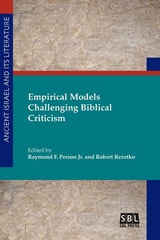
Empirical Models Challenging Biblical Criticism
Raymond F. Person
SBL Press, 2016
Cutting edge reflections on biblical text formation
Empirical models based on ancient Near Eastern literature and variations between different textual traditions have been used to lend credibility to the identification of the sources behind biblical literature and the different editorial layers. In this volume, empirical models are used to critique the exaggerated results of identifying sources and editorial layers by demonstrating that, even though much of ancient literature had such complex literary histories, our methods are often inadequate for the task of precisely identifying sources and editorial layers. The contributors are Maxine L. Grossman, Bénédicte Lemmelijn, Alan Lenzi, Sara J. Milstein, Raymond F. Person Jr., Robert Rezetko, Stefan Schorch, Julio Trebolle Barrera, Ian Young, and Joseph A. Weaks.
Features:
- Evidence that many ancient texts are composite texts with complex literary histories
- Ten essays and an introduction cover texts from Mesopotamia, the Hebrew Bible, the New Testament, and the Dead Sea Scrolls
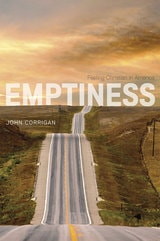
Emptiness
Feeling Christian in AmericaJohn Corrigan
University of Chicago Press, 2015
Corrigan examines different kinds of emptiness essential to American Christianity, such as the emptiness of deep longing, the emptying of the body through fasting or weeping, the emptiness of the wilderness, and the emptiness of historical time itself. He argues, furthermore, that emptiness is closely connected to the ways Christian groups differentiate themselves: many groups foster a sense of belonging not through affirmation, but rather avowal of what they and their doctrines are not. Through emptiness, American Christians are able to assert their identities as members of a religious community.
Drawing much-needed attention to a crucial aspect of American Christianity, Emptiness expands our understanding of historical and contemporary Christian practices.
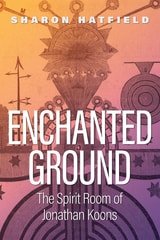
Enchanted Ground
The Spirit Room of Jonathan KoonsSharon Hatfield
Ohio University Press, 2018
In Enchanted Ground, Sharon Hatfield brings to life the true story of a nineteenth-century farmer-turned-medium, Jonathan Koons, one of thousands of mediums throughout the antebellum United States. In the hills outside Athens, Ohio, Koons built a house where it was said the dead spoke to the living, and where ancient spirits communicated the wisdom of the ages. Curious believers, in homespun and in city attire, traveled from as far as New Orleans to a remote Appalachian cabin whose marvels would rival any of P. T. Barnum’s attractions.
Yet Koons’s story is much more than showmanship and sleight of hand. His enterprise, not written about in full until now, embodied the excitement and optimism of citizens breaking free from societal norms. Reform-minded dreamers were drawn to Koons’s seances as his progressive brand of religion displaced the gloomy Calvinism of previous generations. As heirs to the Second Great Awakening, which stretched from New York State to the far reaches of the Northwest Territory, the curious, the faithful, and Koons himself were part of a larger, uniquely American moment that still marks the cultural landscape today.
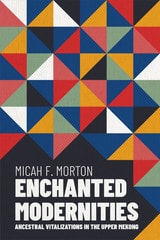
Enchanted Modernities
Ancestral Vitalizations in the Upper MekongMicah F. Morton
University of Wisconsin Press, 2025
Although modernity and its colonial legacies are often portrayed as severing or at least attenuating people’s ancestral ties, Enchanted Modernities shows that those ties persist and, in fact, are on the rise. Akha and other Indigenous ancestral and animist resurgences are blossoming despite the paradigmatic Western framing of modernity as fundamentally at odds with Ancestors and, for that matter, kinship and even religion. Morton demonstrates that modernity and modernization proceed alongside the reproduction of new and old forms of enchantment.
Encompassing Others
The Magic of Modernity in MelanesiaEdward LiPuma
University of Michigan Press, 2001
Focusing on the Maring people of Highland New Guinea and on the Westerners who interacted with them, Edward LiPuma presents issues from the perspectives of both sides. We hear the voice of the Anglican priest from San Francisco as well as the most powerful Maring shamans. Further, the book seeks to develop a theory of generations that helps explain how change accelerates and societies take on new directions across generations.
Theoretical, descriptive, but almost entirely free of jargon, this book is intended for all those who are interested in how the West's encompassment of other peoples influences how these others conceive of their past, imagine their future, and experience the present. It will have wide appeal for anthropologists and others concerned with colonialism, globalization, and the formation of the nation-state.
Edward LiPuma is Professor and Chair, Department of Anthropology, University of Miami.
Encounters With Silence
Karl Rahner
St. Augustine's Press, 1999
One of the classics of modern spirituality, Encounters with Silence is one of Karl Rahner’s most lucid and powerful books. A book of meditations about man’s relation with God, it is not a work of dry theology, but rather a book of prayerful reflections on love, knowledge, and faith, obedience, everyday routines, life with our friends and neighbors, our work and vocation, and human goodness. The immense success of this moving work is a tribute to its practicality and the ability of the great theologian to speak simply and yet profoundly to ordinary men and women seeking an inspiring guide to the inner life, one that never forsakes the world of reality. The book is cast in the form of a dialogue with God that moves from humble but concerned inquiry to joyful contemplation.
“You will come again because the fact that you have already come must continue to be revealed ever more clearly. It must become progressively manifest to the world that the heart of all things is already transformed, because you have taken them all to your heart. . . . The false appearance of our world, the shabby pretense that it has not been liberated . . . must be more and more thoroughly rooted out and destroyed. . . . And your coming is neither past nor future, but the present, which has only to reach its fulfillment. Now it is still the one single hour of your advent.” (from the book)
Encounters in the Dark
Identity Formation in the Jacob StoryNoel Forlini Burt
SBL Press, 2020
An interdisciplinary study of a familiar patriarchal narrative
Encounters in the Dark: Identity Formation in the Jacob Story traces the many moments of darkness in the life of Jacob. From the darkness of his mother's womb, to the darkness Jacob uses to deceive his father and his brother, to the night he sleeps on the ground with just a stone for a pillow at Bethel, and to the triumphant scene of wrestling God by the Jabbok River, the biblical story frequently situates Jacob in the darkness. Through an exploration of key moments in Jacob's story, Noel Forlini Burt follows Jacob's journey from home to exile and back home again. His story symbolizes the larger story of Israel's own wrestling with God in the darkness of exile and return.
Features
- An exploration of the poetics and rhetoric of the Jacob story
- An examination of characterization in its ancient and modern contexts
- An analysis of individual and collective identity
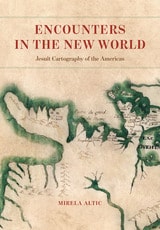
Encounters in the New World
Jesuit Cartography of the AmericasMirela Altic
University of Chicago Press, 2022
In 1540, in the wake of the tumult brought on by the Protestant Reformation, Saint Ignatius of Loyola founded the Society of Jesus, also known as the Jesuits. The Society’s goal was to revitalize the faith of Catholics and to evangelize to non-Catholics through charity, education, and missionary work. By the end of the century, Jesuit missionaries were sent all over the world, including to South America. In addition to performing missionary and humanitarian work, Jesuits also served as cartographers and explorers under the auspices of the Spanish, Portuguese, and French crowns as they ventured into remote areas to find and evangelize to native populations.
In Encounters in the New World, Mirela Altic analyzes more than 150 of their maps, most of which have never previously been published. She traces the Jesuit contribution to mapping and mapmaking from their arrival in the New World into the post-suppression period, placing it in the context of their worldwide undertakings in the fields of science and art. Altic’s analysis also shows the incorporation of indigenous knowledge into the Jesuit maps, effectively making them an expression of cross-cultural communication—even as they were tools of colonial expansion. This ambiguity, she reveals, reflects the complex relationship between missions, knowledge, and empire. Far more than just a physical survey of unknown space, Jesuit mapping of the New World was in fact the most important link to enable an exchange of ideas and cultural concepts between the Old World and the New.

Encounters with Korean Folk Religion
The Goddesses of Eight Peaks MountainClark W. Sorensen
Rutgers University Press, 2027
Encounters with Korean Folk Religion is an account of forty-five years of engagement with the cult of goddesses on Eight Peaks Mountain in Korea’s western Kangwŏn Province, the shaman who tended to the goddesses there from 1977 to 2015, and the folk religion of the surrounding village of Eight Peaks. Since the 1980s, South Korea has urbanized and the village of Eight Peaks has been transformed from a remote agricultural village into a rafting and ski resort. While communal worship ceremonies have been dying out in most of Korea, they have only grown on Eight Peaks Mountain, which has been a site of worship since at least the 15th century. What was a small-scale local ceremony in 1977 has grown into a large-scale regional celebration attracting shamans and tourists from far and wide. The manuscript delves in a historically and anthropologically innovative way into the social, religious, and historical reasons for this efflorescence.
Encyclical Letter Magnifica Humanitas
On Safeguarding the Human Person in the Time of Artificial IntelligencePope Leo XIV
Catholic University of America Press, 2026

Encyclopaedia of Midrash
Biblical Interpretation in Formative JudaismJacob Neusner
SBL Press, 2016
Now in Paperback!
The Encyclopedia of Midrash provides readers with a deep, broad treatment of midrash unavailable in any other single source. Through the writings of top scholars in each of their fields, it sets out the current state of the question for the many topics discussed throughout the two-volume set. The encyclopedia treats interpretations of Scripture that came to closure prior to, or outside of, the framework of rabbinic midrash: Hellenistic Jewish midrash, Josephus, Pseudo-Philo, Jubilees, as well as to the New Testament, Karaite and Samaritan writings, and the Dead Sea Scrolls.
Features:
- Paperback format of an essential Brill hardcover reference set
- A general introduction to rabbinic midrash and its traits
- Discussion of rabbinic midrashic documents focused on specific books of Scripture, the theology expressed by rabbinic midrashic compilations, and the historical context in which rabbinic Midrash took shape
End of Time
The Maya Mystery of 2012Anthony Aveni
University Press of Colorado, 2009
Enduring Motives
The Archaeology of Tradition and Religion in Native AmericaLinea Sundstrom
University of Alabama Press, 2012
Wesley Bernardini / James S. Brown Jr. / Cheryl Claassen / John E. Clark / ArleneColman / Warren DeBoer /
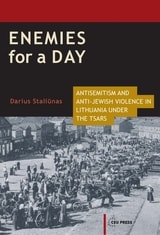
Enemies for a Day
Antisemitism and Anti-Jewish Violence in Lithuania under the TsarsDarius Staliunas
Central European University Press, 2015
It begins by illustrating how widespread anti-Jewish feelings were among the Christian population in 19 th century, focusing on blood libel accusations as well as describing the role of modern antisemitism. Secondly, it tries to identify the structural preconditions as well as specific triggers that turned anti-Jewish feelings into collective violence and analyzes the nature of this violence. Lastly, pogroms in Lithuania are compared to anti-Jewish violence in other regions of the Russian Empire and East Galicia.
This research is inspired by the cultural turn in social sciences, an approach that assumes that violence is filled with meaning, which is “culturally constructed, discursively mediated, symbolically saturated, and ritually regulated.” The author argues that pogroms in Lithuania instead followed a communal pattern of ethnic violence and was very different from deadly pogroms in other parts of the Russian Empire.
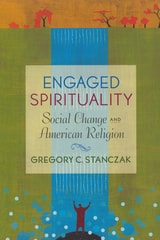
Engaged Spirituality
Social Change and American ReligionStanczak, Gregory C
Rutgers University Press, 2006
In Engaged Spirituality, Gregory C. Stanczak challenges this assumption, arguing that spirituality plays an important social role as well. Based on more than one hundred interviews with individuals of diverse faith traditions, the book shows how prayer, meditation, and ritual provide foundations for activism. Among the stories, a Buddhist monk in Los Angeles intimately describes the physical sensations of strength and compassion that sweep her body when she recites the Buddha’s name in times of selfless service, and a Protestant reverend explains how the calm serenity that she feels during retreats allows her to direct her multi-service agency in San Francisco to creative successes that were previously unimaginable.
In an age when Madonna studies Kabbalah and the internet is bringing Buddhism to the white middle-class, it is clear that formal religious affiliations are no longer enough. Stanczak’s critical examination of spirituality provides us with a way of discussing the factors that impel individuals into social activism and forces us to rethink the question of how “religion” and “spirituality” might be defined.
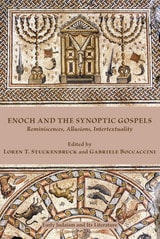
Enoch and the Synoptic Gospels
Reminiscences, Allusions, IntertextualityLoren T. Stuckenbruck
SBL Press, 2016
Essential research for students and scholars of Second Temple Judaism and the New Testament
Since Richard Laurence published the first English translation of 1 Enoch in 1821, its importance for an understanding of early Christianity has been generally recognized. The present volume is the first book of essays contributed by international specialists in Second Temple Judaism devoted to the significance of traditions found in 1 Enoch for the interpretation of the Synoptic Gospels in the New Testament. Areas covered by the contributions include demonology, Christology, angelology, cosmology, birth narratives, forgiveness of sins, veneration, wisdom, and priestly tradition. The contributors are Joseph L. Angel, Daniel Assefa, Leslie Baynes, Gabriele Boccaccini, Kelley Coblentz Bautch, Henryk Drawnel, André Gagné, Lester L. Grabbe, Daniel M. Gurtner, Andrei A. Orlov, Anders Klostergaard Petersen, Amy E. Richter, Loren T. Stuckenbruck, Benjamin Wold, and Archie T. Wright.
Features:
- Multiple approaches to thinking about the relationship between 1 Enoch and the Synoptic Gospels
- Exploration of the common socio-cultural and religious framework within which the traditions concerning Enoch and Jesus developed
- Articles presented at the Seventh Enoch Seminar in 2013
Enquiries into Religion and Culture (The Works of Christopher Dawson)
Christopher Dawson
Catholic University of America Press, 2009
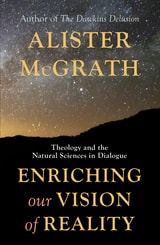
Enriching Our Vision of Reality
Theology and the Natural Sciences in DialogueAlister McGrath
Templeton Press, 2017
“It’s a pleasure to read an introduction to science and Christian belief that is both erudite and accessible. McGrath’s new book is rich with personal examples, biographies of famous scientists and theologians, and effective refutations of their detractors. This invitation to move forward from a bifurcated to an expansive view of reality is recommended for all who seek an ‘integrated understanding’ of science and Christian faith.” —Philip Clayton, editor of The Oxford Handbook of Religion and Science
In this exceptional volume, leading theologian Alister McGrath writes for scientists with an interest in theology, and Christians and theologians who are aware of the importance of the natural sciences. A scene-setting chapter explores the importance of the human quest for intelligibility. The focus then moves to three leading figures who have stimulated discussion about the relationship between science and theology in recent years: Charles Coulson, an Oxford professor of theoretical chemistry who was also a prominent Methodist lay preacher; Thomas F. Torrance, perhaps the finest British theologian of the twentieth-century; and John Polkinghorne, a theoretical physicist and theologian.
The final section of the book features six “parallel conversations” between science and theology, which lay the groundwork for the kind of enriched vision of reality the author hopes to encourage. Here, we are inspired to enjoy individual aspects of nature while seeking to interpret them in the light of deeper revelations about our gloriously strange universe.
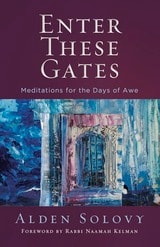
Enter These Gates
Meditations for the Days of AweAlden Solovy
Central Conference of American Rabbis, 2024
FINALIST: NEXT GENERATION INDIE BOOK AWARDS (Spirituality category)
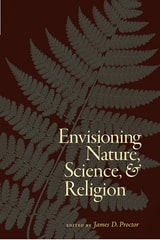
Envisioning Nature, Science, and Religion
Jim Proctor
Templeton Press, 2009
Contemporary scholarship has given rise to several modes of understanding biophysical and human nature, each entangled with related notions of science and religion. Envisioning Nature, Science, and Religion represents the culmination of three years of collaboration by an international group of fourteen natural scientists, social scientists, humanists, and theologians. The result is an intellectually stimulating volume that explores how the ideas of nature pertain to science and religion.
Envisioning Nature, Science, and Religion offers a blend of scholarly rigor and readable prose that will be appreciated by anyone engaged in the fields of religion, philosophy, and the natural sciences.
Envisioning Scripture
Joseph Smith’s Revelations in Their Early American ContextsColby Townsend
Signature Books, 2022
Contributors include Catherine A. Brekus, William Davis, Elizabeth Fenton, Kathleen Flake, Paul Gutjahr, Jared Hickman, Susan Juster, Seth Perry, Laura Thiemann Scales, and Roberto A. Valdeón.
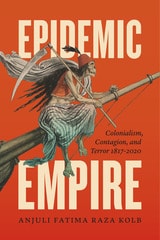
Epidemic Empire
Colonialism, Contagion, and Terror, 1817–2020Anjuli Fatima Raza Kolb
University of Chicago Press, 2021
Terrorism is a cancer, an infection, an epidemic, a plague. For more than a century, this metaphor has figured insurgent violence as contagion in order to contain its political energies. In Epidemic Empire, Anjuli Fatima Raza Kolb shows that this trope began in responses to the Indian Mutiny of 1857 and tracks its tenacious hold through 9/11 and beyond. The result is the first book-length study to approach the global War on Terror from a postcolonial literary perspective.
Raza Kolb assembles a diverse archive from colonial India, imperial Britain, French and independent Algeria, the postcolonial Islamic diaspora, and the neoimperial United States. Anchoring her book are studies of four major writers in the colonial-postcolonial canon: Rudyard Kipling, Bram Stoker, Albert Camus, and Salman Rushdie. Across these sources, she reveals the tendency to imagine anticolonial rebellion, and Muslim insurgency specifically, as a virulent form of social contagion. Exposing the long history of this broken but persistent narrative, Epidemic Empire is a major contribution to the rhetorical history of our present moment.
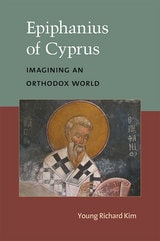
Epiphanius of Cyprus
Imagining an Orthodox WorldYoung Richard Kim
University of Michigan Press, 2015
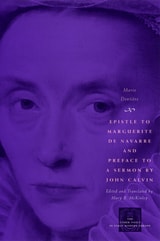
Epistle to Marguerite de Navarre and Preface to a Sermon by John Calvin
Marie Dentière
University of Chicago Press, 2004
Dentière's Very Useful Epistle (1539) is the first explicit statement of reformed theology by a woman to appear in French. Addressed to Queen Marguerite of Navarre, sister of the French king Francis I, the Epistle asks the queen to help those persecuted for their religious beliefs. Dentière offers a stirring defense of women and asserts their right to teach the word of God in public. She defends John Calvin against his enemies and attacks the hierarchy of the Roman Catholic Church. Her Preface (1561) to one of Calvin's sermons criticizes immodesty and extravagance in clothing and warns the faithful to be vigilant. Undaunted in the face of suppression and ridicule, this outspoken woman persisted as an active voice in the Reformation.
Equal in Monastic Profession
Religious Women in Medieval FrancePenelope D. Johnson
University of Chicago Press, 1991
Johnson researched more than two dozen nunneries in northern France from the eleventh century through the thirteenth century, balancing a qualitative reading of medieval monastic documents with a quantitative analysis of a lengthy thirteenth-century visitation record which allows an important comparison of nuns and monks. A fascinating look at the world of medieval spirituality, this work enriches our understanding of women's role in premodern Europe and in church history.

Equality in the City
Imaginaries of the Smart FutureEdited by Susan Flynn and Graham Cairns
Intellect Books, 2022
Equality in the City engenders a timely debate about what future cities might look like and what their concerns should be. Using a multi-disciplinary perspective, it features acclaimed scholars whose work investigates the proposed networked, digital technologies that ostensibly affect planning policies, control infrastructures, and deliver and manage city services and systems. The contributors offer insights into how future cities might be envisaged, planned, and executed in order to be more equal.
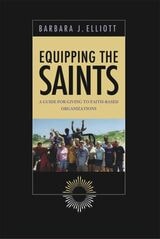
Equipping The Saints
Barbara Elliott
Templeton Press, 2004
For any individual donor or foundation giving money to a faith-based organization, this guide is indispensable. Equipping the Saints offers sage advice on recognizing the qualities of good leaders, effective programs, and the methods of evaluating outcomes. Based on hundreds of interviews with donors and civic leaders, this guide provides a candid look at the unique strengths and weaknesses of these groups. Equipping the Saints is packed with useful tools like a donor's interest inventory, a checklist for making a site visit, tips on reading nonprofit financial statements, and hands-on recommendations for making grants that are both effective and prudent.
"An excellent guide for philanthropists seeking to unleash the power of faith in healing troubled souls and transforming troubled neighborhoods." —Adam Meyerson, president, Philanthropy Roundtable
"Most donors quickly learn how all that glitters is not gold. Some go on to learn how all that is gold does not glitter. In this book Barbara Elliott provides the lessons in discernment and the tools for evaluation that donors need. Take advantage of her understanding by making it your own." —Marvin Olasky, ditor of World magazine, author of Compassionate Conservatism and The Tragedy of American Compassion
"Any donor with even a hint of interest in exploring investments in the work of faith-based organizations (FBOs) needs this book. It is packed with practical information about how to understand and assess FBOs. Its numerous examples of real-life donors making real-life differences through partnerships with faith-inspired community healers ought to stimulate much creative brainstorming among philanthropists." —Dr. Amy L. Sherman, senior fellow and director, Faith in Communities Initiative of the Foundation for American Renewal
"From the perspective of a local foundation giving to faith-based ministries, we have found Barbara Elliott's work to be inspiring, practical and instructive to us as we think through our priorities and principles for funding decisions…I have extraordinary respect for Barbara's scope of understanding, ability to communicate with passion and reason, and her deep understanding of a very complex field. She gives all of us—ministries and funders—genuine hope and invaluable insight." —Fred Smith, president, The Gathering
Eranistes
Gerard H. Theodoret of Cyrus
Catholic University of America Press, 2003

Erasmus and the Jews
Shimon Markish
University of Chicago Press, 1986
Erasmus and the Jews discusses Erasmus' critique of Mosaic law and his view of the conflict between "Judaism" as legalistic morality and Jesus' teaching; his judgment on the Pharisees of Jesus' time; his emphasis on the importance of the study of Hebrew; and his opinions of sixteenth-century Jews. This meticulous analysis reveals an Erasmus who defended his vision of true piety by rejecting "Judaizing" Christians more than Jews and who saw the Old Testament as integral to the Christian worldview. As a Christian, he regretted nonbelief and pitied unbelievers, without vicious hostility toward any single people. His theological opposition to a form of religious thought which he identified with Judaism was not translated into crude prejudice against actual Jews. In general, his calm consideration of the strange and the foreign and his willingness to restrict his judgments to the philosophical realm were, Markish argues, early and significant steps toward enlightened toleration.
Markish's discussion of Erasmus is supplemented with an Afterword by theologian and philosopher Arthur A. Cohen, who offers a variant interpretation of Erasmus' writings and attitudes. The juxtaposed arguments of the two scholars make this an especially illuminating work for any student of Erasmus and his influence. Erasmus and the Jews also gives a necessary clarity to our understanding of the meaning of anti-Semitism and the history of religious toleration. Markish's profound knowledge of Erasmus allows him to demonstrate the fundamental importance of putting arguments and terminology in the context of a thinker's work and his own time.
Erasmus's Life of Origen
Thomas P. Scheck
Catholic University of America Press, 2016
Eric Voegelin's Late Meditations and Essays
Critical Commentary CompanionsMichael Franz
St. Augustine's Press, 2023
Voegelin’s books gave rise to a vast secondary literature that continues to grow, yet the exceptionally impactful late essays and meditative works have never received the scholarly commentaries they deserve because they were published originally as journal articles or chapters in edited collections. This volume remedies that shortcoming with 14 critical analyses that elucidate the late essays while also addressing their implications for the entirety of Voegelin’s thought. The commentaries will prove invaluable to students and scholars in political science, philosophy, history, theology, and other disciplines, serving as a companion piece to the singularly important Vol. 12 of Voegelin’s Collected Works, Published Essays 1966–1985.
Eros Ideologies
Writings on Art, Spirituality, and the DecolonialLaura E. Pérez
Duke University Press, 2018
Erotic Attunement
Parenthood and the Ethics of Sensuality between UnequalsCristina L. H. Traina
University of Chicago Press, 2011
Heightened awareness of the problem of sexual abuse has led to deep anxiety over adults touching children—in nearly any context. Though our society has moved toward increasingly strict enforcement of this taboo, studies have shown that young children need regular human contact, and the benefits of breastfeeding have been widely extolled. Exploring the complicated history of love, desire, gender, sexuality, parenthood, and inequality, Erotic Attunement probes the disquieting issue of how we can draw a clear line between natural affection toward children and perverse exploitation of them.
Cristina L. H. Traina demonstrates that we cannot determine what is wrong about sexual abuse without first understanding what is good about appropriate sensual affection. Pondering topics such as the importance of touch in nurturing children, the psychology of abuse and victimhood, and recent ideologies of motherhood, she argues that we must expand our philosophical and theological language of physical love and make a distinction between sexual love and erotic love. Taking on theological and ethical arguments over the question of sexuality between unequals, she arrives at the provocative conclusion that it can be destructive to completely bar eroticism from these relationships.
Errand into the Wilderness of Mirrors
Religion and the History of the CIAMichael Graziano
University of Chicago Press, 2021
Michael Graziano’s intriguing book fuses two landmark titles in American history: Perry Miller’s Errand into the Wilderness (1956), about the religious worldview of the early Massachusetts colonists, and David Martin’s Wilderness of Mirrors (1980), about the dangers and delusions inherent to the Central Intelligence Agency. Fittingly, Errand into the Wilderness of Mirrors investigates the dangers and delusions that ensued from the religious worldview of the early molders of the Central Intelligence Agency. Graziano argues that the religious approach to intelligence by key OSS and CIA figures like “Wild” Bill Donovan and Edward Lansdale was an essential, and overlooked, factor in establishing the agency’s concerns, methods, and understandings of the world. In a practical sense, this was because the Roman Catholic Church already had global networks of people and safe places that American agents could use to their advantage. But more tellingly, Graziano shows, American intelligence officers were overly inclined to view powerful religions and religious figures through the frameworks of Catholicism. As Graziano makes clear, these misconceptions often led to tragedy and disaster on an international scale. By braiding the development of the modern intelligence agency with the story of postwar American religion, Errand into the Wilderness of Mirrors delivers a provocative new look at a secret driver of one of the major engines of American power.
Errand to the World
American Protestant Thought and Foreign MissionsWilliam R. Hutchison
University of Chicago Press, 1987
Erring
A Postmodern A/theologyMark C. Taylor
University of Chicago Press, 1984
"Many have felt the need for a study which would explicate in coherent and accessible fashion the principal tenets of deconstruction, with particular attention to their theological implications. This need the author has addressed in a most impressive manner. The book's effect upon contemporary discussion is apt to be, and deserves to be, far-reaching."—Walter Lowe, Journal of Religion
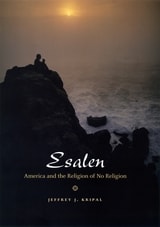
Esalen
America and the Religion of No ReligionJeffrey J. Kripal
University of Chicago Press, 2007
“An impressive new book. . . . [Kripal] has written the definitive intellectual history of the ideas behind the institute.”—San Francisco Chronicle
“Kripal examines Esalen’s extraordinary history and evocatively describes the breech birth of Murphy and Price’s brainchild. His real achievement, though, is effortlessly synthesizing a dizzying array of dissonant phenomena (Cold War espionage, ecstatic religiosity), incongruous pairings (Darwinism, Tantric sex), and otherwise schizy ephemera (psychedelic drugs, spaceflight) into a cogent, satisfyingly complete narrative.”—Atlantic Monthly
Eschatology
Death and the Eternal Life (Second Edition)Joseph Ratzinger
Catholic University of America Press, 2007
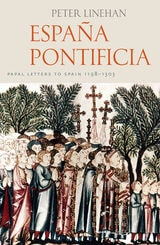
Espana Pontifica
Papal Letters to Spain 1198-1303Peter Linehan
Catholic University of America Press, 2022
Essays in Jewish Thought
Nahum Glatzer
University of Alabama Press, 2009
An exploration of the ideas that have shaped Jewish faith, culture, and identity.
In Essays in Jewish Thought, renowned scholar Nahum N. Glatzer offers a thoughtful and illuminating exploration of the intellectual, spiritual, and cultural traditions that have shaped Judaism across centuries. Drawing upon his deep knowledge of Jewish history, philosophy, theology, and literature, Glatzer examines the ideas, texts, and personalities that have influenced Jewish religious life and identity from antiquity to the modern era.
Through a collection of insightful essays, readers encounter enduring questions concerning faith, ethics, revelation, community, and the relationship between tradition and modernity. Glatzer's scholarship highlights the richness and diversity of Jewish thought while demonstrating how Jewish thinkers have engaged with changing historical circumstances and universal human concerns. His clear and accessible writing makes complex philosophical and theological concepts approachable without sacrificing intellectual depth.
Essays in Jewish Thought provides a valuable introduction to key themes in Jewish intellectual history and offers fresh perspectives for both newcomers and seasoned students of Judaism. The volume serves as a meaningful resource for understanding the foundations of Jewish belief, practice, and cultural continuity. Ideal for courses in Jewish studies, religious studies, theology, and philosophy, this collection remains an important contribution to the study of one of the world's most enduring religious and intellectual traditions.
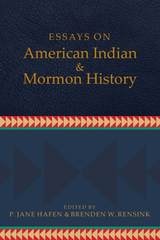
Essays on American Indian and Mormon History
Edited by P. Jane Hafen and Brenden W. Rensink
University of Utah Press, 2019
This collection of essays, many the result of a seminar hosted by the Charles Redd Center for Western Studies at Brigham Young University, explores the historical and cultural complexities of this narrative from a decolonizing perspective. Essays cover the historical construction of the “Lamanite,” settler colonialism and the Book of Mormon, and connections between the Seneca leader Handsome Lake and Joseph Smith. Authors also address American Indian Mormon tribal identities, Navajo and Mormon participation at the dedication of Glen Canyon Dam, the impact of Mormon Polynesian missionaries in Diné Bikéyah, the ISPP, and other topics. Prominent American Indian Mormon voices lend their creative work and personal experiences to the book.
With the aim of avoiding familiar narrative patterns of settler colonialism, contributors seek to make American Indians the subjects rather than the objects of discussion in relation to Mormons, presenting new ways to explore and reframe these relationships.
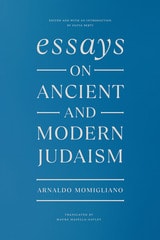
Essays on Ancient and Modern Judaism
Arnaldo Momigliano
University of Chicago Press, 1994
Momigliano acknowledged that his Judaism was the most fundamental inspiration for his scholarship, and the writings in this collection demonstrate how the ethical experience of the Hebraic tradition informed his other works. Part 1 is devoted entirely to writings on ancient and medieval Judaism. In these essays, Momigliano ranges over such subjects as the stages of rapport between Hellenism and Judaism, the figure of Flavius Josephus, and the salient moments of Maccabean history. Part 2 comprises Momigliano's writings on modern subjects. Here are profiles of Jewish scholars of the classical world (Bernays, Bickerman, and Finley) together with those of eminent representatives of contemporary Jewish thought (Strauss, Scholem, and Benjamin). These essays gain special significance alongside Momigliano's reflections on Italian Jewry and the Weberian interpretation of Judaism.
Silvia Berti's Introduction discusses Momigliano's religious and intellectual formation, the key events of his life, and the influence of Judaism on his mature scholarship. In his Preface, Momigliano offers a personal meditation on his own Judaism and that of his family.
By the time of his death, Momigliano had acquired an international following. This volume will at last give his admirers in the English-speaking world easy access to an important body of his work.