Results by title
2285 books match the query 'Women' and 79 start with e
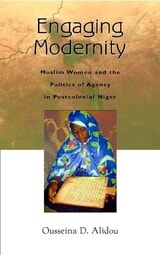
Engaging Modernity
Muslim Women and the Politics of Agency in Postcolonial NigerOusseina Alidou
University of Wisconsin Press, 2005
Engaging Modernity is Ousseina Alidou’s rich and compelling portrait of Muslim women in Niger as they confront the challenges and opportunities of the twentieth century. Contrary to Western stereotypes of passive subordination, these women are taking control of their own lives and resisting domination from indigenous traditions, westernization, and Islam alike.
Based on thorough scholarly research and extensive fieldwork—including a wealth of interviews—Alidou’s work offers insights into the meaning of modernity for Muslim women in Niger. Mixing biography with sociological data, social theory and linguistic analysis, this is a multilayered vision of political Islam, education, popular culture, and war and its aftermath. A gripping look at one of the Muslim world’s most powerful untold stories.
Runner-up for the Aidoo-Snyder Book Prize, Women’s Caucus of the African Studies Association
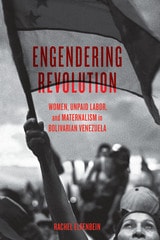
Engendering Revolution
Women, Unpaid Labor, and Maternalism in Bolivarian VenezuelaBy Rachel Elfenbein
University of Texas Press, 2019
In 1999, Venezuela became the first country in the world to constitutionally recognize the socioeconomic value of housework and enshrine homemakers’ social security. This landmark provision was part of a larger project to transform the state and expand social inclusion during Hugo Chávez’s presidency. The Bolivarian revolution opened new opportunities for poor and working-class—or popular—women’s organizing. The state recognized their unpaid labor and maternal gender role as central to the revolution. Yet even as state recognition enabled some popular women to receive public assistance, it also made their unpaid labor and organizing vulnerable to state appropriation.
Offering the first comprehensive analysis of this phenomenon, Engendering Revolution demonstrates that the Bolivarian revolution cannot be understood without comprehending the gendered nature of its state-society relations. Showcasing field research that comprises archival analysis, observation, and extensive interviews, these thought-provoking findings underscore the ways in which popular women sustained a movement purported to exalt them, even while many could not access social security and remained socially, economically, and politically vulnerable.
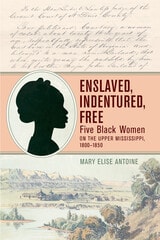
Enslaved, Indentured, Free
Five Black Women on the Upper Mississippi, 1800–1850Mary Elise Antoine
Wisconsin Historical Society Press, 2022
Focusing on these five women, Mary Elise Antoine explores the history of slavery in the Upper Mississippi River Valley, relying on legal documents, military records, court transcripts, and personal correspondence. Whether through perseverance, self-purchase, or freedom suits—including one suit that was used as precedent in Dred and Harriet Scott’s freedom suits years later—each of these women ultimately secured her freedom, thanks in part to the bonds they forged with one another.
Entering the Fray
Gender, Politics, and Culture in the New SouthEdited by Jonathan Daniel Wells & Sheila R. Phipps
University of Missouri Press, 2009
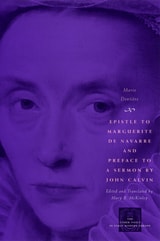
Epistle to Marguerite de Navarre and Preface to a Sermon by John Calvin
Marie Dentière
University of Chicago Press, 2004
Dentière's Very Useful Epistle (1539) is the first explicit statement of reformed theology by a woman to appear in French. Addressed to Queen Marguerite of Navarre, sister of the French king Francis I, the Epistle asks the queen to help those persecuted for their religious beliefs. Dentière offers a stirring defense of women and asserts their right to teach the word of God in public. She defends John Calvin against his enemies and attacks the hierarchy of the Roman Catholic Church. Her Preface (1561) to one of Calvin's sermons criticizes immodesty and extravagance in clothing and warns the faithful to be vigilant. Undaunted in the face of suppression and ridicule, this outspoken woman persisted as an active voice in the Reformation.
Erotic Cartographies
Decolonization and the Queer Caribbean ImaginationKrystal Nandini Ghisyawan
Rutgers University Press, 2022
Escape Through the Pyrenees
Lisa Fittko
Northwestern University Press, 2000
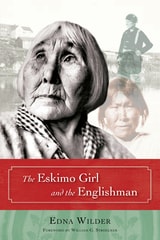
Eskimo Girl and the Englishman
Edna Wilder
University of Alaska Press, 2009
The Eskimo Girl and the Englishman is a sequel to the delightful story Once Upon an Eskimo Time, which recounts the remarkable life of Minnie and her Eskimo mother as she comes of age in a traditional village on Alaska’s western coast. Resuming the tale on the day Minnie encounters her first white man, The Eskimo Girl and the Englishman relates the next century of Minnie’s adventurous life—painting a picture of early twentieth-century village life as Minnie and her Englishman marry and find the determination, strength, and courage to live life in the face of tragedy, rapidly changing technology, and unrelenting hardship along the Bering Sea. Accompanied by photographs of early Eskimo village life, the narrative poignantly captures a sense of a long-lost way of life on the Seward Peninsula.
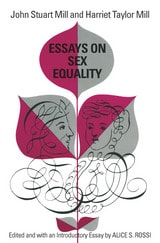
Essays on Sex Equality
John Stuart Mill and Harriet Taylor Mill
University of Chicago Press, 1970
Also contained in this volume is a major interpretative essay by Alice S. Rossi on Mill and Harriet Taylor which describes and analyzes their long personal and intellectual relationship.
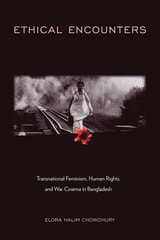
Ethical Encounters
Transnational Feminism, Human Rights, and War Cinema in BangladeshElora Halim Chowdhury
Temple University Press, 2022
Ethical Encounters is an exploration of the intersection of feminism, human rights, and memory to illuminate how visual practices of recollecting violent legacies in Bangladeshi cinema can conjure a global cinematic imagination for the advancement of humanity.
By examining contemporary, women-centered Muktijuddho cinema—features and documentaries that focus on the Bangladesh Liberation War of 1971—Elora Chowdhury shows how these films imagine, disrupt, and reinscribe a gendered nationalist landscape of trauma, freedom, and agency. Chowdhury analyzes Bangladeshi feminist films including Meherjaan, and Itihaash Konna (Daughters of History), as well as socially-engaged films by activist-filmmakers including Jonmo Shathi (Born Together), and Shadhinota (A Certain Liberation), to show how war films of Bangladesh can generate possibilities for gender justice.
Chowdhury argues that justice-driven films are critical to understanding and negotiating the layered meanings and consequences of catastrophic human suffering yet at the same time they hint at subjectivities and identities that are not reducible to the politics of suffering. Rather, they are key to creating an alternative and disruptive archive of feminist knowledge—a sensitive witnessing, responsible spectatorship, and just responsibility across time, and space.
Drawing on Black and transnational feminist critiques, Chowdhury explores questions around women’s place, social roles, and modes of participation in war as well as the visual language through which they become legible as victims/subjects of violence and agents of the nation. Ethical Encounters illuminates the possibilities of film as a site to articulate an ethics that acknowledges a founding violence of the birth of a nation, recuperates it even if in fragments, and imagines differently the irreconcilable relationship between humanity, liberty, and justice.
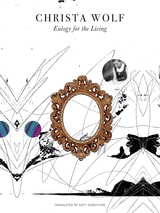
Eulogy for the Living
Taking FlightChrista Wolf
Seagull Books, 2018
Christa Wolf tried for years to find a way to write about her childhood in Nazi Germany. In her 1976 book Patterns of Childhood, she explained why it was so difficult: “Gradually, over a period of months, the dilemma has emerged: to remain speechless or to live in the third person, these seem to be the options. One is impossible, the other sinister.” During 1971 and 1972 she made thirty-three attempts to start the novel, abandoning each manuscript only pages in. Eulogy for the Living, written over the course of four weeks, is the longest of those fragments. In its pages, Wolf recalls with crystalline precision the everyday details of her life as a middle-class grocer’s daughter, and the struggles within the family—struggles common to most families, but exacerbated by the rise of Nazism. And as Nazism fell, the Wolfs fled west, trying to stay ahead of the rampaging Red Army.
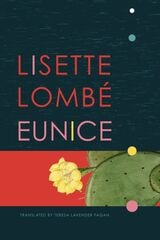
Eunice
Lisette Lombé
Seagull Books, 2026
Nineteen-year-old Eunice’s life is suddenly interrupted when she learns that her mother, Jane, is dead, found drowned in a river after leaving a nightclub. The police rule it an accident, but Eunice isn’t so sure. A red notebook, discovered in a hair salon, suggests there’s more to her mother’s story—cryptic initials, clues, fragments of a life Eunice never fully knew. As she begins to unravel the mystery, she’s forced to confront long-buried family secrets and the painful gaps in her own understanding of who her mother was.
Eunice is a novel about the fierce bond of sisterhood, complex legacies passed down through generations, and the transformative power of forgiveness. It poignantly touches on the power of awakening to tenderness and the hard-won grace of letting go, written in rhythmic, lyrical prose that bears the mark of author Lisette Lombé’s background in slam poetry.
Eve's Longing
The Infinite Possibilities in All ThingsDeborah McKay
University of Alabama Press, 1992
Evening the Score
Women in Music and the Legacy of Frédérique PetridesJan Bell Groh
University of Arkansas Press, 1994
Despite the suffragist activities of the 1920s and the heightened pressures brought to bear on traditionally “male-only” institutions in American society during the past three decades, many vocations remain sanctuaries of male dominance. One such area is the classical music world; though, as Jan Bell Groh asserts in Evening the Score, inroads into this field have bene made, sometimes at great cost.
At the center of this work is a unique set of newsletters edited and published by Frédérique Petrides, one of America’s first and most influential female conductors. In Petride’s time, most women musicians were forced to ply their trade in all-female orchestras; through the thirty-seven issues of Women in Music published from 1935 to 1940, the achievements of these musicians were championed, and the prejudices, misconceptions, and deliberately discriminatory policies of many of their male counterparts were exposed and condemned.
Evening the Score is an ambitious endeavor that seeks not only to preserve these early documents and explain them within the context of the 1930s music industry but also to garner for Petrides the long-overdue praise to which she is entitled. It is at once a celebration and a source of inspiration.
Every Day We Live Is the Future
Surviving in a City of DisastersBy Douglas Haynes
University of Texas Press, 2017
When she was only nine, Dayani Baldelomar left her Nicaraguan village with nothing more than a change of clothes. She was among tens of thousands of rural migrants to Managua in the 1980s and 1990s. After years of homelessness, Dayani landed in a shantytown called The Widows, squeezed between a drainage ditch and putrid Lake Managua. Her neighbor, Yadira Castellón, also migrated from the mountains. Driven by hope for a better future for their children, Dayani, Yadira, and their husbands invent jobs in Managua’s spreading markets and dumps, joining the planet’s burgeoning informal economy. But a swelling tide of family crises and environmental calamities threaten to break their toehold in the city.
Dayani’s and Yadira’s struggles reveal one of the world’s biggest challenges: by 2050, almost one-third of all people will likely live in slums without basic services, vulnerable to disasters caused by the convergence of climate change and breakneck urbanization. To tell their stories, Douglas Haynes followed Dayani’s and Yadira’s families for five years, learning firsthand how their lives in the city are a tightrope walk between new opportunities and chronic insecurity. Every Day We Live Is the Future is a gripping, unforgettable account of two women’s herculean efforts to persevere and educate their children. It sounds a powerful call for understanding the growing risks to new urbanites, how to help them prosper, and why their lives matter for us all.
Everyday Violence
The Public Harassment of Women and LGBTQ PeopleSimone Kolysh
Rutgers University Press, 2021

Everyone Remain Calm
StoriesMegan Stielstra
Northwestern University Press, 2021
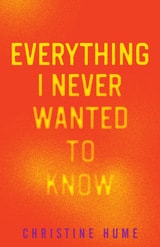
Everything I Never Wanted to Know
Christine Hume
The Ohio State University Press, 2023
In Everything I Never Wanted to Know, Christine Hume confronts the stigma and vulnerability of women’s bodies in the US. She explores bodily autonomy and sexual assault alongside the National Sex Offender Registry in order to invoke not solutions but a willingness to complicate our ideas of justice and defend every human’s right to be treated like a member of the community. Feminist autobiography threads into historical narrative and cultural criticism about the Victorian-era Frozen Charlotte doll; the Nylon Riots of the 1940s; the movie Halloween; Larry Nassar, who practiced in Hume’s home state of Michigan; and other material. In these reflections on sexuality, gender, criminality, and violence, Hume asks readers to reconsider what we have collectively normalized and how we are each complicit, writing through the darkness of what we don’t want to see, what we’d rather not believe, and what some of us have long tried to forget.
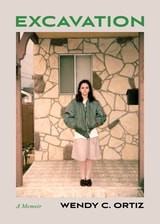
Excavation
A MemoirWendy C. Ortiz
Northwestern University Press, 2025
A darkly vibrant and daring memoir, Wendy C. Ortiz’s Excavation challenged the standard telling of abuse narratives when first published in 2014; over a decade later, it remains deeply prescient. Set in Los Angeles’s San Fernando Valley in the late 1980s, the narrative follows the spiraling entanglement between Wendy and her eighth-grade English teacher as she becomes both victim to and participant in a simultaneously predatorial and impassioned relationship. Baited by initial praise and a false sense of control, Wendy tumbles into a dangerous dynamic that spans the duration of her teens. Artfully constructed from her own journals and decades of personal excavation, the story of this secret relationship has imprinted on Wendy and readers alike. A stunningly honest look at memory, agency, and power, Excavation will claim your whole heart.
Excellent Things in Women
A Memoir of Postcolonial PakistanSara Suleri Goodyear
University of Chicago Press, 1989
Sometimes, only the most heartbreaking memories possess the capacity—in their elegiac immediacy—to take our breath away. With Excellent Things in Women, Sara Suleri offers the reader a delicately wrought memoir of life in postcolonial Pakistan. Suleri intertwines the violent history of Pakistan's independence with her own intimate experiences—relating the tumult of growing up female during a time of fierce change in the Middle East in the 1960s and ’70s. In the two selections presented here, “Excellent Things in Women” and “Meatless Days,” we watch as Suleri re-encounters the relationships that inform her voyage from adolescence to womanhood—with her Welsh mother; her Pakistani father, prominent political journalist Z. A. Suleri; and her tenacious grandmother, Dadi, along with her five siblings—as she comes to terms with the difficulties of growing up and her own complicated passage to the West.
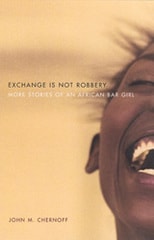
Exchange Is Not Robbery
More Stories of an African Bar GirlJohn M. Chernoff
University of Chicago Press, 2004
In Exchange Is Not Robbery and its predecessor, Hustling Is Not Stealing, a chronicle of exploitation is transformed by verbal art into an ebullient comedy. In Hustling Is Not Stealing, Hawa is a playful warrior struggling against circumstances in Ghana and Togo. In Exchange Is Not Robbery, Hawa returns to her native Burkina Faso, where she achieves greater control over her life but faces new difficulties. As a woman making sacrifices to live independently, Hawa sees her own situation become more complex as she confronts an atmosphere in Burkina Faso that is in some ways more challenging than the one she left behind, and the moral ambiguities of her life begin to intensify.
Combining elements of folklore and memoir, Hawa's stories portray the diverse social landscape of West Africa. Individually the anecdotes can be funny, shocking, or poignant; assembled together they offer a sweeping critical and satirical vision.
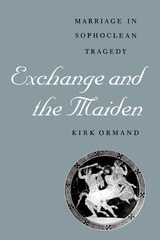
Exchange and the Maiden
Marriage in Sophoclean TragedyBy Kirk Ormand
University of Texas Press, 1999
Marriage is a central concern in five of the seven extant plays of the Greek tragedian Sophocles. In this pathfinding study, Kirk Ormand delves into the ways in which these plays represent and problematize marriage, thus offering insights into how Athenians thought about the institution of marriage.
Ormand takes a two-fold approach. He first explores the legal and economic underpinnings of Athenian marriage, an institution designed to guarantee the legitimate continuation of patrilineal households. He then shows how Sophocles' plays Trachiniae, Electra, Antigone, Ajax, and Oedipus Tyrannus both reinforce and critique this ideology by representing marriage as a homosocial exchange between men, in which women are objects who may attempt—but always fail—to become self-acting subjects.
These fresh readings provide the first systematic study of marriage in Sophocles. They draw important connections between drama and marriage as rituals concerned with controlling potentially disruptive female subjectivities.
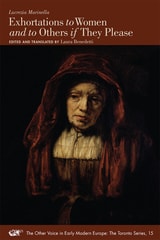
Exhortations to Women and to Others If They Please
Lucrezia Marinella
Iter Press, 2012
—Maria Galli Stampino
Associate Professor of French and Italian
University of Miami
Exotics at Home
Anthropologies, Others, and American ModernityMicaela di Leonardo
University of Chicago Press, 1998
"An impressive work of scholarship that is mordantly witty, passionately argued, and takes no prisoners."—Lesley Gill, News Politics
"[Micaela] di Leonardo eloquently argues for the importance of empirical, interdisciplinary social science in addressing the tragedy that is urban America at the end of the century."—Jonathan Spencer, Times Literary Supplement
"In her quirky new contribution to the American culture brawl, feminist anthropologist Micaela di Leonardo explains how anthropologists, 'technicians of the sacred,' have distorted American popular debate and social life."—Rachel Mattson, Voice Literary Supplement
"At the end of di Leonardo's analyses one is struck by her rare combination of rigor and passion. Simply, [she] is a marvelous iconoclast."—Matthew T. McGuire, Boston Book Review
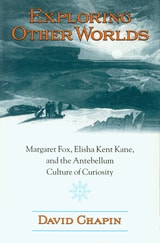
Exploring Other Worlds
Margaret Fox, Elisha Kent Kane, and the Antebellum Culture of CuriosityDavid Chapin
University of Massachusetts Press, 2004
Exploring Other Worlds tells the intertwined stories of the Arctic explorer Elisha Kent Kane and the spiritualist medium Margaret Fox and examines their unlikely relationship. Kane, from a prominent Philadelphia family, became one of the most renowned and honored explorers of the antebellum era. Fox grew up in rural upstate New York and, as one of the Fox Sisters, became a famed and somewhat notorious “spirit raper” whose strange “knocks” were said to be communications from the dead. The two were rumored to have had a love affair, and they may even have been secretly married.
In their separate professional lives, Kane and Fox each revealed something new and strange (though not necessarily true) to their audiences—the unknown worlds of the globe and the spirit. They brought experiences to their listeners that were exotic and delightful. The bourgeoning commercial mass culture of antebellum America provided a natural venue for tales of huge icebergs, fierce polar bears, and messages from the dead. Their public careers bridged the gaps between the scientific investigations of an earlier Enlightenment age and a newer form of sensational inquiry growing up in a democratic marketplace.
Though Kane and Fox began by generating curiosity about geography and the nature of the human soul, in time their personal relationship became the basis for what newspaperman Horace Greeley would call an “impertinent curiosity.” Newspapers printed letters about their supposed romance, and eventually a book purporting to be the famous explorer's love-letters to the notorious spiritualist was published. Curiosity about the Arctic and curiosity about the fate of the soul after death were transformed into curiosity about the private affairs of a new kind of media-driven public celebrity.
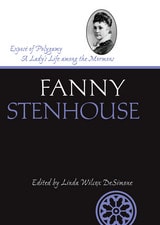
Exposé of Polygamy
A Lady's Life Among the MormonsFanny Stenhouse
Utah State University Press, 2008
After the 1872 publication of Exposé,Fanny Stenhouse became a celebrity in the cultural wars between Mormons and much of America. An English convert, she had grown disillusioned with the Mormon Church and polygamy, which her husband practiced before associating with a circle of dissident Utah intellectuals and merchants. Stenhouse’s critique of plural marriage, Brigham Young, and Mormonism was also a sympathetic look at Utah’s people and honest recounting of her life. She later created a new edition, titled "Tell It All," which ensured her notoriety in Utah and popularity elsewhere but turned her thoughtful memoir into a more polemical, true exposé of Polygamy. Since 1874, it has stayed in print, in multiple, varying editions. The original book, meanwhile, is less known, though more readable. Tracing the literary history of Stenhouse’s important piece of Americana, Linda DeSimone rescues an important autobiographical and historical record from the baggage notoriety brought to it.
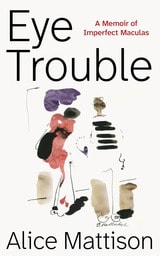
Eye Trouble
A Memoir of Imperfect MaculasAlice Mattison
Northwestern University Press, 2027
A candid and enlightening account of life with flawed vision
Alice Mattison observes the world differently: Her sight has been altered by a progressive eye disease. Mattison had hints early in life of something amiss when reading became difficult, and she was diagnosed in her forties with a rare form of macular degeneration—a disease that gradually destroyed her central vision in one eye. Years later, another form of the same disease threatened her other eye, further altering her sight. Her eye ailments affect relationships with friends, students, doctors, her partner—and especially with herself. Mattison asks questions that apply to all of us, whether or not we live with imperfect vision: What can we learn from a medical problem? How do we determine how bad it is? Who gets to decide that—our family and friends, our doctors, or we ourselves? And, perhaps most challenging of all, what good can come of disease?

Eye to Eye
Sports Journalist Christine BrennanJulie K. Rubini
Ohio University Press, 2019
Christine Brennan, the USA Today sports columnist, author, and commentator, uses her voice to advocate for diversity and equality in the world of sports, and her wisdom to encourage future journalists. Her passion for sports was sparked by her dad, who encouraged her to participate in athletics and, as he said, “smell the game”—go watch baseball and football games together.
As a child, Christine wrote daily entries in her diary and listened to play-by-play coverage on her radio. She pursued this love of words through journalism school and applied her passion for sports by reporting on them for various newspapers. Since then, she has portrayed the setbacks and triumphs of athletes, all the while fighting her own battles for success—and respect—as a female journalist.
From knocking down barriers in NFL locker rooms to covering every Olympics since 1984 to being the go-to commentator whenever scandal occurs in the sports world, Christine Brennan has done it all. Eye to Eye invites young readers to learn more about this remarkable journalist and perhaps to nurture their own dreams of investigating and telling important stories.

e-mail trouble
love and addiction @ the matrixBy S. Paige Baty
University of Texas Press, 1999
"This is about a society of isolates who all communicate with one another from terminal sites. This is about being disembodied, distanced, distinct, and that sort of boundary-thing. It is not about being present. It is not about being there. It is not about a shared history, or a shared meal, or a shared story, or any kind of mutuality. It is about contact between virtual strangers. . . . It happens when you feel that you are so alone that you need anybody to talk to—anybody at all—because you believe that your connections have failed you. This kind of connection leaves you cold and dead inside, because it lacks history and a language of belonging."
In this daring, postmodern autobiography, S. Paige Baty recounts her search for love and community on the Internet. Taking Jack Kerouac's On the Road as a point of departure, Baty describes both an actual road trip to meet the object of an e-mail romance and the cyber-search for connection that draws so many people into the matrix of the Internet. Writing in a bold, experimental style that freely mixes e-mails, poems, fragments of quotations, and puns into expository text, she convincingly links e-mail trouble with "female trouble" in the displacement of embodied love and accountable human relationships to opaque screens and alienated identities. Her book stands as a vivid feminist critique of our culture's love affair with technology and its dehumanizing effect on personal relationships.