Results by title
8642 books match the query '20th Century' and 236 start with e
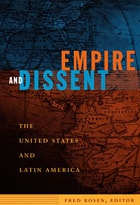
Empire and Dissent
The United States and Latin AmericaFred Rosen, ed.
Duke University Press, 2008
Several essays provide historical perspective on contemporary U.S.–hemispheric relations. These include an analysis of the nature and dynamics of imperial domination, an assessment of financial relations between the United States and Latin America since the end of World War II, an account of Native American resistance to colonialism, and a consideration of the British government’s decision to abolish slavery in its colonies. Other essays focus on present-day conflicts in the Americas, highlighting various modes of domination and dissent, resistance and accommodation. Examining southern Mexico’s Zapatista movement, one contributor discusses dissent in the era of globalization. Other contributors investigate the surprisingly conventional economic policies of Brazil’s president, Luiz Inácio Lula da Silva; Argentina’s recovery from its massive 2001 debt default; the role of coca markets in the election of Bolivia’s first indigenous president, Evo Morales; and the possibilities for extensive social change in Venezuela. A readers’ guide offers a timeline of key events from 1823 through 2007, along with a list of important individuals, institutions, and places.
Contributors: Daniel A. Cieza, Gregory Evans Dowd, Steve Ellner, Neil Harvey, Alan Knight, Carlos Marichal, John Richard Oldfield, Silvia Rivera, Fred Rosen, Jeffrey W. Rubin
Empire of Defense
Race and the Cultural Politics of Permanent WarJoseph Darda
University of Chicago Press, 2019
From the formation of the DOD to the long wars of the twenty-first century, the United States rebranded war as the defense of Western liberalism from first communism, then crime, authoritarianism, and terrorism. Officials learned to frame state violence against Asians, Black and brown people, Arabs, and Muslims as the safeguarding of human rights from illiberal beliefs and behaviors. Through government documents, news media, and the writing and art of Joseph Heller, June Jordan, Trinh T. Minh-ha, I. F. Stone, and others, Darda shows how defense remade and sustained a weakened color line with new racial categories (the communist, the criminal, the authoritarian, the terrorist) that cast the state’s ideological enemies outside the human of human rights. Amid the rise of anticolonial and antiracist movements the world over, defense secured the future of war and white dominance.
Empire of Objects
Iurii Trifonov and the Material World of Soviet CultureBenjamin M. Sutcliffe
University of Wisconsin Press, 2023
Scholars have both neglected Trifonov in recent years and focused their limited attention on the author’s most famous works, produced in the 1960s through 1980s. Yet almost half of his output was written before then. In Empire of Objects, Benjamin Sutcliffe takes care to consider the author’s entire oeuvre. Trifonov’s work reflects the paradoxes of a culture that could neither honestly confront the past nor create a viable future, one that alternated between trying to address and attempting to obscure the trauma of Stalinism. He became increasingly incensed by what he perceived as the erosion of sincerity in public and private life, by the impact of technology, and by the state’s tacit support of greed and materialism. Trifonov’s work, though fictional, offers a compelling window into Soviet culture.
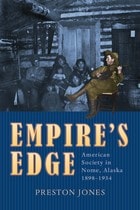
Empire's Edge
American Society in Nome, Alaska, 1898-1934Preston Jones
University of Alaska Press, 2006
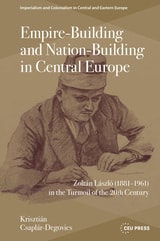
Empire-Building and Nation-Building in Central Europe
Zoltán László (1881–1961) in the Turmoil of the 20th CenturyKrisztián Csaplár-Degovics
Central European University Press, 2026
Before 1914, László established himself as a journalist, writer, academic, and willing agent of Austro-Hungarian imperial policy. In the interwar period and during the Second World War, his expertise as a propagandist found expression in racist circles.
By examining László’s life as a case study, the book offers a microhistorical perspective on how members of the educated middle classes became implicated in, and often willing participants of, imperial, racist, and totalitarian projects. It demonstrates how the lived experience of one individual illuminates the complex entanglement of ideology, identity, and power in East-Central Europe’s modern history.
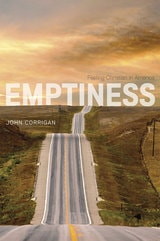
Emptiness
Feeling Christian in AmericaJohn Corrigan
University of Chicago Press, 2015
Corrigan examines different kinds of emptiness essential to American Christianity, such as the emptiness of deep longing, the emptying of the body through fasting or weeping, the emptiness of the wilderness, and the emptiness of historical time itself. He argues, furthermore, that emptiness is closely connected to the ways Christian groups differentiate themselves: many groups foster a sense of belonging not through affirmation, but rather avowal of what they and their doctrines are not. Through emptiness, American Christians are able to assert their identities as members of a religious community.
Drawing much-needed attention to a crucial aspect of American Christianity, Emptiness expands our understanding of historical and contemporary Christian practices.
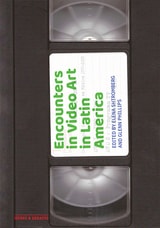
Encounters in Video Art in Latin America
Elena Shtromberg
J. Paul Getty Trust, The, 2023
The emergence of video art in Latin America is marked by multiple points of development, across more than a dozen artistic centers, over a period of more than twenty-five years. When it was first introduced during the 1960s, video was seen as empowering: the portability of early equipment and the possibility of instant playback allowed artists to challenge and at times subvert the mainstream media. Video art in Latin America was—and still is—closely related to the desire for social change. Themes related to gender, ethnic, and racial identity as well as the consequences of social inequality and ecological disasters have been fundamental to many artists’ practices.
This compendium explores the history and current state of artistic experimentation with video throughout Latin America. Departing from the relatively small body of existing scholarship in English, much of which focuses on individual countries, this volume approaches the topic thematically, positioning video artworks from different periods and regions throughout Latin America in dialogue with each other. Organized in four broad sections—Encounters, Networks and Archives, Memory and Crisis, and Indigenous Perspectives—the book’s essays and interviews encourage readers to examine the medium of video across varied chronologies and geographies.

Encounters with Kenneth Burke
William H. Rueckert
University of Illinois Press, 1994
1963 study, Kenneth Burke and the Drama of Human Relations, is often
credited with bringing the field of Burke studies into existence. Here, Rueckert
has gathered his "encounters" with Burke over the past thirty years--brieft
talks, position papers, rethinking and reformation of earlier ideas, and detailed
analyses of individual texts--into one volume that offers readers the best of
Burkean criticism.
Endquote
Sots-Art Literature and Soviet Grand StyleMarina Balina, Nancy Condee, and Evgeny Dobrenko
Northwestern University Press, 1999
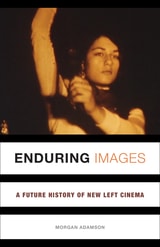
Enduring Images
A Future History of New Left CinemaMorgan Adamson
University of Minnesota Press, 2018
An integrated look at the political films of the 1960s and ’70s and how the New Left transformed cinema
A timely reassessment of political film culture in the 1960s and ’70s, Enduring Images examines international cinematic movements of the New Left in light of sweeping cultural and economic changes of that era. Looking at new forms of cinematic resistance—including detailed readings of particular films, collectives, and movements—Morgan Adamson makes a case for cinema’s centrality to the global New Left.
Enduring Images details how student, labor, anti-imperialist, Black Power, and second-wave feminist movements broke with auteur cinema and sought to forge local and international solidarities by producing political essay films, generating new ways of being and thinking in common. Adamson produces a comparative and theoretical account of New Left cinema that engages with discussions of work, debt, information, and resistance. Enduring Images argues that the cinemas of the New Left are sites to examine, through the lens of struggle, the reshaping of global capitalism during the pivotal moment in which they were made, while at the same time exploring how these movements endure in contemporary culture and politics.
Including in-depth discussions of Third Cinema in Argentina, feminist cinema in Italy, Newsreel movements in the United States, and cybernetics in early video, Enduring Images is an essential examination of the political films of the 1960s and ’70s.
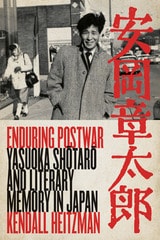
Enduring Postwar
Yasuoka Shotaro and Literary Memory in JapanKendall Heitzman
Vanderbilt University Press, 2019
For a long period, Yasuoka was at the center of the Japanese literary establishment, serving on prize committees and winning the major literary prizes of the era: the Akutagawa, the Noma, the Yomiuri, and the Kawabata. But what makes Yasuoka fascinating as a writer is the way that he consciously, deliberately resisted accepted narratives of modern Japanese history through his approach to personal and collective memory.
In Enduring Postwar, the first literary and biographical study of Yasuoka in English, Kendall Heitzman explores the element of memory in Yasuoka's work in the context of his life and evolving understanding of postwar Japan.
Enemies of Promise
Cyril Connolly
University of Chicago Press, 2008
“Whom the gods wish to destroy,” writes Cyril Connolly, “they first call promising.” First published in 1938 and long out of print, Enemies of Promise, an “inquiry into the problem of how to write a book that lasts ten years,” tests the boundaries of criticism, journalism, and autobiography with the blistering prose that became Connolly’s trademark. Connolly here confronts the evils of domesticity, politics, drink, and advertising as well as novelists such as Joyce, Proust, Hemingway, and Faulkner in essays that remain fresh and penetrating to this day.
“A fine critic, compulsive traveler, and candid autobiographer. . . . [Connolly] lays down the law for all writers who wanted to count. . . . He had imagination and decisive images flashed with the speed of wit in his mind.”—V. S. Pritchett, New York Review of Books
“Anyone who writes, or wants to write, will find something on just about every single page that either endorses a long-held prejudice or outrages, and that makes it a pretty compelling read. . . . You end up muttering back at just about every ornately constructed pensée that Connolly utters, but that’s one of the joys of this book.”—Nick Hornby, The Believer
“A remarkable book.”—Anthony Powell
Enemies of the People
The Destruction of Soviet Literary, Theater, and FKatherine Bliss Eaton
Northwestern University Press, 2002
Engaging Ambience
Visual and Multisensory Methodologies and Rhetorical TheoryBrian McNely
Utah State University Press, 2024
By articulating theoretically sound methodologies and methods for the empirical study of rhetoric conceived as originary, immanent, and enveloping, Brian McNely contributes a methodological perspective that furthers new materialist theories of rhetoric. McNely demonstrates how scholars’ emergent theories of rhetoric call for new methodologies that can extend their reach, and in the process, he proposes a new conception of visual rhetoric. Engaging Ambience delineates methodologies and methods that help researchers in rhetoric and writing studies discover the ambient environments that condition and support everyday communication in all its forms.
Engaging Ambiencedetails and demonstrates visual and multisensory methodologies and methods for exploring the wondrous complexity of everyday communication. It will appeal to scholars and students of rhetorical theory, visual and multisensory rhetorics, and composition and writing studies.
Engineered to Sell
European Émigrés and the Making of Consumer CapitalismJan L. Logemann
University of Chicago Press, 2019
Engineering European Unity
The Quest for the Right Solution Across CenturiesÉva Bóka
Central European University Press, 2023
Which European and non-European ideas and practices facilitated the shaping of European unity? Or rather, which pursuits led to deadlocks in the cooperation between states?
The book seeks answers to these questions by surveying the historical attempts at realizing supranational patterns of governance in Europe since the Middle Ages. The main focus is on the nineteenth and twentieth century organizational models of European unification.
The analysis draws on an abundance of historical and legal source material. While the author encourages critical thinking about European integration, the exploration is admittedly based on specific values. Éva Bóka claims that the struggle for the humanization of power with its democratic creative force has been the major driver in the development of the system of liberties and the idea of European unity. The analysis of the historical process up to the Lisbon Treaty (2007) with the recognition of common, shared, and supported competences meets the author’s set of values to a great extent. The last part of the book examines whether the European Union can serve as a political and economic organizational model for other parts of the world.
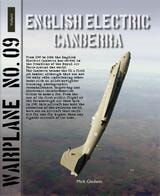
English Electric Canberra
Mick Gladwin
Amsterdam University Press, 2023
The story of the Canberra came to a close for the RAF on the 22nd June 2006 when the last remaining Canberra PR.9s retiring from service life after returning from operational duties. The author had the honour to serve with them in their twilight days of their careers.
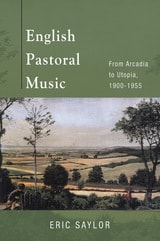
English Pastoral Music
From Arcadia to Utopia, 1900-1955Eric Saylor
University of Illinois Press, 2017
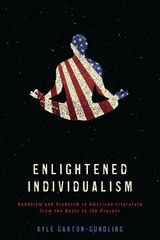
Enlightened Individualism
Buddhism and Hinduism in American Literature from the Beats to the PresentKyle Garton-Gundling
The Ohio State University Press, 2019
This “enlightened individualism” uses Buddhist and Hindu philosophy to reframe American freedom in terms of spiritual liberation, and it also reinterprets Asian teachings through Western traditions of political activism and countercultural provocation. Garton-Gundling argues that even though works by Kerouac, Walker, Kingston, and others wrestle with issues of exoticism and appropriation, their characters are also meaningfully challenged and changed by Asian faiths. These literary adaptations, then, can help Americans reenvision individualism in a more transcendent and cosmopolitan context.
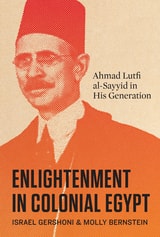
Enlightenment in Colonial Egypt
Ahmad Lutfi al-Sayyid in His GenerationIsrael Gershoni and Molly Bernstein
University of Texas Press, 2026
A study of Ahmad Lutfi al-Sayyid, widely recognized as the creator of Egyptian nationalism, and his impact on Egyptian culture and history.
Ahmad Lutfi al-Sayyid (1872–1963) stands among the most creative, impactful intellectuals of modern Egypt and the Middle East. While best known as the architect of Egyptian nationalism, his nationalist endeavor was in fact part of his broader project to bring enlightenment to Egypt under the yoke of British colonialism. Through his articles, editorials, and mentoring, his newspaper al-Jarida became a key forum for the lively debates of the time, ranging from the role of Islam in society to women's inclusion, all toward shaping a unique colonial modernity for his country.
The most comprehensive study of Lutfi, his writing, and his impact, Enlightenment in Colonial Egypt deconstructs the view that he was a covert apologist for empire out of admiration for the liberal aspects of European enlightenment. Lutfi faced this duality head on: He believed it essential to embrace parts of the West’s enlightenment values and to decolonize and Egyptianize them in order to establish an authentic, indigenous, Egyptian civilization, appropriate for modernity. Israel Gershoni and Molly Bernstein argue that Lutfi successfully engaged with these most difficult challenges, shaping a detailed plan to implement enlightenment in the Egyptian national context.
Enquiries into Religion and Culture (The Works of Christopher Dawson)
Christopher Dawson
Catholic University of America Press, 2009
Entangled Paths Toward Modernity
Contextualizing Socialism and Nationalism in the BalkansAugusta Dimou
Central European University Press, 2009
Enter the Lion
The 1966 State Visit of Emperor Haile Selassie I to the CaribbeanJohn P. Homiak, Giulia Bonacci, and Jahlani A. Niaah
Duke University Press, 2026
Entering the Fray
Gender, Politics, and Culture in the New SouthEdited by Jonathan Daniel Wells & Sheila R. Phipps
University of Missouri Press, 2009
Entitled to the Pedestal
Place, Race, and Progress in White Southern Women’s Writing, 1920–1945Nghana tamu Lewis
University of Iowa Press, 2007
In this searching study, Nghana Lewis offers a close reading of the works and private correspondences, essays, and lectures of five southern white women writers: Julia Peterkin, Gwen Bristow, Caroline Gordon, Willa Cather, and Lillian Smith. At the core of this work is a sophisticated reexamination of the myth of southern white womanhood.
Lewis overturns the conventional argument that white women were passive and pedestal-bound. Instead, she argues that these figures were complicit in the day-to-day dynamics of power and authorship and stood to gain much from these arrangements at the expense of others.
At the same time that her examination of southern mythology explodes received wisdom, it is also a journey of self-discovery. As Lewis writes in her preface, “As a proud daughter of the South, I have always been acutely aware of the region’s rich cultural heritage, folks, and foodstuffs. How could I not be? I was born and reared in Lafayette, Louisiana, where an infant’s first words are not ‘da-da’ and ‘ma-ma’ but ‘crawfish boil’ and ‘fais-do-do.’ . . . I have also always been keenly familiar with its volatile history.” Where these conflicting images—and specifically the role of white southern women as catalysts, vindicators, abettors, and antagonists—meet forms the crux of this study. As such, this study of the South by a daughter of the South offers a distinctive perspective that illuminates the texts in novel and provocative ways.
Entranced Earth
Art, Extractivism, and the End of LandscapeJens Andermann
Northwestern University Press, 2023
A sweeping analysis of the lasting effects of neocolonial extractivism in Latin American aesthetic modernity from 1920 to the present
Looking to the extractive frontier as a focal point of Latin American art, literature, music, and film, Jens Andermann asks what emerges at the other end of landscape. Art in the Global South has long represented and interrogated “insurgent nature”—organic and inorganic matter, human and nonhuman life, thrown into turmoil.
In Entranced Earth: Art, Extractivism, and the End of Landscape, Andermann traces the impact of despaisamiento—world-destroying un-landscaping—throughout the Latin American modernist archive. At the same time, he explores innovative, resilient modes of allyship forged between diverse actors through their shared experiences of destruction. From the literary regionalism of the 1930s to contemporary bio art, from modernist garden architecture to representations of migration and displacement in sound art and film, Entranced Earth tracks the crisis of landscape and environmental exhaustion beyond despair toward speculative, experimental forms of survival.
Environmental Assessment in Countries in Transintion
Norman Lee
Central European University Press, 2000
Envisioning Asia
On Location, Travel, and the Cinematic Geography of U.S. OrientalismJeanette Roan
University of Michigan Press, 2010
"Whereas some other scholars read selected films mainly to illustrate political arguments, Roan never loses sight of the particularities of film as a distinctive cultural form and practice. Her drive to see 'cinema as a mechanism of American orientalism' results in not just a textual analysis of these films, but also a history of their material production and distribution."
---Josephine Lee, University of Minnesota
"Envisioning Asia offers an exciting new contribution to our understandings of the historical developments of American Orientalism. Jeannette Roan deftly situates changing cinematic technologies within the context of U.S. imperial agendas in this richly nuanced analysis of 'shooting on location' in Asia in early 20th century American cinema."
---Wendy Kozol, Oberlin College
"Through her vivid illustration of the role of American cinema in the material, visual, and ideological production of Asia, Jeanette Roan takes the reader on a journey to Asia through a very different route from the virtual travel taken by the viewers of the films she discusses."
---Mari Yoshihara, University of Hawai'i at Manoa
The birth of cinema coincides with the beginnings of U.S. expansion overseas, and the classic Hollywood era coincides with the rise of the United States as a global superpower. In Envisioning Asia, Jeanette Roan argues that throughout this period, the cinema's function as a form of virtual travel, coupled with its purported "authenticity," served to advance America's shifting interests in Asia. Its ability to fulfill this imperial role depended, however, not only on the cinematic representations themselves but on the marketing of the films' production histories---and, in particular, their use of Asian locations. Roan demonstrates this point in relation to a wide range of productions, offering an engaging and useful survey of a largely neglected body of film. Not only that, by focusing on the material practices involved in shooting films on location---that is, the actual travels, negotiations, and labor of making a film---she moves beyond formal analysis to produce a richly detailed history of American interests, attitudes, and cultural practices during the first half of the twentieth century.
Jeanette Roan is Adjunct Professor of Visual Studies at California College of the Arts and author of "Exotic Explorations: Travels to Asia and the Pacific in Early Cinema" in Re/collecting Early Asian America: Essays in Cultural History (2002).
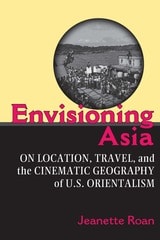
Cover art: Publicity still, Tokyo File 212 (Dorrell McGowan and Stuart McGowan, 1951). The accompanying text reads: "Hundreds of spectators gather on the sidelines as technicians prepare to photograph a parade scene in 'Tokyo File 212,' a Breakston-McGowan Production filmed in Japan for RKO Radio distribution." Courtesy of the Academy of Motion Picture Arts and Sciences.
Envisioning Emancipation
Black Americans and the End of SlaveryDeborah Willis
Temple University Press, 2017
The Emancipation Proclamation is one of the most important documents in American history. As we commemorate its 150th anniversary, what do we really know about those who experienced slavery?
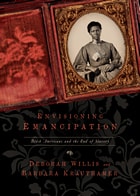
In their pioneering book, Envisioning Emancipation, renowned photographic historian Deborah Willis and historian of slavery Barbara Krauthamer have amassed 150 photographs—some never before published—from the antebellum days of the 1850s through the New Deal era of the 1930s. The authors vividly display the seismic impact of emancipation on African Americans born before and after the Proclamation, providing a perspective on freedom and slavery and a way to understand the photos as documents of engagement, action, struggle, and aspiration.
Envisioning Emancipation illustrates what freedom looked like for black Americans in the Civil War era. From photos of the enslaved on plantations and African American soldiers and camp workers in the Union Army to Juneteenth celebrations, slave reunions, and portraits of black families and workers in the American South, the images in this book challenge perceptions of slavery. They show not only what the subjects emphasized about themselves but also the ways Americans of all colors and genders opposed slavery and marked its end.
Filled with powerful images of lives too often ignored or erased from historical records, Envisioning Emancipation provides a new perspective on American culture.
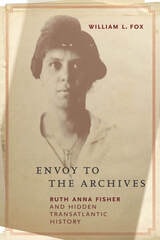
Envoy to the Archives
Ruth Anna Fisher and Hidden Transatlantic HistoryWilliam L. Fox
University of Massachusetts Press, 2026
How a pioneering manuscript librarian and intellectual uncovered buried records that reshaped America’s past
As the London-based agent of the US Library of Congress, Ruth Anna Fisher (1886–1975) profoundly shaped the field of US history. Working at the British Museum and Public Record Office between the world wars, she was responsible for a vast program of identifying and copying up to a million documents related to American history, with prescient attention to the transatlantic slave trade. This monumental achievement has provided countless scholars access to source materials that might have remained hidden in repositories throughout Britian without Fisher’s brilliant discernment and tireless labor.
In Envoy to the Archives, William L. Fox offers the first full-length biography of this remarkable American intellectual. Born to a prominent African American family in northern Ohio, Fisher was keenly aware of racial issues throughout her life. She was associated with key thinkers in the Harlem Renaissance and the twentieth century transatlantic world, including W. E. B. Du Bois, Harold Laski, and J. Franklin Jameson. A trailblazer in historical research, Fisher was among a small group of Black women who first joined the ranks of professional library work, and her efforts in London coincided with the creation and consolidation of the US National Archives in the 1930s. She also mastered technologies that were new at the time, including photostat reproduction and microfilm—precursors to the many historical digitization projects of our own era.
This engrossing biography adds to the growing body of work centered on Black women archivists, librarians, and curators. Fox draws on a wide range of archival sources, including the personal papers of prominent Black thinkers (Fisher’s were destroyed in the bombing of London in 1940), and various institutional records at the Library of Congress and the Carnegie Institution of Washington. Fox also knew Fisher personally, adding warmth and insight into this captivating portrait.
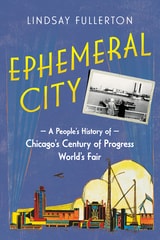
Ephemeral City
A People's History of Chicago's Century of Progress World's FairLindsay Fullerton
University of Illinois Press, 2025
Less celebrated than the 1893 Chicago World’s Fair, the 1933–1934 Century of Progress Exposition brought visitors face-to-face with gleaming American consumerism in the midst of the Great Depression. Lindsay Fullerton draws on a wealth of personal photographs, scrapbooks, oral histories, and writings to illuminate the wildly different experiences of fairgoers against the backdrop of a city steeped in poverty and segregation.
The Exposition took place amidst massive changes sparked by expansion of mass media, Franklin Roosevelt’s election, the repeal of Prohibition, and the Great Migration. A diverse cross-section of Chicagoans informs Fullerton’s history of the event in the context of the fast-changing America of the interwar era. These personal accounts tell stories of how attendees interpreted their own experiences while being surrounded by whiz-bang products and full-throated evangelism on the benefits of progress.
A colorful people’s history, Ephemeral City takes readers inside the other Chicago World’s Fair and how visitors interacted with a pivotal moment in American history.
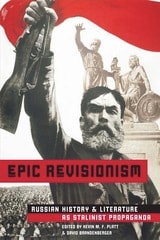
Epic Revisionism
Russian History and Literature as Stalinist PropagandaEdited by Kevin M. F. Platt and David Brandenberger
University of Wisconsin Press, 2006
Focusing on a number of historical and literary personalities who were regarded with disdain in the aftermath of the 1917 revolution—figures such as Peter the Great, Ivan the Terrible, Alexander Pushkin, Leo Tolstoy, and Mikhail Lermontov—Epic Revisionism tells the fascinating story of these individuals’ return to canonical status during the darkest days of the Stalin era.
An inherently interdisciplinary project, Epic Revisionism features pieces on literary and cultural history, film, opera, and theater. This volume pairs scholarly essays with selections drawn from Stalin-era primary sources—newspaper articles, unpublished archival documents, short stories—to provide students and specialists with the richest possible understanding of this understudied phenomenon in modern Russian history.“These scholars shed a great deal of light not only on Stalinist culture but on the politics of cultural production under the Soviet system.”—David L. Hoffmann, Slavic Review
Epic and Exile
Novels of the German Popular Front, 1933-1945Hunter Bivens
Northwestern University Press, 2015
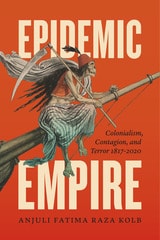
Epidemic Empire
Colonialism, Contagion, and Terror, 1817–2020Anjuli Fatima Raza Kolb
University of Chicago Press, 2021
Terrorism is a cancer, an infection, an epidemic, a plague. For more than a century, this metaphor has figured insurgent violence as contagion in order to contain its political energies. In Epidemic Empire, Anjuli Fatima Raza Kolb shows that this trope began in responses to the Indian Mutiny of 1857 and tracks its tenacious hold through 9/11 and beyond. The result is the first book-length study to approach the global War on Terror from a postcolonial literary perspective.
Raza Kolb assembles a diverse archive from colonial India, imperial Britain, French and independent Algeria, the postcolonial Islamic diaspora, and the neoimperial United States. Anchoring her book are studies of four major writers in the colonial-postcolonial canon: Rudyard Kipling, Bram Stoker, Albert Camus, and Salman Rushdie. Across these sources, she reveals the tendency to imagine anticolonial rebellion, and Muslim insurgency specifically, as a virulent form of social contagion. Exposing the long history of this broken but persistent narrative, Epidemic Empire is a major contribution to the rhetorical history of our present moment.
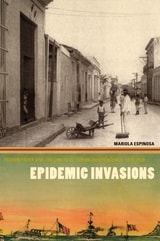
Epidemic Invasions
Yellow Fever and the Limits of Cuban Independence, 1878-1930Mariola Espinosa
University of Chicago Press, 2009
In the early fall of 1897, yellow fever shuttered businesses, paralyzed trade, and caused tens of thousand of people living in the southern United States to abandon their homes and flee for their lives. Originating in Cuba, the deadly plague inspired disease-control measures that not only protected U.S. trade interests but also justified the political and economic domination of the island nation from which the pestilence came. By focusing on yellow fever, Epidemic Invasions uncovers for the first time how the devastating power of this virus profoundly shaped the relationship between the two countries.
Yellow fever in Cuba, Mariola Espinosa demonstrates, motivated the United States to declare war against Spain in 1898, and, after the war was won and the disease eradicated, the United States demanded that Cuba pledge in its new constitution to maintain the sanitation standards established during the occupation. By situating the history of the fight against yellow fever within its political, military, and economic context, Espinosa reveals that the U.S. program of sanitation and disease control in Cuba was not a charitable endeavor. Instead, she shows that it was an exercise in colonial public health that served to eliminate threats to the continued expansion of U.S. influence in the world.
Epistolary Responses
The Letter in Twentieth-Century American Fiction and CriticismAnne Bower
University of Alabama Press, 1996
Epistolary Responses explores the transformative nature of epistolary fiction and criticism in letter form from a largely feminist perspective. While most scholarly work to date has focused on 17th- and 18th-century manifestations of this genre, Bower's study concentrates on epistolary fiction by contemporary American writers published between 1912 and 1988. The novels discussed, all featuring women letter writers, include: Lee Smith's Fair and Tender Ladies, John Barth's LETTERS, Alice Walker's The Color Purple, John Updike's S., Jean Webster's Daddy-Long-Legs, Upton Sinclair's Another Pamela, and Ana Castillo's The Mixquiahuala Letters.
Bower explores the influence letters have on the act of writing and writing as act, their encoded desire for reply, their incompleteness as units of narrative information, their play on ideas of absence and presence, their apparently personal and private nature, and their foregrounding of the writer's agency and authority, all of which make letters a most useful genre both for novelists and for scholars. Several of the book's "fiction" chapters include a letter from the author of the text (sometimes a critic) that complements and supplements Bower's analysis. The final part of the book explores how seven scholars--men and women--have applied letters to their own critical writing, finding that this formal move allows them to question issues of public and private discourse, the authority of signature, and the "feminine" location.
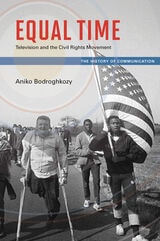
Equal Time
Television and the Civil Rights MovementAniko Bodroghkozy
University of Illinois Press, 2013
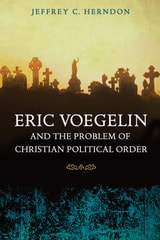
Eric Voegelin and the Problem of Christian Political Order
Jeffrey C. Herndon
University of Missouri Press, 2007
Although some critics of Eric Voegelin’s later work have faulted his failure to deal with the historical Jesus and to address the implications of Christianity for social and political life, the recent publication of Voegelin’s History of Political Ideas has allowed a more complete assessment of his position regarding the Christian political order. This book addresses that criticism through an analysis of Voegelin’s early work.
In Eric Voegelin and the Problem of Christian Political Order, Jeffrey C. Herndon analyzes the development of Voegelin’s thought regarding the origins of Christianity in the person of Jesus, the development of the church in the works of Paul, and the relationship between an immanent institutional order symbolizing the divine presence and the struggle for social and political order. Focusing on the tension between a spiritual phenomenon based on Pauline faith and the institutionalization of that experience in the church, Herndon offers one of the first examinations of the relationship of the History of Political Ideas to Voegelin’s larger body of work.
In his wide-ranging study, Herndon explores Voegelin’s examination of the problem of Christian political order from the inception of Christianity through the Great Reformation. He also presents a clarification of Voegelin’s theory of civilizational foundation and of Voegelin’s philosophy of history with regard to Christianity and Western political order.
Herndon addresses not only the nagging problem in Voegelin scholarship regarding his relationship with the historical Jesus but also the “Pauline compromises with the world” that enabled Christianity to become the instrument by which the West was civilized. He also shows that Voegelin’s interpretation of the historical pressures released by the Great Reformation is important to an understanding of his later work regarding the negative effect of Christian symbols in the creation of ideological disorder.
Eric Voegelin and the Problem of Christian Political Order clarifies issues in Voegelin studies regarding the intersection between political theory and Christian concerns, addressing the relation of religious experience to the public sphere of political life in the West and helping to explain Voegelin’s contention that the death of the spirit is the price of progress. It offers scholars a perspective heretofore lacking in Voegelin scholarship and a clearer view of Voegelin’s understanding of the Christian dispensation and its influence on the course of Western development, history, and philosophy.
Eric Voegelin's Dialogue with the Postmoderns
Searching for FoundationsEdited & Intro by Peter A. Petrakis & Cecil L. Eubanks
University of Missouri Press, 2004
This collection of essays endeavors to generate a dialogue between Eric Voegelin and other prominent twentieth-century thinkers and explore some of the more perplexing issues in contemporary political theory. Each essay rests on the underlying question: is it possible or desirable to construct or discover political foundations without resorting to metaphysical or essentialist constructs? The introduction focuses on the two nineteenth-century thinkers, Nietzsche and Husserl, who have framed the debate about modernity and postmodernity; thereafter, the book examines Voegelin's ideas as compared to those of other twentieth-century thinkers.
Discussed within the volume are Levinas and the precedence of ethics, Ricoeur's theory of narrative representation, Deleuze and the philosophy of immanence, Voegelin's relationship to a speech- dimension theory of human behavior, and Patocka's theory of pre- metaphysical transcendence in Socrates. What will impress scholars most about this collection is the provocative dialogue created between Voegelin and other major thinkers of postmodernism that addresses the issue of establishing foundations without foundationalism.
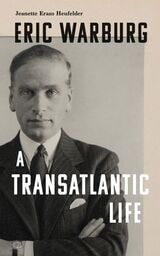
Eric Warburg
A Transatlantic LifeJeanette Erazo Heufelder
Haus Publishing, 2025
In Eric Warburg, Jeanette Erazo Heufelder tells the story of the nephew of the art historian Aby Warburg, whose world-famous library Eric saved from the Nazis. He was a Jew, a banker, a helper of escapees, an intelligence officer in the US Army, a transatlantic bridge builder, and a Cold Warrior. With the help of the cooperation channels he set up, West German and US social groups were aligned with the West amidst the turmoil of postwar Europe.
The history of the transatlantic partnership has become highly topical; since the Russian invasion of Ukraine on February 24, 2022, it has been invoked in Europe as a key reassurance. Eric Warburg’s life, and that of Aby Warburg’s library, tells the story of Europe's twentieth century, the legacy of which continues to inform and inspire the transatlantic partnership today.
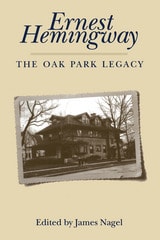
Ernest Hemingway
The Oak Park LegacyJames Nagel
University of Alabama Press, 1996
Ernest Hemingway: The Oak Park Legacy is the first extensive examination of the relationship of Hemingway to his hometown, Oak Park, Illinois, and the influence its people, places, and underlying values had on his early work. In this volume, 11 leading Hemingway scholars explore various aspects of these issues, from the migration of the Hemingway family from Connecticut to Illinois in the 1850s, to Hemingway's high-school stories and the dramatic breakthrough of In Our Time and The Sun Also Rises. With these books, Hemingway suddenly became one of the most influential writers of the 20th century. The essays in this collection explore the social and family background that provided the material and sensibility for these literary masterpieces.
In these essays, James Nagel provides the first account ever published of the move of the Hemingway family from Connecticut to Illinois. Writing his account after the discovery of a lost diary by one of Hemingway's ancestors, Nagel explores dates and places, the motivation for the move to the Midwest, and the tragedies that awaited the family there, including the death of two young men in the Civil War. Michael Reynolds, the premiere biographer of Ernest Hemingway, describes the culture of the village of Oak Park at the turn of the century, and Larry E. Grimes presents an important new assessment of the religious training the Hemingway children received. David Marut discusses the short stories Hemingway published while still a highschool student, and Carlos Azevedo, Mary Anne O'Neal, Abby H. P. Werlock, and George Monteiro examine the early stories about Nick Adams. In an insightful afterword, Morris Buske, the Historian of the Ernest Hemingway Foundation of Oak Park, reflects on the differing values of Ernest Hemingway's parents, the artistic, cultured Hall family as opposed to the scientific, more practical Hemingways, charting the influence the two traditions had on the young Ernest.
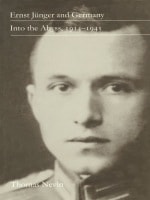
Ernst Jünger and Germany
Into the Abyss, 1914-1945Thomas R. Nevin
Duke University Press, 1996
Ernst Jünger is in many ways Germany’s conscience, and much of the controversy surrounding him is at its source measured by his relation to the Nazis and Nazi culture. But as Nevin suggests, Jünger can more specifically and properly be regarded as the still living conscience of a Germany that existed before Hitler. Although his memoir of service as a highly decorated lieutenant in World War I made him a hero to the Nazis, he refused to join the party. A severe critic of the Weimar Republic, he has often been denounced as a fascist who prepared the way for the Reich, but in 1939 he published a parable attacking despotism. Close to the men who plotted Hitler’s assassination in 1944, he narrowly escaped prosecution and death. Drawing largely on Jünger’s untranslated work, much of which has never been reprinted in Germany, Nevin reveals Jünger’s profound ambiguities and examines both his participation in and resistance to authoritarianism and the cult of technology in the contexts of his Wilhelmine upbringing, the chaos of Weimar, and the sinister culture of Nazism.
Winner of Germany’s highest literary awards, Ernst Jünger is regularly disparaged in the German press. His writings, as this book indicates, put him at an unimpeachable remove from the Nazis, but neo-Nazi rightists in Germany have rushed to embrace him. Neither apology, whitewash, nor vilification, Ernst Jünger and Germany is an assessment of the complex evolution of a man whose work and nature has been viewed as both inspiration and threat.
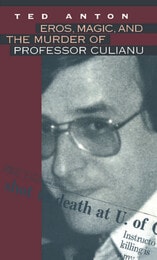
Eros, Magic, and the Murder of Professor Culianu
Ted Anton
Northwestern University Press, 1996
Winner of 1997 Carl Sandburg Award
On May 21, 1991, University of Chicago professor Ioan Culianu was murdered execution-style on campus. The crime stunned the school, terrified students, and mystified the FBI. The case remains unsolved. In Eros, Magic, and the Murder of Professor Culianu, award-winning investigative reporter Ted Anton shows that the murder is what Culianu's friends suspected all along: the first political assassination of a professor on American soil.
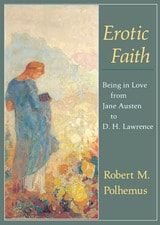
Erotic Faith
Being in Love from Jane Austen to D. H. LawrenceRobert M. Polhemus
University of Chicago Press, 1990
Drawing on a wide range of disciplines, Polhemus shows the reciprocity of love as subject, the novel as form, and faith as motive in important works by Jane Austen, Walter Scott, the Brontës, Dickens, George Eliot, Trollope, Thomas Hardy, Joyce, D. H. Lawrence, Virginia Woolf, and Samuel Beckett. Throughout, Polhemus relates the novelists' representation of love to that of such artists as Botticelli, Vermeer, Claude Lorrain, Redon, and Klimt. Juxtaposing their paintings with nineteenth- and twentieth-century texts both reveals the ways in which novels develop and individualize common erotic and religious themes and illustrates how the novel has influenced our perception of all art.
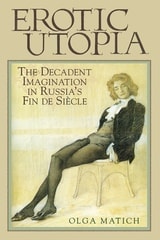
Erotic Utopia
The Decadent Imagination in Russia's Fin de SiecleOlga Matich
University of Wisconsin Press, 2007
The first generation of Russian modernists experienced a profound sense of anxiety resulting from the belief that they were living in an age of decline. What made them unique was their utopian prescription for overcoming the inevitability of decline and death both by metaphysical and physical means. They intertwined their mystical erotic discourse with European degeneration theory and its obsession with the destabilization of gender. In Erotic Utopia, Olga Matich suggests that same-sex desire underlay their most radical utopian proposal of abolishing the traditional procreative family in favor of erotically induced abstinence.
“Offers a fresh perspective and a wealth of new information on early Russian modernism. . . . It is required reading for anyone interested in fin-de-siècle Russia and in the history of sexuality in general.”—Bernice Glatzer Rosenthal, Slavic and East European Journal
“Thoroughly entertaining.”—Avril Pyman, Slavic Review
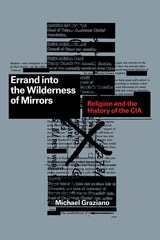
Errand into the Wilderness of Mirrors
Religion and the History of the CIAMichael Graziano
University of Chicago Press, 2021
Michael Graziano’s intriguing book fuses two landmark titles in American history: Perry Miller’s Errand into the Wilderness (1956), about the religious worldview of the early Massachusetts colonists, and David Martin’s Wilderness of Mirrors (1980), about the dangers and delusions inherent to the Central Intelligence Agency. Fittingly, Errand into the Wilderness of Mirrors investigates the dangers and delusions that ensued from the religious worldview of the early molders of the Central Intelligence Agency. Graziano argues that the religious approach to intelligence by key OSS and CIA figures like “Wild” Bill Donovan and Edward Lansdale was an essential, and overlooked, factor in establishing the agency’s concerns, methods, and understandings of the world. In a practical sense, this was because the Roman Catholic Church already had global networks of people and safe places that American agents could use to their advantage. But more tellingly, Graziano shows, American intelligence officers were overly inclined to view powerful religions and religious figures through the frameworks of Catholicism. As Graziano makes clear, these misconceptions often led to tragedy and disaster on an international scale. By braiding the development of the modern intelligence agency with the story of postwar American religion, Errand into the Wilderness of Mirrors delivers a provocative new look at a secret driver of one of the major engines of American power.
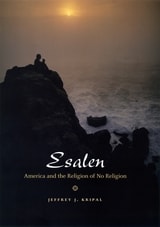
Esalen
America and the Religion of No ReligionJeffrey J. Kripal
University of Chicago Press, 2007
“An impressive new book. . . . [Kripal] has written the definitive intellectual history of the ideas behind the institute.”—San Francisco Chronicle
“Kripal examines Esalen’s extraordinary history and evocatively describes the breech birth of Murphy and Price’s brainchild. His real achievement, though, is effortlessly synthesizing a dizzying array of dissonant phenomena (Cold War espionage, ecstatic religiosity), incongruous pairings (Darwinism, Tantric sex), and otherwise schizy ephemera (psychedelic drugs, spaceflight) into a cogent, satisfyingly complete narrative.”—Atlantic Monthly
Escape from New York
The New Negro Renaissance beyond HarlemDavarian L. Baldwin
University of Minnesota Press, 2013
In the midst of vast cultural and political shifts in the early twentieth century, politicians and cultural observers variously hailed and decried the rise of the “New Negro.” This phenomenon was most clearly manifest in the United States through the outpouring of Black arts and letters and social commentary known as the Harlem Renaissance. What is less known is how far afield of Harlem that renaissance flourished—how much the New Negro movement was actually just one part of a collective explosion of political protest, cultural expression, and intellectual debate all over the world.
In this volume, the Harlem Renaissance “escapes from New York” into its proper global context. These essays recover the broader New Negro experience as social movements, popular cultures, and public behavior spanned the globe from New York to New Orleans, from Paris to the Philippines and beyond. Escape from New York does not so much map the many sites of this early twentieth-century Black internationalism as it draws attention to how New Negroes and their global allies already lived. Resituating the Harlem Renaissance, the book stresses the need for scholarship to catch up with the historical reality of the New Negro experience. This more comprehensive vision serves as a lens through which to better understand capitalist developments, imperial expansions, and the formation of brave new worlds in the early twentieth century.
Contributors: Anastasia Curwood, Vanderbilt U; Frank A. Guridy, U of Texas at Austin; Claudrena Harold, U of Virginia; Jeannette Eileen Jones, U of Nebraska–Lincoln; Andrew W. Kahrl, Marquette U; Shannon King, College of Wooster; Charlie Lester; Thabiti Lewis, Washington State U, Vancouver; Treva Lindsey, U of Missouri–Columbia; David Luis-Brown, Claremont Graduate U; Emily Lutenski, Saint Louis U; Mark Anthony Neal, Duke U; Yuichiro Onishi, U of Minnesota, Twin Cities; Theresa Runstedtler, U at Buffalo (SUNY); T. Denean Sharpley-Whiting, Vanderbilt U; Michelle Stephens, Rutgers U, New Brunswick; Jennifer M. Wilks, U of Texas at Austin; Chad Williams, Brandeis U.
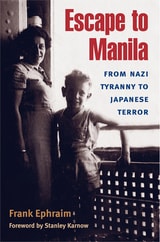
Escape to Manila
From Nazi Tyranny to Japanese TerrorFrank Ephraim. Foreword by Stanley A. Karnow
University of Illinois Press, 2002
A harrowing account of Jewish refugees in the Philippines
With the rise of Nazism in the 1930s more than a thousand European Jews sought refuge in the Philippines, joining the small Jewish population of Manila. When the Japanese invaded the islands in 1941, the peaceful existence of the barely settled Jews filled with the kinds of uncertainties and oppression they thought they had left behind.
In this book Frank Ephraim, who fled to Manila with his parents, gathers the testimonies of thirty-six refugees, who describe the difficult journey to Manila, the lives they built there upon their arrival, and the events surrounding the Japanese invasion. Combining these accounts with historical and archival records, Manila newspapers, and U.S. government documents, Ephraim constructs a detailed account of this little-known chapter of world history.
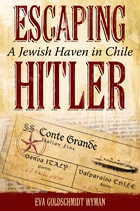
Escaping Hitler
A Jewish Haven in ChileEva Goldschmidt Wyman
University of Alabama Press, 2013
A family’s flight from Nazi terror to an unexpected refuge in Chile.
Escaping Hitler is the personal story of Eva Wyman and her family’s escape from Nazi Germany to Chile in the sociohistorical context of 1930s and 1940s, a time when the Chilean Nazi party had an active presence in the country’s major institutions.
Based primarily on interviews with German Jewish refugees and family correspondence, Eva Goldschmidt Wyman provides an intimate account of Jews in Germany in the 1930s as Nazi controls tightened and family members were taken to Riga concentration camp. Wyman recounts Kristallnacht in Stuttgart, where her father was principal of the Jewish school, his imprisonment in Dachau, and his release and immigration to Great Britain. Escaping Hitler details the family’s escape from Germany and subsequent life in Chile, providing an intimate look at daily life on the steam ship Conte Grande during the voyage from Italy to Chile in 1939, Nazi espionage and anti-Semitic activity in Chile, and the Nazi influence in South America in general.
Recounted in an intimate and personal style, Escaping Hitler immerses the reader in an extraordinary chapter of contemporary Jewish history both inside Germany and South America.