3369 books match the query 'Cultural & Social' and 124 start with e
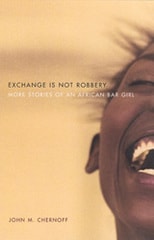
cover of Exchange Is Not Robbery: More Stories of an African Bar Girl

Exchange Is Not Robbery

More Stories of an African Bar Girl

John M. Chernoff

University of Chicago Press, 2004

While living in West Africa in the 1970s, John Chernoff recorded the stories of "Hawa," a spirited and brilliant but uneducated woman whose insistence on being respected and treated fairly propelled her, ironically, into a life of marginality and luck as an "ashawo," or bar girl. Rejecting traditional marriage options and cut off from family support, she is like many women in Africa who come to depend on the help they receive from one another, from boyfriends, and from the men they meet in bars and nightclubs. Refusing to see herself as a victim, Hawa embraces the freedom her lifestyle permits and seeks the broadest experience available to her.

In Exchange Is Not Robbery and its predecessor, Hustling Is Not Stealing, a chronicle of exploitation is transformed by verbal art into an ebullient comedy.  In Hustling Is Not Stealing, Hawa is a playful warrior struggling against circumstances in Ghana and Togo. In Exchange Is Not Robbery, Hawa returns to her native Burkina Faso, where she achieves greater control over her life but faces new difficulties. As a woman making sacrifices to live independently, Hawa sees her own situation become more complex as she confronts an atmosphere in Burkina Faso that is in some ways more challenging than the one she left behind, and the moral ambiguities of her life begin to intensify.

Combining elements of folklore and memoir, Hawa's stories portray the diverse social landscape of West Africa. Individually the anecdotes can be funny, shocking, or poignant; assembled together they offer a sweeping critical and satirical vision.
[more]
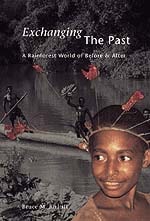
cover of Exchanging the Past: A Rainforest World of Before and After

Exchanging the Past

A Rainforest World of Before and After

Bruce M. Knauft

University of Chicago Press, 2002

Twenty years ago, the Gebusi of the lowland Papua New Guinea rainforest had one of the highest homicide rates in the world. Bruce M. Knauft found then that the killings stemmed from violent scapegoating of suspected sorcerers. But by the time he returned in 1998, homicide rates had plummeted, and Gebusi had largely disavowed vengeance against sorcerers in favor of modern schools, discos, markets, and Christianity.

In this book, Knauft explores the Gebusi's encounter with modern institutions and highlights what their experience tells us more generally about the interaction between local peoples and global forces. As desire for material goods grew among Gebusi, Knauft shows that they became more accepting of and subordinated by Christian churches, community schools,and government officials in their attempt to benefit from them—a process Knauft terms "recessive agency." But the Gebusi also respond actively to modernity, creating new forms of feasting, performance, and music that meld traditional practices with Western ones, all of which Knauft documents in this fascinating study.
[more]
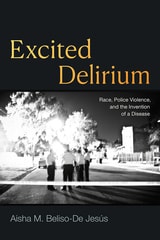
cover of Excited Delirium: Race, Police Violence, and the Invention of a Disease

Excited Delirium

Race, Police Violence, and the Invention of a Disease

Aisha M. Beliso-De Jesús

Duke University Press, 2024
In 1980, Charles Wetli---a Miami-based medical examiner and self-proclaimed “cult expert” of Afro-Caribbean religions---identified what he called “excited delirium syndrome.” Soon, medical examiners began using the syndrome regularly to describe the deaths of Black men and women during interactions with police. Police and medical examiners claimed that Black people with so-called excited delirium exhibited superhuman strength induced from narcotics abuse. It was fatal heart failure that killed them, examiners said, not forceful police restraints. In Excited Delirium, Aisha M. Beliso-De Jesús examines this fabricated medical diagnosis and its use to justify and erase police violence against Black and Brown communities. Exposing excited delirium syndrome’s flawed diagnostic criteria, she outlines its inextricable ties to the criminalization of Afro-Latiné religions. Beliso-De Jesús demonstrates that it is yet a further example of the systemic racism that pervades law enforcement in which the culpability for state violence is shifted from the state onto its victims. In so doing, she furthers understanding of the complex layers of medicalized state-sanctioned violence against people of color in the United States.
[more]
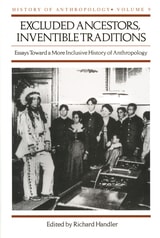
cover of Excluded Ancestors, Inventible Traditions: Essays Toward a More Inclusive History of Anthropology

Excluded Ancestors, Inventible Traditions

Essays Toward a More Inclusive History of Anthropology

Edited by Richard Handler

University of Wisconsin Press, 2015

    History-making can be used both to bolster and to contest the legitimacy of established institutions and canons. Excluded Ancestors, Inventible Traditions seeks to widen the anthropological past and, in doing so, to invigorate contemporary anthropological practice. In the past decade, anthropologists have become increasingly aware of the ways in which participation in professional anthropology has depended and continues to depend on categorical boundaries of race, class, gender, citizenship, institutional and disciplinary affiliation, and English-language proficiency. Historians of anthropology play a crucial role interrogating such boundaries; as they do, they make newly available the work of anthropologists who have been ignored.
    Excluded Ancestors, Inventible Traditions  focuses on little-known scholars who contributed to the anthropological work of their time, such as John William Jackson, the members of the Hampton Folk-Lore Society, Charlotte Gower Chapman, and Lucie Varga.  In addition, essays on Marius Barbeau and Sol Tax present figures who were centrally located in the anthropologies of their day. A final essay analyzes notions of "the canon" and considers the place of a classic ethnographic area, highland New Guinea, in anthropological canon-formation.
[more]
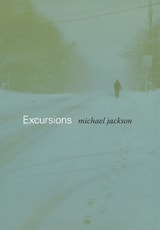
cover of Excursions

Excursions

Michael Jackson

Duke University Press, 2007

A village in Sierra Leone. A refugee trail over the Pyrenees in French Catalonia. A historic copper mine in Sweden. The Shuf mountains in Lebanon. The Swiss Alps. The heart of the West African diaspora in southeast London. The anthropologist Michael Jackson makes his sojourns to each of these far-flung locations, and to his native New Zealand, occasions for exploring the contradictions and predicaments of social existence. He calls his explorations “excursions” not only because each involved breaking with settled routines and certainties, but because the image of an excursion suggests that thought is always on the way, the thinker a journeyman whose views are perpetually tested by encounters with others. Throughout Excursions, Jackson emphasizes the need for preconceptions and conventional mindsets to be replaced by the kind of open-minded critical engagement with the world that is the hallmark of cultural anthropology.

Focusing on the struggles and quandaries of everyday life, Jackson touches on matters at the core of anthropology—the state, violence, exile and belonging, labor, indigenous rights, narrative, power, home, and history. He is particularly interested in the gaps that characterize human existence, such as those between insularity and openness, between the things over which we have some control and the things over which we have none, and between ourselves and others as we talk past each other, missing each others’ meanings. Urging a recognition of the limits to which human existence can be explained in terms of cause and effect, he suggests that knowing why things happen may ultimately be less important than trying to understand how people endure in the face of hardship.

[more]
cover of Exit Zero: Family and Class in Postindustrial Chicago

Exit Zero

Family and Class in Postindustrial Chicago

Christine J. Walley

University of Chicago Press, 2012

Winner of CLR James Book Prize from the Working Class Studies Association and 2nd Place for the Victor Turner Prize in Ethnographic Writing. 

In 1980, Christine J. Walley’s world was turned upside down when the steel mill in Southeast Chicago where her father worked abruptly closed. In the ensuing years, ninety thousand other area residents would also lose their jobs in the mills—just one example of the vast scale of deindustrialization occurring across the United States. The disruption of this event propelled Walley into a career as a cultural anthropologist, and now, in Exit Zero, she brings her anthropological perspective home, examining the fate of her family and that of blue-collar America at large.
 
Interweaving personal narratives and family photos with a nuanced assessment of the social impacts of deindustrialization, Exit Zero is one part memoir and one part ethnography— providing a much-needed female and familial perspective on cultures of labor and their decline. Through vivid accounts of her family’s struggles and her own upward mobility, Walley reveals the social landscapes of America’s industrial fallout, navigating complex tensions among class, labor, economy, and environment. Unsatisfied with the notion that her family’s turmoil was inevitable in the ever-forward progress of the United States, she provides a fresh and important counternarrative that gives a new voice to the many Americans whose distress resulting from deindustrialization has too often been ignored.

This book is part of a project that also includes a documentary film.

[more]
cover of Exit Zero: Family and Class in Postindustrial Chicago

Exit Zero

Family and Class in Postindustrial Chicago

Christine J. Walley

University of Chicago Press, 2012

This is an auto-narrated audiobook version of this book.

Winner of CLR James Book Prize from the Working Class Studies Association and 2nd Place for the Victor Turner Prize in Ethnographic Writing. 

In 1980, Christine J. Walley’s world was turned upside down when the steel mill in Southeast Chicago where her father worked abruptly closed. In the ensuing years, ninety thousand other area residents would also lose their jobs in the mills—just one example of the vast scale of deindustrialization occurring across the United States. The disruption of this event propelled Walley into a career as a cultural anthropologist, and now, in Exit Zero, she brings her anthropological perspective home, examining the fate of her family and that of blue-collar America at large.
 
Interweaving personal narratives and family photos with a nuanced assessment of the social impacts of deindustrialization, Exit Zero is one part memoir and one part ethnography— providing a much-needed female and familial perspective on cultures of labor and their decline. Through vivid accounts of her family’s struggles and her own upward mobility, Walley reveals the social landscapes of America’s industrial fallout, navigating complex tensions among class, labor, economy, and environment. Unsatisfied with the notion that her family’s turmoil was inevitable in the ever-forward progress of the United States, she provides a fresh and important counternarrative that gives a new voice to the many Americans whose distress resulting from deindustrialization has too often been ignored.

This book is part of a project that also includes a documentary film.
[more]
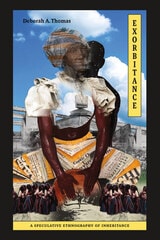
cover of Exorbitance: A Speculative Ethnography of Inheritance

Exorbitance

A Speculative Ethnography of Inheritance

Deborah A. Thomas

Duke University Press, 2025
In Exorbitance, Deborah A. Thomas calls for new approaches to political sovereignty grounded in the embodied forms of autonomy and relation created in daily life. Rather than rooting sovereignty in the violence of the state and its institutions, Thomas conceives of sovereignty as the embodied refusal of law and dominion. Drawing on the insights of Caribbeanist thought and studies of Jamaican social, political, and spiritual life, Thomas proposes an exorbitant sovereignty enacted through a phenomenological notion of inheritance. Such a sovereignty emerges from alternative genealogies of governance, community, and ceremony that exceed Enlightenment expectations of political life. Thomas contends that the articulations of exorbitant sovereignty are emergent, ephemeral, and ultimately, relational. By outlining the perils and promises of our inheritance of colonial logics and the tools to refuse them, Thomas models a collaborative and collective anthropology oriented toward improvisational experimentation rather than ethnographic extraction.
[more]
cover of Exotic No More, Second Edition: Anthropology for the Contemporary World

Exotic No More, Second Edition

Anthropology for the Contemporary World

Edited by Jeremy MacClancy

University of Chicago Press, 2019

In this new edition of the anthropological classic Exotic No More, some of today’s most respected anthropologists demonstrate the tremendous contributions that anthropological theory and ethnographic methods can make to the study of contemporary society. With chapters covering a wide variety of subjects—the economy, religion, the sciences, gender and sexuality, human rights, music and art, tourism, migration, and the internet—this volume shows how anthropologists grapple with a world that is in constant and accelerating transformation. Each contributor uses examples from their adventurous fieldwork to challenge us to rethink some of our most firmly held notions. This fully updated edition reflects the best that anthropology has to offer in the twenty-first century. The result is both an invaluable introduction to the field for students and a landmark achievement that will set the agenda for critical approaches to the study of contemporary life.

Contributors:Ruben Andersson, Philippe Bourgois, Catherine Buerger, James G. Carrier, Marcus Colchester, James Fairhead, Kim Fortun, Mike Fortun, Katy Gardner, Faye Ginsburg, Roberto J. González, Tom Griffiths, Chris Hann, Susan Harding, Faye V. Harrison, Laurie Kain Hart, Richard Jenkins, George Karandinos, Christopher M. Kelty, Melissa Leach, Margaret Lock, Jeremy MacClancy, Sally Engle Merry, Fernando Montero, Matt Sakakeeny, Anthony Alan Shelton, Christopher B. Steiner, Richard Ashby Wilson

[more]
cover of Exoticism and the Culture of Exploration, Volume 26

Exoticism and the Culture of Exploration, Volume 26

Robert P. Maccubbin and Christa Knellwolf, eds.

Duke University Press, 0

Historians use the phrase “the cult of the exotic” to describe the fascination with the foreign or strange that both led to and was intensified by the eighteenth century’s scientific and imperialistic ventures in the Pacific and elsewhere. This volume offers new historical contexts for encounters both real and imaginary and shows the evolution of Europeans’ ideas about themselves and those cultures they considered exotic. The essays draw on a wide variety of sources—art, architecture, scientific and literary works, journals and diaries, and the European popular cultural and political press—to explore eighteenth-century perceptions of the exotic and to demonstrate just how far-reaching “the cult of the exotic” was.

Contributors. Geraldine Barnes, Alexandra Cook, David Culpin, John Greene, Suzanne Kiernan, Christa Knellwolf, Adrian Mitchell, Lisa O’Connell, David Paxman, Ali Uzay Peker, Glynis Ridley, Nicholas Rogers, Walter Veit
[more]
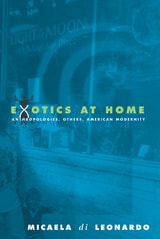
cover of Exotics at Home: Anthropologies, Others, and American Modernity

Exotics at Home

Anthropologies, Others, and American Modernity

Micaela di Leonardo

University of Chicago Press, 1998

In this pathbreaking study, Micaela di Leonardo reveals the face of power within the mask of cultural difference. From the 1893 World's Fair to Body Shop advertisements, di Leonardo focuses on the intimate and shifting relations between popular portrayals of exotic Others and the practice of anthropology. In so doing, she casts new light on gender, race, and the public sphere in America's past and present.

"An impressive work of scholarship that is mordantly witty, passionately argued, and takes no prisoners."—Lesley Gill, News Politics

"[Micaela] di Leonardo eloquently argues for the importance of empirical, interdisciplinary social science in addressing the tragedy that is urban America at the end of the century."—Jonathan Spencer, Times Literary Supplement

"In her quirky new contribution to the American culture brawl, feminist anthropologist Micaela di Leonardo explains how anthropologists, 'technicians of the sacred,' have distorted American popular debate and social life."—Rachel Mattson, Voice Literary Supplement

"At the end of di Leonardo's analyses one is struck by her rare combination of rigor and passion. Simply, [she] is a marvelous iconoclast."—Matthew T. McGuire, Boston Book Review
[more]
cover of Expanding American Anthropology, 1945-1980: A Generation Reflects

Expanding American Anthropology, 1945-1980

A Generation Reflects

Edited by Alice Beck Kehoe and Paul L. Doughty

University of Alabama Press, 2012

Expanding American Anthropology, 1945–1980: A Generation Reflects takes an inside look at American anthropology’s participation in the enormous expansion of the social sciences after World War II. During this time the discipline of anthropology itself came of age, expanding into diverse subfields, frequently on the initiative of individual practitioners. The Association of Senior Anthropologists of the American Anthropological Association (AAA) called upon a number of its leaders to give accounts of their particular innovations in the discipline. This volume is the result of the AAA venture—a set of primary documents on the history of American anthropology at a critical juncture.

In preparing the volume, the editors endeavored to maintain the feeling of “oral history” within the chapters and to preserve the individual voices of the contributors. There are many books on the history of anthropology, but few that include personal essays from such a broad swath of different perspectives. The passing of time will make this volume increasingly valuable in understanding the development of American anthropology from a small discipline to the profession of over ten thousand practitioners.
[more]
cover of Expedition of Hernando de Soto West of the Mississippi, 1541–1543: Proceedings of the de Soto Symposia, 1988 and 1990

Expedition of Hernando de Soto West of the Mississippi, 1541–1543

Proceedings of the de Soto Symposia, 1988 and 1990

Gloria Young

University of Arkansas Press, 1999

Back by popular demand and new in paperback, this spirited collection of nearly twenty papers celebrates the 450th anniversary of Hernando de Soto’s epic expedition across the Southeast and West.

Originally presented at two symposia conducted by the University Museum at the University of Arkansas, the collection offers an array of viewpoints and diverse approaches to de Soto scholarship. Archaeologists, anthropologists, historians, museum curators, and folklorists all contribute to this lively debate on the Spanish explorer and his travels.

The book focuses on research that challenges traditional interpretation of de Soto’s entrada and travel route, particularly after the expedition crossed the Mississippi River. David H. Dye hypothesizes a route across the river and the alluvial plain by linking the narrative accounts with geography and archaeological knowledge. Phyllis A. Morse asserts that the Parkin site is the location of the capital of Casqui, one of the polities visited by de Soto. Charles M. Hudson repostulates his version of the expedition route, which in 1988 severely challenged the De Soto Commission theory of 1939. Ann M. Early redraws the trail in the uplands of the Ouachita Mountains And Frank E. Schambach tests the possibility that the expedition wandered through Caddoan territory in east Texas after de Soto’s death.

Several chapters examine the Native Americans whom de Soto and his expedition encountered in their journey; other contributions provide a fresh look at the chronicles of the expedition that have survived. What emerges is a redrawn map of de Soto’s exploration—and a deeper understanding of the impact of European contact on the New World.
[more]
cover of Experimental Beijing: Gender and Globalization in Chinese Contemporary Art

Experimental Beijing

Gender and Globalization in Chinese Contemporary Art

Sasha Su-Ling Welland

Duke University Press, 2018
During the lead-up to the 2008 Beijing Olympics, the censorious attitude that characterized China's post-1989 official response to contemporary art gave way to a new market-driven, culture industry valuation of art. Experimental artists who once struggled against state regulation of artistic expression found themselves being courted to advance China's international image. In Experimental Beijing Sasha Su-Ling Welland examines the interlocking power dynamics in this transformational moment and rapid rise of Chinese contemporary art into a global phenomenon. Drawing on ethnographic fieldwork and experience as a videographer and curator, Welland analyzes encounters between artists, curators, officials, and urban planners as they negotiated the social role of art and built new cultural institutions. Focusing on the contradictions and exclusions that emerged, Welland traces the complex gender politics involved and shows that feminist forms of art practice hold the potential to reshape consciousness, produce a nonnormative history of Chinese contemporary art, and imagine other, more just worlds.
[more]
cover of Experimental Practice: Technoscience, Alterontologies, and More-Than-Social Movements

Experimental Practice

Technoscience, Alterontologies, and More-Than-Social Movements

Dimitris Papadopoulos

Duke University Press, 2018
In Experimental Practice Dimitris Papadopoulos explores the potential for building new forms of political and social movements through the reconfiguration of the material conditions of existence. Rather than targeting existing institutions in demands for social justice, Papadopoulos calls for the creation of alternative ontologies of everyday life that would transform the meanings of politics and justice. Inextricably linked to technoscience, these “alterontologies”—which Papadopoulos examines in a variety of contexts, from AIDS activism and the financialization of life to hacker communities and neuroscience—form the basis of ways of life that would embrace the more-than-social interdependence of the human and nonhuman worlds. Speaking to a matrix of concerns about politics and justice, social movements, matter and ontology, everyday practice, technoscience, the production of knowledge, and the human and nonhuman, Papadopoulos suggests that the development of alterontologies would create more efficacious political and social organizing.
[more]
cover of Experimenting with Ethnography: A Companion to Analysis

Experimenting with Ethnography

A Companion to Analysis

Andrea Ballestero and Brit Ross Winthereik, editors

Duke University Press, 2021

Experimenting with Ethnography collects twenty-one essays that open new paths for doing ethnographic analysis. The contributors—who come from a variety of intellectual and methodological traditions—enliven analysis by refusing to take it as an abstract, disembodied exercise. Rather, they frame it as a concrete mode of action and a creative practice. Encompassing topics ranging from language and the body to technology and modes of collaboration, the essays invite readers to focus on the imaginative work that needs to be performed prior to completing an argument. Whether exchanging objects, showing how to use drawn images as a way to analyze data, or working with smartphones, sound recordings, and social media as analytic devices, the contributors explore the deliberate processes for pursuing experimental thinking through ethnography. Practical and broad in theoretical scope, Experimenting with Ethnography is an indispensable companion for all ethnographers.

Contributors. Patricia Alvarez Astacio, Andrea Ballestero, Ivan da Costa Marques, Steffen Dalsgaard, Endre Dányi, Marisol de la Cadena, Marianne de Laet, Carolina Domínguez Guzmán, Rachel Douglas-Jones, Clément Dréano, Joseph Dumit, Melanie Ford Lemus, Elaine Gan, Oliver Human, Alberto Corsín Jiménez, Graham M. Jones, Trine Mygind Korsby, Justine Laurent, James Maguire, George E. Marcus, Annemarie Mol, Sarah Pink, Els Roding, Markus Rudolfi, Ulrike Scholtes, Anthony Stavrianakis, Lucy Suchman, Katie Ulrich, Helen Verran, Else Vogel, Antonia Walford, Karen Waltorp, Laura Watts, Brit Ross Winthereik
 
[more]
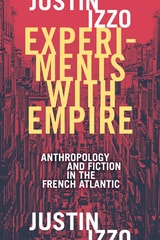
cover of Experiments with Empire: Anthropology and Fiction in the French Atlantic

Experiments with Empire

Anthropology and Fiction in the French Atlantic

Justin Izzo

Duke University Press, 2019
In Experiments with Empire Justin Izzo examines how twentieth-century writers, artists, and anthropologists from France, West Africa, and the Caribbean experimented with ethnography and fiction in order to explore new ways of knowing the colonial and postcolonial world. Focusing on novels, films, and ethnographies that combine fictive elements and anthropological methods and modes of thought, Izzo shows how empire gives ethnographic fictions the raw materials for thinking beyond empire's political and epistemological boundaries. In works by French surrealist writer Michel Leiris and filmmaker Jean Rouch, Malian writer Amadou Hampâté Bâ, Martinican author Patrick Chamoiseau, and others, anthropology no longer functions on behalf of imperialism as a way to understand and administer colonized peoples; its relationship with imperialism gives writers and artists the opportunity for textual experimentation and political provocation. It also, Izzo contends, helps readers to better make sense of the complicated legacy of imperialism and to imagine new democratic futures.
[more]
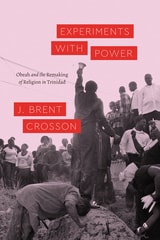
cover of Experiments with Power: Obeah and the Remaking of Religion in Trinidad

Experiments with Power

Obeah and the Remaking of Religion in Trinidad

J. Brent Crosson

University of Chicago Press, 2020

In 2011, Trinidad declared a state of emergency. This massive state intervention lasted for 108 days and led to the rounding up of over 7,000 people in areas the state deemed “crime hot spots.” The government justified this action and subsequent police violence on the grounds that these measures were restoring “the rule of law.” In this milieu of expanded policing powers, protests occasioned by police violence against lower-class black people have often garnered little sympathy. But in an improbable turn of events, six officers involved in the shooting of three young people were charged with murder at the height of the state of emergency. To explain this, the host of Crime Watch, the nation’s most popular television show, alleged that there must be a special power at work: obeah.

From eighteenth-century slave rebellions to contemporary responses to police brutality, Caribbean methods of problem-solving “spiritual work” have been criminalized under the label of “obeah.” Connected to a justice-making force, obeah remains a crime in many parts of the anglophone Caribbean. In Experiments with Power, J. Brent Crosson addresses the complex question of what obeah is. Redescribing obeah as “science” and “experiments,” Caribbean spiritual workers unsettle the moral and racial foundations of Western categories of religion. Based on more than a decade of conversations with spiritual workers during and after the state of emergency, this book shows how the reframing of religious practice as an experiment with power transforms conceptions of religion and law in modern nation-states.
 
[more]
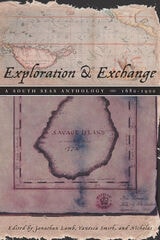
cover of Exploration and Exchange: A South Seas Anthology, 1680-1900

Exploration and Exchange

A South Seas Anthology, 1680-1900

Edited by Jonathan Lamb, Vanessa Smith, and Nicholas Thomas

University of Chicago Press, 2001

"As my sense of the turpitude and guilt of sin was weakened, the vices of the natives appeared less odious and criminal. After a time, I was induced to yield to their allurements, to imitate their manners, and to join them in their sins . . . and it was not long ere I disencumbered myself of my European garment, and contented myself with the native dress. . . ."—from Narrative of the late George Vason, of Nottingham

As George Vason's anguished narrative shows, European encounters with Pacific peoples often proved as wrenching to the Europeans as to the natives. This anthology gathers some of the most vivid accounts of these cultural exchanges for the first time, placing the works of well-known figures such as Captain James Cook and Robert Louis Stevenson alongside the writings of lesser-known explorers, missionaries, beachcombers, and literary travelers who roamed the South Seas from the late seventeenth through the late nineteenth centuries.
Here we discover the stories of the British buccaneers and privateers who were lured to the Pacific by stories of fabulous wealth; of the scientists, cartographers, and natural historians who tried to fit the missing bits of terra incognita into a universal scheme of knowledge; and of the varied settlers who established a permanent European presence in Polynesia and Australia. Through their detailed commentary on each piece and their choice of selections, the editors—all respected scholars of the literature and cultures of the Pacific—emphasize the mutuality of impact of these colonial encounters and the continuity of Pacific cultures that still have the power to transform visitors today.
[more]
cover of Explorations into Highland New Guinea, 1930-1935

Explorations into Highland New Guinea, 1930-1935

Michael J. Leahy, edited by Douglas E. Jones, with a foreword by Jane C. Goodale

University of Alabama Press, 1991

In the 1920s and 1930s there were adventures to be lived and fortunes to be made by strong young men in the outback of Australia and the gold fields of New Guinea. This is the diary of five years spent in hot pursuit—not of honor and glory, but of excitement and riches—by one such adventurer, Michael "Mick" Leahy, his brothers Jim and Pat, and friends Mick Dwyer and Jim Taylor. Leahy and his associates explored the unknown interior of New Guinea, seeking gold and making contact for the first time with the aborigines of the interior mountains and valleys.

White man was unknown to these often cannibalistic, always dangerous, aborigines who thought the seekers of yellow in the streams slightly mad, and thus easy prey. The chronicles of their explorations and their hundreds of photographs brought news of these native peoples to the outside world. In doing so, they changed forever our understanding of the human landscape of New Guinea, and carved a place in history for these explorers who, braving the environment in search of gold, found people.
[more]
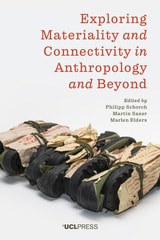
cover of Exploring Materiality and Connectivity in Anthropology and Beyond

Exploring Materiality and Connectivity in Anthropology and Beyond

Edited by Philipp Schorch, Martin Saxer, and Marlen Elders

University College London, 2020
Exploring Materiality and Connectivity in Anthropology and Beyond provides a new look at the old anthropological concern with materiality and connectivity. It understands materiality, not as defined property of some-thing, nor does it take connectivity as merely a relation between discrete entities. It sees materiality and connectivity as two interrelated modes in which an entity is, or more precisely – is becoming, in the world. Throughout the four-year research process that led to this book, the authors approached this question not just from a theoretical perspective; taking the suggestion of 'thinking through things' literally and methodologically seriously, the first two workshops were dedicated to practical, hands-on exercises working with things. From these workshops a series of installations emerged, straddling the boundaries of art and academia. Throughout the pages of this volume, the reader is invited to travel beyond imaginaries of a universe of separate planets united by connections, and to venture with us instead into the thicket of thing~ties in which we live.
 
[more]
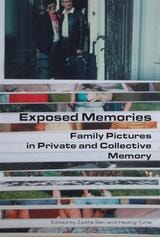
cover of Exposed Memories: Family Pictures in Private and Collective Memory

Exposed Memories

Family Pictures in Private and Collective Memory

Hedvig Turai

Central European University Press, 2010
Within the larger context of cultural memory, family pictures have become one of the most intriguing multi- and interdisciplinary fields of investigation in the past decade. This field brings together artists working in different media (e.g. documentary photography and film, photo-based painting and installations, digital art, collage, montage, comics, etc.) as well as academics, critics, theorists and writers working in a wide range of disciplines including literature, history, art history, sociology, anthropology, psychoanalysis, film and media studies, visual culture studies, gender studies, postcolonial studies, and word and image studies. This volume intends to offer a broad, panoramic view of the topic combining West and East European as well as American perspectives.
[more]
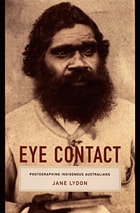
cover of Eye Contact: Photographing Indigenous Australians

Eye Contact

Photographing Indigenous Australians

Jane Lydon

Duke University Press, 2005

An indigenous reservation in the colony of Victoria, Australia, the Coranderrk Aboriginal Station was a major site of cross-cultural contact the mid-nineteenth century and early twentieth. Coranderrk was located just outside Melbourne, and from its opening in the 1860s the colonial government commissioned many photographs of its Aboriginal residents. The photographs taken at Coranderrk Station circulated across the western world; they were mounted in exhibition displays and classified among other ethnographic “data” within museum collections. The immense Coranderrk photographic archive is the subject of this detailed, richly illustrated examination of the role of visual imagery in the colonial project. Offering close readings of the photographs in the context of Australian history and nineteenth- and early-twentieth-century photographic practice, Jane Lydon reveals how western society came to understand Aboriginal people through these images. At the same time, she demonstrates that the photos were not solely a tool of colonial exploitation. The residents of Coranderrk had a sophisticated understanding of how they were portrayed, and they became adept at manipulating their representations.

Lydon shows how the photographic portrayals of the Aboriginal residents of Coranderrk changed over time, reflecting various ideas of the colonial mission—from humanitarianism to control to assimilation. In the early twentieth century, the images were used on stereotypical postcards circulated among the white population, showing what appeared to be compliant, transformed Aboriginal subjects. The station closed in 1924 and disappeared from public view until it was rediscovered by scholars years later. Aboriginal Australians purchased the station in 1998, and, as Lydon describes, today they are using the Coranderrk photographic archive in new ways, to identify family members and tell stories of their own.
[more]
cover of eco-operations

eco-operations

Edited by Fabienne Liptay and Liliana Gómez

Diaphanes, 2024

An edited collection of contributions to conversations about the climate crisis and its role in critical discourse.

The climate change crisis has become part of aesthetic discourse and critical research in culture and the arts. Future-oriented, ecologically conceived possibilities for action are being explored by artists, curators, and scholars alike. eco-operations addresses these emerging aesthetic ecologies and new technologies of cooperation that both challenge and shape a sustainable future, foregrounding interruptions, ruptures, disconnections, dissonances, exclusions, and allochronism. Moving beyond the concepts of “flow” and “network” as a single, coherent (ecological or technological) system, eco-operations instead emphasizes the frictions within asynchronously running systems. The infrastructures and formats of artistic production and exhibition play a central role here, as they themselves constitute ecosystems that invite and regulate processes of sharing and exchange. Artists and activists are embedded in these ecosystems, in which they simultaneously intervene when searching for alternative ways of creating collaborative practice. Bringing together scholars, artists, writers, and curators, and working across a range of disciplines, eco-operations explores this field of tension between global and local ecologies and aims to speculate on where dissonances imply both creative potential and political challenges.

eco-operations features contributions by Dalida María Benfield, Ursula Biemann, Lisa Blackmore, Mateo Chacón Pino, Lucrezia Cippitelli, T. J. Demos, Sandra Frimmel, Laura Flórez, Lorena Cely, Alexandra Gelis, Liliana Gómez, Fabienne Liptay, Uriel Orlow, and Dorota Sajewska.
 
[more]