Results by title
2817 books match the query 'Nature' and 164 start with e
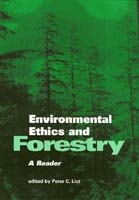
Environmental Ethics and Forestry
Peter List
Temple University Press, 2000
This rising tide of public scrutiny has led many foresters to suspect that their "contract" with society to manage forests using their best professional judgment has been undermined. Some of these professionals, as well as some of their critics, have begun to reexamine their old beliefs and to look for new ways of practicing forestry. Part of this reflective process has entailed new directions in environmental ethics and environmental philosophy.
This reader brings together some of the new thinking in this area. Here students of the applied environmental and natural resource sciences, as well as the interested general reader, will discover a rich sampling of writings in environmental ethics and philosophy as they apply to forestry. Readings focus on basic ethical systems in forestry and forest management, philosophical issues in forestry ethics, codes of ethics in forestry and related natural resource sciences such as fisheries science and wildlife biology, Aldo Leopold's land ethic in forestry, ethical advocacy and whistleblowing in government resource agencies, the ethics of new forestry, ecoforestry, and public debate in forestry, as well as ethical issues in global forestry such as the responsibilities of forest corporations, environmentalists, and individual wood consumers.
The volume contains materials from the founders of forestry ethics, such as Bernhard Fernow, Giford Pinchot, John Muir, and Aldo Leopold; from such organizations as the Society of American Foresters, the Wildlife Society, the American Fisheries Society, Forest Service Employees for Environmental Ethics, and the Ecoforesters group, in addition to the writings by a variety of well-known environmental philosophers and foresters, including Holmes Rolston, Robin Attfield, Lawrence Johnson, Michael McDonald, Paul Wood, James E. Coufal, Raymond Craig, Kristin Shrader-Frechette, Jeff DeBonis, Jim L. Bowyer, Alasdair Gunn, Doug Daigle, Alan G. McQuillan, Stephanie Kaza, Alan Drengson, Duncan Taylor, and Kathleen Dean Moore.

Environmental Ethics in the Midwest
Interdisciplinary ApproachesIan Smith
Michigan State University Press, 2022

Environmental Futures
An International Literary AnthologyEdited by Caren Irr, et al.
Brandeis University Press, 2024
Featuring short stories, poetry, drama, and creative nonfiction from around the world, this anthology showcases contemporary literature to envision the future of the environment. While environmental literature written in English has been dominated by English and American men who make solo explorations into an unspoiled natural world, Environmental Futures emphasizes local and indigenous writers contending with global landscapes that are far from pristine. Their work opens up decolonial perspectives from Anglophone Africa, South Asia, India, China, South America, the peripheries of Europe, and BIPoC North America. Introducing many writers who will be unfamiliar to English-speaking readers, this collection explores resistance to the oil economy, the impact of storms and natural disasters, extinction, and relations between humans and animals, among other themes.
The pieces are organized by geographical area in five sections: Africa, Asia, Europe, Latin America, and North America. Expert scholars and translators—Kurt Cavender, Roberto Forns-Broggi, Cajetan Iheka, Upamanyu (Pablo) Mukherjee, Irina Sadovina, and Shaobo Xie—selected the works and provided critical introductions for each section.
Environmental History, volume 27 number 1 (January 2022)
The University of Chicago Press
University of Chicago Press Journals, 2022
Environmental History, volume 27 number 2 (April 2022)
The University of Chicago Press
University of Chicago Press Journals, 2022
Environmental History, volume 27 number 3 (July 2022)
The University of Chicago Press
University of Chicago Press Journals, 2022
Environmental History, volume 27 number 4 (October 2022)
The University of Chicago Press
University of Chicago Press Journals, 2022
Environmental History, volume 28 number 1 (January 2023)
The University of Chicago Press
University of Chicago Press Journals, 2023
Environmental History, volume 28 number 2 (April 2023)
The University of Chicago Press
University of Chicago Press Journals, 2023
Environmental History, volume 28 number 3 (July 2023)
The University of Chicago Press
University of Chicago Press Journals, 2023
Environmental History, volume 28 number 4 (October 2023)
The University of Chicago Press
University of Chicago Press Journals, 2023
Environmental History, volume 29 number 1 (January 2024)
The University of Chicago Press
University of Chicago Press Journals, 2024
Environmental History, volume 29 number 2 (April 2024)
The University of Chicago Press
University of Chicago Press Journals, 2024
Environmental History, volume 29 number 3 (July 2024)
The University of Chicago Press
University of Chicago Press Journals, 2024
Environmental History, volume 29 number 4 (October 2024)
The University of Chicago Press
University of Chicago Press Journals, 2024
Environmental History, volume 30 number 1 (January 2025)
The University of Chicago Press
University of Chicago Press Journals, 2025
Environmental History, volume 30 number 2 (April 2025)
The University of Chicago Press
University of Chicago Press Journals, 2025
Environmental History, volume 30 number 3 (July 2025)
The University of Chicago Press
University of Chicago Press Journals, 2025
Environmental History, volume 30 number 4 (October 2025)
The University of Chicago Press
University of Chicago Press Journals, 2025

Environmental History, volume 31 number 1 (January 2026)
The University of Chicago Press
University of Chicago Press Journals, 2026
Environmental History, volume 31 number 2 (April 2026)
The University of Chicago Press
University of Chicago Press Journals, 2026
Environmental History, volume 31 number 3 (July 2026)
The University of Chicago Press
University of Chicago Press Journals, 2026
Environmental History, volume 31 number 4 (October 2026)
The University of Chicago Press
University of Chicago Press Journals, 2026
Environmental Imaginaries of the Middle East and North Africa
Diana K. Davis
Ohio University Press, 2011
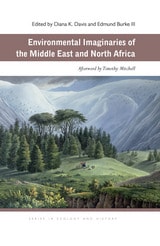
The landscapes of the Middle East have captured our imaginations throughout history. Images of endless golden dunes, camel caravans, isolated desert oases, and rivers lined with palm trees have often framed written and visual representations of the region. Embedded in these portrayals is the common belief that the environment, in most places, has been deforested and desertified by centuries of misuse. It is precisely such orientalist environmental imaginaries, increasingly undermined by contemporary ecological data, that the eleven authors in this volume question. This is the first volume to critically examine culturally constructed views of the environmental history of the Middle East and suggest that they have often benefitted elites at the expense of the ecologies and the peoples of the region. The contributors expose many of the questionable policies and practices born of these environmental imaginaries and related histories that have been utilized in the region since the colonial period. They further reveal how power, in the form of development programs, notions of nationalism, and hydrological maps, for instance, relates to environmental knowledge production.
Contributors: Samer Alatout, Edmund Burke III, Shaul Cohen, Diana K. Davis, Jennifer L. Derr, Leila M. Harris, Alan Mikhail, Timothy Mitchell, Priya Satia, Jeannie Sowers, and George R. Trumbull IV

Environmental Inequality
Explaining Variation in Environmental Justice Efforts in the Mid-Atlantic StatesKimberly P. Fields
Temple University Press, 2027
The Mid-Atlantic region is often overlooked in environmental justice scholarship, but as Kimberly Fields argues, it provides insights into broadly applicable patterns of state policymaking. Focusing on Pennsylvania, Delaware, Maryland, and Virginia, Fields examines how state governments respond to claims of environmental racism—deliberate decisions about whose neighborhoods should host environmental burdens—and to sustained pressure from community activists.
Environmental Inequality examines how these states develop their environmental justice policies and approaches as a way to understand why they vary in form and focus despite similar issues and demands. Fields reviews the institutional and structural factors that shape environmental justice policymaking. She pays particular attention to how the relevant policy-formulating bodies are organized and how they engage—or fail to engage—with affected communities. She considers race-conscious and race-dismissive models, as well as open versus closed approaches to deliberations with engaged local activists. By analyzing these processes, Fields uncovers profound implications of policymaking and institutional design choices, showing how differing arrangements produce variation in states’ policy focus and enactment.
Drawing on extensive original research, Environmental Inequality offers a nuanced and detailed explanation for the variation in state-level environmental justice efforts
Environmental Justice in South Africa
David A. McDonald
Ohio University Press, 2002
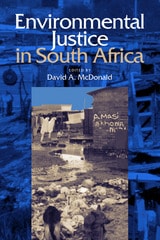
Beginning with a history of the environmental justice movement in the country, the book explores a range of conceptual and practical questions: How does environmental justice relate to issues of marginalization and poverty in South Africa? What are the links between environmental justice and other schools of environmental thought? Is the legal system an appropriate tool for addressing environmental equity? How do race, class, and gender intersect in the South African environmental context?
The second half of the book is a more concrete exploration of environmental (in)justice in the country. These chapters are interspersed with real-life stories of struggles by workers and communities for environmental change. The book is an invaluable resource for South African and international audiences interested in the growing, and increasingly global, environmental justice movement.
Environmental Movement in Majority and Minority Worlds
A Global PerspectiveDoyle, Timothy
Rutgers University Press, 2004
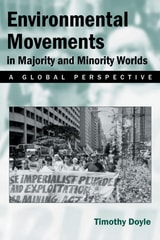
Environmental movements are among the most vibrant, diverse, and powerful social movements occurring today, across all corners of the globe. They range dramatically from government lobbyists raising campaign funds to save the North American spotted owl; to “Green Warriors” engaging in guerrilla conflict in the mountains of the Philippines; to small landholders and indigenous peoples vowing to die by meeting the waters of the Narmada River in India as it rises due to its damming.
Drawing on his primary fieldwork in six countries, environmental researcher Timothy Doyle argues that there is, in fact, no one global environmental movement; rather, there are many, and the differences among them far outweigh their similarities. Movements in the third world—such as those in India and the Philippines —tend to be oriented around issues of human health, shelter, food security, and survival; while those of the developed world—for example, the United States, England, Germany, and Australia —can afford to focus on post-materialist issues such as wilderness concerns and animal rights. Doyle also demonstrates that the consequences of these campaigns are as wide-ranging as their motives and methods.
Taking a much-needed step beyond the wealth of nation-centered accounts of environmentalism, this book makes an important contribution to studies concerned with global environmental problems and politics.

Environmental Physiology of the Amphibians
Edited by Martin E. Feder and Warren W. Burggren
University of Chicago Press, 1992

Environmental Policy Analysis and Practice
Greenberg, Michael R
Rutgers University Press, 2008
In Environmental Policy Analysis and Practice, Michael R. Greenberg cuts through the complicated layers of bureaucracy, science, and the public interest to show how all policy considerations can be broken down according to six specific factors: 1) the reaction of elected government officials, 2) the reactions of the public and special interests, 3) knowledge developed by scientists and engineers, 4) economics, 5) ethical imperatives, and 6) time pressure to make a decision.
The book is organized into two parts, with the first part defining and illustrating each one of these criteria. Greenberg draws on examples such as nuclear power, pesticides, brownfield redevelopment, gasoline additives, and environmental cancer, but focuses on how these subjects can be analyzed rather than exclusively on the issues themselves. Part two goes on to describe a set of over twenty tools that are used widely in policy analysis, including risk assessment, environmental impact analysis, public opinion surveys, cost-benefit analysis, and others. These tools are described and then illustrated with examples from part one.
Weaving together an impressive combination of practical advice and engaging first person accounts from government officials, administrators, and leaders in the fields of public health and medicine, this clearly written volume is poised to become a leading text in environmental policy.
Environmental Politics and Policy in the West, Revised Edition
Zachary A. Smith
University Press of Colorado, 2007
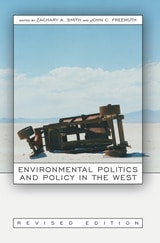
Zachary A. Smith and John Freemuth bring together a roster of top scholars to explicate the issues noted above as well as other key questions in this new edition of Environmental Politics and Policy in the West, which was first published in 1993. This thoroughly revised and updated edition offers a comprehensive and current survey.
Contributors address the policy process as it affects western states, how bureaucracy and politics shape environmental dialogues in the West, how western states innovate environmental policies independently of Washington, and how and when science is involved (or ignored) in management of the West's federal lands. Experts in individual resource areas explore multifaceted issues such as the politics of dam removal and restoration, wildlife resource concerns, suburban sprawl and smart growth, the management of hard-rock mining, and the allocation of the West's tightly limited water resources. Contributors include: Leslie R. Alm, Carolyn D. Baber, Walter F. Baber, Robert V. Bartlett, Hugh Bartling, Matthew A. Cahn, R. McGreggor Cawley, Charles Davis, Sandra Davis, John C. Freemuth, Sheldon Kamieniecki, Matt Lindstrom, William R. Mangun, Denise McCain-Tharnstrom, Daniel McCool, Jaina L. Moan, and Zachary A. Smith.
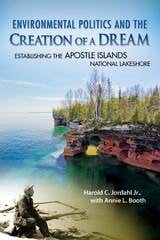
Environmental Politics and the Creation of a Dream
Establishing the Apostle Islands National LakeshoreHarold C. Jordahl
University of Wisconsin Press, 2011
The Apostle Islands National Lakeshore is a breathtakingly beautiful archipelago of twenty-two islands in Lake Superior, just off the tip of northern Wisconsin. For years, the national park has been a favorite destination for tourists and locals alike, but the remarkable story behind its creation is little known. In Environmental Politics and the Creation of a Dream, Harold Jordahl, one of the primary advocates for designating the islands as a national park, discloses the full story behind the effort to preserve their natural beauty for posterity. He describes in detail the political and bureaucratic complexities of the national lakeshore campaign, augmented by his own personal recollections and those of such prominent figures as Wisconsin Senator Gaylord Nelson and President John F. Kennedy. Writing in collaboration with Annie Booth, Jordahl recounts how activists, legislators, media, local residents, and other players shaped the islands’ future establishment as a national park.
Environmental Preservation and the Grey Cliffs Conflict
Negotiating Common Narratives, Values, and EthosKristin D. Pickering
Utah State University Press, 2024
Though environmental degradation and unauthorized use threatened the Grey Cliffs recreational lake area to the point that the Corps considered closure, community members valued it highly and wanted to keep it open. The community near this damaged and crime-ridden area needed help rejuvenating its landscape and image, but the Corps and community were sharply divided on how to maintain this beloved geographic space because of the stakeholders’ different cultural backgrounds and values, as well as the narratives used to discuss them. By co-constructing and aligning narratives, values, and ethos over time—a difficult and lengthy process—the Corps and community succeeded, and Grey Cliffs remains open to all. Focusing on field notes, participant interviews, and analysis of various texts created throughout the conflict, Pickering applies rhetorical analysis and a grounded theory approach to regulation, identity, sustainability, and community values to analyze this communication process.
Illustrating the positive change that can occur when governmental organizations and rural communities work together to construct shared values and engage in a rhetoric of relationship that preserves the environment, Environmental Preservation and the Grey Cliffs Conflict provides key recommendations for resolving environmental conflicts within local communities, especially for those working in technical and professional communication, organizational communication, environmental science, and public policy.

Environmental Program Evaluation
A PrimerEdited by Gerrit Knaap and Tschango John Kim: Foreword by Ravinder K. Jain
University of Illinois Press, 1998
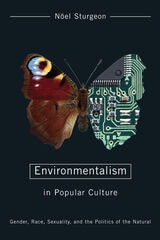
Environmentalism in Popular Culture
Gender, Race, Sexuality, and the Politics of the NaturalNoël Sturgeon
University of Arizona Press, 2009
Although there are other books that examine questions of culture and environment, this is the first book to employ a global feminist environmental justice analysis to focus on how racial inequality, gendered patterns of work, and heteronormative ideas about the family relate to environmental questions. Beginning in the late 1980s and moving to the present day, Sturgeon unpacks a variety of cultural tropes, including ideas about Mother Nature, the purity of the natural, and the allegedly close relationships of indigenous people with the natural world. She investigates the persistence of the “myth of the frontier” and its extension to the frontier of space exploration. She ponders the popularity (and occasional controversy) of penguins (and penguin family values) and questions assumptions about human warfare as “natural.”
The book is intended to provoke debates—among college students and graduate students, among their professors, among environmental activists, and among all citizens who are concerned with issues of environmental quality and social equality.

Environmentally Devastated Neighborhoods
Perceptions, Policies, and RealitiesGreenberg, Michael
Rutgers University Press, 1996
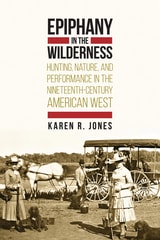
Epiphany in the Wilderness
Hunting, Nature, and Performance in the Nineteenth-Century American WestKaren R. Jones
University Press of Colorado, 2016
Whether fulfilling subsistence needs or featured in stories of grand adventure, hunting loomed large in the material and the imagined landscape of the nineteenth-century West. Epiphany in the Wilderness explores the social, political, economic, and environmental dynamics of hunting on the frontier in three “acts,” using performance as a trail guide and focusing on the production of a “cultural ecology of the chase” in literature, art, photography, and taxidermy.
Using the metaphor of the theater, Jones argues that the West was a crucial stage that framed the performance of the American character as an independent, resourceful, resilient, and rugged individual. The leading actor was the all-conquering masculine hunter hero, the sharpshooting man of the wilderness who tamed and claimed the West with each provident step. Women were also a significant part of the story, treading the game trails as plucky adventurers and resilient homesteaders and acting out their exploits in autobiographical accounts and stage shows.
Epiphany in the Wilderness informs various academic debates surrounding the frontier period, including the construction of nature as a site of personal challenge, gun culture, gender adaptations and the crafting of the masculine wilderness hero figure, wildlife management and consumption, memorializing and trophy-taking, and the juxtaposition of a closing frontier with an emerging conservation movement.
The University Press of Colorado gratefully acknowledges the generous support of the Charles Redd Center for Western Studies at Brigham Young University toward the publication of this book.
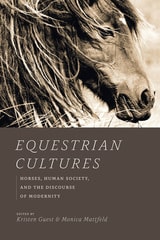
Equestrian Cultures
Horses, Human Society, and the Discourse of ModernityEdited by Kristen Guest and Monica Mattfeld
University of Chicago Press, 2019
Kristen Guest and Monica Mattfeld place the modern period front and center in this collection, illuminating the largely untold story of how the horse has responded to the accelerated pace of modernity. The book’s contributors explore equine cultures across the globe, drawing from numerous interdisciplinary sources to show how horses have unexpectedly influenced such distinctively modern fields as photography, anthropology, and feminist theory. Equestrian Cultures boldly steps forward to redefine our view of the most recent developments in our long history of equine partnership and sets the course for future examinations of this still-strong bond.

Escalante
The Best Kind of NothingText by Brooke Williams; Photographs by Chris Noble
University of Arizona Press, 2006
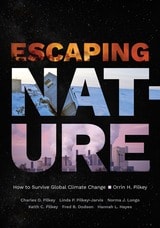
Escaping Nature
How to Survive Global Climate ChangeOrrin H. Pilkey, Charles O. Pilkey, Linda P. Pilkey-Jarvis, Norma J. Longo, Keith C. Pilkey, Fred B. Dodson, and Hannah L. Hayes
Duke University Press, 2024
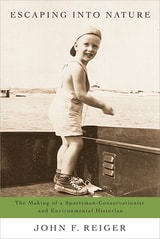
Escaping into Nature
The Making of a Sportsman-Conservationist and Environmental HistorianJohn F. Reiger
Oregon State University Press, 2013
In Escaping into Nature, prominent wildlife conservationist and environmental historian John Reiger shares his story of an angler and hunter who found a cause and a calling and combined them for his life’s work.
John Reiger’s outdoor adventures as a young man primed him for the teachings of the great sportsmen-conservationists of the past, particularly George Bird Grinnell, Theodore Roosevelt, and Aldo Leopold. Inspired by these conservation giants, Reiger left the security of a tenured professorship to serve as executive director of the Connecticut Audubon Society where he, sometimes controversially, put his ideals into practice. Later, he resumed his academic career to illuminate the lives of early wildlife conservationists, visionaries who continue to inspire us to care deeply about the future of the natural world.
Abused psychologically within his family in his early years, Reiger found solace in nature. Though he first entered the outdoors as an escape from his unpleasant circumstances, he soon found the study and pursuit of insects, fishes, and birds to be exciting ends in themselves. He came to believe that it was only by participating in the life and death of other creatures that one could learn to truly value the natural world, be a part of it, and be inspired to work for its conservation.
John Reiger’s autobiography is also the story of his own developing fascination with America’s past, especially as it relates to human interaction with the natural world; his desire to share that passion with others; and his experiences on the road to becoming a nationally recognized scholar. The twists and turns of that journey, and his accounts of the people—and of the wild creatures—who helped him along the way, will appeal to history enthusiasts and nature lovers alike.

Ethics of Environment and Development
Global Challenge, International ResponseJ. Ronald Engel
University of Arizona Press, 1990
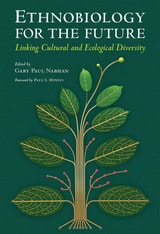
Ethnobiology for the Future
Linking Cultural and Ecological DiversityEdited by Gary Paul Nabhan; Foreword by Paul E. Minnis
University of Arizona Press, 2016
In this important new collection, Gary Paul Nabhan puts forth a call for the future not only of ethnobiology but for the entire planet. He articulates and broadens the portfolio of ethnobiological principles and amplifies the tool kit for anyone engaged in the ethnobiosphere, those vital spaces of intense interaction among cultures, habitats, and creatures.
The essays are grouped into a trio of themes. The first group presents the big questions facing humanity, the second profiles tools and methodologies that may help to answer those questions, and the third ponders how to best communicate these issues not merely to other scholars, but to society at large. The essays attest to the ways humans establish and circumscribe their identities not only through their thoughts and actions, but also with their physical, emotional, and spiritual attachments to place, flora, fauna, fungi, and feasts.
Nabhan and his colleagues from across disciplines and cultures encourage us to be courageous enough to include ethical, moral, and even spiritual dimensions in work regarding the fate of biocultural diversity. The essays serve as cairns on the critical path toward an ethnobiology that is provocative, problem-driven, and, above all, inspiring.
Ethnobotany of the Coos, Lower Umpqua, and Siuslaw Indians
Patricia Whereat-Phillips
Oregon State University Press, 2016
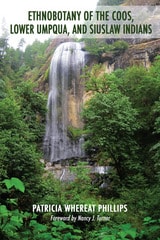
Very little has been published until now on the ethnobotany of western Oregon indigenous peoples. Ethnobotany of the Coos, Lower Umpqua, and Siuslaw Indians documents the use of plants by these closely-related coastal tribes, covering a geographical area that extends roughly from Cape Perpetua on the central coast, south to the Coquille River, and from the Coast Range west to the Pacific shore. With a focus on native plants and their traditional uses, it also includes mention of farming crops, as well as the highly invasive Himalayan blackberry, which some Oregon coast Indians called the "white man's berry."
The cultures of the Coos Bay, Lower Umpqua and Siuslaw are distinct from the Athabaskan speaking people to the south, and the Alsea to the north. Today, many tribal members are reviving ancient arts of basket weaving and woodworking, and many now participate in annual intertribal canoe events. Ethnobotany of the Coos, Lower Umpqua, and Siuslaw Indians contributes to this cultural renaissance by filling an important gap in the historical record. It is an invaluable resource for anyone who wishes to learn about the indigenous cultures of the central and southern Oregon coast, as well as those who are interested in Pacific Northwest plants and their cultural uses.
Every Root an Anchor
Wisconsin's Famous and Historic TreesR. Bruce Allison
Wisconsin Historical Society Press, 2005
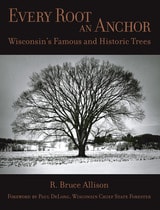
In Every Root an Anchor, writer and arborist R. Bruce Allison celebrates Wisconsin's most significant, unusual, and historic trees. More than one hundred tales introduce us to trees across the state, some remarkable for their size or age, others for their intriguing histories. From magnificent elms to beloved pines to Frank Lloyd Wright's oaks, these trees are woven into our history, contributing to our sense of place. They are anchors for time-honored customs, manifestations of our ideals, and reminders of our lives' most significant events.
For this updated edition, Allison revisits the trees' histories and tells us which of these unique landmarks are still standing. He sets forth an environmental message as well, reminding us to recognize our connectedness to trees and to manage our tree resources wisely. As early Wisconsin conservationist Increase Lapham said, "Tree histories increase our love of home and improve our hearts. They deserve to be told and remembered."
Everyday Ecofascism
Crisis and Consumption in American LiteratureAlexander Menrisky
University of Minnesota Press, 2025
A timely look into how fascist ideas permeate contemporary culture well beyond the far right
As challenges posed by climate change have intensified in the twenty-first century, right-wing figures in the United States and abroad have increasingly framed anti-immigrant, anti-Indigenous, and white-supremacist sentiments in terms of environmental survival. Everyday Ecofascism explores the insidious nature of this tendency, revealing how permutations of these perspectives in fact resonate across the political spectrum. Drawing on comparative studies of fascism writ large, Alexander Menrisky demonstrates that ecofascism is best understood not as a uniquely right-wing ideology but as a political genre that reinforces white supremacy and other forms of domination.
Presenting a view of fascism as a complex power network that plays out on scales both large and small, Menrisky shows how extremist sentiments have crept into everyday language, stories, and ideas. Through a literary and cultural studies lens, he illuminates ecofascism’s narrative patterns and their easy permeation of environmentalist discourses, from back-to-the-land movements to the resurgence of psychedelic drugs, food localism, and pandemic politics. Opposite his analysis of ecofascism in action, Menrisky sheds important light on narrative resistances to dominant conceptions of race, nation, and territory by Native, queer, and women-of-color writers who have countered ethnonationalism for generations.
Bridging past and present, Menrisky powerfully nails down the emergent concept of ecofascism and forms a basis for understanding phenomena like Covid-19, ecological utopianism, and psychedelic environmentalism that detangles ecofascist tendencies from justice-oriented visions of place-based belonging.
Retail e-book files for this title are screen-reader friendly.
Everyday Nature
Knowledge of the Natural World in Colonial New YorkGronim, Sara S
Rutgers University Press, 2007
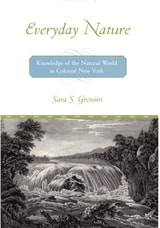
In the modern world, the public looks to scientists and scholars for their expertise on issues ranging from the effectiveness of vaccines to the causes of natural disasters. But for early Americans, whose relationship to nature was more intimate and perilous than our own, personal experience, political allegiances, and faith in God took precedence over the experiments of the learned.
In Everyday Nature, Sara Gronim shows how scientific advances were received in the early modern world, from the time Europeans settled in America until just before the American Revolution. Settlers approached a wide range of innovations, such as smallpox inoculation, maps and surveys, Copernican cosmology, and Ben Franklin’s experiments with electricity, with great skepticism. New Yorkers in particular were distrustful because of the chronic political and religious factionalism in the colony. Those discoveries that could be easily reconciled with existing beliefs about healing the sick, agricultural practices, and the revolution of the planets were more readily embraced.
A fascinating portrait of colonial life, this book traces a series of innovations that were disseminated throughout the Atlantic world during the Enlightenment, and shows how colonial New Yorkers integrated new knowledge into their lives.

Evolutionary Dynamics of a Natural Population
The Large Cactus Finch of the GalapagosB. Rosemary Grant and Peter R. Grant
University of Chicago Press, 1989
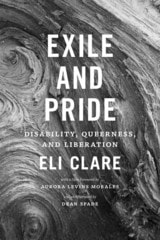
Exile and Pride
Disability, Queerness, and LiberationEli Clare
Duke University Press, 2015

Exile, Nature, and Transformation in the Life of Mary Hallock Foote
Megan Riley McGilchrist
University of Nevada Press, 2021
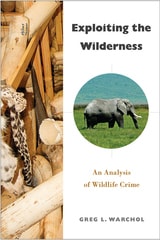
Exploiting the Wilderness
An Analysis of Wildlife CrimeGreg L. Warchol
Temple University Press, 2017
Illegally harvested ivory and endangered plants, mammals, reptiles, birds, and even insects are easily found for sale throughout East and Southern Africa. And this is just one part of the multi-billion-dollar illegal global trade in wildlife.
Wildlife is an important and even vital asset for both intrinsic and economic reasons. Yet it is illegally exploited on a massive scale to the point where some species now risk extinction. Exploiting the Wilderness provides a concise overview of this shameful business, describing some of the main species being exploited and examining select wildlife whose survival is imperiled due to heavy pressure from poachers to meet consumer demand.
Greg Warchol draws on his firsthand experience and research in Africa to examine the structure and operation of the illegal trade in wildlife. He identifies the participants as well as their motivations and operations, and explains the behavior of poachers, traffickers, and consumers of illegally obtained goods. He concludes with a description of legislative and law enforcement efforts to control and prevent wildlife exploitation along with a number of contemporary conservation initiatives designed to improve the ability of rangers to protect wildlife.