Results by title
4743 books match the query 'Religion' and 158 start with e
Essays on the Modern Japanese Church
Christianity in Meiji JapanYamaji Aizan; Translated by Graham Squires, with Introductory Essays by Graham Squires and A. Hamish Ion
University of Michigan Press, 2000
Eternal Life and Human Happiness in Heaven
Philosophical Problems, Thomistic SolutionsChristopher M. Brown
Catholic University of America Press, 2021
Eternity in the Ether
A Mormon Media HistoryGavin Feller
University of Illinois Press, 2023
Intriguing and original, Eternity in the Ether blends communications history with a religious perspective to examine the crossroads where mass media met Mormonism in the twentieth century.
Ethics and Its Sources in Nature and Revelation
Karol Wojtyla
Catholic University of America Press, 2026
Ethics from a Theocentric Perspective, Volume 1
Theology and EthicsJames M. Gustafson
University of Chicago Press, 1983
Ethics from a Theocentric Perspective, Volume 2
Ethics and TheologyJames M. Gustafson
University of Chicago Press, 1984
"Breadth and subtlety, wisdom and insight . . . Gustafson is a first-rate theologian."—Commonweal
"The two-volume work, now complete, will be a benchmark for discussions of Christian ethics for years to come. With it Gustafson becomes one of the thinkers by whom others can, by agreement or divergence, define their own ethics."—Roger L. Shinn, Christianity and Crisis
"Gustafson's theocentrism is an original and creative contribution to modern ethical discussion."—Douglas Sturm, Ethics
Ethics of Liberation
In the Age of Globalization and ExclusionEnrique Dussel
Duke University Press, 2012
Throughout his career, Dussel has sought to open a space for articulating new possibilities for humanity out of, and in light of, the suffering, dignity, and creative drive of those who have been excluded from Western Modernity and neoliberal rationalism. Grounded in engagement with the oppressed, his thinking has figured prominently in philosophy, political theory, and liberation movements around the world.
In Ethics of Liberation, Dussel provides a comprehensive world history of ethics, demonstrating that our most fundamental moral and ethical traditions did not emerge in ancient Greece and develop through modern European and North American thought. The obscured and ignored origins of Modernity lie outside the Western tradition. Ethics of Liberation is a monumental rethinking of the history, origins, and aims of ethics. It is a critical reorientation of ethical theory.
Ethics of Maimonides
Hermann Cohen, Translated by Almut Sh. Bruckstein
University of Wisconsin Press, 2004
Hermann Cohen’s essay on Maimonides’ ethics is one of the most fundamental texts of twentieth-century Jewish philosophy, correlating Platonic, prophetic, Maimonidean, and Kantian traditions. Almut Sh. Bruckstein provides the first English translation and her own extensive commentary on this landmark 1908 work, which inspired readings of medieval and rabbinic sources by Leo Strauss, Franz Rosenzweig, and Emmanuel Levinas.
Cohen rejects the notion that we should try to understand texts of the past solely in the context of their own historical era. Subverting the historical order, he interprets the ethical meanings of texts in the light of a future yet to be realized. He commits the entire Jewish tradition to a universal socialism prophetically inspired by ideals of humanity, peace, and universal justice.
Through her own probing commentary on Cohen’s text, like the margin notes of a medieval treatise, Bruckstein performs the hermeneutical act that lies at the core of Cohen’s argument: she reads Jewish sources from a perspective that recognizes the interpretive act of commentary itself.
Ethnic Conflict
Religion, Identity, and PoliticsS. A. Giannakos
Ohio University Press, 2001
The outbreak of numerous and simultaneous violent conflicts around the globe in the past decade resulted in immense human suffering and countless lost lives. In part, both results were aided by inactivity or by belated and often misplaced responses by the international community to the embattled groups. The apparent inability of the international community to respond firmly and purposefully to violent conflicts can be attributed partially to a general confusion and misunderstanding of the root causes of such conflicts. In some cases, the international community argued that violent conflicts could be attributed to irreconcilable ethnic differences, which, like earthquakes, are impossible to prevent or control.
At other times, the argument was that such conflicts were the results of evil leaders capable of engineering mass violent acts. Ethnic Conflict presents an interdisciplinary and comparative effort to explain the root causes of ethnic conflicts in terms of political, economic, and social common denominators that characterize all such conflicts. It seeks to dispel misplaced assumptions about violent domestic conflicts and, by providing a clearer picture of the mechanics of such conflicts, it hopes to assist in the process of conflict resolution and prevention.
Ethnographic Sorcery
Harry G. West
University of Chicago Press, 2007
According to the people of the Mueda plateau in northern Mozambique, sorcerers remake the world by asserting the authority of their own imaginative visions of it. While conducting research among these Muedans, anthropologist Harry G. West made a revealing discovery—for many of them, West’s efforts to elaborate an ethnographic vision of their world was itself a form of sorcery. In Ethnographic Sorcery, West explores the fascinating issues provoked by this equation.
A key theme of West’s research into sorcery is that one sorcerer’s claims can be challenged or reversed by other sorcerers. After West’s attempt to construct a metaphorical interpretation of Muedan assertions that the lions prowling their villages are fabricated by sorcerers is disputed by his Muedan research collaborators, West realized that ethnography and sorcery indeed have much in common. Rather than abandoning ethnography, West draws inspiration from this connection, arguing that anthropologists, along with the people they study, can scarcely avoid interpreting the world they inhabit, and that we are all, inescapably, ethnographic sorcerers.
Eugene England
A Mormon LiberalKristine L. Haglund
University of Illinois Press, 2021
Kristine L. Haglund views England’s writing through the tensions produced by his often-opposed intellectual and spiritual commitments. Though labeled a liberal, England had a traditional Latter-day Saint background and always sought to address fundamental questions in Mormon terms. His intellectually adventurous essays sometimes put him at odds with Church authorities and fellow believers. But he also influenced a generation of thinkers and cofounded Dialogue, a Mormon academic and literary journal acclaimed for the broad range of its thought.
A fascinating portrait of a Mormon intellectual and his times, Eugene England reveals a believing scholar who emerged from the lived experiences of his faith to engage with the changes roiling Mormonism in the twentieth century.
Europe (c.1400-1458)
Aeneas Silvius Piccolomini
Catholic University of America Press, 2013
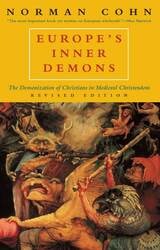
Europe's Inner Demons
The Demonization of Christians in Medieval ChristendomNorman Cohn
University of Chicago Press, 2000

European Religious Cultures
Essays Offered to Christopher Brooke on the Occasion of His Eightieth BirthdayEdited by Miri Rubin
University of London Press, 2008
Eusebius of Emesa
Church and Theology in the Mid-Fourth CenturyRobert E. Winn
Catholic University of America Press, 2011
Evagrius's Kephalaia Gnostika
A New Translation of the Unreformed Text from the SyriacIlaria L.E. Ramelli
SBL Press, 2015
A new English translation for scholars and students of church history
Evagrius exerted a striking impact on the development of spirituality, of Origenism, and of the spiritual interpretation of the Bible in Greek, Syriac, and Latin Christianity. This English translation of the most complete Syriac version of Kephalaia Gnostika makes Evagrius Ponticus's thoughts concerning reality, God, protology, eschatology, anthropology, and allegorical exegesis of Scripture widely available.
Features:
- English translation of the longer Syriac version discovered by Antoine Guillaumont
- Commentary provides an integrated analysis of Evagrius's ascetic and philosophical writings
- Extensive introduction on the importance of Evagrius and the context of his writings
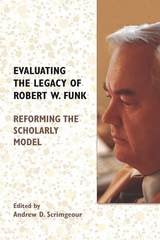
Evaluating the Legacy of Robert W. Funk
Reforming the Scholarly ModelAndrew D. Scrimgeour
SBL Press, 2018
Enter the world of an academic trailblazer
Robert W. Funk, professor of New Testament, former Executive Secretary of the Society of Biblical Literature, and founder of Scholars Press and the Jesus Seminar, was one of the most gifted, controversial figures in modern biblical scholarship. The volume includes nineteen of his essays, correspondences, interviews, and administrative papers pertaining to the Society of Biblical Literature and Scholars Press. Colleagues introduce each section with reflections on the life and contributions of Funk.
Features:
- Evaluation of the changes to scholarly societies and to scholarly research that Funk advocated
- Exploration of the shift in the interpretation of Jesus’s parables initiated by Funk
- Previously unpublished writings
Evangelical Gotham
Religion and the Making of New York City, 1783–1860Kyle B. Roberts
University of Chicago Press, 2016

Evangelical Identity and Gendered Family Life
Gallagher, Sally K
Rutgers University Press, 2003
Evangelical Identity and Gendered Family Life provides a sociological and historical analysis of gender, family, and work among evangelical Protestants. In this innovative study, Sally Gallagher traces two lines of gender ideals—one of husbands’ authority and leadership, the other of mutuality and partnership in marriage—from the Puritans to the Promise Keepers into the lives of ordinary evangelicals today. Rather than simply reacting against or accommodating themselves to “secular society,” Gallagher argues that both traditional and egalitarian evangelicals draw on longstanding beliefs about gender, human nature, and the person of God.
The author bases her arguments on an analysis of evangelical family advice literature, data from a large national survey and personal interviews with over 300 evangelicals nationwide. No other work in this area draws on such a range of data and methodological resources. Evangelical Identity and Gendered Family Life establishes a standard for future research by locating the sources, strategies, and meaning of gender within evangelical Protestantism.
Evangelical News
Politics, Gender, and Bioethics in Conservative Christian Magazines of the 1970s and 1980sAnja-Maria Bassimir
University of Alabama Press, 2022
A comprehensive study of evangelical magazine discourse during the 1970s and 1980s and how it navigated and sustained religious convictions in a time of dramatic social change
The 1970s and 1980s were a tumultuous period in US history. In tandem with a dramatic political shift to the right, evangelicalism also entered the public discourse as a distinct religious movement and was immediately besieged by cultural appropriations and internal fragmentations. Americans in general and evangelicals in particular grappled with issues and ideas such as feminism, abortion, birth control, and restructuring traditional roles for women and the family. During this time, there was a surge in readership for evangelical periodicals such as Christianity Today, Moody Monthly, Eternity, and Post-Americans/Sojourners as well as the feminist newsletter Daughters of Sarah.
While each of these magazines—and other publications and media—contributed to and participated in the overall dissemination of evangelical ideology, they also had their own outlooks and political leanings concerning hot-button issues. In Evangelical News: Politics, Gender, and Bioethics in Conservative Christian Magazines of the 1970s and 1980s, Anja-Maria Bassimir presents a nuanced view of evangelicalism in the late twentieth century through the lens of the movement’s own media.
Bassimir argues that community can be produced in discourse, especially when shared rhetoric, concepts, and perspectives signal belonging. To accomplish this, Evangelical News traces the emergence of evangelical social and political awareness in the 1970s to the height of its power as a political program. The chapters investigate such topics as how evangelicals reenvisioned gender norms and relations in light of the feminist movement, the use of childhood as a symbol of unspoiled innocence, and the place of evangelicals as political actors.
Evangelicals and Democracy in America
Religion and PoliticsSteven G. Brint
Russell Sage Foundation, 2009
Evangelicals and Democracy in America
Religion and SocietySteven G. Brint
Russell Sage Foundation, 2009
Everyday Apocalypse
Art, Empire, and the End of the WorldDavid Dark
Vanderbilt University Press, 2025
This revised edition of the book includes a foreword by Hanif Abdurraqib, an extensive afterword, updates in light of the passage of time since its publication, and new insights from the author, whose outspokenness has placed him outside of circles in which he was once supported and celebrated.
Everyone's Apocalypse
A Reflection Guide, 2nd EditionDonal A. McIlraith
Saint Paul Seminary Press, 2024
Evidence Of Purpose
Scientists Discover The CreatorJohn Marks Templeton
Templeton Press, 1996
Evidence of Editing
Growth and Change of Texts in the Hebrew BibleReinhard Müller
SBL Press, 2014
A new perspective on editorial activity in the Hebrew Bible for research and teaching
Evidence of Editing lays out the case for substantial and frequent editorial activity within the Hebrew Bible. The authors show how editors omitted, expanded, rewrote, and compiled both smaller and larger phrases and passages to address religious and political change. The book refines the exegetical method of literary and redaction criticism, and its results have important consequences for the future use of the Hebrew Bible in historical and theological studies.
Features:
- Hebrew, Greek, and Aramaic examples of editorial activity
- Clear explanations of the distinctions between textual, literary, and redaction criticism
- Fifteen chapters attesting to continual editorial activity in the Torah, the Prophets, and the Writings
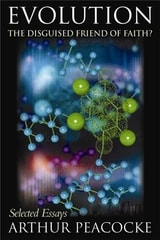
Evolution
The Disguised Friend of Faith?Arthur Peacocke
Templeton Press, 2004
Arthur Peacocke, eminent priest-scientist, has collected thirteen of his essays for this volume. Previously published in various academic journals and edited books, the provocative essays expand upon the theme of the evolution of nature, humanity, and belief. They are grouped into three parts:
- Natural Evolution covers topics ranging from the implications of deterministic chaos; biological evolution and Christian theology; chance, potentiality, and God; complexity, emergence, and divine creativity.
- Humanity Evolving in the Presence of God, articulating God’s presence in and to the world as it is unveiled by the sciences; the chrysalis of the human; the nature and purpose of man in science and Christian theology.
- Theological Evolution—the Reshaping of Belief, dealing with science and the future of theology; public truth in religion; the incarnation of the self-expressive word of God; DNA; and the challenges and possibilities of western theism.
In the epilogue, Dr. Peacocke discusses wisdom in science and education, referring to Robert Grosseteste, a medieval scientist-theologian.
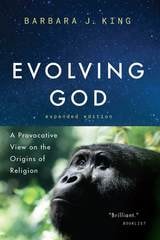
Evolving God
A Provocative View on the Origins of Religion, Expanded EditionBarbara J. King
University of Chicago Press, 2017
Religion has been a central part of human experience since at least the dawn of recorded history. The gods change, as do the rituals, but the underlying desire remains—a desire to belong to something larger, greater, most lasting than our mortal, finite selves.
But where did that desire come from? Can we explain its emergence through evolution? Yes, says biological anthropologist Barbara J. King—and doing so not only helps us to understand the religious imagination, but also reveals fascinating links to the lives and minds of our primate cousins. Evolving God draws on King’s own fieldwork among primates in Africa and paleoanthropology of our extinct ancestors to offer a new way of thinking about the origins of religion, one that situates it in a deep need for emotional connection with others, a need we share with apes and monkeys. Though her thesis is provocative, and she’s not above thoughtful speculation, King’s argument is strongly rooted in close observation and analysis. She traces an evolutionary path that connects us to other primates, who, like us, display empathy, make meanings through interaction, create social rules, and display imagination—the basic building blocks of the religious imagination. With fresh insights, she responds to recent suggestions that chimpanzees are spiritual—or even religious—beings, and that our ancient humanlike cousins carefully disposed of their dead well before the time of Neandertals.
King writes with a scientist’s appreciation for evidence and argument, leavened with a deep empathy and admiration for the powerful desire to belong, a desire that not only brings us together with other humans, but with our closest animal relations as well.
Ex Voto
Votive Giving Across CulturesEdited by Ittai Weinryb
Bard Graduate Center, 2015
The contributors to this comparative study examine ex votos across a range of locations and time periods, including the classical Mediterranean world, medieval Europe, the period of the Catholic Reform, and on to Mexico, Shinto and Buddhist Japan, and Muslim Iran. Voluminous and diverse, Ex Voto will appeal in a wide range of fields, including history, religion, and anthropology.
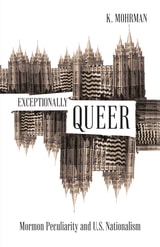
Exceptionally Queer
Mormon Peculiarity and U.S. NationalismK. Mohrman
University of Minnesota Press, 2022
How perceptions of Mormonism from 1830 to the present reveal the exclusionary, racialized practices of the U.S. nation-state
Are Mormons really so weird? Are they potentially queer? These questions occupy the heart of this powerful rethinking of Mormonism and its place in U.S. history, culture, and politics. K. Mohrman argues that Mormon peculiarity is not inherent to the Latter-day Saint faith tradition, as is often assumed, but rather a potent expression of U.S. exceptionalism.
Exceptionally Queer scrutinizes the history of Mormonism starting with its inception in the early 1830s and continuing to the present. Drawing on a wide range of historical texts and moments—from nineteenth-century battles over Mormon plural marriage; to the LDS Church’s emphases on “individual responsibility” and “family values”; to mainstream media’s coverage of the LDS Church’s racist exclusion of Black priesthood holders, its Native assimilation programs, and vehement opposition to the Equal Rights Amendment; and to much more recent legal and cultural battles over same-sex marriage and on-screen Mormon polygamy—Exceptionally Queer evaluates how Mormonism has been used to motivate and rationalize the biased, exclusionary, and colonialist policies and practices of the U.S. nation-state.
Mohrman explains that debates over Mormonism both drew on and shaped racial discourses and, in so doing, delineated the boundaries of whiteness and national belonging, largely through the consolidation of (hetero)normative ideas of sex, marriage, family, and economy. Ultimately, the author shows how discussions of Mormonism in this country have been and continue to be central to ideas of what it means to be American.
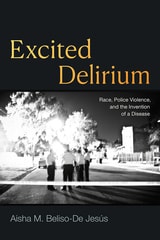
Excited Delirium
Race, Police Violence, and the Invention of a DiseaseAisha M. Beliso-De Jesús
Duke University Press, 2024
Exegetic Homilies
Saint Basil
Catholic University of America Press, 1963
Exegetical Epistles
Thomas P. Jerome
Catholic University of America Press, 2023
Exegetical Epistles, Volume 2
Thomas P. St. Jerome
Catholic University of America Press, 2024
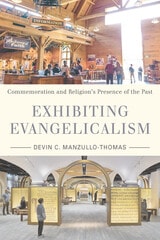
Exhibiting Evangelicalism
Commemoration and Religion’s Presence of the PastDevin C. Manzullo-Thomas
University of Massachusetts Press, 2022
Religion is a subject often overlooked or ignored by public historians. Whether they are worried about inadvertent proselytizing or fearful of contributing to America’s ongoing culture wars, many heritage professionals steer clear of discussing religion’s formative role in the past when they build collections, mount exhibits, and develop educational programming. Yet religious communities have long been active contributors to the nation’s commemorative landscape.
Exhibiting Evangelicalism provides the first account of the growth and development of historical museums created by white evangelical Christians in the United States over the twentieth and twenty-first centuries. Exploring the histories of the Museum of the Bible, the Billy Graham Center Museum, the Billy Sunday Home, and Park Street Church, Devin C. Manzullo-Thomas illustrates how these sites enabled religious leaders to develop a coherent identity for their fractious religious movement and to claim the centrality of evangelicalism to American history. In their zeal to craft a particular vision of the national past, evangelicals engaged with a variety of public history practices and techniques that made them major players in the field—including becoming early adopters of public history’s experiential turn.
Exodus!
Religion, Race, and Nation in Early Nineteenth-Century Black AmericaEddie S. Glaude Jr.
University of Chicago Press, 2000
Exodus! shows how this biblical story inspired a pragmatic tradition of racial advocacy among African Americans in the early nineteenth century—a tradition based not on race but on a moral politics of respectability. Eddie S. Glaude, Jr., begins by comparing the historical uses of Exodus by black and white Americans and the concepts of "nation" it generated. He then traces the roles that Exodus played in the National Negro Convention movement, from its first meeting in 1830 to 1843, when the convention decided—by one vote—against supporting Henry Highland Garnet's call for slave insurrection.
Exodus! reveals the deep historical roots of debates over African-American national identity that continue to rage today. It will engage anyone interested in the story of black nationalism and the promise of African-American religious culture.
Expanding Humanitys Vision Of God
Robert Herrmann
Templeton Press, 2001
How has our understanding of our world and our place in the universe changed in recent decades through the momentous discoveries of science? Do recent developments in the philosophy of science, which place limitations on scientific knowing, provide a more level playing field? This collection of essays and sermons, which have not been readily available before, address these thought-provoking questions.
The John Templeton Foundation sponsored an essay and sermon contest to convey an expanded vision of God, one that is informed by recent discoveries of science on the nature of the universe and the place we have in the world. These selections are the winners of that competition.
The book is divided into three sections: “Contemporary Science Raising Theological Questions,” “New Visions of Theology,” and “Historical and Philosophical Perspectives on the Science-Religion Dialogue.” The essays cover such areas as physics, theology, cosmology, origins, and artificial intelligence.
“There is another way to conceive our life together. There is another way to conceive of our life in God, but it requires a different worldview—not a clockwork universe in which individuals function as discrete springs and gears, but one that looks more like a luminous web, in which the whole is far more than the parts. In this universe, there is no such thing as an individual apart from his or her relationships. Every interaction—between people and people, between people and things, between things and things—changes the face of history. Life on earth cannot be reduced to four sure-fire rules. It is an ever-unfolding mystery that defies precise prediction. Meanwhile, in this universe, there is no such thing as 'parts‚' The whole is the fundamental unit of reality.” —Barbara Brown Taylor, “Physics and Faith,”
Expanding the Palace of Torah
Orthodoxy and FeminismTamar Ross
Brandeis University Press, 2004
This new edition brings this acclaimed and classic text back into print with a new essay by Tamar Ross which examines new developments in feminist thought since the book was first published in 2004.
Expecting Pears from an Elm Tree
Franciscan Missions on the Chiriguano Frontier in the Heart of South America, 1830–1949Erick D. Langer
Duke University Press, 2009
Expecting Pears from an Elm Tree is based on twenty years of research, including visits to the sites of nearly every mission discussed and interviews with descendants of mission Indians, Indian chiefs, Franciscan friars, mestizo settlers, and teachers. Langer chronicles how, beginning in the 1840s, the establishment of missions fundamentally changed the relationship between the Chiriguano villages and national society. He looks at the Franciscan missionaries’ motives, their visions of ideal missions, and the realities they faced. He also examines mission life from the Chiriguano point of view, considering their reasons for joining missions and their resistance to conversion, as well as the interrelated issues of Indian acculturation and the development of the mission economy, particularly in light of the relatively high rates of Indian mortality and outmigration. Expanding his focus, Langer delves into the complex interplay of Indians, missionaries, frontier society, and the national government until the last remaining missions were secularized in 1949. He concludes with a comparative analysis between colonial and republican-era missions throughout Latin America.
Expecting Teryk
An Exceptional Path to ParenthoodDawn Prince-Hughes
Ohio University Press, 2005
“Expecting Teryk is a rich and sumptuous work that speaks to the deeper realities and represents a unique viewpoint of experiences shared by all individuals who choose the path to parenthood.”—Disability, Pregnancy, and Parenthood
The period just prior to the birth of a child is a time of profound personal transformation for expectant parents. Expecting Teryk: An Exceptional Path to Parenthood is an intimate exploration, written in the form of a letter from a parent to her future son, that reclaims a rite of passage that modern society would strip of its magic.
Dawn Prince-Hughes, renowned author of Songs of the Gorilla Nation: My Journey through Autism, considers the ways being autistic might inform her parenting. She also candidly narrates her experience of becoming a parent as part of a lesbian couple—from meeting her partner to the questions they ask about their readiness to become parents and the practical considerations of choosing a sperm donor.
Expecting Teryk is viewed through the lens of autism as Prince-Hughes shares the unique way she sees and experiences the world—as well as her aching will to be fully present for her son. Contemplating the evolutionary traditions of parenting from both animal and human perspectives and the reassurances that nature offers, Expecting Teryk is a work of sensuous wonder that speaks to the deeper realities and archetypal experiences shared by all who embark on the journey of parenthood.
Experience
Thinking, Writing, Language, and ReligionNorman Fischer
University of Alabama Press, 2015
An exploration of how language, creativity, and spiritual practice shape human experience.
By what narrow path is the ineffable silence of Zen cleft by the scratch of a pen? The distilled insights of forty years, Norman Fischer’s Experience: Thinking, Writing, Language, and Religion is a collection of essays by Zen master Fischer about experimental writing as a spiritual practice.
Raised in a Conservative Jewish family, Fischer embraced the twin practices of Zen Buddhism and innovative poetics in San Francisco in the early 1970s. His work includes original poetry, descriptions of Buddhist practice, translations of the Hebrew psalms, and eclectic writings on a range of topics from Homer to Heidegger to Kabbalah. Both Buddhist priest and participant in avant-garde poetry’s Language movement, Fischer has limned the fertile affinities and creative contradictions between Zen and writing, accumulating four decades of rich insights he shares in Experience.
Fischer’s work has been deeply enriched through his collaborations with leading rabbis, poets, artists, esteemed Zen Buddhist practitioners, Trappist monks, and renowned Buddhist leaders, among them the Dalai Lama. Alone and with others, he has carried on a deep and sustained investigation into the intersection of writing and consciousness as informed by meditation.
The essays in this artfully curated collection range across divers, fascinating topics such as time, the Heart Sutra, God in the Hebrew psalms, the supreme “uselessness” of art making, “late work” as a category of poetic appreciation, and the subtle and dubious notion of “religious experience.” From the theoretical to the revealingly personal, Fischer’s essays, interviews, and notes point toward a dramatic expansion of the sense of religious feeling in writing.
Readers who join Fischer on this path in Experience can discover how language is not a description of experience, but rather an experience itself: shifting, indefinite, and essential.
Experientia, Volume 2
Linking Text and ExperienceColleen Shantz
SBL Press, 2012
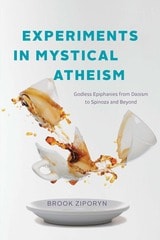
Experiments in Mystical Atheism
Godless Epiphanies from Daoism to Spinoza and BeyondBrook Ziporyn
University of Chicago Press, 2024
Western philosophy is stuck in an irresolvable conflict between two approaches to the spiritual malaise of our times: either we need more God (the “turn to religion”) or less religion (the New Atheism). In this book, Brook Ziporyn proposes an alternative that avoids both totalizing theomania and atomizing reductionism. What we need, he argues, is a deeper, more thoroughgoing, even religious rejection of God: an affirmative atheism without either a creator to provide meaning or finite creatures in need of it—a mystical atheism.
In the legacies of Daoism and Buddhism as well as Spinoza, Nietzsche, and Bataille, Ziporyn discovers a critique of theism that develops into a new, positive sensibility—at once deeply atheist and richly religious. Experiments in Mystical Atheism argues that these “godless epiphanies” hold the key to renewing philosophy today.
Experiments in the Fading Light
Peck, Steven L.
Signature Books, 2025
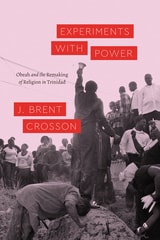
Experiments with Power
Obeah and the Remaking of Religion in TrinidadJ. Brent Crosson
University of Chicago Press, 2020
From eighteenth-century slave rebellions to contemporary responses to police brutality, Caribbean methods of problem-solving “spiritual work” have been criminalized under the label of “obeah.” Connected to a justice-making force, obeah remains a crime in many parts of the anglophone Caribbean. In Experiments with Power, J. Brent Crosson addresses the complex question of what obeah is. Redescribing obeah as “science” and “experiments,” Caribbean spiritual workers unsettle the moral and racial foundations of Western categories of religion. Based on more than a decade of conversations with spiritual workers during and after the state of emergency, this book shows how the reframing of religious practice as an experiment with power transforms conceptions of religion and law in modern nation-states.

Explaining Christian Origins and Early Judaism
Contributions from Cognitive and Social SciencePetri Luomanen
SBL Press, 2016
Now in paperback!
Cognitive science of religion is a radically new paradigm in the study of religion. Historians of religion have shown increasing interest in this approach. The book is in four parts: an introduction to cognitive and social-scientific approaches, applications of cognitive science, applications of conceptual blending theory, and applications of socio-cognitive analyses.
Features:
- Paperback format of an essential Brill resource
- Essays that combine cognitive analysis with historical and social-scientific approaches to biblical materials, Christian origins, and early Judaism
- Research for historians of religion, biblical scholars, and those working in the cognitive science of religion.
Exploring Colossians
Living the New RealityRoy R. Jeal
SBL Press, 2024
Exploring Forgiveness
Edited by Robert D. Enright and Joanna North
University of Wisconsin Press, 1998
Exploring Philemon
Freedom, Brotherhood, and Partnership in the New SocietyRoy R. Jeal
SBL Press, 2015
A new, sociorhetorical interpretation of the Letter to Philemon
Exploring Philemon shows how this letter entered the world of the ancient Mediterranean and the early church with a dramatic and powerful rhetorical force by analyzing the range of textures interwoven with each other to produce a profound effect on an early Christian (Philemon) and on the church that met in his home. It demonstrates that many striking and subtle features work together to present a rhetorical argument that the new Christian society must be one of freedom, brotherhood, and partnership not just for the powerful, but for all.
Features:
- An analysis of the visual imagery of the letter
- Application of up-to-date rhetorical, sensory-aesthetic, and intertextual interpretive methods
- Use of Social and cultural, ideological, and theological strategies
Exploring Second Corinthians
Death and Life, Hardship and RivalryB. J. Oropeza
SBL Press, 2016
A multi-faceted commentary that breathes fresh insight into Paul's letter
In Second Corinthians, Paul responds to reports of the Corinthian congregation questioning his competency as a divinely sent messenger. Through apologetic demegoria and the use of graphic imagery related to triumphal processions, siege warfare, and emissary travels and negotiation, Paul defends his constancy, persona, and speaking abilities as he extends the offer of clemency and reconciliation to his auditors. Oropeza combines rhetorical pictures (rhetography) with interpretative layers (literary features, intertextuality, socio-cultural, ideological, and sacred textures) to arrive at the rhetorical impact of Paul's message for ancient Mediterranean discourse.
Features:- A visual, sensory, and imaginative interpretation of the scripture
- A comprehensive commentary
- An avant-garde approach to biblical interpretation