1927 books match the query 'Technology & Engineering' and 121 start with e
cover of Essays on the History of Transportation and Technology

Essays on the History of Transportation and Technology

EMORY L. KEMP

West Virginia University Press, 2014

Emory Kemp is the founder and director of the Institute for the History of Technology and Industrial Archaeology at West Virginia University, where he also served as a chair and professor of civil engineering and a professor of history. This collection of essays encompasses over fifty years of his research in the field of the history of technology.

Within these twelve essays, Kemp describes and analyzes nineteenth century improvements in building materials such as iron, steel, and cement; roads and bridges, especially the evolution of the suspension bridge; canals and navigable rivers, including the Ohio River and its tributaries; and water supply systems. As one of the few practicing American engineers who also researches and writes as an academic, Kemp adds an important historical context to his work by focusing not only on the construction of a structure but also on the analytical science that heralds a structure’s design and development.

[more]
cover of Essentials of Electromagnetic Compatibility Engineering

Essentials of Electromagnetic Compatibility Engineering

Randy J. Jost

The Institution of Engineering and Technology, 2016

Electromagnetic compatibility (EMC) engineering has grown rapidly as a field as systems have become smaller. More compact systems have resulted in increased interference and leakage problems, thus making it almost every design engineer's mission to seek and eliminate EMC-related problems before production commences.
[more]
cover of Essentials of Non-linear Control Theory

Essentials of Non-linear Control Theory

J.R. Leigh

The Institution of Engineering and Technology, 1983
The book is concerned with understanding the structure of nonlinear dynamic systems within a control engineering context After a discussion of theoretical foundations, the development moves to specific techniques (describing function method, phase plane portrait, linearisation methods). The treatment then becomes oriented to qualitative analysis and maintains this emphasis to the end of the book. The broad aim is to develop methods that will allow the topology of system behaviour to be visualised. The main tools are Lyapunov methods, extending to include recent work on system decomposition. A bibliography lists both earlier seminal and recent literature to allow the reader to follow up particular aspects.
[more]
cover of Evaluation of Intelligent Road Transport Systems: Methods and results

Evaluation of Intelligent Road Transport Systems

Methods and results

Meng Lu

The Institution of Engineering and Technology, 2016
Intelligent Transport Systems (ITS) use information and communications technologies (ICT) to deliver transport improvements instead of extending physical infrastructure, thereby saving money and reducing environmental impact. This book provides an overview of ICT-based intelligent road transport systems with an emphasis on evaluation methods and recent evaluation results of ITS development and deployment. Topics covered include: ITS evaluation policy; frameworks and methods for ITS evaluation; ITS impact evaluation; the network perspective; field operational tests (FOTs); assessing transport measures using cost-benefit and multicriteria analysis; technical assessment of the performance of in-vehicle systems; opportunities and challenges in the era of new pervasive technology; evaluation of automated driving functions; user-related evaluation of ADAS (Advanced Driver Assistance Systems) and automated driving; evaluation of traffic management; performance assessment of a wet weather pilot system; case studies from China; heavy vehicle overload control benefit and cost. With chapters from an international panel of leading experts, this book is essential reading for researchers and advanced students from academia, industry and government working in intelligent road transport systems.
[more]
cover of Evaluation of Intelligent Road Transport Systems: Methods and results

Evaluation of Intelligent Road Transport Systems

Methods and results

Meng Lu

The Institution of Engineering and Technology, 2024
Intelligent transport systems (ITS) use ICT to deliver transport system improvements as an alternative to expanding physical infrastructure, thereby saving on investments and reducing environmental impact. ITS applications contribute to cleaner and safer transport, enhance economic growth, and hold the promise for sustainable mobility solutions for a future flourishing society.
[more]
cover of Everyday Sciences: Practical Knowledge and Knowledgeable Practice in Medieval South Asia

Everyday Sciences

Practical Knowledge and Knowledgeable Practice in Medieval South Asia

Eric Moses Gurevitch

University of Chicago Press, 2027

How people across society in medieval South Asia—including coppersmiths, merchants, bureaucrats, philosophers, and physicians—pioneered new vernacular sciences.

Starting in the eleventh century, South Asian scholars and artisans began to investigate and shape the world in a novel manner. Intellectuals translated Sanskrit texts into regional languages such as Kannada, situating knowledge in particular places. At the same time, architects and artisans began to assert their intellectual and literary presence, often claiming the title of “scholar” as they negotiated a space between classical textual erudition, professional expertise, and personal experience. Working within the perilous world of court politics, a new class of scholar-administrators began collecting recipes and composing texts about weather prediction, horticulture, mathematics, astrology, sexual life, and medicine.

Everyday Sciences traces this emergence of vernacular sciences by engaging with untapped archives and an array of sources in multiple languages. By exploring how historical actors resolved disputes about the physiology of vision, the use of meat and alcohol in medicine, and the management of information in elephant stables, Eric Moses Gurevitch unveils the complex textual and social orders that structured medieval society in India. He argues that a focus on everyday sciences in the non-modern non-West allows historians to reassess how places outside—and even inside—Europe are brought into narratives of a global history of science. Gurevitch articulates a “big-enough” history of science in South Asia, one open to little voices and unexpected connections that might not make their way through the fray in other histories.

Everyday Sciences demonstrates how practical, everyday activities were engines of profound intellectual innovation—and it shows the promise of revisiting the past without colonial hang-ups, and with fresh eyes.  
[more]
cover of Everyday Technology: Machines and the Making of India's Modernity

Everyday Technology

Machines and the Making of India's Modernity

David Arnold

University of Chicago Press, 2013
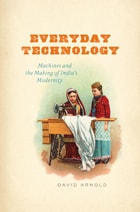
In 1909 Mohandas Karamchand Gandhi, on his way back to South Africa from London, wrote his now celebrated tract Hind Swaraj, laying out his vision for the future of India and famously rejecting the technological innovations of Western civilization. Despite his protestations, Western technology endured and helped to make India one of the leading economies in our globalized world. Few would question the dominant role that technology plays in modern life, but to fully understand how India first advanced into technological modernity, argues David Arnold, we must consider the technology of the everyday.
 
Everyday Technology is a pioneering account of how small machines and consumer goods that originated in Europe and North America became objects of everyday use in India in the late nineteenth and early twentieth centuries. Rather than investigate “big” technologies such as railways and irrigation projects, Arnold examines the assimilation and appropriation of bicycles, rice mills, sewing machines, and typewriters in India, and follows their impact on the ways in which people worked and traveled, the clothes they wore, and the kind of food they ate. But the effects of these machines were not limited to the daily rituals of Indian society, and Arnold demonstrates how such small-scale technologies became integral to new ways of thinking about class, race, and gender, as well as about the politics of colonial rule and Indian nationhood.
 
Arnold’s fascinating book offers new perspectives on the globalization of modern technologies and shows us that to truly understand what modernity became, we need to look at the everyday experiences of people in all walks of life, taking stock of how they repurposed small technologies to reinvent their world and themselves.

[more]
cover of Evolution Made to Order: Plant Breeding and Technological Innovation in Twentieth-Century America

Evolution Made to Order

Plant Breeding and Technological Innovation in Twentieth-Century America

Helen Anne Curry

University of Chicago Press, 2016

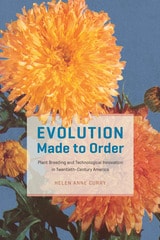
Plant breeders have long sought technologies to extend human control over nature. Early in the twentieth century, this led some to experiment with startlingly strange tools like x-ray machines, chromosome-altering chemicals, and radioactive elements. Contemporary reports celebrated these mutation-inducing methods as ways of generating variation in plants on demand. Speeding up evolution, they imagined, would allow breeders to genetically engineer crops and flowers to order. Creating a new food crop or garden flower would soon be as straightforward as innovating any other modern industrial product. 

In Evolution Made to Order, Helen Anne Curry traces the history of America’s pursuit of tools that could intervene in evolution. An immersive journey through the scientific and social worlds of midcentury genetics and plant breeding and a compelling exploration of American cultures of innovation, Evolution Made to Order provides vital historical context for current worldwide ethical and policy debates over genetic engineering.
[more]
cover of Evolution of the Agricultural Energy Internet: Modeling, simulation and engineering practice

Evolution of the Agricultural Energy Internet

Modeling, simulation and engineering practice

Xueqian Fu

The Institution of Engineering and Technology, 2026
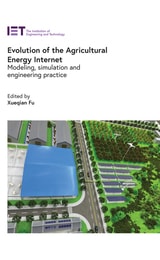
In smart agriculture, core functions such as agricultural machinery automation, intelligent environmental sensing, and precision crop management rely heavily on continuous, high-quality energy supply. Intelligent power systems tailored to agricultural scenarios are essential to realizing unmanned farms. Moreover, as a result of rural revitalization strategies and national programmes such as China's dual carbon goals, rural areas and agriculture are no longer merely energy consumers. Agricultural and rural zones are increasingly becoming important providers of distributed renewable energy and suitable deployment sites for energy infrastructure. As such, the agricultural energy internet is now entering a critical stage of rapid development and engineering transformation.
[more]
cover of Evolving Predictive Analytics in Healthcare: New AI techniques for real-time interventions

Evolving Predictive Analytics in Healthcare

New AI techniques for real-time interventions

Abhishek Kumar

The Institution of Engineering and Technology, 2022

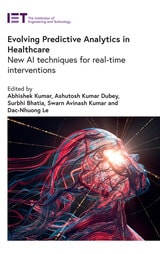
A major use of practical predictive analytics in medicine has been in the diagnosis of current diseases, particularly through medical imaging. Now there is sufficient improvement in AI, IoT and data analytics to deal with real time problems with an increased focus on early prediction using machine learning and deep learning algorithms. With the power of artificial intelligence alongside the internet of 'medical' things, these algorithms can input the characteristics/data of their patients and get predictions of future diagnoses, classifications, treatment and costs.
[more]
cover of Ex Ante: Power and Prediction in the Real-Time Future

Ex Ante

Power and Prediction in the Real-Time Future

John Cheney-Lippold

University of Chicago Press, 2027

An incisive framework for understanding how predictive AI has reshaped our relationship with time.

Ex Ante argues that AI systems draw us into a new experience of time, a continuous stream of machine-generated futures that reshapes our relationship to ourselves, to capitalism, and to infrastructure. Unlike other predictive tools that help us prepare for what might come, these projections—produced by algorithms and sourced by massive flows of data—calibrate our actions moment by moment, second by second. 

In this book, John Cheney-Lippold offers a framework he calls the ex ante, Latin for “before the event,” as a way to consider how the future has become capitalism’s latest resource for exploitation. Through case studies spanning TikTok beauty filters that have fueled a surge in plastic surgery consultations, chess engines that redefine how the game is played, online sports betting platforms that commodify probability itself, hospital sepsis algorithms that transform the labor of nursing, and coordinated vehicle networks that collectively anticipate their surroundings to function, Ex Ante offers an exploration and powerful critique of our algorithmic present and the powers behind it.

[more]
cover of Exam Preparation Requirements for Electrical Installations (2382-18)

Exam Preparation Requirements for Electrical Installations (2382-18)

The Institution of Engineering and Technology

The Institution of Engineering and Technology, 2019

This book has been written as a practice aid for the examination you will need to take to complete the Level 3 Award in Requirements for Electrical Installations: BS 7671 (2382-18).
[more]
cover of Exam Preparation Requirements for Electrical Installations: Level 3 Award

Exam Preparation Requirements for Electrical Installations

Level 3 Award

The Institution of Engineering and Technology

The Institution of Engineering and Technology, 2025

This book is an essential practice aid for the examination required to complete the City & Guilds and EAL Level 3 qualifications, Requirements for Electrical Installations, updated in accordance with BS 7671:2018+A2:2022.
[more]
cover of Exam Preparation: Electrical Installations (2391)

Exam Preparation

Electrical Installations (2391)

The Institution of Engineering and Technology

The Institution of Engineering and Technology, 2017

This level 3 qualification helps learners develop the knowledge and practical skills required to carry out inspection and testing on electrical installations.
[more]
cover of Exam Preparation: Electrotechnical Apprenticeship Qualification (5357)

Exam Preparation

Electrotechnical Apprenticeship Qualification (5357)

The Institution of Engineering and Technology

The Institution of Engineering and Technology, 2017

This book has been written as an exam practice aid to complete the City & Guilds Level 3 NVQ Diploma in Electrotechnical Technology (5357).
[more]
cover of Exam Preparation: Initial and Periodic Electrical Inspection and Testing (2391): Level 3 Award

Exam Preparation

Initial and Periodic Electrical Inspection and Testing (2391): Level 3 Award

The Institution of Engineering and Technology

The Institution of Engineering and Technology, 2023

This book is an essential practice aid for the examinations required to complete the City & Guilds qualification, Initial and Period Electrical Inspection and Testing (2391), including the three available pathways.
[more]
cover of Exam Preparation: Requirements for Electrical Installations (2382): Level 3 Award

Exam Preparation

Requirements for Electrical Installations (2382): Level 3 Award

The Institution of Engineering and Technology

The Institution of Engineering and Technology, 2023

This book is an essential practice aid for the examinations required to complete the City & Guilds qualification, Requirements for Electrical Installations (2382).
[more]
cover of Exhibiting Electricity

Exhibiting Electricity

K.G. Beauchamp

The Institution of Engineering and Technology, 1997
Throughout the 19th and 20th centuries technical exhibitions, held for the benefit of both cognoscente and the general public alike, have presented a mirror to the progress of science, engineering and, towards the second half of the 19th century and throughout the 20th century, to electrical technology.
[more]
cover of Explainable Artificial Intelligence in Medical Decision Support Systems

Explainable Artificial Intelligence in Medical Decision Support Systems

Agbotiname Lucky Imoize

The Institution of Engineering and Technology, 2022
Medical decision support systems (MDSS) are computer-based programs that analyse data within a patient's healthcare records to provide questions, prompts, or reminders to assist clinicians at the point of care. Inputting a patient's data, symptoms, or current treatment regimens into an MDSS, clinicians are assisted with the identification or elimination of the most likely potential medical causes, which can enable faster discovery of a set of appropriate diagnoses or treatment plans. Explainable AI (XAI) is a "white box" model of artificial intelligence in which the results of the solution can be understood by the users, who can see an estimate of the weighted importance of each feature on the model's predictions, and understand how the different features interact to arrive at a specific decision.
[more]
cover of Exploring Intelligent Healthcare with Quantum Computing

Exploring Intelligent Healthcare with Quantum Computing

Abhishek Kumar

The Institution of Engineering and Technology, 2024

Classical computers encode information in binary bits that can either be 0s or 1s. In a quantum computer, the basic unit of memory is a quantum bit or qubit. These qubits play a similar role in terms of storing information, but use physical systems, such as the spin of an electron or the orientation of a photon, to do so. In situations where there are a large number of possible feature combinations, quantum computers can consider them simultaneously, speeding up the data processing time.
[more]
cover of Exploring and Mapping Alaska: The Russian America Era, 1741-1867

Exploring and Mapping Alaska

The Russian America Era, 1741-1867

Alexey Postnikov and Marvin Falk

University of Alaska Press, 2015

Russia first encountered Alaska in 1741 as part of the most ambitious and expensive expedition of the entire eighteenth century. For centuries since, cartographers have struggled to define and develop the enormous region comprising northeastern Asia, the North Pacific, and Alaska. The forces of nature and the follies of human error conspired to make the area incredibly difficult to map.
Exploring and Mapping Alaska focuses on this foundational period in Arctic cartography.  Russia spurred a golden era of cartographic exploration, while shrouding their efforts in a veil of secrecy. They drew both on old systems developed by early fur traders and new methodologies created in Europe. With Great Britain, France, and Spain following close behind, their expeditions led to an astounding increase in the world’s knowledge of North America.
Through engrossing descriptions of the explorations and expert navigators, aided by informative illustrations, readers can clearly trace the evolution of the maps of the era, watching as a once-mysterious region came into sharper focus. The result of years of cross-continental research, Exploring and Mapping Alaska is a fascinating study of the trials and triumphs of one of the last great eras of historic mapmaking.
[more]