Results by title
3071 books match the query 'Business & Economics' and 174 start with e
Evaluating Science and Scientists
Mark S. Frankel
Central European University Press, 1997

Everyday Dirty Work
Invisibility, Communication, and Immigrant LaborWilfredo Alvarez
The Ohio State University Press, 2022
Winner, 2023 NCA Ethnography Division Best Book Award
Wilfredo Alvarez’s Everyday Dirty Work: Invisibility, Communication, and Immigrant Labor is an exploration into co-cultural communication practices within the workplace. Specifically, Alvarez investigates how Latin American immigrant janitors communicate from their marginalized standpoints in a predominantly White academic organization. He examines how custodial workers perceive, interpret, and thematize routine messages regarding race, ethnicity, social class, immigrant status, and occupation, and how those messages and overall communicative experiences affect both their work and personal lives.
A Latin American immigrant himself, Alvarez relates his own experiences to those of the research participants. His positionality informs and enhances his research as he demonstrates how everyday interpersonal encounters create discursive spaces that welcome or disqualify people based on symbolic and social capital. Alvarez offers valuable insights into the lived experiences of critical––but often undervalued and invisible––organizational members. Through theoretical insights and research data, he provides practical recommendations for organizational leaders to improve how they can relate to and support all stakeholders.
Everyday Leadership
Getting Results in Business, Politics, and LifeDaniel Granholm Mulhern
University of Michigan Press, 2007
“A book that truly speaks to everyone. . . . Always practical, often inspiring, this is more a reference book than a self-improvement text, and a great read for any would-be leader.”
—Roger Penske, owner of Penske Corporation and Penske Racing
“Sound, practical advice driven home with real-world examples. . . . This is a must-read book for anyone who wants to make a positive difference in the lives of others in their community, their business, or their family.”
—Dennis W. Archer, former mayor of Detroit
“Everyday Leadership is a treasure chest of engaging stories, practical tips, and rich insights into how we each can make a difference in the world when we take responsibility for the personal power that we have. . . . once you’ve taken Everyday Leadership to heart you’ll leave this world a little bit better than you found it.”
—Jim Kouzes, coauthor of The Leadership Challenge
“Everyday Leadership taught me as much about how to be a better person as it did about being a better leader. In fact, it revealed how much the two are the same. Excellent and helpful reading for anyone.”
—Marianne Williamson, author of Return to Love and Everyday Grace
Everyday Leadership offers strategies to improve leadership skills, achieve results, and gain greater satisfaction in these hectic times. It speaks to the everyday leader, whether that person is a principal, pastor, parent, or CEO.
Daniel Granholm Mulhern brings the art of management down to earth, presenting stories that illuminate some of the best ideas about real human leadership. He offers practical steps to achieve the goal of leading well in our lives through creating a vision, communicating that vision, and living it in simple yet powerful ways.
Daniel Granholm Mulhern is the “First Gentleman” of the State of Michigan and an accomplished consultant, business coach, and motivational speaker. In addition to the personal support and counsel he offers his wife, Governor Jennifer Mulhern Granholm, Dan contributes his professional expertise, spearheading the effort to make Michigan’s state government a model for the nation as a “great place to do great work!” Dan also chairs the Michigan Community Service Commission, which promotes and coordinates volunteer efforts across the state.
Everyone's Business
What Companies Owe SocietyAmit Ron and Abraham A. Singer
University of Chicago Press, 2024
Business is political. What are the ethics of it?
Businesses are political actors. They not only fund political campaigns, take stances on social issues, and wave the flags of identity groups – they also affect politics in their everyday hiring and investment decisions. As a highly polarized public demands political alignment from the powerful businesses they deal with, what’s a company to do?
Amit Ron and Abraham Singer show that the unavoidably political role of companies in modern life is both the fundamental problem and inescapable fact of business ethics: corporate power makes business ethics necessary, and business ethics must strive to mitigate corporate power. Because of its economic and social influence, Ron and Singer forcefully argue that modern business’s primary social responsibility is to democracy. Businesses must work to avoid wielding their power in ways that undermine key democratic practices like elections, public debate, and social movements. Pragmatic and urgent, Everyone’s Business offers an essential new framework for how we pursue profit—and democracy—in our increasingly divided world.
Everything for Sale
The Virtues and Limits of MarketsRobert Kuttner
University of Chicago Press, 1999
"The best survey of the limits of free markets that we have. . . . A much needed plea for pragmatism: Take from free markets what is good and do not hesitate to recognize what is bad."—Jeff Madrick, Los Angeles Times
"It ought to be compulsory reading for all politicians—fortunately for them and us, it is an elegant read."—The Economist
"Demonstrating an impressive mastery of a vast range of material, Mr. Kuttner lays out the case for the market's insufficiency in field after field: employment, medicine, banking, securities, telecommunications, electric power."—Nicholas Lemann, New York Times Book Review
"A powerful empirical broadside. One by one, he lays on cases where governments have outdone markets, or at least performed well."—Michael Hirsh, Newsweek
"To understand the economic policy debates that will take place in the next few years, you can't do better than to read this book."—Suzanne Garment, Washington Post Book World
Evolutionary Concepts in Contemporary Economics
Richard W. England, Editor
University of Michigan Press, 1994
Exchange Rate Theory and Practice
Edited by John F. Bilson and Richard C. Marston
University of Chicago Press, 1984

Exchange Rates and International Macroeconomics
Edited by Jacob A. Frenkel
University of Chicago Press, 1983
Both empirical and theoretical research are represented, and the contributors analyze such issues as the performance of various models of exchange rate determination, the role of risk and speculation in the forward market for foreign exchange, the rational expectations hypothesis in such markets, the performance of monetary policy in ten industrial countries, the role that labor market contracts play in exchange rate policies, the effect of he oil shocks on the evolution of exchange rates, and the output cost of bringing down inflation in the open economy.

Expanding Class
Power and Everyday Politics in Industrial Communities, The Netherlands 1850–1950Don Kalb
Duke University Press, 1998
Expanding Class compares Brabant’s quaint central shoemaking district to its electrical boomtown Eindhoven, home of the enormous Philips Corporation. It introduces the concept of "flexible familism," a sociological phenomenon in which family daughters were employed to facilitate a cheap and ample labor force. Industrialists manipulated and fostered flexible familism to ensure the discipline and loyalty of the working-class community. By using the industrial Netherlands as a paradigm, Kalb reveals new and productive ways to examine class construction and the development of labor history in other countries over the past thirty years, steering a path between the two schools of thought—cultural and economic—that have dominated labor history discussions in recent years.

Expanding the Strike Zone
Baseball in the Age of Free AgencyDaniel A. Gilbert
University of Massachusetts Press, 2013
Readers encounter both legendary and unheralded figures in this sweeping history, which situates Major League Baseball as part of a larger culture industry. The book examines a labor history defined at once by the growing power of big league stars—from Juan Marichal and Curt Flood to Fernando Valenzuela and Ichiro Suzuki—and the collective struggles of players working to make a living throughout the baseball world. It also explores the territorial politics that have defined baseball's development as a form of transnational popular culture, from the impact of Dominican baseball academies to the organized campaign against stadium development by members of Seattle's Asian American community.
Based on a rich body of research along with new readings of popular journalism, fiction, and film, Expanding the Strike Zone highlights the ways in which baseball's players, owners, writers, and fans have shaped and reshaped the sport as a central element of popular culture from the postwar boom to the Great Recession.
Expectations and the Structure of Share Prices
John G. Cragg and Burton G. Malkiel
University of Chicago Press, 1982
John G. Cragg and Burton G. Malkiel collected detailed forecasts of professional investors concerning the growth of 175 companies and use this information to examine the impact of such forecasts on the market evaluations of the companies and to test and extend traditional models of how stock market values are determined.

Experiential Learning in Sport Management
Second EditionSusan B. Foster
FiT Publishing, 2017
In the multi-billion dollar sport industry that captures the interest of a global audience, opportunities abound on the front lines and behind the scenes for those who have the education, skill, and drive to succeed. Often the biggest hurdles for those who want to work in the sport industry is breaking through with an initial opportunity. Experiential Learning in Sport Management: Internships and Beyond, 2nd Edition, presents aspiring sport practitioners with a wealth of information about the industry and provides professors within sport management programs a framework for how to lead students through the experiential learning experience.
Authors Susan Brown Foster and John E. Dollar draw from more than 50 years of combined experience in teaching, research, and internship supervision in writing a comprehensive yet concise manual for students preparing for a career in sport. This new edition includes enhanced content on trending topics such as social media and eSports.
Experimental Economics
Theory and PracticeJohn A. List
University of Chicago Press, 2025
A landmark practical guide from the twenty-first-century pioneer in economics.
Experimental economics—generating and interpreting data to understand human decisions, motivations, and outcomes—is today all but synonymous with economics as a discipline. The advantages of the experimental method for understanding causal effects make it the gold standard for an increasingly empirical field. But until now the discipline has lacked comprehensive and definitive guidance for how to optimally design and conduct economic experiments.
For more than 30 years, John A. List has been at the forefront of using experiments to advance economic knowledge, expanding the domain of economic experiments from the lab to the real-world. Experimental Economics is his A-to-Z compendium for students and researchers on the ground floor of designing, conducting, analyzing, and interpreting data that they generate. List seeks not only to guide readers on how to develop and implement their experimental projects—everything from design to administrative and ethical considerations—but to help them avoid all the mistakes he’s made in his career, too. Experimental Economics codifies its author’s refined approach to the design, execution, and analysis of laboratory and field experiments. It is a milestone work poised to become the definitive reference for the next century of economics (and economists).
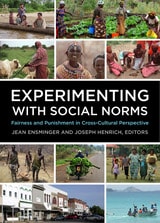
Experimenting with Social Norms
Fairness and Punishment in Cross-Cultural PerspectiveJean Ensminger
Russell Sage Foundation, 2014
Explaining Economic Backwardness
Post-1945 Polish Historians on Eastern EuropeAnna Sosnowska
Central European University Press, 2019
Explaining Process and Change
Approaches to Evolutionary EconomicsUlrich Witt, Editor
University of Michigan Press, 1992
Explaining Social Institutions
Jack Knight and Itai Sened, Editors
University of Michigan Press, 1998
Much of the work being done under the rubric of "new institutionalism" focuses on how institutions shape social, economic, and political outcomes. This emphasis on influence has provided students of economics, political science, and political economy with surprisingly little theory to account for the origins of such institutions. Yet without understanding how institutions form and consequently develop influence, much of the other work lacks context. The contributors fill this void by utilizing a variety of perspectives and theoretical approaches. The twin focus of these articles on the origins of institutions and the development of institutional influence yield innovative and suggestive outcomes. Topics range from the framing of the United States Constitution to debate over the Senate at the Federal Convention; from equilibrium and social institutions to democratic stability.
Contributors include Randall Calvert, Jon Elster, Avner Greif, Jack Knight, Paul Milgrom, Douglass North, William Riker, Norman Schofield, Itai Sened, and Barry Weingast.
Jack Knight is Assistant Professor of Political Science, Washington University, St. Louis. Itai Sened is Assistant Professor of Political Science, Tel Aviv University.
Explorations in Economic Sociology
Richard Swedberg
Russell Sage Foundation, 1993

Explorations in the Economics of Aging
Edited by David A. Wise
University of Chicago Press, 2011
The next two decades will mark a new phase in the demographic transition of the United States as baby boomers become eligible for Social Security and Medicare. Drawing on evidence from the United States and other nations, Explorations in the Economics of Aging yields important new findings on how economic decisions by households and policy choices by governments will influence the effects of this demographic shift. It explores topics such as the implications of differential mortality rates by income on Social Security, the link between cognition and economic outcomes, and scale variations in self-reported work disability. This volume will be an important reference for economists and policymakers alike.

Exploring Degrowth
A Critical GuideVincent Liegey
Pluto Press, 2020
As politicians and corporations obsess over growth objectives, the degrowth movement demands that we must slow down the economy by transforming our economies, our politics and our cultures to live within the Earth's limits.
This book navigates the practice and strategies of the movement, looking at its strengths and weaknesses. Covering horizontal democracy, local economies and the reduction of work, it shows us why degrowth is a compelling and realistic project.

Exports and Local Development
Mexico's New MaquiladorasBy Patricia A. Wilson
University of Texas Press, 1992
Mexico's export assembly industry has been the object of an intensely polarized debate. While some observers laud the maquiladora industry as a source of much-needed employment and foreign exchange for Mexico, others berate it as a vehicle for exploitation and pollution. Exports and Local Development attempts to transcend the dichotomy by taking a practical look at how this export industry could be better utilized to promote local development.
Using data gathered from a field survey of more than seventy maquiladora plants, Patricia A. Wilson compares the Mexican industry with its more successful Asian counterparts to determine how policy initiatives might help Mexico use local linkages to tap the potential of both local and foreign-owned assembly plants.
The study grounds its analysis of the maquiladora industry in leading-edge issues including the rise of free trade, changing corporate sourcing strategies, the competitiveness of U.S. manufacturing, the Japanese challenge, the spread of flexible technology and management methods, the impacts of export-led development strategies, the importance of business networking, and the role of small business. It will be of interest to a wide audience in international business, economic development planning, public policy, and economic geography.

Extracting Appalachia
Images of the Consolidation Coal Company, 1910–1945Geoffrey L. Buckley
Ohio University Press, 2004
As a function of its corporate duties, the Consolidation Coal Company, one of the largest coal-mining operations in the United States during the first half of the twentieth century, had photographers take hundreds of pictures of nearly every facet of its operations. Whether for publicity images, safety procedures, or archival information, these photographs create a record that goes far beyond the purpose the company intended.
In Extracting Appalachia, geographer Geoffrey L. Buckley examines the company’s photograph collection housed at the Smithsonian Institution’s National Museum of American History. Included in the collection are images of mine openings, mining equipment, and mine accidents, as well as scenes of the company towns, including schools, churches, recreational facilities, holiday celebrations, and company stores.
Although the photographs in the collection provide us with valuable insights, they tell only part of the story. Using company records, state and federal government documents, contemporary newspaper accounts, and other archival materials, Professor Buckley shows that these photographs reveal much more than meets the eye.
Extracting Appalachia places these historic mining images in their social, cultural, and historical context, uncovering the true value and meaning of this rare documentary record.

Extraordinary Popular Delusions
Charles Mackay
Templeton Press, 2000
“Today, as in the time of the South Sea Bubble, human nature is drawn like a moth to a flame by the speculative fads of the marketplace. The excitement of new glamour issues in electronics or medical technology and the general euphoria over a rising market can lure even the most experienced investors. Their optimism overcomes their better judgment. They abandon critical analysis of the investment’s fundamental value. Like gamblers in a casino, they play against the odds, paying inflated prices and dreaming of quick profit.” —from the foreword by John Marks Templeton.
Mackay’s classic, first published in 1841, studies the psychology of crowds and mass mania throughout history, including accounts of classic scams, grand-scale madness, and deceptions. Some of these include the Mississippi scheme that swept France in 1720, the South Sea Bubble that ruined thousands in England simultaneously, and the tulip mania of Holland when fortunes were made and lost on single tulip bulbs.
Other chapters deal with fads and delusions that often spring from good ideas or causes, many of which still have their followers today: alchemy and the philosopher’s stone, the prophecies of Nostradamus, the coming of comets and judgment day, the Rosicrucians, and astrology.
Time and again, we can avoid disastrous pitfalls and learn to profit by seeing how history repeats itself. Fascinating, mesmerizing, strikingly strange, and amazingly wise, this book will never be forgotten and cannot be ignored.
eTrust
Forming Relationships in the Online WorldKaren S. Cook
Russell Sage Foundation, 2009