Results by title
4127 books match the query 'Science' and 187 start with e
Evolution and the Genetics of Populations, Volume 1
Genetic and Biometric FoundationsSewall Wright
University of Chicago Press, 1968
Evolution and the Genetics of Populations, Volume 2
Theory of Gene FrequenciesSewall Wright
University of Chicago Press, 1969
Evolution and the Genetics of Populations, Volume 3
Experimental Results and Evolutionary DeductionsSewall Wright
University of Chicago Press, 1977
Evolution and the Genetics of Populations, Volume 4
Variability Within and Among Natural PopulationsSewall Wright
University of Chicago Press, 1978
Evolution and the Machinery of Chance
Philosophy, Probability, and Scientific Practice in BiologyMarshall Abrams
University of Chicago Press, 2023
Natural selection is one of the factors responsible for changes in biological populations. Some traits or organisms are fitter than others, and natural selection occurs when there are changes in the distribution of traits in populations because of fitness differences. Many philosophers of biology insist that a trait’s fitness should be defined as an average of the fitnesses of individual members of the population that have the trait.
Marshall Abrams argues convincingly against this widespread approach. As he shows, it conflicts with the roles that fitness is supposed to play in evolutionary theory and with the ways that evolutionary biologists use fitness concepts in empirical research. The assumption that a causal kind of fitness is fundamentally a property of actual individuals has resulted in unnecessary philosophical puzzles and years of debate. Abrams came to see that the fitnesses of traits that are the basis of natural selection cannot be defined in terms of the fitnesses of actual members of populations, as philosophers of biology often claim. Rather, it is an overall population-environment system—not actual, particular organisms living in particular environmental conditions—that is the basis of trait fitnesses. Abrams argues that by distinguishing different classes of fitness concepts and the roles they play in the practice of evolutionary biology, we can see that evolutionary biologists’ diverse uses of fitness concepts make sense together and are consistent with the idea that fitness differences cause evolution.
Abrams’s insight has broad significance, for it provides a general framework for thinking about the metaphysics of biological evolution and its relations to empirical research. As such, it is a game-changing book for philosophers of biology, biologists who want deeper insight into the nature of evolution, and anyone interested in the applied philosophy of probability.
Evolution of Desert Biota
Edited by David W. Goodall
University of Texas Press, 1976
Written by specialists in the field, the papers in this volume explore evolution of animals and plants on the deserts of North America, South America, and Australia. Together, the articles constitute a complete survey of the geological history of the deserts of three continents, the evolution of the animals and plants of those deserts, and their adaptations to the environments in which they live.
The first paper, by Otto T. Solbrig, discusses the flora of the South American temperate and semidesert regions, citing numerous genera and reasons that they are found in the different areas. John S. Beard uses the same approach in his discussion of the evolution of Australian desert plants and focuses on western Australian areas. Guillermo Sarmiento appraises the evolution of arid vegetation in tropical America, including the Lesser Antilles and the Coast Range of Venezuela and Colombia. A. R. Main surveys the adaptation of Australian vertebrates to desert conditions and gives examples of how various species of birds, reptiles, and amphibians adapt to their environment in order for the greatest number to survive. James A. MacMahon designates specific communities in the Mojave, Sonoran, and Chihuahuan deserts and discusses the similarity of species of the North American desert mammal faunas found there, while Bobbi S. Low focuses on the evolution of amphibian life histories in the desert and compiles a lengthy table of amphibia comparing egg size, habitat, number of eggs per clutch, and so forth. Finally, W. Frank Blair treats adaptation of anurans to equivalent desert scrub of North and South America and cites various species of frogs and toads that are found in similar areas.
The volume also includes an introduction by the editor and an index. Evolution of Desert Biota is the result of a symposium held during the First International Congress of Systematic and Evolutionary Biology in Boulder, Colorado; in August 1973.
Evolution of Fossil Ecosystems
Paul A. Selden and John R. Nudds
University of Chicago Press, 2005
Beginning with a general introduction to fossil Lagerstätten, Evolution of Fossil Ecosystems goes on, chapter by chapter, to consider each fossil site, detailing its evolutionary position and significance; a brief history of the locality; its background sedimentology, stratigraphy, and paleoenvironment; its biota and paleoecology; and its commonalities with similar Lagerstätten. Considering deposits both marine and terrestrial, the book covers one fossil site from the Precambrian era, five sites from the Paleozoic era, five sites from the Mesozoic era, and three sites from the Cenozoic era.
Illustrated with hundreds of color photographs and drawings, Evolution of Fossil Ecosystems is a sophisticated yet accessible guide to these critical sites. Containing useful appendixes listing important museums, instructions on how to visit the fossil sites, and additional suggested reading, this book will attract students, academics, and professionals in paleontology, evolution, and the earth and life sciences, as well as dedicated amateurs interested in fossils and geology.
Evolution of Vertebrate Design
Leonard B. Radinsky
University of Chicago Press, 1987
"A luminous text is matched by lucid drawings rationally placed. . . . A great teaching monograph, the book will charm lay readers of fossil history. For virtually every college & public collection."—Scitech Book News
Evolution's Eye
A Systems View of the Biology-Culture DivideSusan Oyama
Duke University Press, 2000
While acknowledging that, in an uncertain world, it is easy to “blame it on the genes,” Oyama claims that the renewed trend toward genetic determinism colors the way we think about everything from human evolution to sexual orientation and personal responsibility. She presents instead a view that focuses on how a wide variety of developmental factors interact in the multileveled developmental systems that give rise to organisms. Shifting attention away from genes and the environment as causes for behavior, she convincingly shows the benefits that come from thinking about life processes in terms of developmental systems that produce, sustain, and change living beings over both developmental and evolutionary time.
Providing a genuine alternative to genetic and environmental determinism, as well as to unsuccessful compromises with which others have tried to replace them, Evolution’s Eye will fascinate students and scholars who work in the fields of evolution, psychology, human biology, and philosophy of science. Feminists and others who seek a more complex view of human nature will find her work especially congenial.

Evolution
A Scientific American ReaderEdited by Scientific American
University of Chicago Press, 2006
From the Scopes “Monkey Trial” of 1925 to the court ruling against the Dover Area School Board’s proposed intelligent design curriculum in 2005, few scientific topics have engendered as much controversy—or grabbed as many headlines—as evolution. And since the debate shows no signs of abating, there is perhaps no better time to step back and ask: What is evolution? Defined as the gradual process by which something changes into a different and usually more complex and efficient form, evolution explains the formation of the universe, the nature of viruses, and the emergence of humans. A first-rate summary of the actual science of evolution, this Scientific American reader is a timely collection that gives readers an opportunity to consider evolution’s impact in various settings.
Divided into four sections that consider the evolution of the universe, cells, dinosaurs, and humans, Evolution brings together more than thirty articles written by some of the world’s most respected evolutionary scientists. As tour guides through the genesis of the universe and complex cells, P. James E. Peebles examines the evidence in support of an expanding cosmos, while Christian de Duve discusses the birth of eukaryotes. In an article that anticipated his book Full House, Stephen Jay Gould argues that chance and contingency are as important as natural selection for evolutionary change. And Ian Tatersall makes two fascinating contributions, submitting his view that the schematic of human evolution looks less like a ladder and more like a bush.
With the latest on what’s being researched at every level of evolutionary studies, from prospects of life on other planets to the inner working of cells, Evolution offers general readers an opportunity to update their knowledge on this hot topic while giving students an introduction to the problems and methodologies of an entire field of inquiry.

Evolution
Selected PapersSewall Wright
University of Chicago Press, 1986
Wright's shifting-balance theory of evolution, first conceived in 1925, has proved enormously useful in modern evolutionary biology. Wright's international prestige has never been higher than it is currently, and the time is ripe for a rereading of his seminal papers. These papers are not only historically important for understanding the period of the "evolutionary synthesis" of the 1930s and 1940s, but continue to be stimulating and useful to working evolutionary biologists today.
Evolutionary Dynamics of a Natural Population
The Large Cactus Finch of the GalapagosB. Rosemary Grant and Peter R. Grant
University of Chicago Press, 1989
Evolutionary Ecology and Archaeology
Applications to Problems in Human Evolution and PrehistoryJack M Broughton
University of Utah Press, 2009
Each of the twenty-four contributions represents a key benchmark in the field. Chapters are grouped by substantive topic and/or time period. Each of the following sections includes an introduction by the editors:
• Early Hominid Evolution and Behavior
• Pleistocene Foragers and Colonists
• Post-Glacial Adaptations
• Food Production Strategies
• Cooperation and Competition in Complex Societies
This volume’s broad range of research will foster sustained development of evolutionary ecology, and like Darwin’s work nearly 150 years ago will open wide fields of understanding of human prehistory.
Evolutionary Innovations
Edited by Matthew H. Nitecki
University of Chicago Press, 1990
The topics covered include the plurality of evolutionary innovations, patterns and processes at different hierarchical levels, evolutionary genetics of adaptations, heterochrony and other mechanisms of radical evolutionary change in early development, developmental mechanisms at the origin of morphological novelty, the evolution of morphological variation patterns, functional design and its punctuated products, plausibility and testability in assessing the consequences of evolutionary innovations, paradigms and pitfalls of studying physiological evolution, polyphyletic constructional breakthroughs in fossil and extant species, ecology of evolutionary innovations in the fossil record.
Evolutionary Paleobiology
Edited by David Jablonski, Douglas H. Erwin, and Jere H. Lipps
University of Chicago Press, 1996
Contributors to this volume—a veritable who's who of eminent researchers—present the results of original research and new theoretical developments, and provide directions for future studies. Individually wide ranging, these papers all share a debt to the work of James W. Valentine, one of the founders of modern evolutionary paleobiology. This volume's unified approach to the study of life on earth will be a major contribution to paleobiology, evolution, and ecology.
Evolutionary Patterns
Growth, Form, and Tempo in the Fossil RecordEdited by Jeremy B. C. Jackson, Scott Lidgard, and Frank K. McKinney
University of Chicago Press, 2001
Evolutionary Patterns demonstrates the rich variety of clues to evolution that can be gleaned from the fossil record. Chief among these are the major trends and anomalies in species development revealed only by "deep time," such as periodic mass extinctions and species that remain unchanged in form for millions of years. Contributors explore modes of development, the tempo of speciation and extinction, and macroevolutionary patterns and trends. The result is an important contribution to paleobiology and evolutionary biology, and a spirited defense of the fossil record as a crucial tool for understanding evolution and development.
The contributors are Ann F. Budd, Efstathia Bura, Leo W. Buss, Mike Foote, Jörn Geister, Stephen Jay Gould, Eckart Hâkansson, Jean-Georges Harmelin, Lee-Ann C. Hayek, Jeremy B. C. Jackson, Kenneth G. Johnson, Nancy Knowlton, Scott Lidgard, Frank K. McKinney, Daniel W. McShea, Ross H. Nehm, Beth Okamura, John M. Pandolfi, Paul D. Taylor, and Erik Thomsen.
Evolutionary Restraints
The Contentious History of Group SelectionMark E. Borrello
University of Chicago Press, 2010
Evolutionary Rhetoric
Sex, Science, and Free Love in Nineteenth-Century FeminismWendy Hayden
Southern Illinois University Press, 2013
In Evolutionary Rhetoric, scholar Wendy Hayden provides a comprehensive examination of the relationship between scientific and feminist rhetorics in free-love feminism, studying the movement from its inception in the 1850s to its dark turn toward eugenics in the early 1900s. Hayden organizes her provocative study by scientific discipline—evolution, physiology, bacteriology, embryology, and heredity. Each chapter explores how free-love feminists adopted the evidence of that discipline in their arguments for increased sex education, women’s sexual rights, reproductive freedom, and the abolition of a marriage system that repressed the rights and the sexuality of women.
Hayden takes our conventional understanding of the relationship between nineteenth-century feminism and science and expands it. The author provides examples of the powerful words of free-love feminists to show exactly how these exceptional women used science as a rhetorical platform to promote feminist, and often radical, social reforms.
Considering why the free-love movement has not yet been studied, Hayden also discusses how the recovery of this movement may impact larger goals in the recovery of women’s rhetoric. This important and timely study of a long-forgotten movement adds to our understanding of the complexities of the history of feminism.
Evolutionary Systems and Society
A General TheoryVilmos Csányi
Duke University Press, 1988
Evolutionary Theory
A Hierarchical PerspectiveEdited by Niles Eldredge, Telmo Pievani, Emanuele Serrelli, and Ilya Temkin
University of Chicago Press, 2016
Coedited by one of the founders of hierarchy theory and featuring a diverse and renowned group of contributors, this volume provides an integrated, comprehensive, cutting-edge introduction to the hierarchy theory of evolution. From sweeping historical reviews to philosophical pieces, theoretical essays, and strictly empirical chapters, it reveals hierarchy theory as a vibrant field of scientific enterprise that holds promise for unification across the life sciences and offers new venues of empirical and theoretical research. Stretching from molecules to the biosphere, hierarchy theory aims to provide an all-encompassing understanding of evolution and—with this first collection devoted entirely to the concept—will help make transparent the fundamental patterns that propel living systems.
Exceptional Creativity in Science and Technology
Individuals, Institutions, and InnovationsAndrew Robinson
Templeton Press, 2013
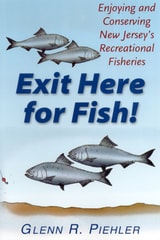
Exit Here for Fish!
Enjoying and Conserving New Jersey's Recreational FisheriesPiehler, Glenn R
Rutgers University Press, 2000
Known as the Garden State, New Jersey could also be called the Fishing State. New Jersey boasts more than 6,000 miles of rivers and streams; 24,000 acres of public lakes, reservoirs and ponds; 420 square miles of open bay and estuary waters; and 120 miles of ocean coast — with nearly every gallon of water swimming with a remarkable variety of fish.
Using his more than 50 years of personal and academic observations, Glenn R. Piehler has written the perfect guidebook for new and proficient anglers, as well as students of fisheries science.
Piehler begins with the taxonomic origins and classification of almost 100 species of fresh and saltwater sport fishes described in the book, as well as “a number of creatures you might unwittingly hook into . . . with just enough technical jargon and information on the general biology of fishes to make the remaining chapters more winning,” he writes. “In each case I have tried to capture the essence of each species or group of species—what they look like, how big they get, where they came from, what kind of waterbodies they live in, what they do for a living, generally how and when they may be caught, how they’ve fared over the years and are doing today, and where you can get more specific information about some of them.”
Exit Here for Fish examines the factors affecting the distribution and abundance of fish, probing the controversies surrounding preservation efforts, and the apportionment of fish among sport and commercial interests. Piehler looks at the seldom-examined history of fisheries and laws dealing with their management, habitats, and water quality. Finally, he lists a host of activities readers can enjoy, such as fish tagging and volunteering for the Wildlife Conservation Corps, to help preserve and protect the fun of fishing.

Exoplanets
Edited by Sara Seager
University of Arizona Press, 2010
Exoplanets serves as both an introduction for the non-specialist and a foundation for the techniques and equations used in exoplanet observation by those dedicated to the field.
Expanding Hermeneutics
Visualism in ScienceDon Ihde
Northwestern University Press, 1999
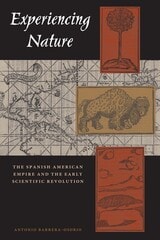
Experiencing Nature
The Spanish American Empire and the Early Scientific RevolutionBy Antonio Barrera-Osorio
University of Texas Press, 2006
As Spain colonized the Americas during the sixteenth century, Spanish soldiers, bureaucrats, merchants, adventurers, physicians, ship pilots, and friars explored the natural world, gathered data, drew maps, and sent home specimens of America's vast resources of animals, plants, and minerals. This amassing of empirical knowledge about Spain's American possessions had two far-reaching effects. It overturned the medieval understanding of nature derived from Classical texts and helped initiate the modern scientific revolution. And it allowed Spain to commodify and control the natural resources upon which it built its American empire.
In this book, Antonio Barrera-Osorio investigates how Spain's need for accurate information about its American colonies gave rise to empirical scientific practices and their institutionalization, which, he asserts, was Spain's chief contribution to the early scientific revolution. He also conclusively links empiricism to empire-building as he focuses on five areas of Spanish activity in America: the search for commodities in, and the ecological transformation of, the New World; the institutionalization of navigational and information-gathering practices at the Spanish Casa de la Contratación (House of Trade); the development of instruments and technologies for exploiting the natural resources of the Americas; the use of reports and questionnaires for gathering information; and the writing of natural histories about the Americas.
Experimental Practice
Technoscience, Alterontologies, and More-Than-Social MovementsDimitris Papadopoulos
Duke University Press, 2018

Explainable Artificial Intelligence in Medical Decision Support Systems
Agbotiname Lucky Imoize
The Institution of Engineering and Technology, 2022
Explaining Science
A Cognitive ApproachRonald N. Giere
University of Chicago Press, 1990
"The writing is delightfully clear and accessible. On balance, few books advance our subject as well."—Paul Teller, Philosophy of Science
Exploring Mars
Chronicles from a Decade of DiscoveryScott Hubbard; Foreword by Bill Nye
University of Arizona Press, 2012
The Red Planet has been a subject of fascination for humanity for thousands of years, becoming part of our folklore and popular culture. The most Earthlike of the planets in our solar system, Mars may have harbored some form of life in the past and may still possess an ecosystem in some underground refuge. The mysteries of this fourth planet from our Sun make it of central importance to NASA and its science goals for the twenty-first century.
In the wake of the very public failures of the Mars Polar Lander and the Mars Climate Orbiter in 1999, NASA embarked on a complete reassessment of the Mars Program. Scott Hubbard was asked to lead this restructuring in 2000, becoming known as the "Mars Czar." His team's efforts resulted in a very successful decade-long series of missions—each building on the accomplishments of those before it—that adhered to the science adage "follow the water" when debating how to proceed. Hubbard's work created the Mars Odyssey mission, the twin rovers Spirit and Opportunity, the Mars Reconnaissance Orbiter, the Phoenix mission, and most recently the planned launch of the Mars Science Laboratory.
Now for the first time Scott Hubbard tells the complete story of how he fashioned this program, describing both the technical and political forces involved and bringing to life the national and international cast of characters engaged in this monumental endeavor. Blending the exciting stories of the missions with the thrills of scientific discovery, Exploring Mars will intrigue anyone interested in the science, the engineering, or the policy of investigating other worlds.
Exploring the Scientific Method
Cases and QuestionsEdited by Steven Gimbel
University of Chicago Press, 2011
From their grade school classrooms forward, students of science are encouraged to memorize and adhere to the “scientific method”—a model of inquiry consisting of five to seven neatly laid-out steps, often in the form of a flowchart. But walk into the office of a theoretical physicist or the laboratory of a biochemist and ask “Which step are you on?” and you will likely receive a blank stare. This is not how science works. But science does work, and here award-winning teacher and scholar Steven Gimbel provides students the tools to answer for themselves this question: What actually is the scientific method?
Exploring the Scientific Method pairs classic and contemporary readings in the philosophy of science with milestones in scientific discovery to illustrate the foundational issues underlying scientific methodology. Students are asked to select one of nine possible fields—astronomy, physics, chemistry, genetics, evolutionary biology, psychology, sociology, economics, or geology—and through carefully crafted case studies trace its historical progression, all while evaluating whether scientific practice in each case reflects the methodological claims of the philosophers. This approach allows students to see the philosophy of science in action and to determine for themselves what scientists do and how they ought to do it.
Exploring the Scientific Method will be a welcome resource to introductory science courses and all courses in the history and philosophy of science.
Exposed
Environmental Politics and Pleasures in Posthuman TimesStacy Alaimo
University of Minnesota Press, 2016
Opening with the statement “The anthropocene is no time to set things straight,” Stacy Alaimo puts forth potent arguments for a material feminist posthumanism in the chapters that follow.
From trans-species art and queer animals to naked protesting and scientific accounts of fishy humans, Exposed argues for feminist posthumanism immersed in strange agencies and scale-shifting ethics. Including such divergent topics as landscape art, ocean ecologies, and plastic activism, Alaimo explores our environmental predicaments to better understand feminist occupations of transcorporeal subjectivity.
She puts scientists, activists, artists, writers, and theorists in conversation, revealing that the state of the planet in the twenty-first century has radically transformed ethics, politics, and what it means to be human. Ultimately, Exposed calls for an environmental stance in which, rather than operating from an externalized perspective, we think, feel, and act as the very stuff of the world.
Extinct Madagascar
Picturing the Island's PastSteven M. Goodman and William L. Jungers
University of Chicago Press, 2014
In Extinct Madagascar, noted scientists Steven M. Goodman and William L. Jungers explore the recent past of these land animal extinctions. Beginning with an introduction to the geologic and ecological history of Madagascar that provides context for the evolution, diversification, and, in some cases, rapid decline of the Malagasy fauna, Goodman and Jungers then seek to recapture these extinct mammals in their environs. Aided in their quest by artist Velizar Simeonovski’s beautiful and haunting digital paintings—images of both individual species and ecosystem assemblages reproduced here in full color—Goodman and Jungers reconstruct the lives of these lost animals and trace their relationships to those still living.
Published in conjunction with an exhibition of Simeonovski’s artwork set to open at the Field Museum, Chicago, in the fall of 2014, Goodman and Jungers’s awe-inspiring book will serve not only as a sobering reminder of the very real threat of extinction, but also as a stunning tribute to Madagascar’s biodiversity and a catalyst for further research and conservation.
Extinction and Biogeography of Tropical Pacific Birds
David W. Steadman
University of Chicago Press, 2006
Reconstructing the avian world in the same way archeologists re-create ancient human societies, David Steadman—a leading authority on tropical Pacific avian paleontology—has spent the past two decades in the field, digging through layers of soil in search of the bones that serve as clues to the ancient past of island bird communities. His years of indefatigable research and analysis are the foundation for Extinction and Biogeography of Tropical Pacific Birds, a monumental study of the landbirds of tropical Pacific islands—especially those from Fiji eastward to Easter Island—and an intricate history of the patterns and processes of island biology over time.
Using information gleaned from prehistoric specimens, Steadman reconstructs the birdlife of tropical Pacific islands as it existed before the arrival of humans and in so doing corrects the assumption that small, remote islands were unable to support rich assemblages of plants and animals. Easter Island, for example, though devoid of wildlife today, was the world’s richest seabird habitat before Polynesians arrived more than a millennium ago. The forests of less isolated islands in the Pacific likewise teemed with megapodes, rails, pigeons, parrots, kingfishers, and songbirds at first human contact.
By synthesizing data from the distant past, Steadman hopes to inform present conservation programs. Grounded in geology, paleontology, and archeology, but biological at its core, Extinction and Biogeography of Tropical Pacific Birds is an exceptional work of unparalleled scholarship that will stimulate creative discussions of terrestrial life on oceanic islands for years to come.
Extinctions
From Dinosaurs to YouCharles Frankel
University of Chicago Press, 2024
On its face, the story of mass extinction on Earth is one of unavoidable disaster. Asteroid smashes into planet; goodbye dinosaurs. Planetwide crises seem to be beyond our ability to affect or evade. Extinctions argues that geological history tells an instructive story, one that offers important signs for us to consider. When the asteroid struck, Charles Frankel explains, it set off a wave of cataclysms that wore away at the global ecosystem until it all fell apart. What if there had been a way to slow or even turn back these tides? Frankel believes that the answer to this question holds the key to human survival.
Human history, from the massacre of Ice Age megafauna to today’s industrial climate change, has brought the planet through another series of cataclysmic events. But the history of mass extinction together with the latest climate research, Frankel maintains, shows us a way out. If we curb our destructive habits, particularly our drive to kill and consume other species, and work instead to conserve what biodiversity remains, the Earth might yet recover. Rather than await decisive disaster, Frankel argues that we must instead take action to reimagine what it means to be human. As he eloquently explains, geological history reminds us that life is not eternal; we can disappear, or we can become something new and continue our evolutionary adventure.

Extraordinary Orchids
Sandra Knapp
University of Chicago Press, 2021
Orchids deserve such a visual celebration: parts of the orchid flower have shapes unlike any other flowering plant, and the sheer number of species means they have a seemingly endless ability to create ever more fantastical forms. In fact, many orchid common names refer to the shape-shifting forms of their flowers—the “man-orchids” or “monkey-orchids” are so called because of their resemblance to the primate form. Orchids lend themselves to depiction, and botanical artworks of them abound. Who could resist painting or drawing such odd shapes?
Illustrated with stunning artwork, much from the archives of the Natural History Museum in London and never before published, Extraordinary Orchids includes depictions from celebrated botanical artists such as Ferdinand and Franz Bauer, Arthur Harry Church, and Sydney Parkinson, revealing the weird and wonderful lives of this most diverse of plant families.
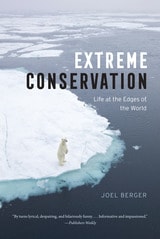
Extreme Conservation
Life at the Edges of the WorldJoel Berger
University of Chicago Press, 2018
On the Tibetan Plateau, there are wild yaks with blood cells thinner than those of horses’ by half, enabling the endangered yaks to survive at 40 below zero and in the lowest oxygen levels of the mountaintops. But climate change is causing the snow patterns here to shift, and with the snows, the entire ecosystem. Food and water are vaporizing in this warming environment, and these beasts of ice and thin air are extraordinarily ill-equipped for the change. A journey into some of the most forbidding landscapes on earth, Joel Berger’s Extreme Conservation is an eye-opening, steely look at what it takes for animals like these to live at the edges of existence. But more than this, it is a revealing exploration of how climate change and people are affecting even the most far-flung niches of our planet.
Berger’s quest to understand these creatures’ struggles takes him to some of the most remote corners and peaks of the globe: across Arctic tundra and the frozen Chukchi Sea to study muskoxen, into the Bhutanese Himalayas to follow the rarely sighted takin, and through the Gobi Desert to track the proboscis-swinging saiga. Known as much for his rigorous, scientific methods of developing solutions to conservation challenges as for his penchant for donning moose and polar bear costumes to understand the mindsets of his subjects more closely, Berger is a guide par excellence. He is a scientist and storyteller who has made his life working with desert nomads, in zones that typically require Sherpas and oxygen canisters. Recounting animals as charismatic as their landscapes are extreme, Berger’s unforgettable tale carries us with humor and expertise to the ends of the earth and back. But as his adventures show, the more adapted a species has become to its particular ecological niche, the more devastating climate change can be. Life at the extremes is more challenging than ever, and the need for action, for solutions, has never been greater.
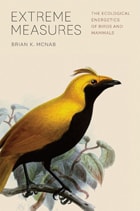
Extreme Measures
The Ecological Energetics of Birds and MammalsBrian K. McNab
University of Chicago Press, 2012
Along with reproduction, balancing energy expenditure with the limits of resource acquisition is essential for both a species and a population to survive. But energy is a limited resource, as we know well, so birds and mammals—the most energy-intensive fauna on the planet—must reduce energy expenditures to maintain this balance, some taking small steps, and others extreme measures.
Here Brian K. McNab draws on his over sixty years in the field to provide a comprehensive account of the energetics of birds and mammals, one fully integrated with their natural history. McNab begins with an overview of thermal rates—much of our own energy is spent maintaining our 98.6?F temperature—and explains how the basal rate of metabolism drives energy use, especially in extreme environments. He then explores those variables that interact with the basal rate of metabolism, like body size and scale and environments, highlighting their influence on behavior, distribution, and even reproductive output. Successive chapters take up energy and population dynamics and evolution. A critical central theme that runs through the book is how the energetic needs of birds and mammals come up against rapid environmental change and how this is hastening the pace of extinction.