Results by title
8812 books match the query 'Political Science' and 246 start with e
Europe's Indians
Producing Racial Difference, 1500–1900Vanita Seth
Duke University Press, 2010

European Energy Challenge
East and WestGeorge W. Hoffman
Duke University Press, 1985
European Higher Education, Social Responsibility, and the Local Democratic Mission
Sjur Bergan
Temple University Press, 2025
Bergan outlines the political and institutional complexity of European universities. He explains how history, cultural traditions, and national identities impact education across Europe. He also describes the roles of the Council of Europe and U.S. higher education in the development of a transatlantic cooperation on the democratic mission of higher education. Other chapters explore education programs for developing and maintaining democracy and human rights, pragmatic and creative ways that European universities are working with their local communities, and the development of education opportunities for refugees.
Ultimately, Bergan’s book explores not only the local democratic mission of higher education as it has developed in Europe, but also how it could continue to develop, and why it is important it does so.
In the series Higher Education, Place, and Social Responsibility.
European Slave Trading in the Indian Ocean, 1500–1850
Richard B. Allen
Ohio University Press, 2015
Between 1500 and 1850, European traders shipped hundreds of thousands of African, Indian, Malagasy, and Southeast Asian slaves to ports throughout the Indian Ocean world. The activities of the British, Dutch, French, and Portuguese traders who operated in the Indian Ocean demonstrate that European slave trading was not confined largely to the Atlantic but must now be viewed as a truly global phenomenon. European slave trading and abolitionism in the Indian Ocean also led to the development of an increasingly integrated movement of slave, convict, and indentured labor during the late eighteenth and early nineteenth centuries, the consequences of which resonated well into the twentieth century.
Richard B. Allen’s magisterial work dramatically expands our understanding of the movement of free and forced labor around the world. Drawing upon extensive archival research and a thorough command of published scholarship, Allen challenges the modern tendency to view the Indian and Atlantic oceans as self-contained units of historical analysis and the attendant failure to understand the ways in which the Indian Ocean and Atlantic worlds have interacted with one another. In so doing, he offers tantalizing new insights into the origins and dynamics of global labor migration in the modern world.

European Socialists Across Borders
Transnational Cooperation and Alternative Visions of Europe After 1945Edited by Mélanie Torrent and Andrew J. Williams
University of London Press, 2024
From postwar debates on institutionalized cooperation in Western Europe to the current dynamics of the European Union in the post-Cold War era, European Socialists Across Borders investigates the impact of socialist networks on European construction and integration, and the role of European socialism in international (dis)orders. It assesses how socialist networks were influenced by socialist groups outside Europe, and how they navigated domestic and global politics. Collectively, the chapters explore four main areas: the relationship between European ideals of cooperation, daily routine, and domestic politics; the shifting definitions of political elites in Europe—including African, Caribbean, and Asian influence on the transformation of European socialist thought, policies, and practices; the extent to which European socialists attempted to propose a post-colonial, post-imperial agenda for Europe; and how European institutions were used by socialists and their contacts.
Reflecting on the successes and failures of the transnational processes of socialization, the role of cultural bridge-builders, and the reasons behind missed opportunities for peace and equality, this book examines how socialist politicians and activists conceived of Europe’s role in worldmaking in its transition out of conflict and empire. Through this reflection, the book contributes to a better understanding of cooperation across borders.
European-Russian Power Relations in Turbulent Times
Mai’a K. Davis Cross and Ireneusz Pawel Karolewski, Editors
University of Michigan Press, 2021
The volume editors’ primary goal is to illuminate the nature of the deteriorating security relationship between Europe and Russia, and the key implications for its future. While the book is timely, the editors and contributors also draw out long-term lessons from this era of diplomatic degeneration to show how increasing cooperation between two regions can devolve into rapidly escalating conflict. While it is possible that the relationship between Russia and Europe can ultimately be restored, it is also necessary to understand why it was undermined in the first place. The fact that these transformations occur under the backdrop of an uncertain transatlantic relationship makes this investigation all the more pressing.
Each chapter in this volume addresses three dimensions of the problem: first, how and why the power status quo that had existed since the end of the Cold War has changed in recent years, as evidenced by Russia’s newly aggressive posturing; second, the extent to which the EU’s power has been enabled or constrained in light of Russia’s actions; and third, the risks entailed in Europe’s reactive power—that is, the tendency to act after-the-fact instead of proactively toward Russia—in light of the transatlantic divide under Trump.
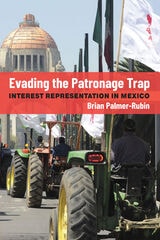
Evading the Patronage Trap
Interest Representation in MexicoBrian Palmer-Rubin
University of Michigan Press, 2022
Why have Latin American democracies proven unable to confront the structural inequalities that cripple their economies and stymie social mobility? Brian Palmer-Rubin contends that we may lay the blame on these countries’ systems of interest representation, which exhibit “biased pluralism,” a system in which the demands of organizations representing economic elites—especially large corporations—predominate. A more inclusive model of representation would not only require a more encompassing and empowered set of institutions to represent workers, but would also feature spaces for non-eliteproducers—such as farmers and small-business owners to have a say in sectoral economic policies.
With analysis drawing on over 100 interviews, an original survey, and official government data, this book focuses on such organizations and develops an account of biased pluralism in developing countries typified by the centrality of patronage—discretionarily allocated state benefits. Rather than serving as conduits for demand-making about development models, political parties and interest organizations often broker state subsidies or social programs, augmenting the short-term income of beneficiaries, but doing little to improve their long-term economic prospects. When organizations become diverted into patronage politics, the economic demands of the masses go unheard in the policies that most affect their lives, and along the way, their economic interests go unrepresented.
Evaluating Methodology in International Studies
Frank P. Harvey and Michael Brecher, Editors
University of Michigan Press, 2009
Evaluating Methodology in International Studies offers a unique collection of original essays by world-renowned political scientists. The essays address the state of the discipline in regard to the methodology of researching global politics, focusing in particular on formal modeling, quantitative methods, and qualitative approaches in International Studies.
The authors reflect on the strengths and weaknesses of current methodology and suggest ways to advance theory and research in International Studies. This volume is essential reading for methods courses and will be of interest to scholars and students alike.
See table of contents and excerpts.
Frank P. Harvey is Professor of Political Science and Director of the Centre for Foreign Policy Studies at Dalhousie University.
Michael Brecher is the R.B. Angus Professor of Political Science at McGill University and past president of the International Studies Association.
Millennial Reflections on International Studies
This volume is part of the Millennial Reflections on International Studies project in which forty-five prominent scholars engage in self-critical, state-of-the-art reflection on international studies to stimulate debates about successes and failures and to address the larger questions of progress in the discipline.
Other paperbacks from this project:
Realism and Institutionalism in International Studies
Conflict, Security, Foreign Policy, and International Political Economy: Past Paths and Future Directions in International Studies
Critical Perspectives in International Studies
The full collection of essays is available in the handbook Millennial Reflections on International Studies.

Evaluating Public Health Interventions
Edited by Tim Colbourn and James Hargreaves
University College London, 2026
An authoritative student guide for how to evaluate complex public health interventions.
Public health interventions include any effort or policy that attempts to improve the well-being of individuals or an entire population. They can be run by governmental health departments or non-governmental organizations and can include educational programs, screening programs, vaccination programs, environmental improvements, and health promotion campaigns. Interventions that include multiple independent or interacting components are referred to as complex. Evaluating and predicting the efficacy of any public health intervention, as well as calculating the cost effectiveness, is essential. Using examples from multiple published studies conducted around the world, this textbook shows readers how to evaluate public health interventions in real-world settings. It will enable readers to understand how to investigate whether a public health intervention works, for whom, when, where, how, and why. It provides a comprehensive introduction to key areas of evaluation, including understanding complex interventions, developing program theories, community engagement in evaluation, and the main methods used in process, impact, and economic evaluation. It explains how different methods can be used individually and in combination to answer different kinds of evaluation questions and at different phases in an evaluation cycle and considers how the results of evaluations can be brought together to inform action.
Evaluating Science and Scientists
Mark S. Frankel
Central European University Press, 1997

Evangelicals and Democracy in America
Religion and PoliticsSteven G. Brint
Russell Sage Foundation, 2009

Evangelicals and Democracy in America
Religion and SocietySteven G. Brint
Russell Sage Foundation, 2009

Everyday Anarchism
Prefiguring Utopia in Spain and Argentina, 1890-1930Nathaniel Andrews
University of Illinois Press, 2027
In Spain and Argentina during the late nineteenth and early twentieth centuries, anarchists sought to build their ideal society in the present rather than wait for the revolution. These radicals built their daily lives around their beliefs—a far-sighted cultural project that shaped education, family life, leisure time, and moral values.
Nathaniel Andrews looks at life in four communities to explore how anarchists fused radical politics with the everyday. As Andrews shows, anarchists created networks across the Atlantic that not only shared people and ideas, but practices, too. Small actions—picnics, childrearing, using time differently—became a part of pursuing larger political goals. But these practices also revealed tensions within the movement by highlighting the gap separating ideas and actions, particularly in matters of gender.
Vivid and surprising, <i>Everyday Anarchism</i> reveals a daring program to model a radical society within the very world anarchism hoped to transform.
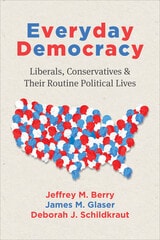
Everyday Democracy
Liberals, Conservatives, and Their Routine Political LivesJeffrey M. Berry, James M. Glaser and Deborah J. Schildkraut
University of Chicago Press, 2025
How the everyday habits and attitudes of ordinary liberals and conservatives shape the health of American democracy.
In Everyday Democracy, Jeffrey M. Berry, James M. Glaser, and Deborah J. Schildkraut study Americans’ views of several manifestations of “everyday democracy,” which they define as the attitudes, behaviors, and processes that people experience in daily life and their routine considerations of politics and community. Examples include engaging in dialogue with political opponents and giving politicians license to compromise. Ordinary political moments like these constitute much of politics, and they can lay the foundation that shapes if, when, and how crisis moments unfold.
Paying particular attention to the role of ideology in shaping how Americans emulate daily democratic ideals, this book considers such questions as: How do liberals and conservatives support different aspects of democratic practice, and are there ideological asymmetries between the two groups? If and when asymmetries emerge, what factors might explain them? The authors consider what their findings mean for the health of American democracy broadly.

Everyday Economic Survival in Myanmar
Ardeth Maung Thawnghmung
University of Wisconsin Press, 2022
Thawnghmung conducted in-depth interviews and surveys of 372 individuals from all walks of life and across geographical locations in Myanmar between 2008 and 2015. To frame her analysis, she provides context from countries with comparable political and economic situations. Her findings will be welcomed by political scientists and policy analysts, as well by journalists and humanitarian activists looking for substantive, reliable information about everyday life in a country that remains largely in the shadows.
Everyday Forms of State Formation
Revolution and the Negotiation of Rule in Modern MexicoGilbert M. Joseph and Daniel Nugent, eds.
Duke University Press, 1994
Structured in the form of a dialogue between a distinguished array of Mexicanists and comparative social theorists, this volume boldly reassesses past analyses of the Mexican revolution and suggests new directions for future study. Showcasing a wealth of original archival and ethnographic research, this collection provides a new and deeper understanding of Mexico’s revolutionary experience. It also speaks more broadly to a problem of extraordinary contemporary relevance: the manner in which local societies and self-proclaimed "revolutionary" states are articulated historically. The result is a unique collection bridging social history, anthropology, historical sociology, and cultural studies in its formulation of new approaches for rethinking the multifaceted relationship between power, culture, and resistance.
Contributors. Ana María Alonso, Armando Bartra, Marjorie Becker, Barry Carr, Philip Corrigan, Romana Falcón, Gilbert M. Joseph, Alan Knight, Florencia E. Mallon, Daniel Nugent, Elsie Rockwell, William Roseberry, Jan Rus, Derek Sayer, James C. Scott

Everyday Harm
Domestic Violence, Court Rites, and Cultures of ReconciliationMindie Lazarus-Black
University of Illinois Press, 2007
Exposing the powerful contradictions between empowering rights and legal rites
By investigating the harms routinely experienced by the victims and survivors of domestic violence, both inside and outside of law, Everyday Harm studies the limits of what domestic violence law can--and cannot--accomplish. Combining detailed ethnographic research and theoretical analysis, Mindie Lazarus-Black illustrates the ways persistent cultural norms and ingrained bureaucratic procedures work to unravel laws designed to protect the safety of society’s most vulnerable people.
Lazarus-Black’s fieldwork in Trinidad traces a story with global implications about why and when people gain the right to ask the court for protection from violence, and what happens when they pursue those rights in court. Why is itthat, in spite of laws designed to empower subordinated people, so little results from that legislation? What happens in and around courts that makes it so difficult for people to obtain their legally available rights and protections? In the case of domestic violence law, what can such legislation mean for women’s empowerment, gender equity, and protection? How do cultural norms and practices intercept the law?
Everyday State and Democracy in Africa
Ethnographic EncountersWale Adebanwi
Ohio University Press, 2022
Bottom-up case studies, drawn from the perspective of ordinary Africans’ experiences with state bureaucracies, structures, and services, reveal how citizens and states define each other.
This volume examines contemporary citizens’ everyday encounters with the state and democratic processes in Africa. The contributions reveal the intricate and complex ways in which quotidian activities and experiences—from getting an identification card (genuine or fake) to sourcing black-market commodities to dealing with unreliable waste collection—both (re)produce and (re)constitute the state and democracy. This approach from below lends gravity to the mundane and recognizes the value of conceiving state governance not in terms of its stated promises and aspirations but rather in accordance with how people experience it.
Both new and established scholars based in Africa, Europe, and North America cover a wide range of examples from across the continent, including
- bureaucratic machinery in South Sudan, Nigeria, and Kenya
- infrastructure and shortages in Chad and Nigeria
- disciplinarity, subjectivity, and violence in Rwanda, South Africa, and Nigeria
- the social life of democracy in the Congo, Cameroon, and Mozambique
- education, welfare, and health in Ethiopia, the Democratic Republic of Congo, and Burkina Faso
Everyday State and Democracy in Africa demonstrates that ordinary citizens’ encounters with state agencies and institutions define the meanings, discourses, practices, and significance of democratic life, as well its distressing realities.
Contributors:
- Daniel Agbiboa
- Victoria Bernal
- Jean Comaroff
- John L. Comaroff
- E. Fouksman
- Fred Ikanda
- Lori Leonard
- Rose Løvgren
- Ferenc Dávid Markó
- Ebenezer Obadare
- Rogers Orock
- Justin Pearce
- Katrien Pype
- Edoardo Quaretta
- Jennifer Riggan
- Helle Samuelsen
- Nicholas Rush Smith
- Eric Trovalla
- Ulrika Trovalla
Everything for Sale
The Virtues and Limits of MarketsRobert Kuttner
University of Chicago Press, 1999
"The best survey of the limits of free markets that we have. . . . A much needed plea for pragmatism: Take from free markets what is good and do not hesitate to recognize what is bad."—Jeff Madrick, Los Angeles Times
"It ought to be compulsory reading for all politicians—fortunately for them and us, it is an elegant read."—The Economist
"Demonstrating an impressive mastery of a vast range of material, Mr. Kuttner lays out the case for the market's insufficiency in field after field: employment, medicine, banking, securities, telecommunications, electric power."—Nicholas Lemann, New York Times Book Review
"A powerful empirical broadside. One by one, he lays on cases where governments have outdone markets, or at least performed well."—Michael Hirsh, Newsweek
"To understand the economic policy debates that will take place in the next few years, you can't do better than to read this book."—Suzanne Garment, Washington Post Book World

Everything is Police
Tia Trafford
University of Minnesota Press, 2024
How institutional and interpersonal policing have been central to worldmaking
Policing is constitutive of colonial modernity: normalizing, internalizing, and legalizing anti-Black violence as the ongoing condition for white life and freedom. The result, Tia Trafford argues here, is a situation where we cannot practically experience or even imagine worlds free from policing. From the plantation to the prison, global apartheid, and pandemic control, this book examines why and how policing has become the most ingrained, commonsense—and insidious—way of managing our world.
Evo Morales and the Movimiento Al Socialismo in Bolivia
The First Term in Context, 2005-2009Edited by Adrian Pearce
University of London Press, 2011
Evo's Bolivia
Continuity and ChangeBy Linda C. Farthing and Benjamin H. Kohl
University of Texas Press, 2014
In this compelling and comprehensive look at the rise of Evo Morales and Bolivia’s Movimiento al Socialismo (MAS), Linda Farthing and Benjamin Kohl offer a thoughtful evaluation of the transformations ushered in by the western hemisphere’s first contemporary indigenous president. Accessible to all readers, Evo’s Bolivia not only charts Evo’s rise to power but also offers a history of and context for the MAS revolution’s place in the rising “pink tide” of the political left. Farthing and Kohl examine the many social movements whose agendas have set the political climate in Bolivia and describe the difficult conditions the administration inherited. They evaluate the results of Evo’s policies by examining a variety of measures, including poverty; health care and education reform; natural resources and development; and women’s, indigenous, and minority rights. Weighing the positive with the negative, the authors offer a balanced assessment of the results and shortcomings of the first six years of the Morales administration.
At the heart of this book are the voices of Bolivians themselves. Farthing and Kohl interviewed women and men in government, in social movements, and on the streets throughout the country, and their diverse backgrounds and experiences offer a multidimensional view of the administration and its progress so far. Ultimately the “process of change” Evo promised is exactly that: an ongoing and complicated process, yet an important example of development in a globalized world.
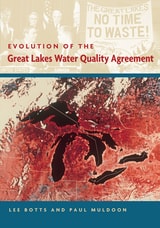
Evolution of the Great Lakes Water Quality Agreement
Lee Botts
Michigan State University Press, 2005
Water quality concerns are not new to the Great Lakes. They emerged early in the 20th century, in 1909, and matured in 1972 and 1978. They remain a prominent part of today’s conflicted politics and advancing industrial growth. The Great Lakes Water Quality Agreement, under the Boundary Waters Treaty of 1909, became a model to the world for environmental management across an international boundary. Evolution of the Great Lakes Water Quality Agreement recounts this historic binational relationship, an agreement intended to protect the fragile Great Lakes.
One strength of the agreement is its flexibility, which includes a requirement for periodic review that allows modification as problems are solved, conditions change, or scientific research reveals new problems. The first progress was made in the 1970s in the area of eutrophication, the process by which lakes gradually age, which normally takes thousands of years to progress, but is accelerated by modern water pollution. The binational agreement led to the successful lowering of phosphorus levels that saved Lake Erie and prevented accelerated eutrophication in the rest of the Great Lakes ecosystem. Another major success at the time was the identification and lowering of the levels of toxic contaminants that cause major threats to human and wildlife health, from accumulating PCBs and other persistent organic pollutants
Evolving Constitutional Rights
The Roberts Court and Criminal JusticeChristopher E. Smith, Michael A. McCall, and Madhavi M. McCall
Southern Illinois University Press, 2025
Illuminating continuity and change in Supreme Court decisions
Evolving Constitutional Rights: The Roberts Court and Criminal Justice offers a compelling and in-depth analysis of how the U.S. Supreme Court has reshaped constitutional protections under Chief Justice John Roberts. Authors Christopher E. Smith, Michael A. McCall, and Madhavi M. McCall examine the Court’s significant decisions from 2005 to Justice Breyer’s retirement in 2022, revealing a complex judicial landscape where traditional doctrines are revised and fundamental rights are redefined.
The Roberts Court played a decisive role in some of the most contentious issues in American law. Due to several justices’ application of originalist interpretations, its rulings have reconfigured key constitutional protections—often in ways that expand the authority of law enforcement while constraining legislative power over criminal statutes. The trajectory of the Court’s conservative supermajority raises pressing questions about the future of constitutional rights.
Taking a rigorous yet accessible approach, Evolving Constitutional Rights breaks down the Court’s influence across the full spectrum of criminal justice issues, from sentencing and trial rights to search-and-seizure protections, Miranda warnings, and corrections policies. Using both legal and empirical analysis, the authors track patterns in judicial ideology, uncovering how the Roberts Court has not only reinforced conservative principles but also unexpectedly broadened rights in areas such as digital privacy and defense counsel obligations.
This timely and insightful book goes beyond historical rulings to offer a forward-looking perspective on the Supreme Court’s role in shaping public safety, legal precedent, and the balance of power in American government. Essential reading for legal scholars, policymakers, and anyone concerned with the future of constitutional rights, this new volume provides a clear and authoritative examination of the Roberts Court’s lasting impact on American law.
Excellence for All
How a New Breed of Reformers Is Transforming America's Public SchoolsJack Schneider
Vanderbilt University Press, 2011
"Excellence for all" might, at first glance, appear to be nothing more than a rhetorical flourish. Who, after all, would oppose the idea of a great education for every student? Yet it is hardly a throwaway phrase. Rather, it represents a surprising fusion of educational policy approaches that had been in tense opposition throughout the twentieth centurythose on the right favoring social efficiency, and those on the left supporting social justice.
This book seeks to understand why the "excellence for all" vision took hold at the time it did, unpacks the particular beliefs and assumptions embedded in it, and details the often informal coalition building that produced this period of consensus. Examining the nation's largest urban school districts (Los Angeles, Chicago, and New York), the author details three major reform efforts in chapters titled "The Right Space: The Small Schools Movement"; "The Right Teachers: Teach for America"; and "The Right Curriculum: Expanding Advanced Placement."
Excited Delirium
Race, Police Violence, and the Invention of a DiseaseAisha M. Beliso-De Jesús
Duke University Press, 2024
Exclusion and Engagement
Social Policy in Latin AmericaEdited by Christopher Abel and Colin M. Lewis
University of London Press, 2002
Executing Freedom
The Cultural Life of Capital Punishment in the United StatesDaniel LaChance
University of Chicago Press, 2016
That question is at the heart of Executing Freedom, a powerful, wide-ranging examination of the place of the death penalty in American culture and how it has changed over the years. Drawing on an array of sources, including congressional hearings and campaign speeches, true crime classics like In Cold Blood, and films like Dead Man Walking, Daniel LaChance shows how attitudes toward the death penalty have reflected broader shifts in Americans’ thinking about the relationship between the individual and the state. Emerging from the height of 1970s disillusion, the simplicity and moral power of the death penalty became a potent symbol for many Americans of what government could do—and LaChance argues, fascinatingly, that it’s the very failure of capital punishment to live up to that mythology that could prove its eventual undoing in the United States.
Exemplary Violence
Rewriting History in Colonial ColombiaAlberto Villate-Isaza
Bucknell University Press, 2021

Exhibiting Atrocity
Memorial Museums and the Politics of Past ViolenceSodaro, Amy
Rutgers University Press, 2018
Today, nearly any group or nation with violence in its past has constructed or is planning a memorial museum as a mechanism for confronting past trauma, often together with truth commissions, trials, and/or other symbolic or material reparations. Exhibiting Atrocity documents the emergence of the memorial museum as a new cultural form of commemoration, and analyzes its use in efforts to come to terms with past political violence and to promote democracy and human rights.
Through a global comparative approach, Amy Sodaro uses in-depth case studies of five exemplary memorial museums that commemorate a range of violent pasts and allow for a chronological and global examination of the trend: the U.S. Holocaust Memorial Museum in Washington, DC; the House of Terror in Budapest, Hungary; the Kigali Genocide Memorial Centre in Rwanda; the Museum of Memory and Human Rights in Santiago, Chile; and the National September 11 Memorial Museum in New York. Together, these case studies illustrate the historical emergence and global spread of the memorial museum and show how this new cultural form of commemoration is intended to be used in contemporary societies around the world.
Download open access ebook.
Exiting the Fragility Trap
Rethinking Our Approach to the World’s Most Fragile StatesDavid Carment
Ohio University Press, 2019
State fragility is a much-debated yet underinvestigated concept in the development and international security worlds. Based on years of research as part of the Country Indicators for Foreign Policy project at Carleton University, Exiting the Fragility Trap marks a major step toward remedying the lack of research into the so-called fragility trap. In examining the nature and dynamics of state transitions in fragile contexts, with a special emphasis on states that are trapped in fragility, David Carment and Yiagadeesen Samy ask three questions: Why do some states remain stuck in a fragility trap? What lessons can we learn from those states that have successfully transitioned from fragility to stability and resilience? And how can third-party interventions support fragile state transitions toward resilience?
Carment and Samy consider fragility’s evolution in three state types: countries that are trapped, countries that move in and out of fragility, and countries that have exited fragility. Large-sample empirical analysis and six comparative case studies—Pakistan and Yemen (trapped countries), Mali and Laos (in-and-out countries), and Bangladesh and Mozambique (exited countries)—drive their investigation, which breaks ground toward a new understanding of why some countries fail to see sustained progress over time.

Expedition Escape from the Classroom
Political Outings on the Campus and the Anxiety of Teaching IROded Löwenheim
University of Michigan Press, 2024
Expedition Escape from the Classroom offers a unique narrative where teaching and its inherent challenges intersect with the intricacies of global politics, history, and identity. While recounting his academic experiment, Löwenheim grapples with the changing landscape of academia in a neoliberal age, while illustrating how personal vulnerabilities can transform into powerful tools for growth, exploration, and enlightenment. Whether you’re an educator, student, or just a curious reader, Expedition Escape from the Classroom promises a journey of reflection, critical thinking, and profound revelations.

Expelled
James Lawson Jr. and Vanderbilt UniversityBenjamin Houston
Vanderbilt University Press, 2026
In February 1960, as lunch counter sit-ins began in Southern cities, national attention focused on Nashville, where demonstrations were carried out by an unusually organized and disciplined group of students tutored extensively in nonviolent direct action. Their mentor was Reverend James Lawson Jr., a graduate student at Vanderbilt University Divinity School with longstanding nonviolent credentials. His workshops with Nashville students, exploring Gandhian style philosophies and tactics, had predated the famed Greensboro sit-ins.
As demonstrations continued in Nashville and successive sit-ins saw violence erupt downtown, local Black ministers demanded an audience with Mayor Ben West. At this meeting, an exchange occurred that was misconstrued by subsequent newspaper reportage. Shortly thereafter, Lawson was summarily expelled from Vanderbilt, one semester shy of graduating.
Lawson’s ouster triggered a wave of repercussions and headlines. After extended negotiations with their superiors were rebuffed, a large contingent of Divinity School faculty resigned en masse. Simmering dissension between the university’s professors, Board of Trust, and administrators kept the crisis ongoing. Sustained criticism of Vanderbilt both within the city and nationally made for a turbulent situation as Lawson’s expulsion came to symbolize profound tensions about civil rights and racial justice.
Expelling Public Schools
How Antiracist Politics Enable School Privatization in NewarkJohn Arena
University of Minnesota Press, 2023
Exploring the role of identitarian politics in the privatization of Newark’s public school system
In Expelling Public Schools, John Arena explores the more than two-decade struggle to privatize public schools in Newark, New Jersey—a conflict that is raging in cities across the country—from the vantage point of elites advancing the pro-privatization agenda and their grassroots challengers.
Analyzing the unsuccessful effort of Cory Booker—Newark’s leading pro-privatization activist and mayor—to generate popular support for the agenda, and Booker’s rival and ultimate successor Ras Baraka’s eventual galvanization of the charter movement, Arena argues that Baraka’s black radical politics cloaked a revanchist agenda of privatization.
Expelling Public Schools reveals the political rise of Booker and Baraka, their one-time rivalry and subsequent alliance, and what this particular case study illuminates about contemporary post–civil rights Black politics. Ultimately, Expelling Public Schools is a critique of Black urban regime politics and the way in which antiracist messaging obscures real class divisions, interests, and ideological diversity.

Experimental Foundations of Political Science
Donald R. Kinder and Thomas R. Palfrey, Editors
University of Michigan Press, 1993
Explaining Social Institutions
Jack Knight and Itai Sened, Editors
University of Michigan Press, 1998
Much of the work being done under the rubric of "new institutionalism" focuses on how institutions shape social, economic, and political outcomes. This emphasis on influence has provided students of economics, political science, and political economy with surprisingly little theory to account for the origins of such institutions. Yet without understanding how institutions form and consequently develop influence, much of the other work lacks context. The contributors fill this void by utilizing a variety of perspectives and theoretical approaches. The twin focus of these articles on the origins of institutions and the development of institutional influence yield innovative and suggestive outcomes. Topics range from the framing of the United States Constitution to debate over the Senate at the Federal Convention; from equilibrium and social institutions to democratic stability.
Contributors include Randall Calvert, Jon Elster, Avner Greif, Jack Knight, Paul Milgrom, Douglass North, William Riker, Norman Schofield, Itai Sened, and Barry Weingast.
Jack Knight is Assistant Professor of Political Science, Washington University, St. Louis. Itai Sened is Assistant Professor of Political Science, Tel Aviv University.

Explaining the East Asian Peace
A Research StoryStein Tønnesson
National University of Singapore Press, 2017

Explorations in Early Southeast Asian History
The Origins of Southeast Asian StatecraftKenneth R. Hall and John K. Whitmore, Editors
University of Michigan Press, 1976
Explorations in Political Psychology
Shanto Iyengar and William J. McGuire, eds.
Duke University Press, 1993
historical evolution as an area of inquiry to the rich and eclectic array of theories, concepts, and methods that mark it as an emerging discipline.
In introductory essays, editors Shanto Iyengar and William J. McGuire identify the points of exchange between the disciplines represented and discuss the issues that make up the subfields of political psychology. Bringing together leading scholars from social psychology and political science, the following sections discuss attitude research (the study of political attitudes and opinions); cognition and information-processing (the relationship between the structures of human information-processing and political and policy preferences); and decision making (how people make decisions about political preferences).
As a comprehensive introduction to a growing field of interdisciplinary concern, Explorations in Political Psychology will prove a useful guide for historians, social psychologists, and political scientists with an interest in individual political behavior.
Contributors. Stephen Ansolabehere, Donald Granberg, Shanto Iyengar, Robert Jervis, Milton Lodge, Roger D. Masters, William J. McGuire, Victor C. Ottati, Samuel L. Popkin, William M. Runyan, David O. Sears, Patrick Stroh, Denis G. Sullivan, Philip E. Tetlock, Robert S. Wyer, Jr.
Exploring Federalism
Daniel J. Elazar
University of Alabama Press, 1987
CHOICE OUTSTANDING ACADEMIC BOOK
A definitive exploration of the ideas, institutions, and principles that shape federal government.
Exploring Federalism is a seminal study by political scientist Daniel J. Elazar that examines the origins, evolution, and enduring significance of federal systems of government. Widely regarded as one of the leading scholars of federalism, Elazar offers a comprehensive analysis of how federal principles have shaped political institutions across diverse societies and historical periods. Rather than limiting his discussion to the United States, he adopts a global and comparative perspective, exploring how federal arrangements provide workable solutions for nations seeking to balance unity with diversity, shared governance with local autonomy, and collective action with individual liberty.
Drawing on history, constitutional theory, and political philosophy, Elazar investigates the covenantal foundations of federalism and explains how federal systems distribute authority, protect regional identities, and promote democratic participation. He also examines contemporary trends toward both centralization and decentralization, arguing that federalism remains one of the most effective frameworks for governing pluralistic societies. Exploring Federalism remains an essential resource for students, scholars, policymakers, and anyone interested in constitutional government and democratic institutions.
Exploring the Public Effects of Religious Communication on Politics
Brian Calfano, Editor
University of Michigan Press, 2021
Though not all people are religious believers, religion has played important historic roles in developing political systems, parties, and policies—affecting believers and nonbelievers alike. This is particularly true in the United States, where scholars have devoted considerable attention to a variety of political phenomena at the intersection of religious belief and identity, including social movements, voting behavior, public opinion, and public policy. These outcomes are motivated by “identity boundary-making” among the religiously affiliated. The contributors to this volume examine two main factors that influence religious identity: the communication of religious ideas and the perceptions of people (including elites) in communicating said ideas.
Exploring the Public Effects of Religious Communication on Politics examines an array of religious communication phenomena. These include the media’s role in furthering religious narratives about minority groups, religious strategies that interest groups use to advance their appeal, the variable strength of Islamophobia in cross-national contexts, what qualifies as an “evangelical” identity, and clergy representation of religious and institutional teachings. The volume also provides ways for readers to think about developing new insights into the influence religious communication has on political outcomes.
Export Controls in Transition
Perspectives, Problems, and ProspectsGary K. Bertsch and Steven Elliott-Gower, eds.
Duke University Press, 1992
The contributors discuss the role and function of export control policies from a variety of perspectives—security, commerce, diplomacy, the European region, and that of the newly industrialized countries. Among the topics covered are the problems the United States and the Western export regime will face in the 1990s in light of changing international political alliances and dependencies, in defining strategic exports, in enforcing export controls, and the role of the Coordinating Committee for Multilateral Export Controls.
Contributors. Sumner Benson, Beverly Crawford, Richard t. Cupitt, Dorinda G. Dallmeyer, Paul Freedenberg, Martin J. Hillenbrand, Hanns-Dieter Jacobsen, Bruce W. Jentleson, Kevin J. Lasher, William J. Long, Janne Haaland Matlary, Jere W. Morehead, Henry R. Nau, Han S. Park, Kevin F. F. Quigley, Alen B. Sherr, Christine Westbrook
Extra/ordinary Johannesburg
Centrality, Periphery and the Spaces BetweenLindsay Blair Howe
University College London, 2025
In Extra/ordinary Johannesburg, urbanist Lindsay Blair Howe argues that Johannesburg, part of the highly urbanized Gauteng City-Region and often labeled as an “apartheid city,” is an “ordinary” space where spatial changes both marginalize and create opportunities for people in their everyday lives. Structured around the concepts of urbanization and peripheralization and drawing on Henri Lefebvre’s theory of spatial dialectics, the book uses empirical research methods like smartphone applications and volunteered geographic information to draw theoretical conclusions, providing exciting new insights into urban denizens’ daily lives and how urbanization in the Gauteng region relates to the decolonial project. One central premise is that understanding how people navigate the urban fabric of centralities, peripheries, and the spaces in between is crucial for reimagining effective ways to address poverty and inequality in urban Africa.

Extreme Cinema
The Transgressive Rhetoric of Today's Art Film CultureFrey, Mattias
Rutgers University Press, 2016
From Shortbus to Shame and from Oldboy to Irreversible, film festival premieres regularly make international headlines for their shockingly graphic depictions of sex and violence. Film critics and scholars alike often regard these movies as the work of visionary auteurs, hailing directors like Michael Haneke and Lars von Trier as heirs to a tradition of transgressive art. In this provocative new book, Mattias Frey offers a very different perspective on these films, exposing how they are also calculated products, designed to achieve global notoriety in a competitive marketplace.

Eyes on Amazonia
Transnational Perspectives on the Rubber Boom FrontierJessica Carey-Webb
Vanderbilt University Press, 2024
Eyes on Amazonia operates in cultural geography, ecocriticism, and visual cultural analysis. The diverse and intriguing documents and images examined in this book capture the modernizing project of this region at a crucial juncture in its long history: the early twentieth-century rubber boom.
eTrust
Forming Relationships in the Online WorldKaren S. Cook
Russell Sage Foundation, 2009