Results by title
60 books match the query '1918-1945' and 4 start with f
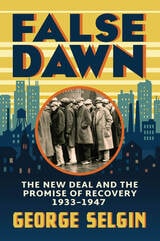
False Dawn
The New Deal and the Promise of Recovery, 1933–1947George Selgin
University of Chicago Press, 2025
CHOSEN AS ONE OF THE WALL STREET JOURNAL’S 10 BEST BOOKS OF 2025
A definitive history of the United States’ recovery from the Great Depression—and the New Deal's true part in it.
FDR’s New Deal has long enjoyed a special place in American history and policy—both because it redefined the government’s fundamental responsibilities and because Roosevelt’s “bold experimentation” represented a type of policymaking many would like to see repeated.
But “the thing about bold experiments,” economist George Selgin reminds us, “is that they often fail.” In False Dawn Selgin draws on both contemporary sources and numerous studies by economic historians to show that, although steps taken during the Roosevelt administration’s first days raised hopes of a speedy recovery from the Great Depression, instead of fulfilling those hopes, subsequent New Deal policies proved so counterproductive that over seventeen percent of American workers—more than the peak unemployment rate during the COVID-19 crisis—were still either unemployed or on work relief six years later.
By distinguishing the New Deal’s successes from its failures, and explaining how the U.S. finally managed to lay the specter of mass unemployment to rest, Selgin draws salient lessons for dealing with future recessions.
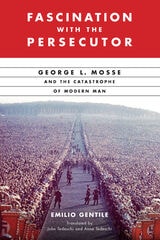
Fascination with the Persecutor
George L. Mosse and the Catastrophe of Modern ManEmilio Gentile and and Stanley G. Payne, translated by John and Anne Tedeschi
University of Wisconsin Press, 2021
This translation makes Emilio Gentile’s groundbreaking study of Mosse’s life and work available to English language readers. A leading authority on fascism, totalitarianism, and Mosse’s legacy, Gentile draws on a wealth of published and unpublished material, including letters, interviews, lecture plans, and marginalia from Mosse’s personal library. Gentile details how the senior scholar eschewed polemics and employed rigorous academic standards to better understand fascism and the “catastrophe of the modern man”—how masculinity transformed into a destructive ideology. As long as wars are waged over political beliefs in popular culture, Mosse’s theories of totalitarianism will remain as relevant as ever.

Forest Brothers
The Account of an Anti-Soviet Lithuanian Freedom Fighter, 1944–1948Translated and with an Introduction by Laima Vincė
Central European University Press, 2009
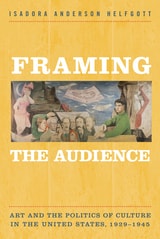
Framing the Audience
Art and the Politics of Culture in the United States, 1929-1945Isadora Helfgott
Temple University Press, 2015
Framing the Audience explores the cultural politics of the Great Depression and World War II through the prism of art appreciation. Isadora Helfgott interrogates the ideological and political motivations for breaking down barriers between fine art and popular culture. She charts the impact that changes in art appreciation had on the broader political, social, cultural, and artistic landscape.
Framing the Audience argues that efforts to expand the social basis of art became intertwined with—and helped shape—broader debates about national identity and the future of American political economy. Helfgott chronicles artists’ efforts toinfluence the conditions of artistic production and display. She highlights the influence of the Federal Art Project, the impact of the Museum of Modern Art as an institutional home for modernism in America and as an organizer of traveling exhibitions, and the efforts by LIFE and Fortune magazines to integrate art education into their visual record of modern life. In doing so, Helfgott makes critical observations about the changing relationship between art and the American public.