Results by title
8642 books match the query '20th Century' and 354 start with f
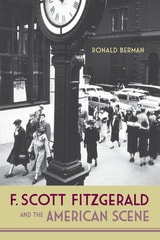
F. Scott Fitzgerald and the American Scene
Ronald Berman
University of Alabama Press, 2017
A study of the philosophical, intellectual, and political influences on the artistic creations of Fitzgerald and key early American modernist writers
F. Scott Fitzgerald and the American Scene continues Ronald Berman’s lifelong study of the philosophical, intellectual, and political influences on the artistic creations of key early American modernist writers. Each chapter in this volume elaborates on a crucial aspect of F. Scott Fitzgerald’s depiction of American society, specifically through the lens of the social sciences that most influenced his writing and thinking.
Berman addresses, among other subjects, Fitzgerald’s use of philosophy, cultural analyses, and sociology—all enriched by the insights of his own experience living an American life. He was especially interested in how life had changed from 1910 to 1920. Many Americans were unable to navigate between the 1920s and their own memories of a very different world before the Great War; especially Daisy Buchanan who evolves from girlhood (as typified in sentimental novels of the time) to wifehood (as actually experienced in the new decade). There is a profound similarity between what happens to Fitzgerald’s characters and what happened to the nation.
Berman revisits classics like The Great Gatsby but also looks carefully at Fitzgerald’s shorter fictions, analyzing a stimulating spectrum of scholars from more contemporary critics like Thomas Piketty to George Santayana, John Maynard Keynes, John Dewey, and Walter Lippmann. This fascinating addition to F. Scott Fitzgerald scholarship, although broad in its content, is accessible to a wide audience. Scholars and students of Fitzgerald and twentieth-century American literature, as well as dedicated Fitzgerald readers, will enjoy Berman’s take on a long-debated and celebrated author.
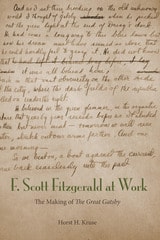
F. Scott Fitzgerald at Work
The Making of "The Great Gatsby"Horst H. Kruse
University of Alabama Press, 2014
The essays in F. Scott Fitzgerald at Work examine fresh facts that illuminate the experiences and source materials upon which Fitzgerald based this quintessentially American masterpiece. They confirm author Horst Kruse’s view that Fitzgerald’s flights of fancy, even at their most spectacular, are firmly grounded in biographical experience as well as in the social, literary, and philosophical circumstances of his era.
In the first essay, Kruse reconstructs the life story of the individual who allegedly inspired the character of Jay Gatsby: Max von Gerlach. Kruse recounts his journeys to various archives and libraries in the United States as well as in Germany to unearth new facts about the genesis of the Gatsby characters. In another journey, readers travel with Kruse to Long Island to explore its physical and moral geography in relation to Fitzgerald, specifically the role of certain elite Long Island families in the advancement of the “science of eugenics” movement. The final two essays take Kruse across the globe to various destinations to consider the broader place of The Great Gatsby in American and international intellectual history.
Replete with fascinating discoveries and insights, F. Scott Fitzgerald at Work both corrects previous assumptions about The Great Gatsby and deepens our appreciation and understanding of Fitzgerald‘s imagination.
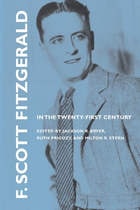
F. Scott Fitzgerald in the Twenty-First Century
Jackson R. Bryer
University of Alabama Press, 2003
This thought-provoking collection explores significant new facets of an American author of lasting international stature.
“Edited by three eminent Fitzgerald scholars, this fine book comprises nineteen incisive and provocative essays (most written for this collection) by . . . well-known Fitzgerald critics. The content is as varied as the international origins of its authors.” —Choice
As the author of some of the most compelling short stories ever written, two of the central novels in American literature, and some of the most beautiful prose ever penned, F. Scott Fitzgerald is read and studied all over the world. Sixty-two years after his death, his works—protean, provocative, multilayered, and rich—continue to elicit spirited responses. This collection grew out of the F. Scott Fitzgerald Conference that convened in Princeton at the centennial of this author's birth. Bringing together dozens of the world's leading scholars and commentators, the conference and the book celebrate the ever-growing legacy of Fitzgerald's art.
The subjects of these 19 essays reflect the contributors' wish to shine new light on less-frequently discussed aspects of Fitzgerald's work. Topics include Fitzgerald's Princeton influences and his expression of Catholic romanticism; his treatments of youth culture, the devil, and waste; parallels in the work of Mencken, Cather, and Murakami; and the ways gender, pastoral mode, humor, and the Civil War are variously presented in his work. One illustrated summary examines Fitzgerald's effect on popular culture through his appearance in the comics. Two broad overviews—one on Fitzgerald's career and another on the final developments in the author's style—round out the collection.
The international scope of the contributors to this volume reflects Fitzgerald's worldwide reputation and appeal. With extensive treatments of This Side of Paradise, The Beautiful and Damned, The Last Tycoon, and the Pat Hobby stories, this collection makes an unusual and significant contribution to the field of Fitzgerald studies.
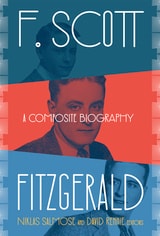
F. Scott Fitzgerald
A Composite BiographyNiklas Salmose
University of Minnesota Press, 2023
A comprehensive study of the life of F. Scott Fitzgerald, related in two-year chapters by twenty-three leading writers on the Jazz Age author
“There never was a good biography of a novelist,” F. Scott Fitzgerald wrote in The Crack-Up. “There couldn’t be. He is too many people, if he’s any good.” Fitzgerald, a good novelist by any measure, has tested this challenge to the biographer’s art. A new star illuminating the literary scene; a chronicler of the Jazz Age in all its brilliance and tarnish; a romantic symbol of the American century; an acute observer of society’s best and worst, and of his own star-crossed career; a midlife burnout at forty-four, leaving an unfinished masterpiece in his wake—he was a man of many aspects, a writer whose complexity and multitudes this composite biography finally aptly portrays.
Bringing together twenty-three leading writers and scholars on Fitzgerald, each focusing on two years of his life, this volume takes its cue from Henry James’s remark, cited by preeminent Fitzgerald biographer Scott Donaldson: “The whole of anything is never told; you can only take what groups together.” F. Scott Fitzgerald: A Composite Biography presents a new way of “grouping together” biographical material and perspectives, considering from various angles the author's best-known works as well as understudied writings, including neglected stories and forays into autobiography such as “What I Think and Feel at 25” and “How to Live on $36,000 a Year.” The glamor and fame that made F. Scott and Zelda mythic figures of their time appear here alongside the personal experiences that he occasionally included in his writing: the beginnings as well as the poignant end; the literary relationships that informed and framed his work, set against solitary effort, fame, and failures. This remarkable study of F. Scott Fitzgerald reflects the multifaceted whole of a “life in many parts” in new and revelatory ways.
Contributors: Jade Broughton Adams; Ronald Berman; William Blazek, Liverpool Hope U; Elisabeth Bouzonviller, Jean Monnet U; Jackson Bryer, U of Maryland; Kirk Curnutt, Troy U; Catherine Delesalle-Nancey, U Jean Moulin Lyon 3; Scott Donaldson; Kayla Forrest; Marie-Agnès Gay, U Jean Moulin Lyon 3; Joel Kabot, U of Maryland, Baltimore; Sara Kosiba; Arne Lunde, U of California, Los Angeles; Bryant Mangum, Virginia Commonwealth U; Martina Mastandrea; Philip McGowan, Queen’s U Belfast; David Page; Walter Raubicheck, Pace U; Ross Tangedal, U of Wisconsin–Stevens Point; Helen Turner, Linnaeus U; James L. W. West III, Pennsylvania State U.
FDR and the Spanish Civil War
Neutrality and Commitment in the Struggle that Divided AmericaDominic Tierney
Duke University Press, 2007
Between 1936 and 1939, Roosevelt’s perceptions of the Spanish Civil War were transformed. Initially indifferent toward which side won, FDR became an increasingly committed supporter of the leftist government. He believed that German and Italian intervention in Spain was part of a broader program of fascist aggression, and he worried that the Spanish Civil War would inspire fascist revolutions in Latin America. In response, Roosevelt tried to send food to Spain as well as illegal covert aid to the Spanish government, and to mediate a compromise solution to the civil war. However unsuccessful these initiatives proved in the end, they represented an important stage in Roosevelt’s emerging strategy to aid democracy in Europe.
FDR's Good Neighbor Policy
Sixty Years of Generally Gentle ChaosBy Fredrick B. Pike
University of Texas Press, 1995
During the 1930s, the United States began to look more favorably on its southern neighbors. Latin America offered expanded markets to an economy crippled by the Great Depression, while threats of war abroad nurtured in many Americans isolationist tendencies and a desire for improved hemispheric relations.
One of these Americans was Franklin Delano Roosevelt, the primary author of America's Good Neighbor Policy. In this thought-provoking book, Fredrick Pike takes a wide-ranging look at FDR's motives for pursuing the Good Neighbor Policy, at how he implemented it, and at how its themes have played out up to the mid-1990s.
Pike's investigation goes far beyond standard studies of foreign and economic policy. He explores how FDR's personality and Eleanor Roosevelt's social activism made them uniquely simpático to Latin Americans. He also demonstrates how Latin culture flowed north to influence U.S. literature, film, and opera. The book will be essential reading for everyone interested in hemispheric relations.
FROM OLD WOMAN TO OLDER WOMEN
Contemporary Culture and Women’s NarrativesSally Chivers
The Ohio State University Press, 2003
Sally Chivers provides a fascinating look at and challenge to how North American popular culture has portrayed old age as a time of disease, decline, and death. Within contemporary Canadian literary and film production, a tradition of articulate central elderly female characters challenges what the aging body has come to signify in a broader cultural context. Rather than seek positive images of aging, which can do their own prescriptive damage, the author focuses on constructive depictions that provide a basis on which to create new stories and readings of growing old. This type of humanities approach to the study of aging promises neither to fixate on nor avoid consideration of the role of the body in the much broader process of getting older. The progression implied in the title from the solitary symbol of The Old Woman toward a community of older women, indicates not a move toward euphemism, but rather an increasing and necessary awareness of the social and cultural dimensions of aging.
Fables of Representation
EssaysPaul Hoover
University of Michigan Press, 2004
With its title essay, "Fables of Representation," one of the most cogent studies ever written of the New York School of poets (a group that includes the influential poet John Ashbery), this book is required reading for anyone who seeks to understand the poetry and culture of the postmodern period.
Author Paul Hoover's wide-ranging subjects include African-American interdisciplinary studies; the position of poetry in the electronic age; the notion of doubleness in the work of Harryette Mullen and others; the lyricism of the New York School poets; and the role of reality in American poetry. Hoover also introduces two provocative essays sure to generate attention and discussion: "The Postmodern Era: A Final Exam" and "The New Millennium: Fifty Statements on Literature and Culture."
Paul Hoover is the editor of the anthology Postmodern American Poetry and author of nine poetry collections, including Totem and Shadow: New and Selected Poems and Viridian. His poetry has appeared in American Poetry Review, The New Republic, and The Paris Review, among others. He is Poet-in-Residence at Columbia College, Chicago.
Fabricating Transnational Capitalism
A Collaborative Ethnography of Italian-Chinese Global FashionLisa Rofel and Sylvia J. Yanagisako
Duke University Press, 2018
Faces along the Bar
Lore and Order in the Workingman's Saloon, 1870-1920Madelon Powers
University of Chicago Press, 1998
"A free-pouring blend of astonishing facts, folklore and firsthand period observations. . . . It's the rich details that'll inspire the casual reader to drink deep from this tap of knowledge."—Don Waller, USA Today recommended reading
"A surprise on every page."—Publishers Weekly
"Here we get social history that appreciates the bar talk even while dissecting its marvelous rituals."—Library Journal, starred review
"Careful scholarship with an anecdotal flair to please even the most sober of readers."—Nina C. Ayoub, Chronicle of Higher Education
Faces of Freedom Summer
Herbert Randall and Bobs M. Tusa
University of Alabama Press, 2001
Witness the faces that defined a movement for freedom and equality
The old adage “One picture is worth ten thousand words” is definitely true for Faces of Freedom Summer. There are simply not enough words to describe the period in our history that is recorded by the pictures in this book.
As this book afirms, the resurgence of overt activities by hate groups—both the old traditional ones (e.g., the Ku Klux Klan) and the new ones (e.g., the Skin Heads)—however much the hard work and sacrifices of the modern civil rights movement humanized American society, much still remains to be done. The modern civil rights movement associated with the 1960s was not in vain, yet it did not eradicate from our society the evils of racism and sexism. While we activists made the United States more of an open society than it has ever been in its history, our vision and desire for the beloved community did not reach into all sectors of American society. “Freedom,” it has been said, “is a constant struggle, a work of eternal vigilance.”
Faces of Freedom Summer brings to life that there was such a time and there were such people and, if such a people were once, then they are still among us. Yet, they may only become aware of themselves when they are confronted with visible evidence, such as the evidence contained in the pictures of Herbert Randall.
Facing Texts
Encounters Between Contemporary Writers and CriticsHeide Ziegler, ed.
Duke University Press, 1988
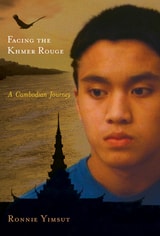
Facing the Khmer Rouge
A Cambodian JourneyRonnie Yimsut
Rutgers University Press, 2011
As a child growing up in Cambodia, Ronnie Yimsut played among the ruins of the Angkor Wat temples, surrounded by a close-knit community. As the Khmer Rouge gained power and began its genocidal reign of terror, his life became a nightmare. In this stunning memoir, Yimsut describes how, in the wake of death and destruction, he decides to live.
Escaping the turmoil of Cambodia, he makes a perilous journey through the jungle into Thailand, only to be sent to a notorious Thai prison. Fortunately, he is able to reach a refugee camp and ultimately migrate to the United States, where he attended the University of Oregon and became an influential leader in the community of Cambodian immigrants. Facing the Khmer Rouge shows Ronnie Yimsut’s personal quest to rehabilitate himself, make a new life in America, and then return to Cambodia to help rebuild the land of his birth.
Fact, Fiction, and Form
Selected EssaysRalph W. Rader
The Ohio State University Press, 2011
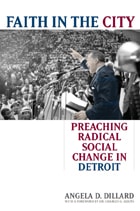
Faith in the City
Preaching Radical Social Change in DetroitAngela D. Dillard
University of Michigan Press, 2009
“The dynamics of Black Theology were at the center of the ‘Long New Negro Renaissance,’ triggered by mass migrations to industrial hubs like Detroit. Finally, this crucial subject has found its match in the brilliant scholarship of Angela Dillard. No one has done a better job of tracing those religious roots through the civil rights–black power era than Professor Dillard.”
—Komozi Woodard, Professor of History, Public Policy & Africana Studies at Sarah Lawrence College and author of A Nation within a Nation: Amiri Baraka (LeRoi Jones) and Black Power Politics
“Angela Dillard recovers the long-submerged links between the black religious and political lefts in postwar Detroit. . . . Faith in the City is an essential contribution to the growing literature on the struggle for racial equality in the North.”
—Thomas J. Sugrue, University of Pennsylvania, author of The Origins of the Urban Crisis: Race and Inequality in Postwar Detroit
Spanning more than three decades and organized around the biographies of Reverends Charles A. Hill and Albert B. Cleage Jr., Faith in the City is a major new exploration of how the worlds of politics and faith merged for many of Detroit’s African Americans—a convergence that provided the community with a powerful new voice and identity. While other religions have mixed politics and creed, Faith in the City shows how this fusion was and continues to be particularly vital to African American clergy and the Black freedom struggle.
Activists in cities such as Detroit sustained a record of progressive politics over the course of three decades. Angela Dillard reveals this generational link and describes what the activism of the 1960s owed to that of the 1930s. The labor movement, for example, provided Detroit’s Black activists, both inside and outside the unions, with organizational power and experience virtually unmatched by any other African American urban community.
Angela D. Dillard is Associate Professor of Afroamerican and African Studies at the University of Michigan. She specializes in American and African American intellectual history, religious studies, critical race theory, and the history of political ideologies and social movements in the United States.
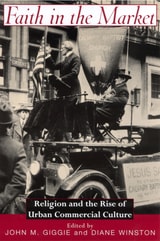
Faith in the Market
Religion and the Rise of Urban Commercial CultureEdited by John M. Giggie and Diane Winston
Rutgers University Press, 2002
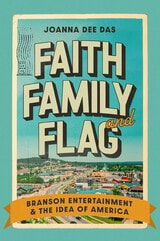
Faith, Family, and Flag
Branson Entertainment and the Idea of AmericaJoanna Dee Das
University of Chicago Press, 2025
Branson, Missouri, the Ozark Mountain mecca of wholesome entertainment, has been home to countless stage shows espousing patriotism and Christianity, welcoming over ten million visitors a year. Some consider it “God’s Country” and others “as close to Hell as anything on Earth.” For Joanna Dee Das, Branson is a political, religious, and cultural harbinger of a certain enduring dream of what America is. She takes Branson more seriously than the light-hearted fun it advertises—and maybe we should too.
For Das, Branson’s performers offer visions of the American Dream that embody a set of values known as the three Fs: faith, family, and flag. Branson boosters insist that these are universal values that welcome all people; the city aims to capture as many tourists as possible. But over the past several decades, faith, family, and flag have become markers of contemporary conservatism. The shows and culture of Branson, for all their fun and laughter, have been a galvanizing political force for white, working-and-middle class, Christian Americans. For social and economic conservatives alike, Branson is practically proof-of-concept for America as they want it to be.
Faith, Family, and Flag is a comprehensive history of the Branson entertainment industry, within the context of America’s long culture wars. Das reveals how and why a town known for popular entertainment, a domain associated most often with the political left (“Hollywood liberals”), came to be so important to the political right and its vision for America.
Faith, Family, and Flag
Branson Entertainment and the Idea of AmericaJoanna Dee Das
University of Chicago Press, 2025
Branson, Missouri, the Ozark Mountain mecca of wholesome entertainment, has been home to countless stage shows espousing patriotism and Christianity, welcoming over ten million visitors a year. Some consider it “God’s Country” and others “as close to Hell as anything on Earth.” For Joanna Dee Das, Branson is a political, religious, and cultural harbinger of a certain enduring dream of what America is. She takes Branson more seriously than the light-hearted fun it advertises—and maybe we should too.
For Das, Branson’s performers offer visions of the American Dream that embody a set of values known as the three Fs: faith, family, and flag. Branson boosters insist that these are universal values that welcome all people; the city aims to capture as many tourists as possible. But over the past several decades, faith, family, and flag have become markers of contemporary conservatism. The shows and culture of Branson, for all their fun and laughter, have been a galvanizing political force for white, working-and-middle class, Christian Americans. For social and economic conservatives alike, Branson is practically proof-of-concept for America as they want it to be.
Faith, Family, and Flag is a comprehensive history of the Branson entertainment industry, within the context of America’s long culture wars. Das reveals how and why a town known for popular entertainment, a domain associated most often with the political left (“Hollywood liberals”), came to be so important to the political right and its vision for America.

Faithful to Our Tasks
Arkansas's Women and the Great WarElizabeth Griffin Hill
Butler Center for Arkansas Studies, 2017
The United States was a vital, if brief, participant in World War I—spending only eighteen months fighting in “the Great War.” But that short span marked an era of tremendous change for women as they moved out of the Victorian nineteenth century and came into their own as social activists during the early years of the twentieth century.
Faithful to Our Tasks provides the context for women’s actions and reactions during the war. It incorporates the mitigating factors and experiences of American women in general and compares Arkansas women’s Progressive Era actions with those of other southern women. The contextual underpinnings provide a rich tapestry as we attempt to understand our grandmothers and great-grandmothers’ responses to wartime needs.
Primary records of the World War I era, accessed in archives in central Arkansas, reveal that the state’s organized women were suddenly faced with a devastating world war for which they were expected to make a significant contribution of time and effort. “Club women” were already tackling myriad problems to be found in abundance within a poor, rural state as they worked for better schools, a centralized education system, children’s well-being, and improved medical care.
Under wartime conditions, their contributions were magnified as the women followed a barrage of directions from Washington, DC, within a disconcerting display of micromanagement by the federal government. The important takeaway, however, is that the Great War created a scenario in which Arkansas’s organized women—as well as women throughout the nation—would step forward and excel as men and governments stood up and took notice. After the war, these same organized women won the right to vote.

Faking Liberties
Religious Freedom in American-Occupied JapanJolyon Baraka Thomas
University of Chicago Press, 2019
Through a fresh analysis of pre-war Japanese law, Jolyon Baraka Thomas demonstrates that the occupiers’ triumphant narrative obscured salient Japanese political debates about religious freedom. Indeed, Thomas reveals that American occupiers also vehemently disagreed about the topic. By reconstructing these vibrant debates, Faking Liberties unsettles any notion of American authorship and imposition of religious freedom. Instead, Thomas shows that, during the Occupation, a dialogue about freedom of religion ensued that constructed a new global set of political norms that continue to form policies today.
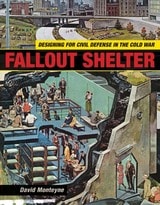
Fallout Shelter
Designing for Civil Defense in the Cold WarDavid Monteyne
University of Minnesota Press, 2011
In 1961, reacting to U.S. government plans to survey, design, and build fallout shelters, the president of the American Institute of Architects, Philip Will, told the organization’s members that “all practicing architects should prepare themselves to render this vital service to the nation and to their clients.” In an era of nuclear weapons, he argued, architectural expertise could “preserve us from decimation.”
In Fallout Shelter, David Monteyne traces the partnership that developed between architects and civil defense authorities during the 1950s and 1960s. Officials in the federal government tasked with protecting American citizens and communities in the event of a nuclear attack relied on architects and urban planners to demonstrate the importance and efficacy of both purpose-built and ad hoc fallout shelters. For architects who participated in this federal effort, their involvement in the national security apparatus granted them expert status in the Cold War. Neither the civil defense bureaucracy nor the architectural profession was monolithic, however, and Monteyne shows that architecture for civil defense was a contested and often inconsistent project, reflecting specific assumptions about race, gender, class, and power.
Despite official rhetoric, civil defense planning in the United States was, ultimately, a failure due to a lack of federal funding, contradictions and ambiguities in fallout shelter design, and growing resistance to its political and cultural implications. Yet the partnership between architecture and civil defense, Monteyne argues, helped guide professional design practice and influenced the perception and use of urban and suburban spaces. One result was a much-maligned bunker architecture, which was not so much a particular style as a philosophy of building and urbanism that shifted focus from nuclear annihilation to urban unrest.
Fallout
Nuclear Diplomacy in an Age of Global FractureGrégoire Mallard
University of Chicago Press, 2014
In Fallout, Grégoire Mallard seeks to understand why some nations agreed to these limitations of their sovereign will—and why others decidedly did not. He builds his investigation around the 1968 signing of the Nuclear Nonproliferation Treaty (NPT), which, though binding in nature, wasn’t adhered to consistently by all signatory nations. Mallard looks at Europe’s observance of treaty rules in contrast to the three holdouts in the global nonproliferation regime: Israel, India, and Pakistan. He seeks to find reasons for these discrepancies, and makes the compelling case that who wrote the treaty and how the rules were written—whether transparently, ambiguously, or opaquely—had major significance in how the rules were interpreted and whether they were then followed or dismissed as regimes changed. In honing in on this important piece of the story, Mallard not only provides a new perspective on our diplomatic history, but, more significantly, draws important conclusions about potential conditions that could facilitate the inclusion of the remaining NPT holdouts. Fallout is an important and timely book sure to be of interest to policy makers, activists, and concerned citizens alike.
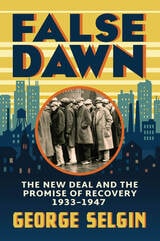
False Dawn
The New Deal and the Promise of Recovery, 1933–1947George Selgin
University of Chicago Press, 2025
CHOSEN AS ONE OF THE WALL STREET JOURNAL’S 10 BEST BOOKS OF 2025
A definitive history of the United States’ recovery from the Great Depression—and the New Deal's true part in it.
FDR’s New Deal has long enjoyed a special place in American history and policy—both because it redefined the government’s fundamental responsibilities and because Roosevelt’s “bold experimentation” represented a type of policymaking many would like to see repeated.
But “the thing about bold experiments,” economist George Selgin reminds us, “is that they often fail.” In False Dawn Selgin draws on both contemporary sources and numerous studies by economic historians to show that, although steps taken during the Roosevelt administration’s first days raised hopes of a speedy recovery from the Great Depression, instead of fulfilling those hopes, subsequent New Deal policies proved so counterproductive that over seventeen percent of American workers—more than the peak unemployment rate during the COVID-19 crisis—were still either unemployed or on work relief six years later.
By distinguishing the New Deal’s successes from its failures, and explaining how the U.S. finally managed to lay the specter of mass unemployment to rest, Selgin draws salient lessons for dealing with future recessions.
False Documents
Inter-American Cultural History, Literature, and the Lost Decade (1975–1992)Frans Weiser
The Ohio State University Press, 2020
After deconstructing economic accounts of the “two Americas" model of the hemisphere, including the lost decade (1981–1992) and the “end of history” (1975–1992), Weiser considers six case studies during the same period that reach very different conclusions by drawing on cultural history, including works by Tomás Eloy Martínez, Laura Antillano, Ana Maria Machado, Silviano Santiago, John Updike, and Jay Cantor. In order to expose how governments controlled and misrepresented recent events, these writers created false documents, or fake historical texts, that presented themselves as legitimate eyewitness accounts or archival documents. Weiser establishes how this alternative to postmodern irony more effectively galvanized citizen responses. As the first book to contextualize the parallel, hemispheric evolutions of postwar literary criticism and cultural historiography, False Documents responds to the methodological impasse between Latin American and American studies as well as the antagonism between history and literature, arguing that collaboration and synthesis are particularly vital at a moment when the humanities is increasingly under attack.
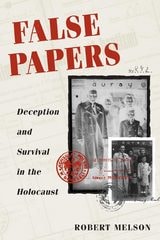
False Papers
DECEPTION AND SURVIVAL IN THE HOLOCAUSTRobert Melson
University of Illinois Press, 2000
Armed with their new lives and their new pasts, the Count and Countess Zamojski and their son, Count Bobi, took shelter in the very shadow of the Nazi machine, hiding day after day in plain sight behind a façade of elegant good manners and cultivated self-assurance, even arrogance: "you had to shout [the Gestapo] down or they would kill you." Melson's father took advantage of his flawless German to build a lucrative business career while working for a German businessman of the Schindler type. The Zamojskis acquired beautiful homes in the German quarter of Krakow and in Prague, where they had maids and entertained Nazi officials. Their masquerade enabled them to save not only themselves and their son but also an uncle and three Jewish women, one of whom became part of the family.
False Papers is a candid, sometimes funny account of a stylish couple who dazzled the Nazis with flamboyant theatrics then gradually, tragically fell apart after the war. Particularly arresting is Melson himself, who was just a child when his family embarked on their grand charade. A resilient boy who had to negotiate bewildering shifts of identify–-now Catholic, now Jewish; now European aristocrat, now penniless refugee who becomes an American college student--Melson closes each chapter of his parents' recollections with his childhood perceptions of the same events.
Against the totalizing, flattening, unrelenting Nazi behemoth, Melson says, "I wished to pit our very bodies, our quirky, sexy, funny, wicked, frail, ordinary selves." By balancing the adults' maneuvering with the perspective of a child, Melson crafts an account of the Holocaust that is at once poignant, entertaining, and troubling.
False Starts
The Rhetoric of Failure and the Making of American ModernismDavid M. Ball
Northwestern University Press, 2014
Familial Fitness
Disability, Adoption, and Family in Modern AmericaSandra M. Sufian
University of Chicago Press, 2022
Disability and child welfare, together and apart, are major concerns in American society. Today, about 125,000 children in foster care are eligible and waiting for adoption, and while many children wait more than two years to be adopted, children with disabilities wait even longer. In Familial Fitness, Sandra M. Sufian uncovers how disability operates as a fundamental category in the making of the American family, tracing major shifts in policy, practice, and attitudes about the adoptability of disabled children over the course of the twentieth century.
Chronicling the long, complex history of disability, Familial Fitness explores how notions and practices of adoption have—and haven’t—accommodated disability, and how the language of risk enters into that complicated relationship. We see how the field of adoption moved from widely excluding children with disabilities in the early twentieth century to partially including them at its close. As Sufian traces this historical process, she examines the forces that shaped, and continue to shape, access to the social institution of family and invites readers to rethink the meaning of family itself.
Familial Undercurrents
Untold Stories of Love and Marriage in Modern IranAfsaneh Najmabadi
Duke University Press, 2022

Family Bible
Melissa J. Delbridge
University of Iowa Press, 2008
"Swimming and sex seemed a lot alike to me when I was growing up. You took off most of your clothes to do them and you only did them with people who were the same color as you. As your daddy got richer, you got to do them in fancier places." Starting with her father, who never met a whitetail buck he couldn't shoot, a whiskey bottle he couldn't empty, or a woman he couldn't charm, and her mother, who "invented road rage before 1960," Melissa Delbridge introduces us to the people in her own family bible. Readers will find elements of Southern Gothic and familiar vernacular characters, but Delbridge endows each with her startling and original interpretation. In this disarmingly unguarded and unapologetic memoir, she shows us what really happened in the "stew of religion and sex" that was 1960s Tuscaloosa.

Family Practice Stories
Memories, Reflections, and Stories of Hoosier Family Doctors of the Mid-Twentieth CenturyRichard Feldman
Indiana Historical Society Press, 2013
Famous Long Ago
My Life and Hard Times with Liberation News ServiceRaymond Mungo
University of Massachusetts Press, 2012
Originally published in 1970, Raymond Mungo's picaresque account of his adventures with Liberation News Service in the wild years of 1967 and 1968 has been variously described as youthful, passionate, lyrical, demented, and an iconic symbol of the sixties counterculture. A review in The Nation described it as “hip Huck Finn.”
A college editor at the height of the Vietnam War, Mungo found himself smack in the middle of a mad swirl of activism and dissent, vigorously protesting everything from the draft to abortion laws to the university itself. Then he connected with Marshall Bloom to cofound LNS in Washington, D.C., as a news service catering to the burgeoning underground press. One thing led to another, until LNS, like so many other radical organizations, eventually disintegrated into violently warring factions. Mungo's memoir tracks its development and destruction with wicked humor and literary panache.
In an introduction to this new edition, John McMillian discusses the enduring appeal of Famous Long Ago and situates it within its broader historical context, while the author provides his own retrospective take in a new afterword.
Fantasies of Ito Michio
Tara Rodman
University of Michigan Press, 2024
Winner of the 2025 Dance Studies Association Oscar Brockett Book Prize
Born in Japan and trained in Germany, dancer and choreographer Ito Michio (1893–1961) achieved prominence in London before moving to the U.S. in 1916 and building a career as an internationally acclaimed artist. During World War II, Ito was interned for two years, and then repatriated to Japan, where he contributed to imperial war efforts by creating propaganda performances and performing revues for the occupying Allied Forces in Tokyo. Throughout, Ito continually invented stories of voyages made, artists befriended, performances seen, and political activities carried out—stories later dismissed as false.
Fantasies of Ito Michio argues that these invented stories, unrealized projects, and questionable political affiliations are as fundamental to Ito’s career as his ‘real’ activities, helping us understand how he sustained himself across experiences of racialization, imperialism, war, and internment. Tara Rodman reveals a narrative of Ito’s life that foregrounds the fabricated and overlooked to highlight his involvement with Japanese artists, such as Yamada Kosaku and Ishii Baku, and global modernist movements. Rodman offers “fantasy” as a rubric for understanding how individuals such as Ito sustain themselves in periods of violent disruption and as a scholarly methodology for engaging the past.
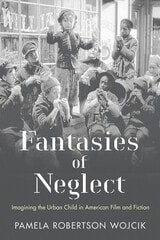
Fantasies of Neglect
Imagining the Urban Child in American Film and FictionPamela Robertson Wojcik
Rutgers University Press, 2016
Fantasies of Nina Simone
Jordan Alexander Stein
Duke University Press, 2024
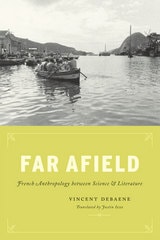
Far Afield
French Anthropology between Science and LiteratureVincent Debaene
University of Chicago Press, 2014
The relationship between anthropology and literature in France is one of careful curiosity. Literary writers are wary about anthropologists’ scientific austerity but intrigued by the objects they collect and the issues they raise, while anthropologists claim to be scientists but at the same time are deeply concerned with writing and representational practices. Debaene elucidates the richness that this curiosity fosters and the diverse range of writings it has produced, from Proustian memoirs to proto-surrealist diaries. In the end he offers a fascinating intellectual history, one that is itself located precisely where science and literature meet.
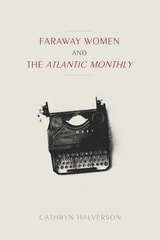
Faraway Women and the "Atlantic Monthly"
Cathryn Halverson
University of Massachusetts Press, 2019
Winner of the 2020 Thomas J. Lyon Award from the Western Literature Association
In the first decades of the twentieth century, famed Atlantic Monthly editor Ellery Sedgwick chose to publish a group of nontraditional writers he later referred to as “Faraway Women,” working-class authors living in the western United States far from his base in Boston. Cathryn Halverson surveys these enormously popular Atlantic contributors, among them a young woman raised in Oregon lumber camps, homesteaders in Wyoming, Idaho, and Alberta, and a world traveler who called Los Angeles and Honolulu home.
Faraway Women and the “Atlantic Monthly” examines gender and power as it charts an archival journey connecting the least remembered writers and readers of the time with one of its most renowned literary figures, Gertrude Stein. It shows how distant friends, patrons, publishers, and readers inspired, fostered, and consumed the innovative life narratives of these unlikely authors, and it also tracks their own strategies for seizing creative outlets and forging new protocols of public expression. Troubling binary categories of east and west, national and regional, and cosmopolitan and local, the book recasts the coordinates of early twentieth-century American literature.
Farewell to Prosperity
Wealth, Identity, and Conflict in Postwar AmericaLisle A. Rose
University of Missouri Press, 2014
Farm Girl
A Wisconsin MemoirBeuna Coburn Carlson
University of Wisconsin Press, 2020
Farm Girl is Beuna "Bunny" Coburn Carlson's loving tribute to the gently rolling hills of western Wisconsin. With an inviting and fluid voice, she shares intimate moments of happinesses from her childhood: collecting butternuts for homemade maple candy, watching her father read by the flickering light of a kerosene lamp, and the joy of finding a juicy orange at the bottom of a Christmas stocking. Underlying each vignette is the courage of a strong family surviving adversity and finding comfort in one another. Hers is a memoir that readers can dip in and out of with pleasure.

Farm to Form
Modernist Literature and Ecologies of Food in the British EmpireJessica Martell
University of Nevada Press, 2020
Deeply informed by Martell’s extensive knowledge of modern British, Irish, American, and World Literatures, this progressive work positions modernism as central to the study of narratives of resistance against social and environmental degradation. Analyzed works include those of Thomas Hardy, E. M. Forster, Virginia Woolf, Joseph Conrad, George Russell, and James Joyce.
In light of climate change, fossil fuel supremacy, nutritional dearth, and other pressing food issues, modernist texts bring to life an era of crisis and anxiety similar to our own. In doing so, Martell summons the past as a way to employ the modernist term of “defamiliarizing” the present so that entrenched perceptions can be challenged. Our current food regime is both new and constantly evolving with the first industrial food trades. Studying earlier cultural responses to them invites us to return to persistent problems with new insights and renewed passion.
Farming and Famine
Landscape Vulnerability in Northeast Ethiopia, 1889–1991Donald E. Crummey; Edited by James C. McCann
University of Wisconsin Press, 2018
Crummey draws on photographs comparing identical landscapes in 1937 and 1997 as well as interviews with local farmers, among other sources. He reveals that forestation actually increased due to farmers' tree-planting initiatives. More broadly, he shows that, in the face of growing environmental stress, Ethiopian farmers have innovated and adapted. Yet the threat of famine remains because of constricted access to resources and erratic rainfall. To avoid future famines, Crummey suggests, Ethiopia's farmers must transform agricultural productivity, but they cannot achieve that on their own.
Fascism Comes to America
A Century of Obsession in Politics and CultureBruce Kuklick
University of Chicago Press, 2022
From the time Mussolini took power in Italy in 1922, Americans have been obsessed with and brooded over the meaning of fascism and how it might migrate to the United States. Fascism Comes to America examines how we have viewed fascism overseas and its implications for our own country. Bruce Kuklick explores the rhetoric of politicians, who have used the language of fascism to smear opponents, and he looks at the discussions of pundits, the analyses of academics, and the displays of fascism in popular culture, including fiction, radio, TV, theater, and film. Kuklick argues that fascism has little informational meaning in the United States, but instead, it is used to denigrate or insult. For example, every political position has been besmirched as fascist. As a result, the term does not describe a phenomenon so much as it denounces what one does not like. Finally, in displaying fascism for most Americans, entertainment—and most importantly film—has been crucial in conveying to citizens what fascism is about. Fascism Comes to America has been enhanced by many illustrations that exhibit how fascism was absorbed into the US public consciousness.
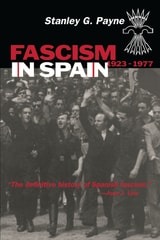
Fascism in Spain, 1923–1977
Stanley G. Payne
University of Wisconsin Press, 2000
Fascism in Spain, 1923–1977, by celebrated historian Stanley G. Payne, is the most comprehensive history of Spanish fascism to appear in any language. This authoritative study offers treatment of all the major doctrines, personalities, and defining features of the Spanish fascist movement, from its beginnings until the death of General Francisco Franco in 1977.
Payne describes and analyzes the development of the Falangist party both prior to and during the Spanish Civil War, presenting a detailed analysis of its transformation into the state party of the Franco regime—Falange Española Tradicionalista—as well as its ultimate conversion into the pseudofascist Movimiento Nacional. Payne devotes particular attention to the crucial years 1939–1942, when the Falangists endeavored to expand their influence and convert the Franco regime into a fully Fascist system. Fascism in Spain helps us to understand the personality of Franco, the way in which he handled conflict within the regime, and the reasons for the long survival of his rule. Payne concludes with the first full inquiry into the process of “defascistization,” which began with the fall of Mussolini in 1943 and extended through the Franco regime’s later efforts to transform the party into a more viable political entity.
Fascism
History and TheoryDavid Renton
Pluto Press, 2020
To explain this disturbing trend, David Renton surveys the history of fascism in Europe from its pre-war origins to the present day, examining Marxist responses to fascism in the age of Hitler and Mussolini, the writings of Trotsky and Gramsci and contemporary theorists. Renton theorizes that fascism was driven by the chaotic and unstable balance between reactionary ambitions and the mass character of its support. This approach will arm a new generation of anti-fascists to resist those who seek to re-enact fascism.
Rewritten and revised for the twentieth anniversary of its first publication, Renton's classic book synthesizes the Marxist theory of fascism and updates it for our own times.
Fascism
The History of a WordFederico Marcon
University of Chicago Press, 2025
The rise and popular support for authoritarianism around the world and within traditional democracies have spurred debates over the meaning of the term “fascist” and when and whether it is appropriate to use it. The landmark study Fascism: The History of a Word takes this debate further by tackling its most fundamental questions: How did the terms “fascism” and “fascist” come to be in the first place? How and in what circumstances have they been used? How can they be understood today? And what are the advantages (or disadvantages) of using “fascism” to make sense of interwar authoritarianism as well as contemporary politics?
Exploring the writings and deeds of political leaders, activists, artists, authors, and philosophers, Federico Marcon traces the history of the term’s use (and usefulness) in relation to Mussolini’s political regime, antifascist resistance, and the quest of postwar historians to develop a definition of a “fascist minimum.” This investigation of the semiotics of “fascism” also aims to inquire about people’s voluntary renunciation of the modern emancipatory ideals of freedom, equality, and solidarity.

Fashion, Desire and Anxiety
Image and Morality in the Twentieth CenturyArnold, Rebecca
Rutgers University Press, 2001
These dreams and freedoms, Rebecca Arnold proposes, are contradictory. Fashion and its surrounding imagery elicit fear and anxiety in their consumers as well as pleasure. Fashion has come to incorporate the underside of modern life, with violence and decay becoming a dominant theme in clothing design and photography.
Arnold draws on diverse written sources to explore the complex nature of modern fashion. She discusses a range of key themes: how fashion uses and abuses the power of wealth; the alienating promotion of "good" taste; the power plays of sex and display; and how identities can be blurred to disguise and confuse. In order to unravel the contradictory emotions of desire and anxiety they provoke, she never loses sight of the historical and cultural contexts in which fashion designers and photographers perform.
Generously illustrated, Fashion, Desire and Anxiety focuses on the last thirty years, from photographic works of the 1970s to the beginning of the twenty-first century.
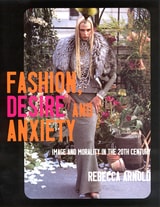
Fashion, Desire and Anxiety
Image and Morality in the Twentieth CenturyArnold, Rebecca
Rutgers University Press, 2001
These dreams and freedoms, Rebecca Arnold proposes, are contradictory. Fashion and its surrounding imagery elicit fear and anxiety in their consumers as well as pleasure. Fashion has come to incorporate the underside of modern life, with violence and decay becoming a dominant theme in clothing design and photography.
Arnold draws on diverse written sources to explore the complex nature of modern fashion. She discusses a range of key themes: how fashion uses and abuses the power of wealth; the alienating promotion of "good" taste; the power plays of sex and display; and how identities can be blurred to disguise and confuse. In order to unravel the contradictory emotions of desire and anxiety they provoke, she never loses sight of the historical and cultural contexts in which fashion designers and photographers perform.
Generously illustrated, Fashion, Desire and Anxiety focuses on the last thirty years, from photographic works of the 1970s to the beginning of the twenty-first century.
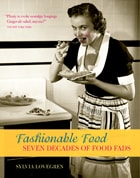
Fashionable Food
Seven Decades of Food FadsSylvia Lovegren
University of Chicago Press, 2005
Well researched and delightfully illustrated, this collection of faddish recipes from the 1920s to the 1990s is a decade-by-decade tour of a hungry American century. From the Three P's Salad—that's peas, pickles, and peanuts—of the post-World War I era to the Fruit Cocktail and Spam Buffet Party loaf—all the rage in the ultra-modern 1950s, when cooking from a can epitomized culinary sophistication—Fashionable Food details the origins of these curious delicacies. In two chapters devoted to "exotic foods of the East," for example, Lovegren explores the long American love affair with Chinese food and the social status conferred upon anyone chic enough to eat pu-pu platters from Polynesia. Throughout, Lovegren supplements recipes—some mouth-watering, some appalling—from classic cookbooks and family magazines, with humorous anecdotes that chronicle how society and kitchen technology influenced the way we lived and how we ate.
Equal parts American and culinary history, Fashionable Food examines our collective past from the kitchen counter. Even if it's been a while since you last had Tang Pie and your fondue set is collecting dust in the back of the cupboard, Fashionable Food will inspire, entertain, and inform.

Fast Combat Support Ship HNLMS Zuiderkruis
Jantinus Mulder
Amsterdam University Press, 2023
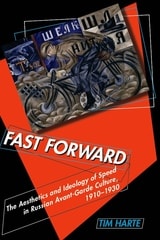
Fast Forward
The Aesthetics and Ideology of Speed in Russian Avant-Garde Culture, 1910–1930Tim Harte
University of Wisconsin Press, 2009
Although modernism arrived somewhat late in Russia, the increased tempo of life at the start of the twentieth century provided Russia’s avant-garde artists with an infusion of creative dynamism and crucial momentum for revolutionary experimentation. In Fast Forward Tim Harte presents a detailed examination of the images and concepts of speed that permeated Russian modernist poetry, visual arts, and cinema. His study illustrates how a wide variety of experimental artistic tendencies of the day—such as “rayism” in poetry and painting, the effort to create a “transrational” language (zaum’) in verse, and movements seemingly as divergent as neo-primitivism and constructivism—all relied on notions of speed or dynamism to create at least part of their effects.
Fast Forward reveals how the Russian avant-garde’s race to establish a new artistic and social reality over a twenty-year span reflected an ambitious metaphysical vision that corresponded closely to the nation’s rapidly changing social parameters. The embrace of speed after the 1917 Revolution, however, paradoxically hastened the movement’s demise. By the late 1920s, under a variety of historical pressures, avant-garde artistic forms morphed into those more compatible with the political agenda of the Russian state. Experimentation became politically suspect and abstractionism gave way to orthodox realism, ultimately ushering in the socialist realism and aesthetic conformism of the Stalin years.
Fate in My Hands
The Death Penalty in the Soviet UnionYana Skorobogatov
University of Chicago Press, 2026
A striking examination of the death penalty in the Soviet Union that documents in heart-rending detail how its citizens, hopeful for a new life post-Stalin, lost faith that their transgressions could be forgiven.
From 1954 to 1991 in the Soviet Union, nearly forty thousand citizens were executed after the death penalty was reinstated as a punishment for homicide. Fate in My Hands introduces readers to the many citizens in this period—women and men of all ages and backgrounds—who found themselves on death row and tried to escape it in the only way available to them: asking for forgiveness.
Examining the letters and objects the dead left behind, Skorobogatov recovers their voices and allows them to speak anew. She offers a striking portrait of life in the Soviet Union and the citizens who dreamed of new possibilities even as they faced their tragic end. Using a corpus of never-before-accessed criminal court records, Fate in My Hands brings readers not just into the police interrogation rooms, courthouses, and cells where the condemned awaited their fates, but into the homes, workplaces, and psychiatric hospitals where families and friends alike came together to pursue an elusive, bitter justice in the wake of violent tragedy.