Results by title
471 books match the query 'Aesthetics' and 16 start with f

FRAMING ANNA KARENINA
TOLSTOY, WOMEN QUESTION, & VICTORIAN NOVAMY MANDELKER
The Ohio State University Press, 1994

Faith in the World
Post-Secular Readings of Hannah ArendtLudger Hagedorn and Rafael Zawisza
Campus Verlag, 2021
This volume is a manifold approach to a less evident and much-neglected undercurrent in the work of Hannah Arendt, namely her ambiguous relation to the Judeo-Christian religious heritage. It contains discussions about strictly theological motives—like salvation or original sin—but it also explores topics such as forgiveness, love, natality, and the world within the religious aura.

Fascist Fantasies?
Aesthetics and the Ambivalent Reception of Science Fiction and FantasyEdited by Tobias Hof and Jan Süselbeck
Lever Press, 2027
Why do right-wing extremists find science fiction and fantasy so appealing? This edited collection sets out to answer that question by examining ten influential genre texts, comics, and their filmic adaptations through an interdisciplinary lens. The wide historical scope reveals a recurring pattern: The far right has repeatedly attempted to claim interpretive authority over popular fiction as a means of establishing what Antonio Gramsci called “cultural hegemony.” By investigating how and why right-wing audiences gravitate toward these genres—and why those works may carry an inherent susceptibility to such readings—the collection offers timely insights into how core elements of fascist ideology can be transmitted both subtly through narrative and symbolism, and more deliberately through right-wing appropriation. The volume also explores how certain authors—whether intentionally or not—have lent themselves to this agenda through ambivalent storytelling choices.
Works examined include The Lord of the Rings, Star Wars, and The Matrix, and many more to enable a nuanced decoding of ambivalent texts, semiotics, and cinematic codes, while also assessing their potential real-world impact. Balancing scholarly rigor and an accessible style, the collection will be of interest to students and university instructors, as well as to engaged film enthusiasts and fantasy fans eager to think more critically about the genres they love.
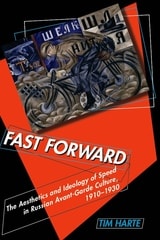
Fast Forward
The Aesthetics and Ideology of Speed in Russian Avant-Garde Culture, 1910–1930Tim Harte
University of Wisconsin Press, 2009
Although modernism arrived somewhat late in Russia, the increased tempo of life at the start of the twentieth century provided Russia’s avant-garde artists with an infusion of creative dynamism and crucial momentum for revolutionary experimentation. In Fast Forward Tim Harte presents a detailed examination of the images and concepts of speed that permeated Russian modernist poetry, visual arts, and cinema. His study illustrates how a wide variety of experimental artistic tendencies of the day—such as “rayism” in poetry and painting, the effort to create a “transrational” language (zaum’) in verse, and movements seemingly as divergent as neo-primitivism and constructivism—all relied on notions of speed or dynamism to create at least part of their effects.
Fast Forward reveals how the Russian avant-garde’s race to establish a new artistic and social reality over a twenty-year span reflected an ambitious metaphysical vision that corresponded closely to the nation’s rapidly changing social parameters. The embrace of speed after the 1917 Revolution, however, paradoxically hastened the movement’s demise. By the late 1920s, under a variety of historical pressures, avant-garde artistic forms morphed into those more compatible with the political agenda of the Russian state. Experimentation became politically suspect and abstractionism gave way to orthodox realism, ultimately ushering in the socialist realism and aesthetic conformism of the Stalin years.
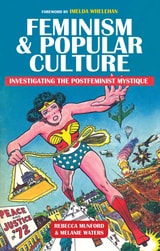
Feminism and Popular Culture
Investigating the Postfeminist MystiqueMunford, Rebecca
Rutgers University Press, 2014
In Feminism and Popular Culture, Rebecca Munford and Melanie Waters consider why the twenty-first century media landscape is so haunted by the ghosts of these traditional figures that feminism otherwise laid to rest. Why, over fifty years since Betty Friedan’s critique, does the feminine mystique exert such a strong spectral presence, and how has it been reimagined to speak to the concerns of a postfeminist audience?
To answer these questions, Munford and Waters draw from a rich array of examples from contemporary film, fiction, music, and television, from the shadowy cityscapes of Homeland to the haunted houses of American Horror Story. Alongside this comprehensive analysis of today’s popular culture, they offer a vivid portrait of feminism’s social and intellectual history, as well as an innovative application of Jacques Derrida’s theories of “hauntology.” Feminism and Popular Culture thus not only considers how contemporary media is being visited by the ghosts of feminism’s past, it raises vital questions about what this means for feminism’s future.
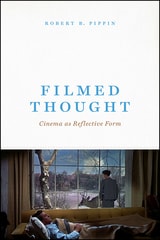
Filmed Thought
Cinema as Reflective FormRobert B. Pippin
University of Chicago Press, 2020
Filmed Thought examines questions of morality in Almodóvar’s Talk to Her, goodness and naïveté in Hitchcock’s Shadow of a Doubt, love and fantasy in Sirk’s All That Heaven Allows, politics and society in Polanski’s Chinatown and Malick’s The Thin Red Line, and self-understanding and understanding others in Nicholas Ray’s In a Lonely Place and in the Dardennes brothers' oeuvre. In each reading, Pippin pays close attention to what makes these films exceptional as technical works of art (paying special attention to the role of cinematic irony) and as intellectual and philosophical achievements. Throughout, he shows how films offer a view of basic problems of human agency from the inside and allow viewers to think with and through them. Captivating and insightful, Filmed Thought shows us what it means to take cinema seriously not just as art, but as thought, and how this medium provides a singular form of reflection on what it is to be human.
Films That Spill
Beyond the Cinema of TransgressionMarie Sophie Beckmann
Rutgers University Press, 2025
Five Faces of Modernity
Modernism, Avant-garde, Decadence, Kitsch, PostmodernismMatei Calinescu
Duke University Press, 1987
Five Faces of Modernity attempts to do for the foundations of the modernist critical lexicon what earlier terminological studies have done for such complex categories as classicism, baroque, romanticism, realism, or symbolism and thereby fill a gap in literary scholarship. On another, more ambitious level, Calinescu deals at length with the larger issues, dilemmas, ideological tensions, and perplexities brought about by the assertion of modernity.
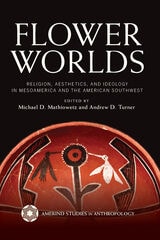
Flower Worlds
Religion, Aesthetics, and Ideology in Mesoamerica and the American SouthwestEdited by Michael D. Mathiowetz and Andrew D. Turner
University of Arizona Press, 2021
The recognition of Flower Worlds is one of the most significant breakthroughs in the study of Indigenous spirituality in the Americas. These worlds are solar and floral spiritual domains that are widely shared among both pre-Hispanic and contemporary Native cultures in Mesoamerica and the American Southwest. Flower Worldsis the first volume to bring together a diverse range of scholars to create a truly multidisciplinary understanding of Flower Worlds. During the last thirty years, archaeologists, art historians, ethnologists, Indigenous scholars, and linguists have emphasized the antiquity and geographical extent of similar Flower World beliefs among ethnic and linguistic groups in the New World.
Flower Worlds are not simply ethereal, otherworldly domains, but rather they are embodied in lived experience, activated, invoked, and materialized through ritual practices, expressed in verbal and visual metaphors, and embedded in the use of material objects and ritual spaces. This comprehensive book illuminates the origins of Flower Worlds as a key aspect of religions and histories among societies in Mesoamerica and the American Southwest. It also explores the role of Flower Worlds in shaping ritual economies, politics, and cross-cultural interaction among Indigenous peoples.
Flower Worlds reaches into multisensory realms that extend back at least 2,500 years, offering many different disciplines, perspectives, and collaborations to understand these domains. Today, Flower Worlds are expressed in everyday work and lived experiences, embedded in sacred geographies, and ritually practiced both individually and in communities. This volume stresses the importance of contemporary perspectives and experiences by opening with living traditions before delving into the historical trajectories of Flower Worlds, creating a book that melds scientific and humanistic research and emphasizes Indigenous voices.
Contributors: Oswaldo Chinchilla Mazariegos, James M. Córdova, Davide Domenici, Ángel González López, Kelley Hays-Gilpin, Michael D. Mathiowetz, Cameron L. McNeil, Felipe S. Molina, Johannes Neurath, John M. D. Pohl, Alan R. Sandstrom, David Delgado Shorter, Karl A. Taube, Andrew D. Turner, Lorena Vázquez Vallín, Dorothy Washburn
For Us, What Music?
The Life and Poetry of Donald JusticeJerry Harp
University of Iowa Press, 2010
When Donald Justice wrote in “On a Picture by Burchfield” that “art keeps long hours,” he might have been describing his own life. Although he early on struggled to find a balance between his life and art, the latter became a way of experiencing his life more deeply. He found meaning in human experience by applying traditional religious language to his artistic vocation. Central to his work was the translation of the language of devotion to a learned American vernacular. Art not only provided him with a wealth of intrinsically worthwhile experiences but also granted rich and nuanced ways of experiencing, understanding, and being in the world. For Donald Justice—recipient of some of poetry’s highest laurels, including the Pulitzer Prize, the Bollingen Prize, and the Lannan Literary Award for Poetry—art was a way of life.
Because Jerry Harp was Justice’s student, his personal knowledge of his subject—combined with his deep understanding of Justice’s oeuvre—works to remarkable advantage in For Us, What Music? Harp reads with keen intelligence, placing each poem within the precise historical moment it was written and locating it in the context of the literary tradition within which Justice worked. Throughout the text runs the narrative of Justice’s life, tying together the poems and informing Harp’s interpretation of them. For Us, What Music? grants readers a remarkable understanding of one of America’s greatest poets.
Formal Objects
On Beauty and SustainabilityRobert Hariman
University of Chicago Press, 2027
A bold invitation to learn sustainability from the aesthetic forms that pattern our world.
If we are to survive the ecological crisis, we must develop a new orientation to the world that draws us into better relationships with nature and one another. Robert Hariman believes that, as a first step, we must cultivate a renewed appreciation for the beauty at the center of reality. We must learn again, he argues, to see forms: the rhythms, shapes, and textures that evoke connection and pleasure. To that end, Formal Objects applies literary, philosophical, and art historical concepts to reimagine an often-ignored theory called formalism. This perspective is developed through visual motifs that are found in nature and the decorative arts, and it invites us to become attuned to rich patterns of reciprocity. Once we recognize the beauty in the world, we can move in step with its abundance to design more just and sustainable communities.
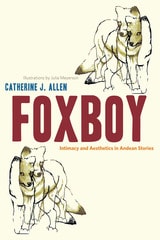
Foxboy
Intimacy and Aesthetics in Andean StoriesBy Catherine J. Allen
University of Texas Press, 2011
Once there was a Quechua folktale. It begins with a trickster fox's penis with a will of its own and ends with a daughter returning to parents who cannot recognize her until she recounts the uncanny adventures that have befallen her since she ran away from home. Following the strange twists and turnings of this tale, Catherine J. Allen weaves a narrative of Quechua storytelling and story listening that links these arts to others—fabric weaving, in particular—and thereby illuminates enduring Andean strategies for communicating deeply felt cultural values.
In this masterful work of literary nonfiction, Allen draws out the connections between two prominent markers of ethnic identity in Andean nations—indigenous language and woven cloth—and makes a convincing case that the connection between language and cloth affects virtually all aspects of expressive culture, including the performing arts. As she explores how a skilled storyteller interweaves traditional tales and stock characters into new stories, just as a skilled weaver combines traditional motifs and colors into new patterns, she demonstrates how Andean storytelling and weaving both embody the same kinds of relationships, the same ideas about how opposites should meet up with each other. By identifying these pervasive patterns, Allen opens up the Quechua cultural world that unites story tellers and listeners, as listeners hear echoes and traces of other stories, layering over each other in a kind of aural palimpsest.
Fragments for a History of a Vanishing Humanism
Edited by Myra Seaman and Eileen A. Joy
The Ohio State University Press, 2016
This volume, edited by Myra Seaman and Eileen A. Joy, insists on the always provisional and contingent formations of the human, and of various humanisms, over time, while also aiming to demonstrate the different ways these formations emerge (and also disappear) in different times and places, from the most ancient past to the most contemporary present. The essays are offered as “fragments” because the authors do not believe there can ever be a “total history” of either the human or the post/human as they play themselves out in differing historical contexts. At the same time, the volume as a whole argues that defining what “the human” (or “post/human”) is has always been an ongoing, never finished cultural project.
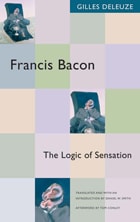
Francis Bacon
The Logic of SensationGilles Deleuze
University of Minnesota Press, 2005
Afterword by Tom Conley
Gilles Deleuze had several paintings by Francis Bacon hanging in his Paris apartment, and the painter’s method and style as well as his motifs of seriality, difference, and repetition influenced Deleuze’s work. This first English translation shows us one of the most original and important French philosophers of the twentieth century in intimate confrontation with one of that century’s most original and important painters.
In considering Bacon, Deleuze offers implicit and explicit insights into the origins and development of his own philosophical and aesthetic ideas, ideas that represent a turning point in his intellectual trajectory. First published in French in 1981, Francis Bacon has come to be recognized as one of Deleuze’s most significant texts in aesthetics. Anticipating his work on cinema, the baroque, and literary criticism, the book can be read not only as a study of Bacon’s paintings but also as a crucial text within Deleuze’s broader philosophy of art.
In it, Deleuze creates a series of philosophical concepts, each of which relates to a particular aspect of Bacon’s paintings but at the same time finds a place in the “general logic of sensation.” Illuminating Bacon’s paintings, the nonrational logic of sensation, and the act of painting itself, this work—presented in lucid and nuanced translation—also points beyond painting toward connections with other arts such as music, cinema, and literature. Francis Bacon is an indispensable entry point into the conceptual proliferation of Deleuze’s philosophy as a whole.
Gilles Deleuze (1925–1995) was professor of philosophy at the University of Paris, Vincennes–St. Denis. He coauthored Anti-Oedipus and A Thousand Plateaus with Félix Guattari. These works, as well as Cinema 1, Cinema 2, The Fold, Proust and Signs, and others, are published in English by Minnesota.
Daniel W. Smith teaches in the Department of Philosophy at Purdue University.
Free Women
Ethics and Aesthetics in Twentieth-Century Women's FictionKate Fullbrook
Temple University Press, 1990
From Light to Byte
Toward an Ethics of Digital CinemaMarkos Hadjioannou
University of Minnesota Press, 2012
Cinema has been undergoing a profound technological shift: celluloid film is being replaced by digital media in the production, distribution, and reception of moving images. Concerned with the debate surrounding digital cinema’s ontology and the interrelationship between cinema cultures, From Light to Byte investigates the very idea of change as it is expressed in the current technological transition. Markos Hadjioannou asks what is different in the way digital movies depict the world and engage with the individual and how we might best address the issue of technological shift within media archaeologies.
Hadjioannou turns to the technical basis of the image as his first point of departure, considering the creative and perceptual activities of moviemakers and viewers. Grounded in film history, film theory, and philosophy, he explores how the digital configures its engagement with reality and the individual while simultaneously replaying and destabilizing celluloid’s own structures. He observes that, where film’s photographic foundation encourages an existential association between individual and reality, digital representations are graphic renditions of mathematical codes whose causal relations are more difficult to trace.
Throughout this work Hadjioannou examines how the two technologies set themselves up with reference to reality, physicality, spatiality, and temporality, and he concludes that the question concerning digital cinema is ultimately one of ethical implications—a question, that is, of the individual’s ability to respond to the image of the world.