Results by title
71 books match the query 'Armed Forces' and 2 start with f
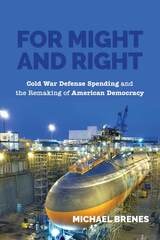
For Might and Right
Cold War Defense Spending and the Remaking of American DemocracyMichael Brenes
University of Massachusetts Press, 2020
How did the global Cold War influence American politics at home? For Might and Right traces the story of how Cold War defense spending remade participatory politics, producing a powerful and dynamic political coalition that reached across party lines. This “Cold War coalition” favored massive defense spending over social welfare programs, bringing together a diverse array of actors from across the nation, including defense workers, community boosters, military contractors, current and retired members of the armed services, activists, and politicians. Faced with neoliberal austerity and uncertainty surrounding America's foreign policy after the 1960s, increased military spending became a bipartisan solution to create jobs and stimulate economic growth, even in the absence of national security threats.
Using a rich array of archival sources, Michael Brenes draws important connections between economic inequality and American militarism that enhance our understanding of the Cold War's continued impact on American democracy and the resilience of the military-industrial complex, up to the age of Donald Trump.
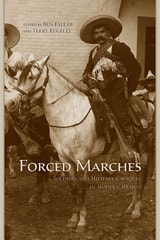
Forced Marches
Soldiers and Military Caciques in Modern MexicoEdited by Ben Fallaw and Terry Rugeley
University of Arizona Press, 2012
When Mexico first became a nation, its military and militias were two of the country’s few major institutions besides the Catholic Church. The army and local provincial militias functioned both as political pillars, providing institutional stability of a crude sort, and as springboards for the ambitions of individual officers. Military service provided upward social mobility, and it taught a variety of useful skills, such as mathematics and bookkeeping.
In the postcolonial era, however, militia units devoured state budgets, spending most of the national revenue and encouraging locales to incur debts to support them. Men with rifles provided the principal means for maintaining law and order, but they also constituted a breeding-ground for rowdiness and discontent. As these chapters make clear, understanding the history of state-making in Mexico requires coming to terms with its military past.