Results by title
3258 books match the query 'Art' and 107 start with f
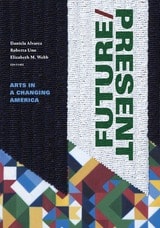
FUTURE/PRESENT
Arts in a Changing AmericaDaniela Alvarez, Roberta Uno, and Elizabeth M. Webb, editors
Duke University Press, 2024
Selected contributors. Dahlak Brathwaite, adrienne maree brown, Jeff Chang, Tameca Cole, Ofelia Esparza, Antoine Hunter, Nobuko Miyamoto, Wendy Red Star, Spel, Jose Antonio Vargas, Carrie Mae Weems, Hinaleimoana Kwai Kong Wong-Kalu
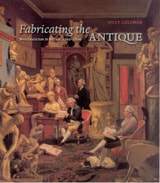
Fabricating the Antique
Neoclassicism in Britain, 1760-1800Viccy Coltman
University of Chicago Press, 2006
Looking at the theoretical foundations of neoclassicism, Coltman contends this reinvention of ancient material culture was more than a fabrication of style. Based in the strong emphasis on classical education during this time, neoclassicism, Coltman claims, could be more accurately described as a style of thought translated into material possessions. Fabricating the Antique is a new take on both well-known collections of ancient art and newly cataloged artifacts. This book also covers how these objects—once removed from their original context—were received, preserved, and displayed. Art historians, classicists, and archaeologists alike will benefit from this important examination of British eighteenth-century history.
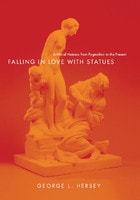
Falling in Love with Statues
Artificial Humans from Pygmalion to the PresentGeorge L. Hersey
University of Chicago Press, 2009
Hersey’s history of statue love begins in Cyprus, home of the legendary sculptor Pygmalion, who famously grew enamored of his own creation. Examining the island’s prehistoric images of Aphrodite—the love goddess who brought Pygmalion’s sculpture to life—Hersey traces the origins of statue love back to the Cypriot followers who adored her terra-cotta likenesses. He goes on to explore ideas about human replicas in the works of Empedocles, Aristotle, Lucretius, and Ovid, whose definitive account of the Pygmalion myth introduced the notion that statues have the potential to induce physical responses in their viewers. Finding avatars of Ovid’s living image in everything from pagan idols and early Christian statuary to eighteenth-century painting to modern action figures and marionettes, Hersey concludes by investigating the concern that these automata will eventually replace humans.
In the process, he narrates a powerful history of artificial life at a moment when—with the development of robot soldiers, ever more sophisticated genetic engineering, and a continually expanding digital universe—it seems more real than ever.

Fan Phenomena
MermaidsEdited by Matthieu Guitton
Intellect Books, 2016
Mermaids, and merfolk more generally, are everywhere you look. Merfolk devotees march in themed parades and practice mermaid-ing—swimming with a mermaid tail. There’s mermaid fiction and mermaid virtual reality; mermaid art and #mermaid trends. You may not know it, but transgenerational merfolk fan communities stretch around the world—from sea to shining sea. And their popularity is only growing.
In Fan Phenomena: Mermaids, Matthieu Guitton assembles a star-studded cast of scholars and popular culture insiders to decode the mermaid phenomenon. The book explores how merfolk have evolved in popular culture and what it is that grants them their privileged status among fantasy creatures. Illustrated throughout with fan photographs and stills from a plethora of films and TV shows, this new addition to the Fan Phenomena series promises to both fascinate and delight readers—earthbound and ocean-going alike.
Fan Phenomena
Star TrekEdited by Bruce E. Drushel
Intellect Books, 2013
Fan Phenomena
Star WarsEdited by Mika Elovaara
Intellect Books, 2013

Fantasies of Precision
American Modern Art, 1908-1947Ashley Lazevnick
University of Minnesota Press, 2023
Redefining the artistic movement that helped shape American modernism
In the early decades of the twentieth century, a loose contingent of artists working in and around New York City gave rise to the aesthetic movement known as precisionism, primarily remembered for its exacting depictions of skyscrapers, factories, machine parts, and other symbols of a burgeoning modernity. Although often regarded as a singular group, these artists were remarkably varied in their subject matter and stylistic traits. Fantasies of Precision excavates the surprising ties that connected them, exploring notions of precision across philosophy, technology, medicine, and many other fields.
Bookended by discussions of the landmark First Biennial Exhibition of Painting at the Whitney Museum in 1932, this study weaves together a series of interconnected chapters illuminating the careers of Charles Sheeler, Georgia O’Keeffe, and Charles Demuth. Built on a theoretical framework of the writing of modernist poets Marianne Moore and William Carlos Williams, Fantasies of Precision outlines an “ethos of precision” that runs through the diverse practices of these artists, articulating how the broad range of enigmatic imagery they produced was underpinned by shared strategies of restraint, humility, and slowness.
Questioning straightforward modes of art historical classification, Ashley Lazevnick redefines the concept that designated the precisionist movement. Through its cross-disciplinary approach and unique blend of historiography and fantasy, Fantasies of Precision offers a comprehensive reevaluation of one of the defining movements of artistic modernism.
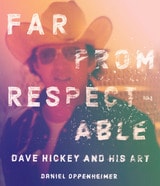
Far From Respectable
Dave Hickey and His ArtDaniel Oppenheimer
University of Texas Press, 2021
Finalist, 2021 Writers’ League of Texas Book Award
Regarded as both a legend and a villain, the critic Dave Hickey has inspired generations of artists, art critics, musicians, and writers. His 1993 book The Invisible Dragon became a cult hit for its potent and provocative critique of the art establishment and its call to reconsider the role of beauty in art. His next book, 1997’s Air Guitar, introduced a new kind of cultural criticism—simultaneously insightful, complicated, vulnerable, and down-to-earth—that propelled Hickey to fame as an iconoclastic thinker, loved and loathed in equal measure, whose influence extended beyond the art world.
Far from Respectable is a focused, evocative exploration of Hickey’s work, his impact on the field of art criticism, and the man himself, from his Huck Finn childhood to his drug-fueled periods as both a New York gallerist and Nashville songwriter to, finally, his anointment as a tenured professor and MacArthur Fellow. Drawing on in-person interviews with Hickey, his friends and family, and art world comrades and critics, Daniel Oppenheimer examines the controversial writer’s distinctive takes on a broad range of subjects, including Norman Rockwell, Robert Mapplethorpe, academia, Las Vegas, basketball, country music, and considers how Hickey and his vision of an “ethical, cosmopolitan paganism” built around a generous definition of art is more urgently needed than ever before.
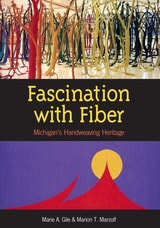
Fascination with Fiber
Michigan's Handweaving HeritageMarie A. Gile and Marion T. Marzolf
University of Michigan Press, 2006
"A premiere work offering a rich chronicle of weaving in Michigan. Colorful stories tell of Michigan's textile people, places, and events, and show the important role that this state played in preserving and progressing the culture of cloth locally and nationally. I came away with a new sense of pride and joy at being a part of this rich human history and inspired to continue exploring within this great tradition!"
---Chris Triola, Fiber Artist
"Fascination with Fiber is a well-documented history, with consequence! The authors reveal surprising continuity in relationships, with results that are far-reaching. Readers will be moved beyond border as they come to realize the extensive influences generated in Michigan."
---Gerhardt Knodel, Director, Cranbrook Academy of Art
Fascination with Fiber is the first complete look at Michigan's rich tradition of handweaving, from pioneer log cabin days to the contemporary era of digital computer-aided looms.
Michigan has been at the center of handweaving and fiber arts and crafts since early settlers brought their skills with them from countries where handicrafts and weaving were traditionally strong. The textiles they produced in their new country, from linens to coverlets to rugs, took on a distinctly American expression. In the twentieth century, the formation of guilds, craft communities, and formal art programs created a revival of interest in handweaving as an opportunity for artistic expression so that by latter part of the century the state played a vital role in the national fiber movement.
Weavers and historians themselves, authors Marie A. Gile and Marion T. Marzolf focus on the people and forces that have kept the craft of handweaving alive in Michigan and indeed throughout the country for over two centuries: a passionate group of individuals and weaving communities enlivened through shared necessity, opportunity, and creativity.
Gile and Marzolf base their book on oral histories, interviews, and documentary and artifact research. With its tales of colorful characters such as Mary Atwater, the gun-toting weaver from Montana who helped organize the handweaving industry; to the formation of the Michigan League of Handweavers in 1959; and the "Fascination with Fiber" exhibit that opened in 2004; Fascination with Fiber brings the story of handweaving in Michigan to life like no other book.
Marie A. Gile is Textile Specialist and Research Associate at Michigan State University Museum in Lansing. She has been a weaver and fiber artist for twenty-five years. Marion T. Marzolf is Professor Emerita in the Department of Journalism and Communication at the University of Michigan. Since retiring in 1995, she has taught basic weaving, has served as president of the Michigan League of Handweavers, and has exhibited in galleries statewide.
Fashion Knowledge
Theories, Methods, Practices and PoliticsEdited by Elke Gaugele and Monica Titton
Intellect Books, 2024
At a point when fashion studies are expanding and the fashion industry is at a crucial point of change, Fashion Knowledge makes a valuable contribution to the field. The book explores current issues in fashion research, with a focus on the relationship between theory and practice. This edited collection assembles academic essays and intellectual activism next to visual essays and artistic interventions, proposing a different concept for fashion research that eschews the traditional logic of academic fashion studies. It features acclaimed designers, artists, curators, and theorists whose work investigates the multi-faceted debates on the rise of practice-based research in fashion. Contributors look at new forms of fashion knowledge that are forming along with shifting practices, shedding light on the entanglement of fashion and politics in both contemporary and historical moments.
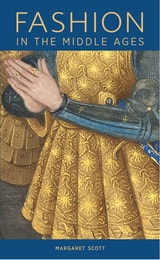
Fashion in the Middle Ages
Margaret Scott
J. Paul Getty Trust, The, 2018
From the costly velvets and furs worn by kings to the undyed wools and rough linens of the peasantry, the clothing worn by the various classes in the Middle Ages played an integral role in medieval society. In addition to providing clues to status, profession, and/or geographic origin, textiles were a crucial element in the economies of many countries and cities.
Much of what is known about medieval fashion is gleaned from the pages of manuscripts, which serve as a rich source of imagery. This volume provides a detailed look at both the actual fabrics and composition of medieval clothing as well as the period’s attitude toward fashion through an exploration of illuminated manuscripts in the collection of the J. Paul Getty Museum. The last portion of the book is dedicated to the depiction of clothing in biblical times and the ancient world as seen through a medieval lens. Throughout, excerpts from literary sources of the period help shed light on the perceived role and function of fashion in daily life.
Fashion, Culture, and Identity
Fred Davis
University of Chicago Press, 1992
Much of what we assume to be individual preference, Davis shows, really reflects deeper social and cultural forces. Ours is an ambivalent social world, characterized by tensions over gender roles, social status, and the expression of sexuality. Predicting what people will wear becomes a risky gamble when the link between private self and public persona can be so unstable.
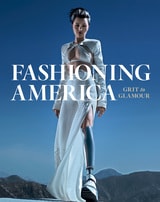
Fashioning America
Grit to GlamourMichelle Tolini Finamore
University of Arkansas Press, 2022
With nearly one hundred illustrations of garments and accessories that span two centuries of design, Fashioning America celebrates the achievements of a wide array of makers—especially immigrants, Native Americans, and Black Americans. Incorporating essays by fashion historians, curators, and journalists, this volume takes a fresh look at the country’s fashion history while exploring its close relationship with Hollywood and media in general, illuminating the role that American designers have played in shaping global visual culture and demonstrating why American fashion has long resonated around the world.
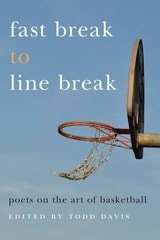
Fast Break to Line Break
Poets on the Art of BasketballTodd Davis
Michigan State University Press, 2012
If baseball is the sport of nostalgic prose, basketball’s movement, myths, and culture are truly at home in verse. In this extraordinary collection of essays, poets meditate on what basketball means to them: how it has changed their perspective on the craft of poetry; how it informs their sense of language, the body, and human connectedness; how their love of the sport made a difference in the creation of their poems and in the lives they live beyond the margins. Walt Whitman saw the origins of poetry as communal, oral myth making. The same could be said of basketball, which is the beating heart of so many neighborhoods and communities in this country and around the world. On the court and on the page, this “poetry in motion” can be a force of change and inspiration, leaving devoted fans wonderstruck.
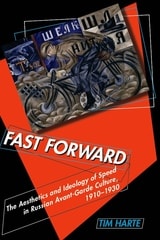
Fast Forward
The Aesthetics and Ideology of Speed in Russian Avant-Garde Culture, 1910–1930Tim Harte
University of Wisconsin Press, 2009
Although modernism arrived somewhat late in Russia, the increased tempo of life at the start of the twentieth century provided Russia’s avant-garde artists with an infusion of creative dynamism and crucial momentum for revolutionary experimentation. In Fast Forward Tim Harte presents a detailed examination of the images and concepts of speed that permeated Russian modernist poetry, visual arts, and cinema. His study illustrates how a wide variety of experimental artistic tendencies of the day—such as “rayism” in poetry and painting, the effort to create a “transrational” language (zaum’) in verse, and movements seemingly as divergent as neo-primitivism and constructivism—all relied on notions of speed or dynamism to create at least part of their effects.
Fast Forward reveals how the Russian avant-garde’s race to establish a new artistic and social reality over a twenty-year span reflected an ambitious metaphysical vision that corresponded closely to the nation’s rapidly changing social parameters. The embrace of speed after the 1917 Revolution, however, paradoxically hastened the movement’s demise. By the late 1920s, under a variety of historical pressures, avant-garde artistic forms morphed into those more compatible with the political agenda of the Russian state. Experimentation became politically suspect and abstractionism gave way to orthodox realism, ultimately ushering in the socialist realism and aesthetic conformism of the Stalin years.
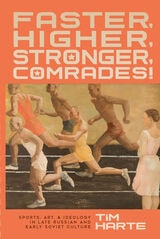
Faster, Higher, Stronger, Comrades!
Sports, Art, and Ideology in Late Russian and Early Soviet CultureTim Harte
University of Wisconsin Press, 2020
With interdisciplinary analysis of literature, painting, and film, Faster, Higher, Stronger, Comrades! traces how physical fitness had an even broader impact on culture and ideology in the Soviet Union than previously realized. From prerevolutionary writers and painters glorifying popular circus wrestlers to Soviet photographers capturing unprecedented athleticism as a means of satisfying their aesthetic ideals, the nation's artists embraced sports in profound, inventive ways. Though athletics were used for doctrinaire purposes, Tim Harte demonstrates that at their core, they remained playful, joyous physical activities capable of stirring imaginations and transforming everyday realities.

Fear Reverence Terror
Carlo Ginzburg
Seagull Books, 2017
Fear, Reverence, Terror invites us to look at images slowly, with the help of a few examples: Picasso’s Guernica, the “Lord Kitchener Wants You” World War I recruitment poster, Jacques-Louis David’s Marat, the frontispiece of Thomas Hobbes’s Leviathan, and a cup of gilded silver with scenes from the conquest of the New World. Are these political images, Carlo Ginzburg asks? Yes, because every image is, in a sense, political—an instrument of power. Tacitus once wrote, unforgettably, that we are enslaved by lies of which we ourselves are the authors. Is it possible to break this bond? Fear, Reverence, Terror will answer this question.
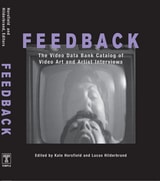
Feedback
The Video Data Bank Catalog of Video Art and Artist InterviewsKate Horsfield
Temple University Press, 2006
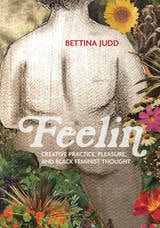
Feelin
Creative Practice, Pleasure, and Black Feminist ThoughtBettina Judd
Northwestern University Press, 2023
How creativity makes its way through feeling—and what we can know and feel through the artistic work of Black women
Feeling is not feelin. As the poet, artist, and scholar Bettina Judd argues, feelin, in African American Vernacular English, is how Black women artists approach and produce knowledge as sensation: internal and complex, entangled with pleasure, pain, anger, and joy, and manifesting artistic production itself as the meaning of the work. Through interviews, close readings, and archival research, Judd draws on the fields of affect studies and Black studies to analyze the creative processes and contributions of Black women—from poet Lucille Clifton and musician Avery*Sunshine to visual artists Betye Saar, Joyce J. Scott, and Deana Lawson.
Feelin: Creative Practice, Pleasure, and Black Feminist Thought makes a bold and vital intervention in critical theory’s trend toward disembodying feeling as knowledge. Instead, Judd revitalizes current debates in Black studies about the concept of the human and about Black life by considering how discourses on emotion as they are explored by Black women artists offer alternatives to the concept of the human. Judd expands the notions of Black women’s pleasure politics in Black feminist studies that include the erotic, the sexual, the painful, the joyful, the shameful, and the sensations and emotions that yet have no name. In its richly multidisciplinary approach, Feelin calls for the development of research methods that acknowledge creative and emotionally rigorous work as productive by incorporating visual art, narrative, and poetry.
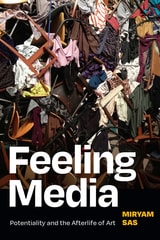
Feeling Media
Potentiality and the Afterlife of ArtMiryam Sas
Duke University Press, 2022
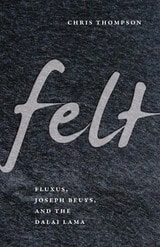
Felt
Fluxus, Joseph Beuys, and the Dalai LamaChris Thompson
University of Minnesota Press, 2010
Building from the resonance of felt, the fabric, in both Tibetan culture and in Beuys’s art, Thompson takes as his point of departure Deleuze and Guattari’s discussion in A Thousand Plateaus of felt as smooth space that is “in principle infinite, open, and unlimited in every direction,” its structure determined by chance as opposed to the planned, woven nature of most fabrics. Felt is thus seen as an alternative to the model of the network: felt’s anarchic form is not reducible to the regularity of the net, grid, or mesh, and the more it is pulled, tweaked, torn, and agitated, the greater its structural integrity.
Felt thus invents its methodology from the material that represents its object of inquiry and from this advances a reading of the avant-garde. At the same time, Thompson demonstrates that it is sometimes the failures of thought, the disappointing meetings, even the untimely deaths that open portals through which life flows into art and allows new conjunctions of life, art, and thought. Thompson explores both the well-known engagement of Fluxus artists with Eastern spirituality and the more elusive nature of Beuys’s own late interest in Tibetan culture, arriving at a sense of how such noncausal interactions—interhuman intrigue—create culture and shape contemporary art history.
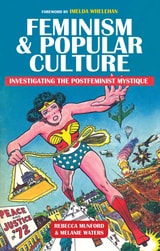
Feminism and Popular Culture
Investigating the Postfeminist MystiqueMunford, Rebecca
Rutgers University Press, 2014
In Feminism and Popular Culture, Rebecca Munford and Melanie Waters consider why the twenty-first century media landscape is so haunted by the ghosts of these traditional figures that feminism otherwise laid to rest. Why, over fifty years since Betty Friedan’s critique, does the feminine mystique exert such a strong spectral presence, and how has it been reimagined to speak to the concerns of a postfeminist audience?
To answer these questions, Munford and Waters draw from a rich array of examples from contemporary film, fiction, music, and television, from the shadowy cityscapes of Homeland to the haunted houses of American Horror Story. Alongside this comprehensive analysis of today’s popular culture, they offer a vivid portrait of feminism’s social and intellectual history, as well as an innovative application of Jacques Derrida’s theories of “hauntology.” Feminism and Popular Culture thus not only considers how contemporary media is being visited by the ghosts of feminism’s past, it raises vital questions about what this means for feminism’s future.

Feminism in Revolt
An AnthologyCarla Lonzi
Seagull Books, 2023
Recently rediscovered in Italy and abroad, the works of Carla Lonzi tend to fall under the remit of art history or feminist theory. Art historians focus on the texts written in the 1960s, when Lonzi was still actively working as a critic, whereas feminist scholars engage with her more openly political interventions, published after her declared embrace of a separatist feminism. In 1970 Lonzi decided to leave the art world for good and dedicate herself to her newly founded feminist collective, Rivolta Femminile. While recognizing the break in Lonzi’s life and work, this anthology maps the overall arc of her intellectual and political production, giving equal weight to her seminal contributions to art criticism and her trailblazing feminist writings. A comprehensive collection of texts from the most influential and iconic figure of Italian second-wave feminism, Feminism in Revolt seeks to shed light on Lonzi’s versatile approach to literary genres and compositions by juxtaposing essayistic texts, poems, diary excerpts, and manifestos.
Feminist Ethics in Film
Reconfiguring Care through CinemaJoseph H. Kupfer
Intellect Books, 2012
Popular films can do more than merely entertain us; they can contribute to our understanding of human nature and the ethical theory that informs it. Feminist Ethics in Film explores a varied group of cinematic narratives from the perspective of care-based ethics. The interpersonal relationships they portray disclose important dimensions of care that have been overlooked in less contextualized discussions. In particular, the book examines the relationships between care and community, autonomy, family, and self transformation. Interpreting films from the perspective of the feminist ethics of care both expands our knowledge of this burgeoning area of philosophy and adds depth to our appreciation of the films.
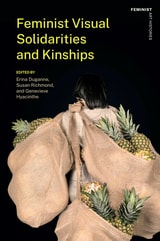
Feminist Visual Solidarities and Kinships
Erina Duganne
Rutgers University Press, 2027
Feminist Visual Solidarities and Kinships considers global feminist coalitional practices in the contemporary visual arts through three key frameworks: transnational solidarity, archives, and kinships and care. The edited volume features emerging and established scholars and artists whose diverse perspectives inspire connections as well as critical points of divergence over the meanings of “feminism,” “transnationalism,” and “art.” Representing grassroots activism, artistic practice, and scholarly and curatorial inquiry, the diversity of approaches, writing styles, and chapter lengths depart from conventional modes of academic writing and provide pedagogical opportunities for students and scholars to use these contributions in a variety of learning environments not limited to the traditional classroom.

Ferocious Reality
Documentary according to Werner HerzogEric Ames
University of Minnesota Press, 2012
Over the course of his career Werner Herzog, known for such visionary masterpieces as Aguirre: The Wrath of God (1972) and The Enigma of Kaspar Hauser (1974), has directed almost sixty films, roughly half of which are documentaries. And yet, in a statement delivered during a public appearance in 1999, the filmmaker declared: “There are deeper strata of truth in cinema, and there is such a thing as poetic, ecstatic truth. It is mysterious and elusive, and can be reached only through fabrication and imagination and stylization.” Ferocious Reality is the first book to ask how this conviction, so hostile to the traditional tenets of documentary, can inform the work of one of the world’s most provocative documentarians.
Herzog, whose Cave of Forgotten Dreams was perhaps the most celebrated documentary of 2010, may be the most influential filmmaker missing from major studies and histories of documentary. Examining such notable films as Lessons of Darkness (1992) and Grizzly Man (2005), Eric Ames shows how Herzog dismisses documentary as a mode of filmmaking in order to creatively intervene and participate in it. In close, contextualized analysis of more than twenty-five films spanning Herzog’s career, Ames makes a case for exploring documentary films in terms of performance and explains what it means to do so. Thus his book expands the field of cinema studies even as it offers an invaluable new perspective on a little studied but integral part of Werner Herzog’s extraordinary oeuvre.
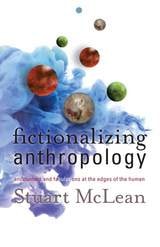
Fictionalizing Anthropology
Encounters and Fabulations at the Edges of the HumanStuart J. McLean
University of Minnesota Press, 2017
What might become of anthropology if it were to suspend its sometime claims to be a social science? What if it were to turn instead to exploring its affinities with art and literature as a mode of engaged creative practice carried forward in a world heterogeneously composed of humans and other than humans? Stuart McLean claims that anthropology stands to learn most from art and literature not as “evidence” to support explanations based on an appeal to social context or history but as modes of engagement with the materiality of expressive media—including language—that always retain the capacity to disrupt or exceed the human projects enacted through them.
At once comparative in scope and ethnographically informed, Fictionalizing Anthropology draws on an eclectic range of sources, including ancient Mesopotamian myth, Norse saga literature, Hesiod, Lucretius, Joyce, Artaud, and Lispector, as well as film, multimedia, and performance art, along with the concept of “fabulation” (the making of fictions capable of intervening in and transforming reality) developed in the writings of Bergson and Deleuze. Sharing with proponents of anthropology’s recent “ontological turn,” McLean insists that experiments with language and form are a performative means of exploring alternative possibilities of collective existence, new ways of being human and other than human, and that such experiments must therefore be indispensable to anthropology’s engagement with the contemporary world.
Field Notes on the Visual Arts
Edited by Karen Lang
Intellect Books, 2019
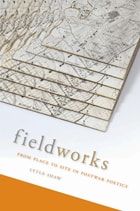
Fieldworks
From Place to Site in Postwar PoeticsLytle Shaw
University of Alabama Press, 2013
Fieldworks offers a historical account of the social, rhetorical, and material attempts to ground art and poetry in the physicality of a site.
Arguing that place-oriented inquiries allowed poets and artists to develop new, experimental models of historiography and ethnography, Lytle Shaw draws out the shifting terms of this practice from World War II to the present through a series of illuminating case studies. Beginning with the alternate national genealogies unearthed by William Carlos Williams in Paterson and Charles Olson in Gloucester, Shaw demonstrates how subsequent poets sought to ground such inquiries in concrete social formations—to in effect live the poetics of place: Gary Snyder in his back-to-the-land familial compound, Kitkitdizze; Amiri Baraka in a black nationalist community in Newark; Robert Creeley and the poets of Bolinas, California, in the capacious “now” of their poet-run town. Turning to the work of Robert Smithson—who called one of his essays an “appendix to Paterson,” and who in turn has exerted a major influence on poets since the 1970s—Shaw then traces the emergence of site-specific art in relation both to the poetics of place and to the larger linguistic turn in the humanities, considering poets including Clark Coolidge, Bernadette Mayer, and Lisa Robertson.
By putting the poetics of place into dialog with site-specificity in art, Shaw demonstrates how poets and artists became experimental explicators not just of concrete locations and their histories, but of the discourses used to interpret sites more broadly. It is this dual sense of fieldwork that organizes Shaw’s groundbreaking history of site-specific poetry.

Fiery Cinema
The Emergence of an Affective Medium in China, 1915–1945Weihong Bao
University of Minnesota Press, 2015
What was cinema in modern China? It was, this book tells us, a dynamic entity, not strictly tied to one media technology, one mode of operation, or one system of aesthetic code. It was, in Weihong Bao’s term, an affective medium, a distinct notion of the medium as mediating environment with the power to stir passions, frame perception, and mold experience. In Fiery Cinema, Bao traces the permutations of this affective medium from the early through the mid-twentieth century, exploring its role in aesthetics, politics, and social institutions.
Mapping the changing identity of cinema in China in relation to Republican-era print media, theatrical performance, radio broadcasting, television, and architecture, Bao has created an archaeology of Chinese media culture. Within this context, she grounds the question of spectatorial affect and media technology in China’s experience of mechanized warfare, colonial modernity, and the shaping of the public into consumers, national citizens, and a revolutionary collective subject. Carrying on a close conversation with transnational media theory and history, she teases out the tension and affinity between vernacular, political modernist, and propagandistic articulations of mass culture in China’s varied participation in modernity.
Fiery Cinema advances a radical rethinking of affect and medium as a key insight into the relationship of cinema to the public sphere and the making of the masses. By centering media politics in her inquiry of the forgotten future of cinema, Bao makes a major intervention into the theory and history of media.
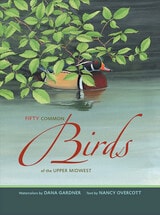
Fifty Common Birds of the Upper Midwest
Dana Gardner
University of Iowa Press, 2006
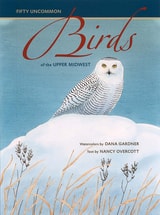
Fifty Uncommon Birds of the Upper Midwest
Dana Gardner
University of Iowa Press, 2007
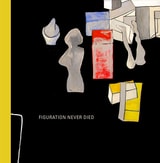
Figuration Never Died
New York Painterly Painting, 1950–1970Karen Wilkin
The Artist Book Foundation, 2020
By 1950, forward-looking New York painting was seen as synonymous with abstraction, especially charged, gestural Abstract Expressionism. But there was also a strong group of dissenters; artists, all born in the 1920s and many of them students of Hans Hofmann, who never lost their enthusiasm for recognizable imagery, without rejecting Abstract Expressionism's love of malleable oil paint. Although most of them began as abstract artists, they all evolved into painters working from observation, using a fluid, urgent touch to translate their perceptions into eloquent, highly individualized visual languages, almost always informed by the hand; that is, unlike the Color Field and Minimalist artists, these artists remained, for the most part, "painterly" painters. In light of their important contributions to twentieth-century American art, The Artist Book Foundation presents the cataloge for the Brattleboro Museum & Art Center's eponymous 2020 exhibition, Figuration Never Died: New York Painterly Painting, 1950–1970.
These rebellious artists include Lois Dodd, Jane Freilicher, Paul Georges, Grace Hartigan, Wolf Kahn, Alex Katz, Albert Kresch, Robert de Niro Sr., Paul Resika, and Anne Tabachnick. The compelling figurative work they made between about 1950 and 1970, in contrast to the prevailing Abstract Expressionism of the time, constitutes a significat chapter in the history of recent American Modernism. Their work not only greatly expands our conception of the story of New York painting, but it also presages and contextualizes today's multiplicity of artistic concepts and processes. Given both the aesthetic diversity of today's New York art world and the dependence of many younger artists on digital media or the appearance of digital media, it seems an appropriate moment to reconsider the work of these daring pioneers, as both precursor and opposition to current norms.
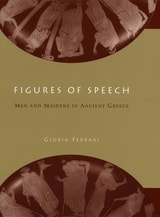
Figures of Speech
Men and Maidens in Ancient GreeceGloria Ferrari
University of Chicago Press, 2002
Ferrari begins by developing a theoretical perspective on visual representation, arguing that artistic images give us access to how their subjects were imagined rather than to the way they really were. For instance, Ferrari's examinations of the many representations of women working wool reveal that these images constitute powerful metaphors—metaphors, she argues, which both reflect and construct Greek conceptions of the ideal woman and her ideal behavior.
From this perspective, Ferrari studies a number of icons representing blameless femininity and ideal masculinity to reevaluate the rites of passage by which girls are made ready for marriage and boys become men. Representations of the nude male body in Archaic statues known as kouroi, for example, symbolize manhood itself and shed new light on the much-discussed institution of paiderastia. And, in Ferrari's hands, imagery equating maidens with arable land and buried treasure provides a fresh view of Greek ideas of matrimony.
Innovative, thought-provoking, and insightful throughout, Figures of Speech is a powerful demonstration of how the study of visual images as well as texts can reshape our understanding of ancient Greek culture.

Film Criticism in the Digital Age
Frey, Mattias
Rutgers University Press, 2015
Film Nation
Hollywood Looks at U.S. History, Revised EditionRobert Burgoyne
University of Minnesota Press, 2010
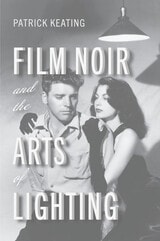
Film Noir and the Arts of Lighting
Patrick Keating
Rutgers University Press, 2024
Film on The Faultline
Edited by Alan Wright
Intellect Books, 2015
Filming the City
Urban Documents, Design Practices and Social Criticism through the LensEdited by Edward Clift, Mirko Guaralda, and Ari Mattes
Intellect Books, 2016
Films That Spill
Beyond the Cinema of TransgressionMarie Sophie Beckmann
Rutgers University Press, 2025
Final Light
The Life and Art of V. Douglas SnowFrank McEntire
University of Utah Press, 2013
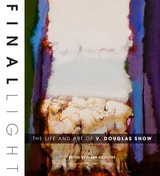
A nationally recognized artist, Snow chose to stay in Utah where, when not teaching at the University of Utah, he roamed the southern Utah desert gaining inspiration from the red rock formations, especially the Cockscomb outside his studio near Capitol Reef National Park. Snow said, “Every artist probably wonders if he or she made the right decision to dig in to a certain place.” He dug into the landscape in and around Southern Utah and never regretted it. Just as “Tennessee Williams’s South, William Faulkner’s Mississippi, [or] John Steinbeck’s West Coast, formed their work,” the desert lands of the Colorado Plateau formed Snow’s. Their sense of place, “without provincialism,” said Snow “is what gives their art its enduring power.” Final Light will appeal to art historians and art lovers, especially those interested in abstract expressionism and the art of Utah, the West, and the Southwest.
Chosen by 15 Bytes, Utah's art magazine, as the most exceptional art book for 2014.
Finding Augusta
Habits of Mobility and Governance in the Digital EraHeidi Rae Cooley
Dartmouth College Press, 2014
Finding Caspicara
Double Identities, Hidden Figures, and the Commerce of Sculpture in Colonial QuitoSusan Verdi Webster
University of Texas Press, 2024
2026 Eleanor Tufts Award, Society for Iberian Global Art, College Art Association
An examination of sculpture and authorship in eighteenth-century Quito that documents Caspicara as a participant in the innovative artistic production of the city’s workshops and its widespread commerce of polychrome sculptures.
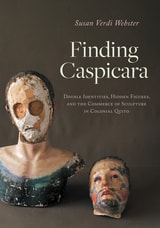
Who is Caspicara? Nothing is known of Caspicara’s life, and not a single sculpture has been documented as his work. Yet traditional histories laud him as a prolific Indigenous sculptor in eighteenth-century Quito who created exquisite polychrome figures and became a national artistic icon. Drawing on extensive archival, historical, and object research, Susan Verdi Webster peels away layers of historiographical fabrication to reveal what we do and do not know about Caspicara and his work.
Rather than being a solitary master, Caspicara collaborated with other, largely Indigenous artists in Quito’s protoindustrial workshops, manufacturing sculptures now credited to him alone. The high quality of Quito sculptures produced by anonymous artists turned the city into a hub of wide-ranging commerce in religious icons. The art world and post-independence Ecuadorians have lionized the one named sculptor, Caspicara, according to the Western model of the artist-genius, amplifying the market for works bearing his name and creating a national hero on par with European masters. Lost in this process were the artists themselves. Webster returns to their world, detailing their methods and labor and, for the first time, documenting a sculpture made by Caspicara.
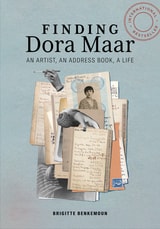
Finding Dora Maar
An Artist, an Address Book, a LifeBrigitte Benkemoun
J. Paul Getty Trust, The, 2020
“[A] spirited and deeply researched project…. [Benkemoun’s] affection for her subject is infectious. This book gives a satisfying treatment to a woman who has been confined for decades to a Cubist’s limited interpretation.” — Joumana Khatib, The New York Times
Merging biography, memoir, and cultural history, this compelling book, a bestseller in France, traces the life of Dora Maar through a serendipitous encounter with the artist’s address book.
In search of a replacement for his lost Hermès agenda, Brigitte Benkemoun’s husband buys a vintage diary on eBay. When it arrives, she opens it and finds inside private notes dating back to 1951—twenty pages of phone numbers and addresses for Balthus, Brassaï, André Breton, Jean Cocteau, Paul Éluard, Leonor Fini, Jacqueline Lamba, and other artistic luminaries of the European avant-garde.
After realizing that the address book belonged to Dora Maar—Picasso’s famous “Weeping Woman” and a brilliant artist in her own right—Benkemoun embarks on a two-year voyage of discovery to learn more about this provocative, passionate, and enigmatic woman, and the role that each of these figures played in her life.
Longlisted for the prestigious literary award Prix Renaudot, Finding Dora Maar is a fascinating and breathtaking portrait of the artist.
This work received support from the French Ministry of Foreign Affairs and the Cultural Services of the French Embassy in the United States through their publishing assistance program.
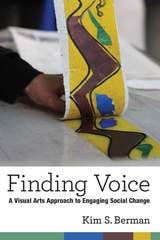
Finding Voice
A Visual Arts Approach to Engaging Social ChangeKim S. Berman
University of Michigan Press, 2017
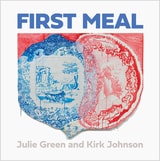
First Meal
Julie Green
Oregon State University Press, 2023
Wrongful convictions haunt the American criminal justice system, as revealed in recent years by DNA and other investigative tools. And every wrongfully convicted person who walks free, exonerated after years or decades, carries part of that story. From those facts, artist Julie Green posed a seemingly simple question: When you have been denied all choice, what do you choose to eat on the first day of freedom?
In the small details of life at such pivotal moments, a vast new landscape of the world can emerge, and that is the core concept of First Meal. Partnering with the Center on Wrongful Convictions at Northwestern University’s Pritzker School of Law, Green and her coauthor, award-winning journalist Kirk Johnson, have created a unique melding of art and narration in the portraits and stories of twenty-five people on the day of their release.
Food and punishment have long been intertwined. The tradition of offering a condemned person a final meal before execution, for example, has been explored by psychologists, filmmakers, and others—including Green herself in an earlier series of criminal-justice themed paintings, The Last Supper. First Meal takes on that issue from the other side: food as a symbol of autonomy in a life restored. Set against the backdrop of a flawed American legal system, First Meal describes beauty, pain, hope and redemption, all anchored around the idea—explored by writers from Marcel Proust to Michael Pollan—that food touches us deeply in memory and emotion.
In Green’s art, state birds and surreal lobsters soar over places where wrongful convictions unfolded, mistaken witnesses shout their errors, glow-in-the-dark skylines evoke homecoming. Johnson’s essays take us inside those moments—from the courtrooms where things went wrong to the pathways of faith and resilience that kept people sane through their years of injustice. First Meal seeks to inform and spread awareness, but also celebrate the humanity that unites us, and the idea that gratitude and euphoria—even as it mixes with grief and the awareness of loss—can emerge in places we least expect.
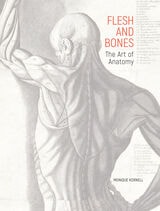
Flesh and Bones
The Art of AnatomyMonique Kornell
J. Paul Getty Trust, The, 2022
This illustrated volume examines the different methods artists and anatomists used to reveal the inner workings of the human body and evoke wonder in its form.
For centuries, anatomy was a fundamental component of artistic training, as artists such as Leonardo da Vinci and Michelangelo sought to skillfully portray the human form. In Europe, illustrations that captured the complex structure of the body—spectacularly realized by anatomists, artists, and printmakers in early atlases such as Andreas Vesalius’s De humani corporis fabrica libri septem of 1543—found an audience with both medical practitioners and artists.
Flesh and Bones examines the inventive ways anatomy has been presented from the sixteenth through the twenty-first century, including an animated corpse displaying its own body for study, anatomized antique sculpture, spectacular life-size prints, delicate paper flaps, and 3-D stereoscopic photographs. Drawn primarily from the vast holdings of the Getty Research Institute, the over 150 striking images, which range in media from woodcut to neon, reveal the uncanny beauty of the human body under the skin.
This volume is published to accompany an exhibition on view at the Getty Research Institute at the Getty Center from February 22 to July 10, 2022.
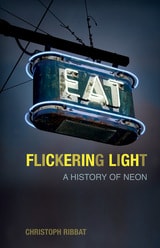
Flickering Light
A History of NeonChristoph Ribbat
Reaktion Books, 2013
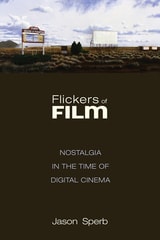
Flickers of Film
Nostalgia in the Time of Digital CinemaSperb, Jason
Rutgers University Press, 2015
In Flickers of Film, Jason Sperb offers nuanced and unexpected answers to these questions, examining the benefits of certain types of film nostalgia, while also critiquing how Hollywood’s nostalgic representations of old technologies obscure important aspects of their histories. He interprets this affection for the prehistory and infancy of digital technologies in relation to an industry-wide anxiety about how the digital has grown to dominate Hollywood, pushing it into an uncertain creative and economic future. Yet he also suggests that Hollywood’s nostalgia for old technologies ignores the professionals who once employed them, as well as the labor opportunities that have been lost through the computerization and outsourcing of film industry jobs.
Though it deals with nostalgia, Flickers of Film is strikingly cutting-edge, one of the first studies to critically examine Pixar’s role in the film industry, cinematic representations of videogames, and the economic effects of participatory culture. As he takes in everything from Terminator: Salvation to The Lego Movie, Sperb helps us see what’s distinct about this recent wave of self-aware nostalgic films—how Hollywood nostalgia today isn’t what it used to be.
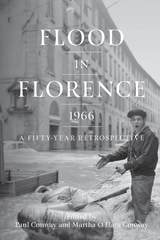
Flood in Florence, 1966
A Fifty-Year RetrospectivePaul Conway and Martha O’Hara Conway
Michigan Publishing Services, 2018