Results by title
159 books match the query 'Birds' and 9 start with f

Feather Brained
My Bumbling Quest to Become a Birder and Find a Rare Bird on My OwnBob Tarte
University of Michigan Press, 2016
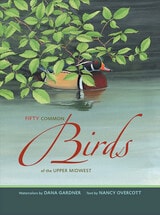
Fifty Common Birds of the Upper Midwest
Dana Gardner
University of Iowa Press, 2006
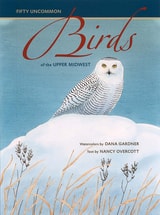
Fifty Uncommon Birds of the Upper Midwest
Dana Gardner
University of Iowa Press, 2007
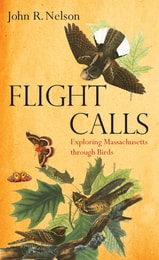
Flight Calls
Exploring Massachusetts through BirdsJohn R. Nelson
University of Massachusetts Press, 2019
With style, humor, and a sense of wonder, Nelson blends his field adventures with a history of the birding community; natural and cultural history; bird stories from authors such as Henry David Thoreau, Emily Dickinson, and Mary Oliver; current scientific research; and observations about the fascinating habits of birds and their admirers. These essays are capped off with a plea for bird conservation, in Massachusetts and beyond.
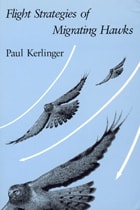
Flight Strategies of Migrating Hawks
Paul Kerlinger
University of Chicago Press, 1989
Kerlinger begins with an overview, discussing ecology and geography, research methods, natural history, and evolution, and atmospheric structure. He then addresses specific aspects of flight behavior: aerodynamics, morphology, mechanics, direction, altitude, flocking, water crossing, speed selection, daily distance traveled, and flight strategies. Kerlinger describes each aspect of behavior quantitatively, testing mechanistic hypotheses. In conclusion, he examines how migrants integrate these behavioral components. Throughout the text he draws comparisons between the migratory flight behavior of hawks and that of other taxa. By means of such comparisons, researchers can gain insight into the selective pressures that shape the behavior of migrant species.
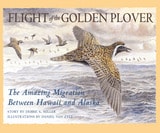
Flight of the Golden Plover
The Amazing Migration Between Hawaii and AlaskaDebbie S. Miller
University of Alaska Press, 2011
The remarkable story of the golden plover’s annual migration, this beautifully illustrated nature title for young readers sees the small but mighty plover embark on a six-thousand-mile flight between the frozen Alaska tundra and gentle grassy slopes of the Hawaiian Islands. Equally at home in his two very different habitats, the once-endangered golden plover has evolved many behaviors and adaptations that make it perfectly well-suited to each of its homes, and this book contains many fascinating facts about them. Readers are also introduced to the plover’s neighbors and friends—from the giant Hawaiian goose, or nene, to the musk ox, grizzly bear, arctic fox, and sandhill crane.

For The Birds
An Uncommon GuideLaura Erickson
University of Minnesota Press, 2001
In 365 day-by-day sketches, Laura Erickson brings more than 250 birds right into your living room-from rare hawk owls to elusive sedge wrens to plastic lawn flamingos. Light-hearted, yet authoritative, For the Birds is brimming with fascinating birdlore.
Did you know that you can mail three chickadees with a single stamp? That Black-billed Cuckoos flourish on a diet of army worms? That winter finches are especially attracted to feeders offering grit and eggshells?
Enjoy Laura’s entertaining observations and record your own in For the Birds: An Uncommon Guide.
For the Birds
Protecting Wildlife through the Naturalist GazeElizabeth Cherry
Rutgers University Press, 2019
One in five people in the United States is a birdwatcher, yet the popular understanding of birders reduces them to comical stereotypes, obsessives who only have eyes for their favorite rare species. In real life, however, birders are paying equally close attention to the world around them, observing the devastating effects of climate change and mass extinction, while discovering small pockets of biodiversity in unexpected places.
For the Birds offers readers a glimpse behind the binoculars and reveals birders to be important allies in the larger environmental conservation movement. With a wealth of data from in-depth interviews and over three years of observing birders in the field, environmental sociologist Elizabeth Cherry argues that birders learn to watch wildlife in ways that make an invaluable contribution to contemporary conservation efforts. She investigates how birders develop a “naturalist gaze” that enables them to understand the shared ecosystem that intertwines humans and wild animals, an appreciation that motivates them to participate in citizen science projects and wildlife conservation.

Fossil Lake and the Rise of Modern Birds
Snapshots from Early Avian EvolutionLance Grande, Daniel T Ksepka, and Gerald Mayr
University of Chicago Press, 2027
Lavishly produced with color fossil photographs throughout, the first comprehensive summary of findings at one of the world’s best fossil bird localities, offering profound insight into early avian evolution after the end-of-Cretaceous extinction event.
What is today a high mountain desert in southwestern Wyoming was, 52 million years ago, a magnificent subtropical lake system. Part of the famed Green River Formation, the limestone layers of this region’s Fossil Lake provide an unparalleled record of life in the Early Eocene of North America. Evolutionary biologist Lance Grande has spent much of his career collecting and studying the beautiful and diverse assemblage of fossils from this locality. Since his 2013 book, The Lost World of Fossil Lake, researchers have uncovered many new fossil bird specimens—often stunningly preserved skeletons, sometimes even including feathers—and benefited from significant advances in our understanding of avian evolution. Their findings help to illuminate the early days of bird life on Earth.
In this volume, Grande and his collaborators—paleornithologists Daniel T. Ksepka and Gerald Mayr—explore these birds of Fossil Lake, where various researchers have formally named and described thirty avian species. The authors also present an additional twenty possible new species awaiting further study and formal review, birds that may soon be added to that list. Fossil Lake and the Rise of Modern Birds then places these avian ancestors within the global context of other fossil birds. Like Grande’s previous publications, this comprehensive work features stunning imagery, including nearly two hundred detailed fossil photographs—fifty that have never appeared elsewhere.
Whether you are an ornithologist, paleontologist, evolutionary biologist, or amateur fossil enthusiast interested in the early evolutionary diversification of modern birds, this book is a treasure.