Results by title
81 books match the query 'Boston' and 4 start with f
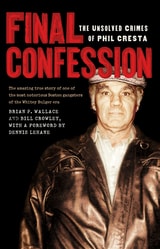
Final Confession
The Unsolved Crimes of Phil CrestaBrian P. Wallace and Bill Crowley
University Press of New England, 2013
For “Children Who Vary from the Normal Type”
Robert Osgood
Gallaudet University Press, 2000
For “Children Who Vary from the Normal Type” describes the growth of Boston and its educational system during this period, then examines closely the emergence of individual programs that catered to students formally identified as having special needs: intermediate schools and ungraded classes; three separate programs for students with children; special classes for mentally retarded children; and other programs established between 1908 and 1913. Osgood describes these programs and their relations with each other, and also the rationales offered for their establishment and support. This detailed examination graphically depicts how patterns of integration and segregation in special education shifted over time in Boston, and provides a foundation for continuing the present-day discussion of the politics and realities of inclusion.
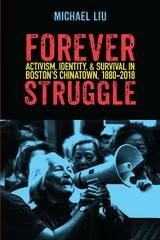
Forever Struggle
Activism, Identity, and Survival in Boston's Chinatown, 1880–2018Michael Liu
University of Massachusetts Press, 2020
In writing about Boston Chinatown's long history, Michael Liu, a lifelong activist and scholar of the community, charts its journey and efforts for survival—from its emergence during a time of immigration and deep xenophobia to the highway construction and urban renewal projects that threatened the neighborhood after World War II to its more recent efforts to keep commercial developers at bay. At the ground level, Liu depicts its people, organizations, internal battles, and varied and complex strategies against land-taking by outside institutions and public authorities. The documented courage, resilience, and ingenuity of this low-income immigrant neighborhood of color have earned it a place amongst our urban narratives. Chinatown has much to teach us about neighborhood agency, the power of organizing, and the prospects of such neighborhoods in rapidly growing and changing cities.
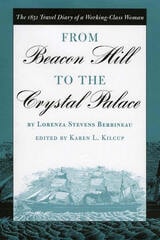
From Beacon Hill to the Crystal Palace
The 1851 Travel Diary of a Working-Class WomanLorenza Stevens Berbineau
University of Iowa Press, 2002
Because prior studies of American women’s travel writing have focused exclusively on middle-class and wealthy travelers, it has been difficult to assess the genre and its participants in a holistic fashion. One of the very few surviving working-class travel diaries, Lorenza Stevens Berbineau’s account provides readers with a unique perspective of a domestic servant in the wealthy Lowell family in Boston. Staying in luxurious hotels and caring for her young charge Eddie during her six-month grand tour, Berbineau wrote detailed and insightful entries about the people and places she saw.
Contributing to the traditions of women’s, diary, and travel literature from the perspective of a domestic servant, Berbineau's narrative reveals an arresting and intimate outlook on both her own life and the activities, places, and people she encounters. For example, she carefully records Europeans’ religious practices, working people and their behavior, and each region’s aesthetic qualities. Clearly writing in haste and with a pleasing freedom from the constraints of orthographic and stylistic convention, Berbineau offers a distinctive voice and a discerning perspective. Alert to nuances of social class, her narrative is as appealing and informative to today's readers as it no doubt was to her fellow domestics in the Lowell household.
Unobtrusively edited to retain as much as possible the individuality and texture of the author’s original manuscript, From Beacon Hill to the Crystal Palace offers readers brief framing summaries, informative endnotes, and a valuable introduction that analyzes Berbineau’s narrative in relation to gender and class issues and compares it to the published travel writing of her famous contemporary, Harriet Beecher Stowe.