Results by title
379 books match the query 'Botany' and 75 start with f
Fathers of Botany
The Discovery of Chinese Plants by European MissionariesJane Kilpatrick
Royal Botanic Gardens, Kew, 2014
But as Jane Kilpatrick shows in Fathers of Botany, the first Westerners to come upon and document this bounty were in fact cut from a different cloth: the clergy. Following the Opium Wars, European missionaries were the first explorers to dig further into the Chinese interior and send home evidence of one of the richest and most varied floras ever seen, and it was their discoveries that caused a sensation among Western plantsmen. Both men of faith and talented botanists alike, these missionaries lent their names to many of the plants they discovered, but their own stories disappeared into the leaf litter of history. Drawing on their letters and contemporary accounts, Kilpatrick focuses on the lives of four great French missionary botanists—Pères Armand David (of Davidia involucrata—the dove tree—and discoverer of the giant panda), Jean Marie Delavay, Paul Guillaume Farges, and Jean André Soulié—as well as a group of other French priests, Franciscan missionaries, and a single German Protestant pastor who all amassed significant plant collections, as she unearths a lost chapter of botanical history. In so doing, she reminds today’s gardeners and botanists—and any of us who stop to smell the roses—of the enormous debt owed to these obscure fathers of botany.
Ferns
Robert H. Mohlenbrock
Southern Illinois University Press, 1999
Perhaps no other group of plants attracts more interest among both professional and amateur botanists than ferns. As early as 1846, when one of the first lists of Illinois plants was published, sixteen species of ferns were already known in the state. The longtime interest of a great many people makes the distribution of ferns better known than that of any other group of plants in Illinois.
This detailed account of ferns and fern-allies was first published in 1967 as the first volume in the series The Illustrated Flora of Illinois. Eminent botanist Robert H. Mohlenbrock has now revised Ferns to include twenty-five additional taxa of ferns that have since been discovered in Illinois. In addition, numerous nomenclatural changes have occurred for plants already known in the state.
The introductory information of Ferns includes discussions of the morphology and life history of the ferns and fern-allies, the taxonomic history of the group in Illinois, and the habitats where they can be found.
The semitechnical keys and descriptions, familiar to the professional botanist, have been simplified for the novice and are accompanied by a glossary and a profuse use of illustrations. A new key has been included for the additional ferns. Two general keys enable the reader to identify the order and the genus of the fern or fern-ally in question. One of these is designed for use with specimens that have sporangia; the other is for use with sterile specimens. The keys are composed of a hierarchy of characteristics for determining the order, family, and genus of any given specimen. Once a genus is ascertained, the reader can apply its key to more than one species of the same genus.
Each species has its own description, statement of habitat and range, Illinois distribution, map, discussion, synonymy, and full-page line illustration showing its diagnostic characteristics.
Field Guide to Coastal Wetland Plants of the Northeastern United States
Ralph W. Tiner
University of Massachusetts Press, 1987
Coastal wetlands are among our most important fish and wildlife habitats. For example, over two-thirds of our recreationally and commercially important marine fishes depend on coastal marshes and associated waters for nursery and spawning grounds.
This book is arranged in four major sections: (1) Coastal Wetland Ecology: A General Overview, (2) Identification of Coastal Wetland Plants, (3) Wetland Plant Descriptions and Illustrations, and (4) Places to Observe Coastal Wetlands, and (5) Sources of Other Information. In addition , a list of references used in preparing this book and a glossary of technical terms are provided.

Field Guide to Tidal Wetland Plants of the Northeastern United States and Neighboring Canada
Vegetation of Beaches, Tidal Flats, Rocky Shores, Marshes, Swamps, and Coastal PondsRalph W. Tiner
University of Massachusetts Press, 2009
First published in 1987, Ralph W. Tiner's A Field Guide to Coastal Wetland Plants of the Northeastern United States soon established itself as the definitive work on its subject. Now Tiner has prepared a revised and expanded edition, broadening the coverage both botanically and geographically. It emphasizes plant identification and includes descriptions of over 700 species and illustrations of approximately 550 species. More tidal wetland types are covered (beaches, rocky shores, and tidal swamps) and the geographic scope extends as far north as Canada's Maritime Provinces.
Field Guide to Wisconsin Grasses
Emmet J. Judziewicz , Robert W. Freckmann, Lynn G. Clark, Merel R. Black
University of Wisconsin Press, 2014
The book includes:
• drawings of most species
• chapters on grass morphology and grasses in natural communities
• keys to all species, including an illustrated key to genera
• a glossary of grass terminology.
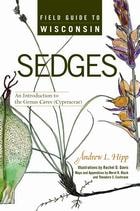
Field Guide to Wisconsin Sedges
An Introduction to the Genus Carex (Cyperaceae)Andrew L. Hipp; Illustrations by Rachel D. Davis; Maps and Appendices by Merel R. Black and Theodore S. Cochrane
University of Wisconsin Press, 2008
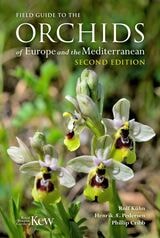
Field Guide to the Orchids of Europe and the Mediterranean
Rolf Kühn, Henrik Ærenlund Pedersen, and Phillip Cribb
Royal Botanic Gardens, Kew, 2024
Field Guide to the Orchids of Europe and the Mediterranean: Second Edition is a comprehensive photographic guide to the orchids of the region written by leading experts, who between them have decades of orchid field and research experience. The book covers orchids from Europe and the Mediterranean, extending to Turkey and the immediate near east of North Africa and Macaronesia.
Many guides to orchids of this region exist, but in this completely revised second edition, the authors have drawn on the latest scientific research to bring clarity to orchid identification and names, with an emphasis on the natural variability that exists in many wild species. This edition incorporates the latest updates in taxonomy. With over 2000 color photographs and new images, the book provides the reader with an accessible and easy-to-use identification guide to the natural variability seen in these orchids.
The book covers thirty genera and their species including Ophrys, Cypripedium, Orchis, Dactylorhiza, Epipactis, and Serapias, as well as seventy natural hybrids. Much of the confusion over identification is due to the morphological variation a species can have within a habitat and across its distribution, and therefore to simplify identification, several images accompany each species to illustrate this diversity, along with notes on distinguishing features and distribution maps. Each species is also accompanied by common names and important synonyms, as well as notes on habitat, flowering times, and distinguishing features.
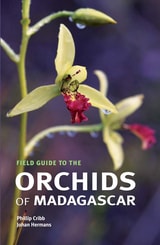
Field Guide to the Orchids of Madagascar
Phillip Cribb and Johan Hermans
Royal Botanic Gardens, Kew, 2009
As is the case with many other rare and sought-after species of plant and animal, Madagascar is one of the world’s prime locations for orchids, which make up the largest family of flowering plants on the island. Madagascar is home to nearly one thousand different species of orchids—which make up nearly ten percent of the island’s flora—nearly nine hundred of them endemic. Orchids are found in almost every habitat on the island, from the mountains to the coasts, and this field guide—the first of its kind, fully illustrated with color photographs and packed with details to aid identification—is an invaluable tool for researchers and ecotourists visiting the island.
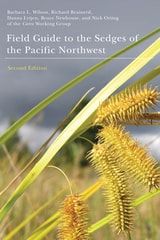
Field Guide to the Sedges of the Pacific Northwest
Second EditionBarbara J. Wilson, Richard Brainerd, Danny Lytjen, Bruce Newhouse, and Nick Otting of the Carex Working Group
Oregon State University Press, 2014
Sedges can be difficult to identify, with differences between species based on small, technical characters. This comprehensive guide contains identification keys, descriptions, more than 650 color photographs, and distribution maps for each species, providing users with helpful tools and tips for identifying the plants in this challenging group. Information about sedge ecology, habitat, management and restoration, ethnobotanical uses, and propagation enhances the guide’s utility.
Field Guide to the Sedges of the Pacific Northwest provides an invaluable resource for botanists, land managers, restoration ecologists, and plant enthusiasts. And, as the genus Carex becomes increasingly important amongst landscapers, nurseries, and gardeners, the guide will serve as a handy tool for choosing Northwest natives for the garden.
Field Guide to the Wild Flowers of the Algarve
Chris Thorogood and Simon Hiscock
Royal Botanic Gardens, Kew, 2014
With the Field Guide, visitors can find the best places and times to see the plants. The Guide also explains their habitats and vegetation types. Richly illustrated, it includes hundreds of color photos and line drawings to aid identification, plus distribution maps that make it easy to plan trips and find nearby species.
Introductory passages give environmental context and cover climate, geology, agriculture, wildflower classification, and flower morphology. Written to appeal to both amateur naturalists and professional botanists alike, this is the essential companion for anyone drawn to the rich beauty of the Algarve.
Field Guide to the Wild Flowers of the Algarve
Second EditionChris Thorogood and Simon Hiscock
Royal Botanic Gardens, Kew, 2019
This second edition is fully updated with new species and new findings. Information is provided on where and when to see plants with information on their habitat and vegetation types. Rare and unusual plants of the region are highlighted, including orchids and parasitic plants. The more than one thousand descriptions are accompanied throughout with over 650 stunning color photographs, 780 line drawings, and distribution maps.
Field Guide to the Wild Flowers of the Eastern Mediterranean
Chris Thorogood
Royal Botanic Gardens, Kew, 2019
The geographic coverage of this book spans the Ionian Archipelago, mainland Greece, Peloponnese, Aegean Islands, Crete, Cyprus, Mediterranean Turkey, and the coasts of Israel, Palestine, Lebanon, and Syria. Featuring more than three thousand plants, this easy-to-use guide focuses on the most common and conspicuous species that occur in the area, with plant descriptions, color photographs, and illustrations throughout. A section on where to see wild flowers in the region is included, as well as a glossary of terms. An ideal companion for wildlife and plant enthusiasts, this guide will enable anyone to reliably identify wild flowers in the field.
Field Guide to the Wild Plants of Oman
Helen Pickering and Annette Patzelt
Royal Botanic Gardens, Kew, 2008
This compact volume is a handy, thorough guide to the wild plants found in the small Middle Eastern nation of Oman. A short introduction provides an overview of Oman’s geography and remarkable environmental diversity, followed by catalog of more than 250 common species of plants, enhanced by color photographs designed to assist with quick identification in the field. Descriptive accounts—including details of habitat, uses, and worldwide distribution—round out the individual entries, while a glossary of botanical terms, a bibliography, and an index of scientific and vernacular names combine to make this an invaluable reference.
Field Guide to the Wildflowers of the Western Mediterranean
Chris Thorogood
Royal Botanic Gardens, Kew, 2016
Filicineae, Gymnospermae and Other Monocots Excluding Cyperaceae
Ferns, Conifers, and Other Monocots Excluding SedgesRobert H. Mohlenbrock
Southern Illinois University Press, 2006
The second in a series of four illustrated guides to identifying aquatic and standing water plants in the central Midwest, this convenient reference volume includes descriptions, nomenclature, ecological information, and identification keys to plants in all of the monocot families except sedges—which are covered in the first volume in the series—that are found in Kentucky (except for the Cumberland region), Ohio, Indiana, Illinois, Iowa, Missouri, Kansas, and Nebraska.
Monocots covered in this volume include ferns, conifers, grasses, rushes, orchids, duckweeds, irises, sweet flags, arrowheads, aroids, flowering rushes, pipeworts, frog-bits, arrowgrasses, naiads, pickerelweeds, pondweeds, bur reeds, cattails, and yellow-eyed grasses. Robert H. Mohlenbrock includes three types of plants: submergents, those that spend their entire lives with their vegetative parts either completely submerged or at least floating on the water’s surface; emergents, which are typically rooted underwater with their vegetative parts standing out of water; and a third category of plants that live most of their lives out of water, but which may live in water at least three months a year.
With taxa arranged alphabetically, the volume is well organized and easy to use. In addition, basic synonymy, description, distribution, comments, and line drawings show the habits and distinguishing features for each plant. Habitat and nomenclatural notes are also listed, as are the official wetland designations given by the U.S. Fish and Wildlife Service.
Filicineae, Gymnospermae, and Other Monocots, Excluding Cyperaceae is a useful standard reference for state and federal employees who deal with both aquatic and wetland plants and environmental conservation and mitigation issues. It is furthermore an essential guide for students and instructors in college and university courses focusing on the identification of aquatic and wetland plants.

Flora Zambesiaca Compositae 6 (4)
Edited by Benoit Loeuille
Royal Botanic Gardens, Kew, 2025
The Flora Zambesiaca series provides comprehensive descriptive accounts of the flowering plants and ferns native and naturalized in Zambia, Malawi, Mozambique, Zimbabwe, Botswana, and the Caprivi Strip.

Flora Zambesiaca Compositae 6(5)
D. J. Nicholas Hind
Royal Botanic Gardens, Kew, 2024
The Flora Zambesiaca series provides comprehensive descriptive accounts of the flowering plants and ferns native and naturalized in Zambia, Malawi, Mozambique, Zimbabwe, Botswana, and the Caprivi Strip. Volume 6 (5) covers part of Compositae, including detailed plant descriptions and botanical illustrations to aid identification.

Flora Zambesiaca Volume 10 Part 4
J. Timberlake
Royal Botanic Gardens, Kew, 2002

Flora Zambesiaca Volume 12 Part 1
Araceae (Including Lemnaceae)Edited by J. R. Timberlake and E. S. Martins
Royal Botanic Gardens, Kew, 2012

Flora Zambesiaca Volume 12 Part 2
Dioscoreaceae, Taccaceae, Burmanniaceae, Pandanaceae, Velloziaceae, Colchicaceae, Liliaceae, SmilacaceaeEdited by Jonathan Timberlake
Royal Botanic Gardens, Kew, 2009
Alismataceae, Limnocharitaceae, Hydrocharitaceae, Najadaceae, Aponogetonaceae, Juncaginaceae, Potamogetonaceae, Zosteraceae, Zannichelliaceae, Cymodoceaceae, Dioscoreaceae, Burmanniaceae, Pandanaceae, Velloziaceae, Colchicaceae, Liliaceae, Smilacaceae.
Flora Zambesiaca Volume 13 (3) Hyancinthaceae
Edited by Benoit Loeuille
Royal Botanic Gardens, Kew, 2023
The Flora Zambesiaca series provides comprehensive descriptive accounts of the flowering plants and ferns native and naturalized in Zambia, Malawi, Mozambique, Zimbabwe, Botswana, and the Caprivi Strip. Volume 14 covers the Hyancinthaceae in its entirety, including detailed plant descriptions and botanical illustrations to aid identification.
Flora Zambesiaca Volume 13 Part 1
Edited by J. R. Timberlake
Royal Botanic Gardens, Kew, 2008

Flora Zambesiaca Volume 13 Part 2
: Eriospermaceae, Dracaenaceae, Arecaceae (Palmae), Pontederiaceae, Bromeliaceae, MayacaceaeEdited by Jonathan Timberlake
Royal Botanic Gardens, Kew, 2011
This part covers the families:-
Eriospermaceae, Dracaenaceae, Arecaceae (Palmae), Pontederiaceae, Bromeliaceae, Mayacaceae.

Flora Zambesiaca Volume 13 Part 4
Xyridaceae, Eriocaulaceae, Typhaceae, Restionaceae, Flagellariaceae, Juncaceae, Musaceae, Strelitziaceae, Costaceae, Zingiberaceae, Cannaceae, MarantaceaeEdited by Jonathan Timberlake
Royal Botanic Gardens, Kew, 2010
This volume covers Xyridaceae, Eriocaulaceae, Typhaceae, Restionaceae, Flagellariaceae, Juncaceae, Musaceae, Strelitziaceae, Costaceae, Zingiberaceae, Cannaceae, Marantaceae.

Flora Zambesiaca Volume 3 Part 2
Edited by J. R. Timberlake, G.V. Pope, R.M. Polehill, and E.S. Martin
Royal Botanic Gardens, Kew, 2007
Flora Zambesiaca Volume 3 Part 3
PapilionoideaeEdited by J. R. Timberlake, R. M. Polhill, G. V. Pope, and E. S. Martins
Royal Botanic Gardens, Kew, 2007

Flora Zambesiaca
Volume 8, Part 6: Acanthaceae: Barleria to HypoestesEdited by J. R. Timberlake
Royal Botanic Gardens, Kew, 2014
Volume 8 part 6 covers the Acanthaceae family, from Barleria to Hypoestes.
Flora of Iraq Volume 7
Solanaceae to BiebersteiniaceaeEdited by Shahina Ghazanfar, John Edmondson, and Ali Haboob
Royal Botanic Gardens, Kew, 2025
The Flora of Iraq is the only flora for this region in the Middle East. It enables anyone documenting, studying, or managing Iraq’s vast and rich flora to identify the vascular cryptograms and flowering plants. In addition to the detailed taxonomic information, a large amount of supplementary data of general biological interest and economic interest is provided, as well as notes on vernacular names. Nearing completion, the series fills a major gap in the floral knowledge of Iraq.
Flora of Iraq Volume Five Part One
Elatinaceae to SphenocleaceaeEdited by Shahina A. Ghazanfar
Royal Botanic Gardens, Kew, 2015
Flora of Iraq, Volume Five, Part Two
Lythraceae to CampanulaceaeEdited by Shahina A. Ghazanfar and John R. Edmondson
Royal Botanic Gardens, Kew, 2014

Flora of Tropical East Africa
Acanthaceae IIEdited by H. J. Beentje and S. A. Ghazanfar
Royal Botanic Gardens, Kew, 2010
Flora of Tropical East Africa
Acanthaceae Part 1H. J. Beentje
Royal Botanic Gardens, Kew, 2000

Flora of Tropical East Africa
Apocynaceae IIEdited by Henk J. Beentje
Royal Botanic Gardens, Kew, 2012
Flora of Tropical East Africa
AsparagaceaeSebsebe Demissew
Royal Botanic Gardens, Kew, 2006
Prepared at the Royal Botanic Gardens, Kew in co-operation with the East African Herbarium, the National Herbarium of Tanzania, and the Herbaria of Makerere University and Dar es Salaam University.
Flora of Tropical East Africa
AspleniaceaeKew Publishing
Royal Botanic Gardens, Kew, 2008
Prepared at the Royal Botanic Gardens, Kew in co-operation with the East African Herbarium, the National Herbarium of Tanzania, and the Herbaria of Makerere University and Dar es Salaam University.

Flora of Tropical East Africa
BlechnaceaeH. J. Beentje
Royal Botanic Gardens, Kew, 2006
Prepared at the Royal Botanic Gardens, Kew in co-operation with the East African Herbarium, the National Herbarium of Tanzania, and the Herbaria of Makerere University and Dar es Salaam University.
Flora of Tropical East Africa
ColchicaceaeH. J. Beentje
Royal Botanic Gardens, Kew, 2005
Prepared at the Royal Botanic Gardens, Kew in co-operation with the East African Herbarium, the National Herbarium of Tanzania, and the Herbaria of Makerere University and Dar es Salaam University.
Flora of Tropical East Africa
CommelinaceaeEdited by Henk Beentje
Royal Botanic Gardens, Kew, 2012
The Flora of Tropical East Africa is a descriptive, extensively illustrated account of the flowering plants and ferns native and naturalized in Kenya, Tanzania and Uganda, together with information on exotic ornamental and crop plants. At least one species of each genus is illustrated, and the bibliography and synonymy are sufficiently detailed to explain the nomenclature and taxonomic circumscriptions within a broad regional context. This part covers the Commelinaceae family.
Flora of Tropical East Africa
Compositae (Part 3)H. J. Beentje
Royal Botanic Gardens, Kew, 2005
Prepared at the Royal Botanic Gardens, Kew in co-operation with the East African Herbarium, the National Herbarium of Tanzania, and the Herbaria of Makerere University and Dar es Salaam University.
Flora of Tropical East Africa
CyatheaceaeH. J. Beentje
Royal Botanic Gardens, Kew, 2005
Prepared at the Royal Botanic Gardens, Kew in co-operation with the East African Herbarium, the National Herbarium of Tanzania, and the Herbaria of Makerere University and Dar es Salaam University.

Flora of Tropical East Africa
CyperaceaeEdited by H. J. Beentje and S. A. Ghazanfar
Royal Botanic Gardens, Kew, 2010
This part is devoted to the substantial family of Cyperaceae - or sedges.
Flora of Tropical East Africa
DracaenaceaeEdited by H.J. Beentje and S.A. Ghazanfar
Royal Botanic Gardens, Kew, 2007
Prepared at the Royal Botanic Gardens, Kew in co-operation with the East African Herbarium, the National Herbarium of Tanzania, and the Herbaria of Makerere University and Dar es Salaam University.
Flora of Tropical East Africa
HymenophyllaceaeH. J. Beentje and S. A. Ghazanfar
Royal Botanic Gardens, Kew, 2000
Flora of Tropical East Africa
Lamiaceae (Labiatae)Edited by H.J. Beentje and S.A. Ghazanfar
Royal Botanic Gardens, Kew, 2010
Prepared at the Royal Botanic Gardens, Kew in co-operation with the East African Herbarium, the National Herbarium of Tanzania, and the Herbaria of Makerere University and Dar es Salaam University.
Flora of Tropical East Africa
MalvaceaeEdited by H.J. Beentje and S.A. Ghazanfar
Royal Botanic Gardens, Kew, 2010
The 'Malvaceae' includes the genera Pavonia, Hibiscus and Abutilon.

Flora of Tropical East Africa
OchnaceaeH. J. Beentje
Royal Botanic Gardens, Kew, 2000
Flora of Tropical East Africa
ScrophulariaceaeH. J. Beentje
Royal Botanic Gardens, Kew, 2008
Prepared at the Royal Botanic Gardens, Kew in co-operation with the East African Herbarium, the National Herbarium of Tanzania, and the Herbaria of Makerere University and Dar es Salaam University.
Flora of Tropical East Africa
SolanaceaeEdited by Henk J. Beentje
Royal Botanic Gardens, Kew, 2012
The Flora of Tropical East Africa is a descriptive, extensively illustrated account of the flowering plants and ferns native and naturalized in Kenya, Tanzania, and Uganda, together with information on exotic ornamental and crop plants. At least one species of each genus is illustrated, and the bibliography and synonymy are sufficiently detailed to explain the nomenclature and taxonomic circumscriptions within a broad regional context. This part of the series is devoted to the Solanaceae or nightshade family, which includes both important agricultural crops as well as a number of toxic plants.

Flora of the Gran Desierto and Río Colorado Delta
Richard Stephen Felger
University of Arizona Press, 2001
Common names of plants are given in English, Spanish, and O'odham. While emphasizing scientific accuracy, the book is written in an accessible style. Felger's observations and knowledge of plant ecology, geographic distribution, evolution, ethnobotany, plant variation and special adaptations, and the history of the region provides botanists, naturalists, ecologists, conservationists, and anyone else celebrating the desert with readable, interesting, and important information. With two of Mexico's newest biosphere reserves—the Pinacate and the Upper Gulf of California—this region is a keystone for desert conservation efforts. Its location linking vast preserves to the north makes this book especially useful for anyone interested in borderland studies and the Sonoran Desert. Flora of the Gran Desierto represents a most creative, definitive, and enthusiastic treatment of Sonoran Desert plant life and is highly relevant to ecological restoration in deserts and wetlands in arid places worldwide.
Flora of the Guianas Series A
MeliaceaeEdited by Sylvia Mota de Oliveira
Royal Botanic Gardens, Kew, 2016