198 books match the query 'Campaigns' and 9 start with f
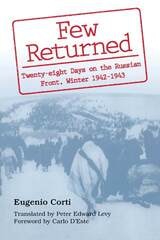
cover of Few Returned: Twenty-eight Days on the Russian Front, Winter 1942-1943

Few Returned

Twenty-eight Days on the Russian Front, Winter 1942-1943

Eugenio Corti, Translated by Peter Edward Levy, & Foreword by Carlo D'Este

University of Missouri Press, 1997

After World War II more than one hundred books appeared that dealt with the experience of the Italian army in Russia, and particularly the terrible winter retreat of 1942-1943. Few Returned (I piu' non ritornano) is the only one of these that is still regularly reissued in Italy.

Eugenio Corti, who was a twenty-one-year-old second lieutenant at the time, found himself, together with 30,000 Italians and a smaller contingent of Germans, encircled on the banks of the River Don by enemy forces who far outnumbered them. To break out of this encirclement, these men undertook a desperate march across the snow, with constant engagements and in temperatures ranging from -20 to -30 degrees Fahrenheit. Whereas supplies were air-dropped to the Germans, the predicament of the Italians was far more difficult: lacking gasoline, they were compelled to abandon their vehicles and to proceed without heavy arms, equipment, ammunition, or provisions. Even the wounded had to be abandoned, though it was well known that the soldiers of the Red Army"enraged by the brutality of the German invasion"killed all the enemy wounded who fell into their hands. After twenty-eight days of encirclement, only 4,000 of the 30,000 Italians made it out of the pocket.

Why is it that Corti's book, which was first published in 1947, continues after fifty years to be reprinted in Italy? Because, as Mario Apollonio of the University of Milan said, when the book first appeared: "It is a chronicle . . . but it is much more than that: behind the physical reality, there is the truth" about man at his most tragic hour. Apollonio adds: "The power of the writing immediately transforms the document into drama"; the result is a "novel-poem-drama-history." The philosopher Benedetto Croce found in Corti's book "the not infrequent gleam of human goodness and nobility." Few Returned is a classic of war literature that succeeds in bringing home the full hatefulness of war.

Eugenio Corti began writing his diary at a military hospital immediately after being repatriated from the Russian front. When in September 1943 Italy found itself cut in two by the Armistice, Corti, loyal to his officer's oath, joined up with what remained of the Italian army in the south and with those few troops participated in driving the Germans off Italian soil, fighting at the side of the British Eighth and the American Fifth Armies.
[more]
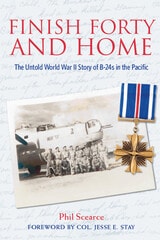
cover of Finish Forty and Home: The Untold World War II Story of B-24s in the Pacific

Finish Forty and Home

The Untold World War II Story of B-24s in the Pacific

Phil Scearce

University of North Texas Press, 2011

[more]
cover of Flying with the Fifteenth Air Force: A B-24 Pilot's Missions from Italy during World War II

Flying with the Fifteenth Air Force

A B-24 Pilot's Missions from Italy during World War II

Tom Faulkner

University of North Texas Press, 2018
[more]
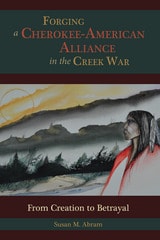
cover of Forging a Cherokee-American Alliance in the Creek War: From Creation to Betrayal

Forging a Cherokee-American Alliance in the Creek War

From Creation to Betrayal

Susan M. Abram

University of Alabama Press, 2015

Explores how the Creek War of 1813–1814 not only affected Creek Indians but also acted as a catalyst for deep cultural and political transformation within the society of the United States’ Cherokee allies

The Creek War of 1813–1814 is studied primarily as an event that impacted its two main antagonists, the defending Creeks in what is now the State of Alabama and the expanding young American republic. Scant attention has been paid to how the United States’ Cherokee allies contributed to the war and how the war transformed their society. In Forging a Cherokee-American Alliance in the Creek War, Susan M. Abram explains in engrossing detail the pivotal changes within Cherokee society triggered by the war that ultimately ended with the Cherokees’ forced removal by the United States in 1838.
 
The Creek War (also known as the Red Stick War) is generally seen as a local manifestation of the global War of 1812 and a bright footnote of military glory in the dazzling rise of Andrew Jackson. Jackson’s victory, which seems destined only in historic hindsight, was greatly aided by Cherokee fighters. Yet history has both marginalized Cherokee contributions to that conflict and overlooked the fascinating ways Cherokee society changed as it strove to accommodate, rationalize, and benefit from an alliance with the expanding American republic. Through the prism of the Creek War and evolving definitions of masculinity and community within Cherokee society, Abram delineates as has never been done before the critical transitional decades prior to the Trail of Tears.
 
Deeply insightful, Abram illuminates the ad hoc process of cultural, political, and sometimes spiritual transitions that took place among the Cherokees. Before the onset of hostilities, the Cherokees already faced numerous threats and divisive internal frictions. Abram concisely records the Cherokee strategies for meeting these challenges, describing how, for example, they accepted a centralized National Council and replaced the tradition of conflict-resolution through blood law with a network of “lighthorse regulators.” And while many aspects of masculine war culture remained, it too was filtered and reinterpreted through contact with the legalistic and structured American military.
 
Rigorously documented and persuasively argued, Abram’s award-winning Forging a Cherokee-American Alliance in the Creek War fills a critical gap in the history of the early American republic, the War of 1812, the Cherokee people, and the South.
[more]
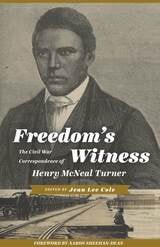
cover of Freedom's Witness: The Civil War Correspondence of Henry McNeal Turner

Freedom's Witness

The Civil War Correspondence of Henry McNeal Turner

Jean Lee Cole

West Virginia University Press, 2013
In a series of columns published in the African American newspaper The Christian Recorder, the young, charismatic preacher Henry McNeal Turner described his experience of the Civil War, first from the perspective of a civilian observer in Washington, D.C., and later, as one of the Union army’s first black chaplains.
 
In the halls of Congress, Turner witnessed the debates surrounding emancipation and black enlistment. As army chaplain, Turner dodged “grape” and cannon, comforted the sick and wounded, and settled disputes between white southerners and their former slaves. He was dismayed by the destruction left by Sherman’s army in the Carolinas, but buoyed by the bravery displayed by black soldiers in battle. After the war ended, he helped establish churches and schools for the freedmen, who previously had been prohibited from attending either.
 
Throughout his columns, Turner evinces his firm belief in the absolute equality of blacks with whites, and insists on civil rights for all black citizens. In vivid, detailed prose, laced with a combination of trenchant commentary and self-deprecating humor, Turner established himself as more than an observer: he became a distinctive and authoritative voice for the black community, and a leader in the African Methodist Episcopal church. After Reconstruction failed, Turner became disillusioned with the American dream and became a vocal advocate of black emigration to Africa, prefiguring black nationalists such as Marcus Garvey and Malcolm X. Here, however, we see Turner’s youthful exuberance and optimism, and his open-eyed wonder at the momentous changes taking place in American society.
 
Well-known in his day, Turner has been relegated to the fringes of African American history, in large part because neither his views nor the forms in which he expressed them were recognized by either the black or white elite. With an introduction by Jean Lee Cole and a foreword by Aaron Sheehan-Dean, Freedom’s Witness: The Civil War Correspondence of Henry McNeal Turner restores this important figure to the historical and literary record.

[more]
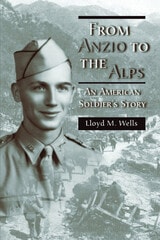
cover of From Anzio to the Alps: An American Soldier's Story

From Anzio to the Alps

An American Soldier's Story

Lloyd M. Wells

University of Missouri Press, 2019
This compelling work is Lloyd M. Wells’s firsthand account of World War II based on a journal he kept during the war, letters he sent home, and personal records, as well as recollections of people and events.
In June 1941, the twenty-one-year-old Wells was drafted into the army. He was commissioned second lieutenant after he attended O.C.S. and was later promoted to first lieutenant with the First Armored Division. He saw action in North Africa, Italy, and Germany and was awarded the Combat Infantry Badge, the Purple Heart, and the Bronze Star.
Wells offers the reader information that has never before been provided. He tells exactly what happened to 2/7 Queens on the night of February 21, 1944, when the troops came up to “the caves” at Anzio. He also depicts what happened during the last offensive in Italy and what armored infantry troops experienced on the perimeter of the attack. This book, however, is not just a story of battle actions. It is a personal story about the “old Army” and how young soldiers were transformed by it during one of the greatest upheavals in world history.
Wells’s goal in writing this book was to leave behind “an account of a simpler time and of the funny, sad, terrorizing, and tender moments of a war which, with the death of each man or woman who lived through it, recedes just a little bit further into the nation’s past.” He accomplished that and so much more.
[more]
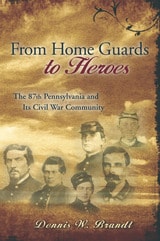
cover of From Home Guards to Heroes: The 87th Pennsylvania and Its Civil War Community

From Home Guards to Heroes

The 87th Pennsylvania and Its Civil War Community

Dennis W. Brandt

University of Missouri Press, 2007

The soldiers of the 87th Pennsylvania Infantry fought in the Overland campaign under Grant and in the Shenandoah valley under Sheridan, notably at the Battle of Monocacy. But as Dennis Brandt reveals in From Home Guards to Heroes, their real story takes place beyond the battlefield. The 87th drew its men from the Scotch-Irish and German populations of York and Adams counties in south-central Pennsylvania—a region with closer ties to Baltimore than to Philadelphia—where some citizens shared Marylanders’ southern views on race while others aided the Underground Railroad.
Brandt’s unique regimental history investigates why these “boys from York” enlisted and why some deserted, the ways in which soldiers reflected their home communities, and the area’s attitudes toward the war both before and after hostilities broke out. Brandt takes a humanistic approach to the Civil War, revealing the more personal aspects of the struggle in a book that focuses on the soldiers themselves.
Using their own words to describe action both on and off the battlefield, he sheds light on the lives of ordinary men: the comparative values of farm and city boys, their motives and concerns, the effect of battle on soldiers and their families, and the suffering that veterans took to the grave. Brandt also looks at soldiers’ racial views, illuminating their deepest worries about the war, and at community politics and problems of discipline surrounding this ideologically divided unit.
Grounded in more than a decade of research into nearly two thousand military records, this is one of the few regimental histories based on more than one thousand pension records for the entire regiment, plus nearly eight hundred additional record sets for other area soldiers. Brandt tapped regional newspapers and a cache of unpublished letters and diaries—some from private collections not previously known—to provide an invaluable account of Civil War sensibilities in a northern area bordering a slave state.
From Home Guards to Heroes is a book about war in which humanity rather than troop movement takes center stage. Engagingly written for a wide audience and meticulously researched, it offers a distinctive image of a community and the intimate lives of the men it sent off to fight—and a story that will intrigue any Civil War aficionado.
[more]
cover of From Texas to Tinian and Tokyo Bay: The Memoirs of Captain J. R. Ritter, Seabee Commander during the Pacific War, 1942-1945

From Texas to Tinian and Tokyo Bay

The Memoirs of Captain J. R. Ritter, Seabee Commander during the Pacific War, 1942-1945

Jonathan Templin Ritter

University of North Texas Press, 2019

[more]
cover of From the Halls of the Montezumas: Mexican War Dispatches from James L. Freaner, Writing under the Pen Name "Mustang"

From the Halls of the Montezumas

Mexican War Dispatches from James L. Freaner, Writing under the Pen Name "Mustang"

Alan D. Gaff

University of North Texas Press, 2019

[more]