332 books match the query 'Canada' and 19 start with f
cover of FROM OLD WOMAN TO OLDER WOMEN: Contemporary Culture and Women’s Narratives

FROM OLD WOMAN TO OLDER WOMEN

Contemporary Culture and Women’s Narratives

Sally Chivers

The Ohio State University Press, 2003

Sally Chivers provides a fascinating look at and challenge to how North American popular culture has portrayed old age as a time of disease, decline, and death. Within contemporary Canadian literary and film production, a tradition of articulate central elderly female characters challenges what the aging body has come to signify in a broader cultural context. Rather than seek positive images of aging, which can do their own prescriptive damage, the author focuses on constructive depictions that provide a basis on which to create new stories and readings of growing old. This type of humanities approach to the study of aging promises neither to fixate on nor avoid consideration of the role of the body in the much broader process of getting older. The progression implied in the title from the solitary symbol of The Old Woman toward a community of older women, indicates not a move toward euphemism, but rather an increasing and necessary awareness of the social and cultural dimensions of aging.
[more]
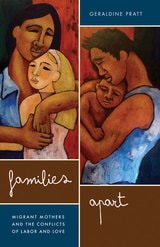
cover of Families Apart: Migrant Mothers and the Conflicts of Labor and Love

Families Apart

Migrant Mothers and the Conflicts of Labor and Love

Geraldine Pratt

University of Minnesota Press, 2012

In a developing nation like the Philippines, many mothers provide for their families by traveling to a foreign country to care for someone else’s. Families Apart focuses on Filipino overseas workers in Canada to reveal what such arrangements mean for families on both sides of the global divide.

The outcome of Geraldine Pratt’s collaboration with the Philippine Women Centre of British Columbia, this study documents the difficulties of family separation and the problems that children have when they reunite with their mothers in Vancouver. Aimed at those who have lived this experience, those who directly benefit from it, and those who simply stand by and watch, Families Apart shows how Filipino migrant domestic workers—often mothers themselves—are caught between competing neoliberal policies of sending and receiving countries and how, rather than paying rich returns, their ambitions as migrants often result in social and economic exclusion for themselves and for their children. This argument takes shape as an open-ended series of encounters, moving between a singular academic voice and the “we” of various research collaborations, between Vancouver and the Philippines, and between genres of “evidence-based” social scientific research, personal testimony, theatrical performance, and nonfictional narrative writing.

Through these experiments with different modes of storytelling, Pratt seeks to transform frameworks of perception, to create and collect sympathetic witnesses—in short, to promote a wide-ranging public discussion and debate about a massive worldwide shift in family (and nonfamily) relations of intimacy and care.

[more]
cover of Families, Lovers, and their Letters: Italian Postwar Migration to Canada

Families, Lovers, and their Letters

Italian Postwar Migration to Canada

Sonia Cancian

University of Manitoba Press, 2010
Families, Lovers, and their Letters takes us into the passionate hearts and minds of ordinary people caught in the heartbreak of transatlantic migration. It examines the experiences of Italian migrants to Canada and their loved ones left behind in Italy following the Second World War, when the largest migration of Italians to Canada took place. In a micro-analysis of 400 private letters, including three collections that incorporate letters from both sides of the Atlantic, Sonia Cancian provides new evidence on the bidirectional flow of communication during migration. She analyzes how kinship networks functioned as a means of support and control through the flow of news, objects, and persons; how gender roles in productive and reproductive spheres were reinforced as a means of coping with separation; and how the emotional impact of both temporary and permanent separation was expressed during the migration process. Cancian also examines the love letter as a specific form of epistolary exchange, a first in Italian immigrant historiography, revealing the powerful effect that romantic love had on the migration experience.
[more]
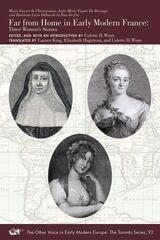
cover of Far from Home in Early Modern France: Three Women’s Stories

Far from Home in Early Modern France

Three Women’s Stories

Marie Guyart de l’Incarnation, Anne-Marie Fiquet du Boccage, and Henriette-Lucie Dillon de la Tour du Pin

Iter Press, 2022

An engaging account of women’s travels in the early modern period. 

This book showcases three Frenchwomen who ventured far from home at a time when such traveling was rare. In 1639, Marie de l’Incarnation embarked for New France where she founded the first Ursuline monastery in present-day Canada. In 1750, Madame du Boccage set out at the age of forty on her first “grand tour.” She visited England, the Netherlands, and Italy where she experienced firsthand the intellectual liberty offered there to educated women. As the Reign of Terror gripped France, the Marquise de la Tour du Pin fled to America with her husband and their two young children, where they ran a farm from 1794 to 1796. The writings these women left behind detailing their respective journeys abroad represent significant contributions to early modern travel literature. This book makes available to anglophone readers three texts that are rich in both historical and literary terms.  
 
[more]
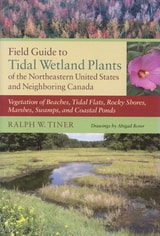
cover of Field Guide to Tidal Wetland Plants of the Northeastern United States and Neighboring Canada: Vegetation of Beaches, Tidal Flats, Rocky Shores, Marshes, Swamps, and Coastal Ponds

Field Guide to Tidal Wetland Plants of the Northeastern United States and Neighboring Canada

Vegetation of Beaches, Tidal Flats, Rocky Shores, Marshes, Swamps, and Coastal Ponds

Ralph W. Tiner

University of Massachusetts Press, 2009

First published in 1987, Ralph W. Tiner's A Field Guide to Coastal Wetland Plants of the Northeastern United States soon established itself as the definitive work on its subject. Now Tiner has prepared a revised and expanded edition, broadening the coverage both botanically and geographically. It emphasizes plant identification and includes descriptions of over 700 species and illustrations of approximately 550 species. More tidal wetland types are covered (beaches, rocky shores, and tidal swamps) and the geographic scope extends as far north as Canada's Maritime Provinces.

[more]
cover of Finding a Way to the Heart: Feminist Writings on Aboriginal and Women’s History in Canada

Finding a Way to the Heart

Feminist Writings on Aboriginal and Women’s History in Canada

Robin Jarvis Brownlie

University of Manitoba Press, 2012
[more]
cover of First Nations Gaming in Canada

First Nations Gaming in Canada

Yale D. Belanger

University of Manitoba Press, 2011

While games of chance have been part of the Aboriginal cultural landscape since before European contact, large-scale commercial gaming facilities within First Nations communities are a relatively new phenomenon in Canada. First Nations Gaming in Canada is the first multidisciplinary study of the role of gaming in indigenous communities north of the 49th parallel. Bringing together some of Canada’s leading gambling researchers, the book examines the history of Aboriginal gaming and its role in indigenous political economy, the rise of large-scale casinos and cybergaming, the socio-ecological impact of problem gambling, and the challenges of labour unions and financial management. The authors also call attention to the dearth of socio-economic impact studies of gambling in First Nations communities while providing models to address this growing issue of concern.
[more]
cover of Following the Barn Quilt Trail

Following the Barn Quilt Trail

Suzi Parron

Ohio University Press, 2016

Suzi Parron, in cooperation with Donna Sue Groves, documented the massive public art project known as the barn quilt trail in her 2012 book Barn Quilts and the American Quilt Trail Movement. The first of these projects began in 2001, when Groves and community members created a series of twenty painted quilt squares in Adams County, Ohio. Since then, barn quilts have spread throughout forty-eight states and several Canadian provinces.

In Following the Barn Quilt Trail, Parron brings readers along as she, her new love, Glen, their dog Gracie, and their converted bus Ruby, leave the stationary life behind. Suzi and Glen follow the barn quilt trail through thirty states across thirteen thousand miles as Suzi collects the stories behind the brightly painted squares. With plentiful color photographs, this endearing hybrid of memoir and travelogue is for quilt lovers, Americana and folk art enthusiasts, or anyone up for a good story.

[more]
cover of For All We Have and Are: Regina and the Experience of the Great War

For All We Have and Are

Regina and the Experience of the Great War

James M. Pitsula

University of Manitoba Press, 2008
The First World War profoundly affected every community in Canada. In Regina, the politics of national identity, the rural myth, and the social gospel all lent a distinctive flavour to the city’s experience of the Great War. For many Reginans, the fight against German militarism merged with the struggle against social evils and the “Big Interests,” adding new momentum to the forces of social reform, including the fights for prohibition and women’s suffrage.James M. Pitsula traces these social movements against the background of the lives of Regina men who fought overseas in battles such as Passchendaele and Vimy Ridge. Skillfully combining vivid detail with the larger social context, For All We Have and Are provides a nuanced picture of how one Canadian community rebuilt both its realities and myths in response to the cataclysm of the “war to end all wars.”
[more]
cover of For Emplacement: Political Ontology in Two Acts

For Emplacement

Political Ontology in Two Acts

Mario Blaser

Duke University Press, 2025

In For Emplacement, Mario Blaser proposes a new lens for contending with the momentous challenges facing the world, from anthropogenic climate change to rampant socioeconomic inequalities to the rise of neofascism. Blaser shows that the prevalent solutions to these problems—which often depend on intensifying globalization, technological development, and extractivism—only deepen these crises. Effectively addressing these issues, he suggests, might require grounding our ways of being in the specificities of place. Drawing on decades of ethnographic experience in South America and the Canadian subarctic, and engaging with material semiotics, Blaser recasts the fundamental political question of how to live together well as a cosmopolitical one: how to become emplaced with others, in divergence. Ultimately, he presents a political ontology where visions of the good life oriented to the specificities of place guide us through the promises and challenges that a journey toward emplacement holds.
[more]
cover of For King and Kanata: Canadian Indians and the First World War

For King and Kanata

Canadian Indians and the First World War

Timothy C. Winegard

University of Manitoba Press, 2012
[more]
cover of Formidable Heritage: Manitoba's North and the Cost of Development

Formidable Heritage

Manitoba's North and the Cost of Development

Jim Mochoruk

University of Manitoba Press, 2004

Canadians have an ambivalent feeling towards the North. Although climate and geography make our northern condition apparent, Canadians often forget about the north and its problems. Nevertheless, for the generation of historians that included Lower, Creighton, and Morton, the northern rivers, lakes, forests, and plains were often seen as primary characters in the drama of nation building. W.L. Morton even went so far as to write that the ìmain task of Canadian life has been to make something of that formidable heritageî of the northern Canadian shield. For many politicians and developers, "to make something" of the North came to mean thinking of the North as an empty hinterland waiting to be exploited, and today, hydroelectric projects, mining, milling, pulp and paper, and other industries have changed much of the North beyond recognition.One of the first parts of the North to be aggressively industrialized was northern Manitoba. When all of Manitoba was given in 1670 to a group of entrepreneurs, a precedent was set that was replicated throughout the provinceís history. After the province entered confederation in 1870, provincial politicians and business leaders began to look to the northern resources as a new key to the provinceís economic development. Particularly after 1912, they saw resource development in the North as a strategy to expand the provincial economy from its agricultural base. Jim Mochoruk shows how government and business worked together to transform what had been the exclusive fur-trading preserve of the Hudsonís Bay Company into an industrial hinterland. He follows the many twisting paths established by developers and politicians as they chased their goal of economic growth, and recounts the ultimate costs of development in economic, ecological, and political terms.
[more]
cover of Fragments of Truth: Residential Schools and the Challenge of Reconciliation in Canada

Fragments of Truth

Residential Schools and the Challenge of Reconciliation in Canada

Naomi Angel. Edited by Dylan Robinson and Jamie Berthe.

Duke University Press, 2022

In 2008, the Canadian government established a Truth and Reconciliation Commission (TRC) to review the history of the residential school system, a brutal colonial project that killed and injured many Indigenous children and left a legacy of trauma and pain. In Fragments of Truth Naomi Angel analyzes the visual culture of reconciliation and memory in relation to this complex and painful history. In her analyses of archival photographs from the residential school system, representations of the schools in popular media and literature, and testimonies from TRC proceedings, Angel traces how the TRC served as a mechanism through which memory, trauma, and visuality became apparent. She shows how many Indigenous communities were able to use the TRC process as a way to claim agency over their memories of the schools. Bringing to light the ongoing costs of transforming settler states into modern nations, Angel demonstrates how the TRC offers a unique optic through which to survey the long history of colonial oppression of Canada’s Indigenous populations.
[more]
cover of Free Trade & Uneven Development: North American Apparel Industry After Nafta

Free Trade & Uneven Development

North American Apparel Industry After Nafta

edited by Gary Gereffi, David Spener and Jennifer Bair

Temple University Press, 2002
This volume addresses many of the complex issues raised by North American integration through the lens of one of the largest and most global industries in the region: textiles and apparel. In part, this is a story of winners and losers in the globalization process, especially if one focuses on jobs lost and jobs gained in different countries and communities within North America, defined here as: Canada, the United States, Mexico, Central America, and the Caribbean. However, it would be a mistake to view the industry solely in these zerosum terms. The North American apparel industry is an excellent illustration of larger trends in the global economy, in which regional divisions of labor appear to be one of the most stable and effective responses to globalization.The contributors to this volume are an international and interdisciplinary group of scholars who have all done detailed fieldwork at the firm and factory levels in one or more countries of North America. Taken together the essays offer theoretical and methodological innovations built around the intersection of the global commodity chains and industrial districts literatures, as well as innovative approaches to studying the impact of cross-national, interfirm networks in terms of production and trade issues, and local development outcomes for workers and communities.
[more]
cover of French and Indians in the Heart of North America, 1630-1815

French and Indians in the Heart of North America, 1630-1815

Robert Englebert

Michigan State University Press, 2013

In the past thirty years, the study of French-Indian relations in the center of North America has emerged as an important field for examining the complex relationships that defined a vast geographical area, including the Great Lakes region, the Illinois Country, the Missouri River Valley, and Upper and Lower Louisiana. For years, no one better represented this emerging area of study than Jacqueline Peterson and Richard White, scholars who identified a world defined by miscegenation between French colonists and the native population, or métissage, and the unique process of cultural accommodation that led to a “middle ground” between French and Algonquians. Building on the research of Peterson, White, and Jay Gitlin, this collection of essays brings together new and established scholars from the United States, Canada, and France, to move beyond the paradigms of the middle ground and métissage. At the same time it seeks to demonstrate the rich variety of encounters that defined French and Indians in the heart of North America from 1630 to 1815. Capturing the complexity and nuance of these relations, the authors examine a number of thematic areas that provide a broader assessment of the historical bridge-building process, including ritual interactions, transatlantic connections, diplomatic relations, and post-New France French-Indian relations.
[more]
cover of Fringed Orchids in Your Pocket: A Guide to Native Platanthera Species of the Continental United States and Canada

Fringed Orchids in Your Pocket

A Guide to Native Platanthera Species of the Continental United States and Canada

Paul Martin Brown

University of Iowa Press, 2009

Native orchids are increasingly threatened by pressure from population growth and development but, nonetheless, still present a welcome surprise to observant hikers in every state and province. Compiled and illustrated by long-time orchid specialist Paul Martin Brown, this pocket guide to the fringed orchids forms part of a series that will cover all the wild orchids of the continental United States and Canada.

Brown provides a description, general distributional information, time of flowering, and habitat requirements for each species as well as a complete list of hybrids and the many different growth and color forms that can make identifying orchids so challenging. For the fringed-lipped orchids, which make up some of the most intriguing and richly colored of all wild orchids, he includes information on fourteen species and thirteen hybrids.

The genus Platanthera is the largest genus of orchids to be found in North America north of Mexico; the fringe-lipped group is found primarily in the eastern U.S. and Canada, extending west to the prairies and Great Plains. The fringed orchids, so-called because of the delicately fringed petals and lips on many of the species, comprise some of the largest and showiest native orchids found in our region. Most of these species are easy to identify based upon their general appearance, range, and time of flowering. Answering three simple questions—when, where, and how does it grow?—and comparing the living plants with the striking photos in the backpack-friendly laminated guide and the information in the simple key should enable both professional and amateur naturalists to achieve the satisfaction of identifying a specific orchid.
[more]
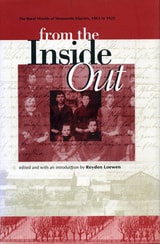
cover of From the Inside Out: The Rural Worlds of Mennonite Diarists

From the Inside Out

The Rural Worlds of Mennonite Diarists

Royden Loewen

University of Manitoba Press, 1999

Historian Royden Loewen has brought together selections from diaries kept by 21 Mennonites in Canada between 1863 and 1929, some translated from German for the first time. By skillfully comparing and contrasting a wide cross-section of lives, Loewen shows how these diaries often turn the hidden contours of household and community "inside out." The writers featured were ordinary rural people: young women and grandmothers, rural preachers and landless householders. They include a teenaged boy who immigrated from Russia to Manitoba in 1875 as well as a successful merchant, a traveling evangelist, and a devout, conservative church elder. An elderly grandfather recounted the daily circuit of his children's homes, while 19-year-old Marie Schoeder wrote of her literary aspirations, her "secret hope" that some day she would "write things that have a real worth, things that are worth printing, and things that other folks would love to read and pay for." From the Inside Out also contrasts diaries from two distinct Mennonite communities in Canada. The Swiss-American Mennonites in Waterloo County, Ontario, faced rapid urbanization, while the Dutch-Russian Mennonites in southern Manitoba maintained their more rural environment. The diaries mirror their writers' preoccupations with work and weather, but they also reveal a communityís social structure and round of activities such as weddings, funerals, and worship services. In the process of diary-keeping, the writers sought to make sense of a dynamic and often unpredictable world. Reading what they chose to record is to learn much about their culture. Their writings provide glimpses of their lives, their collective mindset, and their history as a people.
[more]
cover of From the Tundra to the Trenches

From the Tundra to the Trenches

Eddy Weetaltuk

University of Manitoba Press, 2016

[more]
cover of Futures At Stake: Youth, Gambling, And Society

Futures At Stake

Youth, Gambling, And Society

Howard J. Shaffer

University of Nevada Press, 2003

The widespread legalization of gambling across the U.S. has produced concerns for serious social, economic, and health problems. For the first time in this country, an entire generation of young people has reached adulthood within a context of approval and endorsement of gambling as a source of entertainment and recreation. Compared with their adult counterparts, these young people have evidenced a higher level of gambling related problems. In Futures at Stake, specialists in psychology, medicine, law, public health, economics, casino management, psychiatry, and criminal justice examine this problem from the perspective of their various disciplines, producing an intelligent, thought-provoking, and valuable survey of what is fast becoming a leading social-health problem across the nation. Foreword by Thomas N. Cummings.

[more]